
Last Updated on 4 months ago by TodayWhy Editorial
Open any front page this week and the pattern is the same: Donald Trump is the story. On Wednesday he ordered strikes on Iran. On Thursday he canceled the next wave and declared the war all but over. On Sunday he turns 80 — and celebrates with a cage match on the White House South Lawn in front of an expected 125,000 guests. In between: a tariff rebuild, an inflation argument, an intelligence standoff in Congress, and an immigration bill heading to his desk.
This guide is the hub for our Why Trump series. It maps every active front, explains why each one is in the news, and links to the deeper explainer for each storyline — both the case the White House makes and the pushback it draws.
The Short Answer
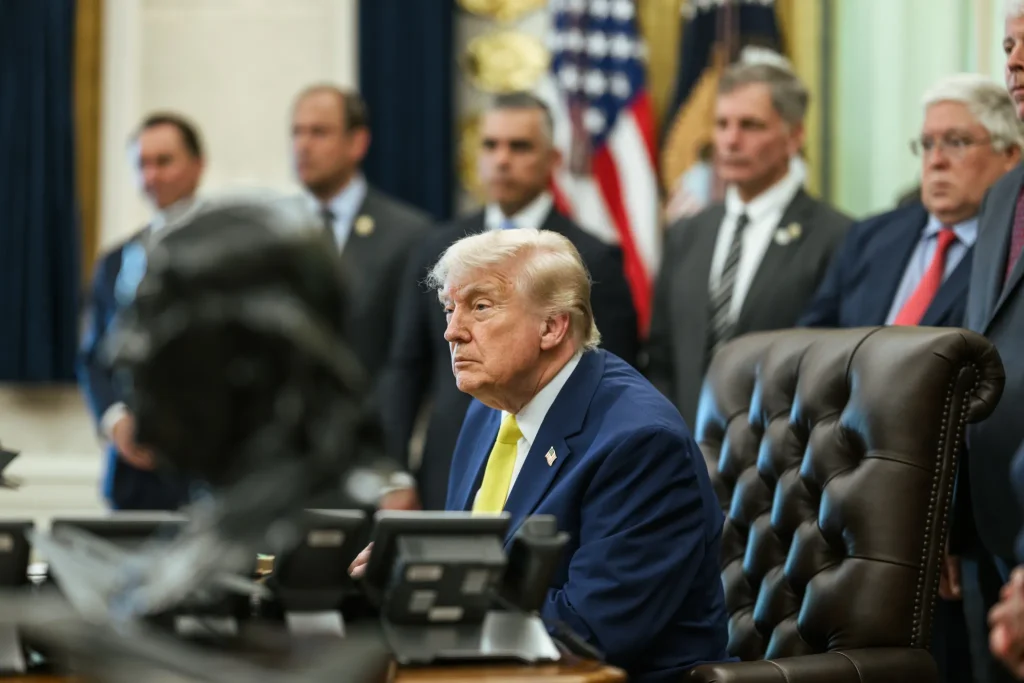
Trump dominates the 2026 news cycle because five storylines are peaking at once, and they are deliberately interconnected. The war with Iran drives oil prices; oil prices drive inflation; inflation drives the political pressure to end the war; ending the war is the deal Trump wants to sign before the summer’s America250 celebrations put the presidency on its biggest stage. Supporters see a strategy — pressure abroad, spectacle at home, everything pointing toward a deal. Critics see whiplash. Either way, the effect is the same: every news cycle runs through the White House.
Front 1: The Iran War — From Strikes to a Handshake
The defining storyline of 2026. The war began on February 28, survived a fragile April ceasefire that collapsed into renewed exchanges, and passed its 100-day mark this week amid the heaviest US-Iran crossfire since spring.
Then came the reversal: on June 11, hours after threatening a third strike of the week and the seizure of Iran’s Kharg Island oil terminal, Trump announced he had canceled the operation because talks had been approved at the highest level of Iranian leadership. He says a signing could come within days, possibly in Europe. Tehran has not confirmed; a senior Iranian official said no memorandum had yet been agreed. The full decision — the White House’s logic, the Qatari-mediated draft, and the caveats — is broken down in our spoke article: Why Trump Canceled the Strikes on Iran.
Why it leads every bulletin: it is a live war involving US forces, with daily reversals, and its endgame — real or premature — would be the largest foreign policy event of Trump’s second term.
Front 2: The Economy — Trump’s Inflation Bet
Inflation sits at multi-year highs, and Trump’s popularity has sagged with it. His counter-argument is direct: the war is the cause, and the deal is the cure. He has repeatedly said recent numbers point to a bigger decline in inflation once the Iran war ends — because peace reopens the Strait of Hormuz, the chokepoint that, per the US Energy Information Administration, normally carries oil equal to about one-fifth of global petroleum liquids consumption. The International Energy Agency adds that a prolonged closure also locks away most of the world’s spare production capacity — which is why every Hormuz headline moves oil markets within minutes.
Economists point out that tariffs and supply factors also feed current prices, so the post-war disinflation may be smaller than advertised. But the structure of the bet explains Trump’s urgency on the deal: it is his fastest available lever on the number voters feel most. (Deep dive coming in our spoke: Why Trump Says Inflation Will Fall After the Iran War)
Front 3: Trade — Rebuilding the Tariff Engine
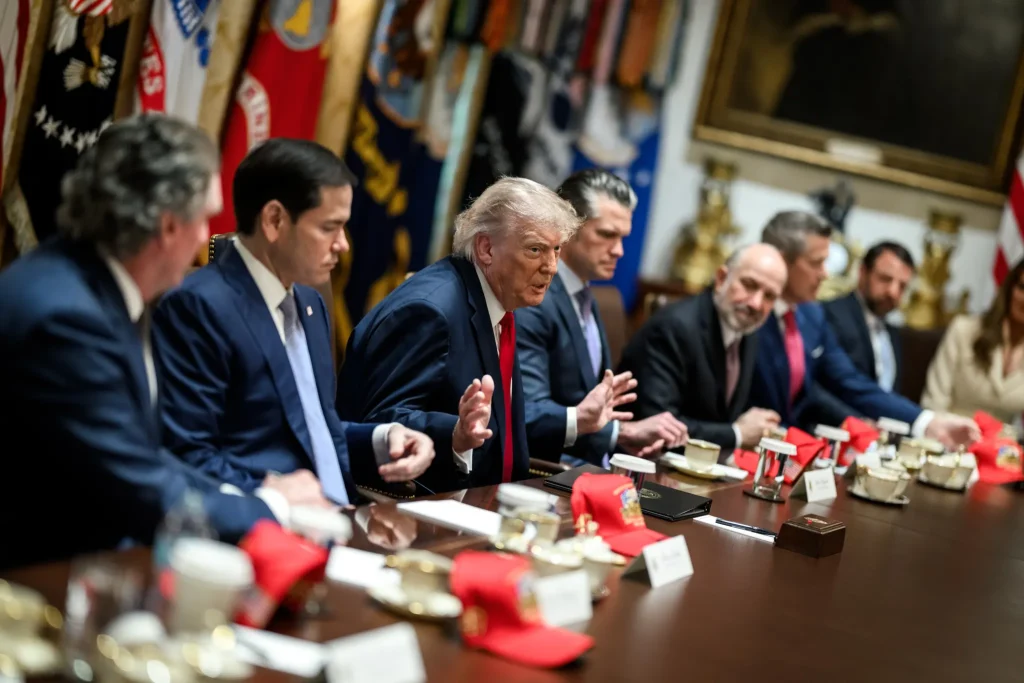
Quietly, while the war absorbed attention, the administration has been reconstructing its tariff architecture following earlier court setbacks, and banking the results of the recent Trump–Xi understanding — which reportedly spans a new trade mechanism and Boeing aircraft purchases. Supporters frame the China agreement as proof the pressure-then-deal method works on economic fronts too; skeptics note implementation details remain thin. (Spoke planned: Why Trump Is Rebuilding His Tariff Engine)
Front 4: Washington Power Plays — Intelligence, Surveillance, Immigration
Three Capitol Hill storylines are running simultaneously:
The DNI fight. Trump’s appointment of an acting intelligence director without a national security background drew Democratic resistance, and lawmakers declined to extend a key surveillance authority during the standoff. Trump has now moved to resolve it by announcing he will nominate US Attorney Jay Clayton as permanent Director of National Intelligence.
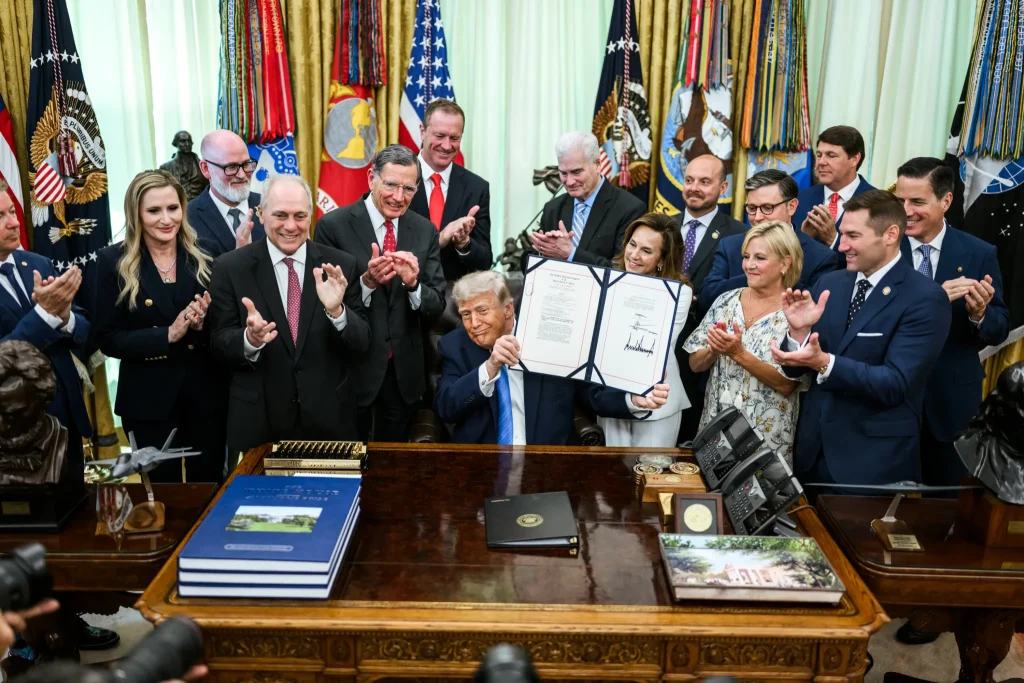
The immigration bill. Congress passed immigration legislation on Republican votes alone after Democrats demanded agency reforms; it now heads to Trump’s desk for signature — a legislative win his allies will showcase through the summer.
The deregulation drumbeat. Smaller but steady: this week Trump opened three Pacific marine protected areas to commercial fishing, framed as a boost to the US seafood industry — the kind of executive action that keeps multiple beats reporting on the White House at once.
Front 5: The Showman Presidency — UFC Freedom 250
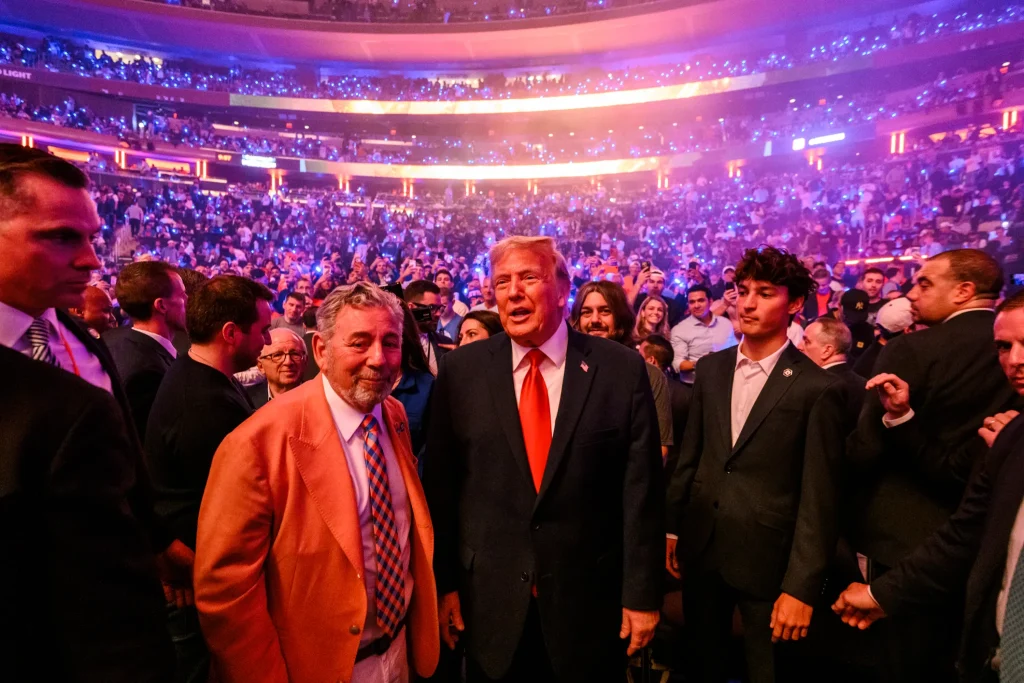
On June 14 — Flag Day, his 80th birthday, and the spine of the America250 celebrations — Trump hosts UFC Freedom 250 on the South Lawn. The numbers explain the coverage by themselves: court filings put staging costs above $60 million, paid by UFC parent TKO, with roughly 125,000 expected guests, weigh-ins planned at the Lincoln Memorial, and fighters walking to the Octagon from the Oval Office. The White House calls it a once-in-a-generation celebration of the American fighting spirit; critics call it spectacle. Both readings guarantee wall-to-wall coverage — and that is rather the point.
Why It All Connects
Seen from inside the White House’s framing, 2026 is one integrated play: military pressure produces an Iran deal; the deal reopens Hormuz; cheaper oil pulls inflation down; tariffs and the China agreement reshore leverage; and America250 — capped by a packed South Lawn — provides the stage on which the wins are presented. That is the case Trump’s supporters make for why this presidency commands attention: not chaos, but sequencing.
The skeptics’ read is the mirror image: the deal remains unsigned and unconfirmed by Tehran, the inflation relief is hypothetical, the pauses have so far produced pauses rather than peace, and the spectacle is a substitute for results. NPR has described the June 11 announcements as the latest in a series of whiplash proclamations.
Which reading wins depends largely on one document — the Iran agreement — and whether it gets signed in the coming days. That is why, for now, every storyline above keeps converging on the same desk.
FAQ: Why Trump Is Everywhere in 2026
Why is Trump dominating the news in 2026?
Five storylines are peaking simultaneously: the Iran war and the deal he says will end it, inflation at multi-year highs, a rebuilt tariff strategy after agreements with Xi Jinping, an intelligence and surveillance standoff in Congress, and the UFC Freedom 250 spectacle at the White House. Each feeds the others, keeping the presidency at the center of every cycle.
Did Trump end the war with Iran?
He says so — after canceling the June 11 strikes he announced a deal approved by Iran’s top leadership would be signed within days. Tehran has not confirmed any agreement, so the war is paused rather than formally ended.
What is the UFC event at the White House?
UFC Freedom 250: a cage-fighting event on the South Lawn on June 14, 2026 — Flag Day, Trump’s 80th birthday, and part of the America250 celebrations. Staging costs exceed $60 million, paid by UFC parent TKO, with roughly 125,000 guests expected.
Why does Trump say inflation will fall soon?
He argues the war — and the closure of the Strait of Hormuz, which normally carries about one-fifth of global petroleum liquids consumption — is what keeps prices elevated, so a peace deal that reopens the strait would pull inflation down. Economists note tariffs and supply factors also contribute to current prices.
What is the fight over Trump’s intelligence picks?
His acting intelligence director drew criticism for lacking national security experience, and Congress declined to extend a key surveillance authority during the standoff. Trump has announced he will nominate US Attorney Jay Clayton as permanent Director of National Intelligence.
Where should I start reading?
Three explainers cover the main arc: why the war started in February, why the Strait of Hormuz closure drives the economic stakes, and why Trump canceled the strikes on June 11 — the moment he declared the war effectively over.
The Why Trump series: Why Trump Canceled the Strikes on Iran | Why Did the Iran War Start in 2026? | Why the Strait of Hormuz Closure Is Pushing Oil Prices Sky-High | Why US-Iran Negotiations 2026: Full Guide