
Last Updated on 4 months ago by TodayWhy Editorial
| 🔴 Update — June 16, 2026 The deal was announced the day after this article was published. On June 14, 2026, Pakistani Prime Minister Shehbaz Sharif declared the peace deal reached. President Trump confirmed on Truth Social: “The Deal with the Islamic Republic of Iran is now complete.” Iran’s Deputy Foreign Minister Kazem Gharibabadi provided Tehran’s confirmation. Trump simultaneously authorized the toll-free reopening of the Strait of Hormuz and the removal of the U.S. naval blockade. A formal signing ceremony is scheduled for Friday, June 19, 2026, in Switzerland. The background analysis and risk factors below remain accurate context — several risks identified here materialized on June 14 itself before the announcement was made. |
On February 28, 2026, the United States and Israel launched a sweeping campaign of coordinated airstrikes against Iran — targeting nuclear facilities, missile sites, and military command infrastructure. Within hours, Iran retaliated with missile barrages across the Middle East, closed the Strait of Hormuz to international shipping, and the world found itself confronting the most dangerous regional war in decades.
This comprehensive guide answers the defining question: Why are US-Iran negotiations happening in 2026, what are they about, and how close are both sides to a deal?
June 2026 Update: Ceasefire Under Fire, IAEA Progress
Since this article was last updated on May 24, 2026, the US-Iran negotiations have entered what analysts are calling a “talks-and-attacks” phase — a pattern in which both sides continue firing weapons at each other while technically maintaining the April 8 ceasefire and continuing diplomatic back-channels. The situation has become more dangerous, but also, paradoxically, closer to a formal agreement on at least some issues than at any prior point.
The Ceasefire in Name Only: What Happened in Late May–June
By late May, the ceasefire that Pakistan brokered on April 8 had deteriorated significantly. On the weekend of May 30–31, both CENTCOM and Iran’s IRGC confirmed fresh exchanges of strikes:
- The US struck Iranian military sites across the weekend, with CENTCOM confirming operations on Sunday.
- Iran’s IRGC retaliated by targeting a US military base in the Gulf region, the first such acknowledged retaliation since the ceasefire began.
- Trump nonetheless told reporters he was “close to achieving a very good deal” with Iran — a statement Iran’s state media did not echo.
On June 4, Secretary of State Marco Rubio met with the Kuwaiti foreign minister and condemned “Iran’s outrageous and unacceptable attacks targeting Kuwait International Airport and other parts of the country.” In a notable divergence, Trump suggested Iran had been “slightly provoked” into the attacks — a remark that created public confusion about the US negotiating position and sparked pushback from members of Congress.
On June 5 and 6, the Strait of Hormuz itself came under renewed assault. CENTCOM shot down four Iranian attack drones launched toward the Strait, then struck Iranian coastal radar sites and a ground control station on Qeshm Island. A day later, Iran launched a new wave of missiles. Bahrain reported its air defenses intercepted multiple Iranian missiles targeting civilian infrastructure.
Source: UK House of Commons Library — US-Iran Ceasefire and Nuclear Talks in 2026 | CNN — Uncertainty Surrounds US-Iran Talks, June 4, 2026
The Nuclear Question: IAEA “Pretty Close” on Framework — But Miles Apart on Substance
The most significant diplomatic development of early June came from an unexpected source: IAEA Director General Rafael Grossi. Speaking on June 5, Grossi stated that the United States and Iran appeared “pretty close” to agreeing on an organizational framework for how nuclear negotiations would proceed going forward. While the IAEA is an observer rather than a direct participant in the bilateral talks, Grossi’s signal was widely interpreted as confirmation that structural progress is being made.
However, Grossi also delivered a stark warning about the substantive nuclear situation: IAEA inspectors’ access to Iran’s nuclear facilities remains severely limited, with Tehran continuing to determine which sites inspectors can visit. Iran has claimed it moved its highly enriched uranium stockpile before the February 28 US-Israeli strikes. Grossi has said his inspectors need to reassess Iran’s stockpiles — but getting that access remains a major sticking point.
Russia has re-entered the nuclear diplomacy picture in a significant way. President Putin reiterated Russia’s offer to take Iran’s enriched uranium out of the country for storage — a proposal Russia successfully implemented during the 2015 JCPOA negotiations. Putin stated: Russia is “ready to do this now,” and that the uranium should be subject to IAEA control with involvement from the US, Israel, and the broader international community. The US has not formally responded to this proposal.
Source: Brussels Morning — Iran Nuclear Talks 2026: 5 Crucial Steps Toward Peace | Carnegie Endowment — Two Wars Later, Iran’s Nuclear Question Is Still on the Table
Iran’s Bottom Lines: $24 Billion and No HEU Surrender
Iran’s negotiating red lines have come into sharper focus in June. A military aide to Iran’s supreme leader, Mohsen Rezaei, told CNN that any US-Iran peace deal depends on Washington releasing $24 billion in frozen Iranian assets — a figure higher than previously reported public estimates. Rezaei warned that renewed fighting would push the United States into a “dark corridor.”
On the nuclear front, Iran continues to categorically reject surrendering its stockpile of highly enriched uranium as an immediate precondition. Tehran has offered to pause enrichment activities and negotiate the future of its nuclear program within a 30–60 day framework following any initial memorandum of understanding — but the HEU stockpile remains off the table as an upfront demand. This gap between US demands (surrender the HEU now) and Iranian offers (negotiate it later) is the single most difficult obstacle to a final agreement.
Trump, for his part, said on June 5 that the nuclear issue would be resolved “one way or the other” — language that left open the possibility of resumed military strikes if talks fail.
Source: Iran International — Trump Says Iran Nuclear Issue Will Be Resolved ‘One Way or the Other’ | Congressional Research Service — US-Iran Ceasefire and Negotiations: Assessment and Issues for Congress
Pakistan’s Shuttle Diplomacy Continues
Pakistan remains the indispensable intermediary. On June 7–8, Pakistan’s Interior Minister Mohsen Naqvi traveled to Tehran for direct talks with Iranian Foreign Minister Abbas Araghchi — the latest in a series of high-level shuttle diplomacy missions that have kept the diplomatic channel alive even as both sides trade fire. Pakistan has now served as the primary back-channel for nearly three months of ceasefire maintenance, a remarkable extension of the role it first assumed in April 2026.
For the full story of how Pakistan came to occupy this position, see: Why Is Pakistan Involved in the 2026 Iran War as Peace Broker?
What the 60-Day MOU Would Actually Cover
The broad outlines of the memorandum of understanding being negotiated — which the US wants as a prerequisite before any final treaty — have come into clearer focus through leaks and official statements. Based on reporting from CNBC, Axios, and the UK House of Commons Library briefing, the MOU framework reportedly includes:
- Strait of Hormuz: Iran clears mines and ceases to interdict commercial shipping; the US lifts its counter-blockade of Iranian ports. The 40-nation Multinational Military Mission deploys to ensure safe passage.
- Nuclear program: Iran pauses new enrichment; a 30–60 day formal negotiation on the future of the nuclear program begins, with IAEA involvement. The HEU stockpile question is deferred to this second phase.
- Sanctions and assets: Partial easing of sanctions and a phased release of frozen Iranian assets as Iran verifiably implements its commitments.
- Lebanon: The Israel-Hezbollah conflict in Lebanon ends as part of the broader US-Iran framework — linking the bilateral war to the wider regional security architecture.
- Long-term peace process: A commitment to a formal peace treaty negotiation, with a timeline and monitoring mechanism to be agreed.
For additional context on how the Strait of Hormuz figures in these negotiations and the latest oil price movements, see our dedicated analysis: Why the Strait of Hormuz Closure in 2026 Is Pushing Oil Prices Sky-High
Assessment: How Close Is a Deal?
As of June 8, 2026, a final US-Iran deal appears simultaneously closer and more fragile than at any point since the war began. The structural elements of an MOU are reportedly within reach on most non-nuclear points. But the nuclear impasse — specifically the HEU stockpile question — has not been bridged, and the daily pattern of military exchanges threatens to escalate beyond the capacity of the ceasefire framework to contain.
Three variables will likely determine whether a deal is signed in June or July 2026 or whether the conflict resumes in earnest:
- Whether Iran accepts the Russia proposal on HEU removal — if Tehran agrees to have Moscow take its enriched uranium stockpile, the single largest US demand could be satisfied without Iran publicly “surrendering” to Washington.
- Whether a major escalation incident occurs — a US strike that kills Iranian civilians, or an Iranian attack that kills US servicemembers, could collapse the ceasefire before negotiations conclude.
- Whether Pakistan can maintain both sides’ trust through continued shuttle diplomacy — the entire framework rests on Islamabad’s ability to keep communication channels open during a period of active military hostilities.
This article was originally published April 12, 2026 and last updated June 8, 2026. Related reading: Why Iran and the US Are Fighting: Historical Roots, Nuclear Tensions, the 2026 Escalation | Why the Strait of Hormuz Closure Is Pushing Oil Prices Sky-High | Iran Nuclear Program: Why Tehran Persists Despite Sanctions and Strikes
1. Background: What Caused the 2026 Iran War?
To understand why the US and Iran are now negotiating, one must first understand why they went to war.
The Strike on February 28, 2026
On the morning of February 28, 2026, Israel launched what it described as a “pre-emptive strike” on Iran, codenamed “Roaring Lion.” The United States, which had spent weeks positioning naval vessels, aircraft, and military forces across Europe and the Middle East, immediately joined the operation under the Pentagon designation “Epic Fury.”
The targets were sweeping: nuclear enrichment facilities, ballistic missile production sites, IRGC command centers, and critical military infrastructure. Within the first hours, Iran’s Supreme Leader Ali Khamenei was killed — a seismic event that immediately reshaped the political landscape in Tehran.
Why Did the US and Israel Strike?
President Trump and Secretary of State Marco Rubio offered several justifications — sometimes in contradictory sequence:
- Eliminating Iran’s nuclear program before Tehran could develop a nuclear weapon.
- Degrading Iran’s ballistic missile capabilities, which the U.S. said posed an imminent threat.
- Regime change — Trump explicitly stated the goal was to help Iranians “overthrow their government,” though the administration later softened this language.
- Self-defense — The U.S. cited the UN Charter’s right to self-defense, arguing Iran’s military posture constituted a continuing threat.
Critically, the war began just days after indirect nuclear talks between the two sides had broken down. As USA Today noted, Senator Mark Warner remarked that Trump offered “four different explanations” for the war’s goals within its first week — a confusion that would later complicate the negotiating position.
Iran’s Response: Escalation and the Hormuz Closure
Iran retaliated with extraordinary breadth. It launched missile and drone strikes on:
- U.S. military bases and embassies across the Middle East
- Israeli territory, including civilian areas
- Gulf Arab states’ infrastructure — ports, oil facilities, and pipelines
Most consequentially, the Iranian Revolutionary Guard Corps (IRGC) closed the Strait of Hormuz to international shipping — a move that immediately cut off roughly 20% of the world’s seaborne oil trade and 20% of global LNG flows, triggering what Gulf states described as the worst energy crisis in decades.
2. Why the US Decided to Negotiate
Despite the swift military campaign, the United States had strong incentives to pursue a negotiated settlement — and quickly.
Domestic Political Pressure
A poll conducted in February 2026 found that only 21% of Americans supported strikes on Iran, while 49% viewed them as unnecessary and expensive. This was a war the American public did not enthusiastically endorse. Congressional pushback emerged almost immediately — though war powers resolution measures failed in both the House and Senate, the political costs were mounting.
Economic Damage
The Hormuz closure had immediate global economic consequences:
- Global oil prices soared past $100/barrel, then higher.
- U.S. gasoline prices spiked, feeding domestic inflation.
- The Federal Reserve faced pressure to raise interest rates, threatening an already fragile economic recovery.
- Supply chains dependent on Gulf shipping were disrupted worldwide.
The financial pain at home gave the Trump administration a powerful incentive to reach a deal that reopened the Strait, even at the cost of major diplomatic concessions.
Limited Military Objectives Achieved
By late March, U.S. and Israeli strikes had inflicted enormous damage on Iran’s military infrastructure. The administration argued it had already achieved its core military goals — degrading Iran’s nuclear and missile programs. Continuing indefinitely without a political off-ramp was not strategically sustainable.
3. Why Iran Came to the Table
Iran’s motivations for negotiating are equally complex and multi-layered.
Military and Infrastructure Devastation
Weeks of U.S. and Israeli airstrikes had destroyed large portions of Iran’s military infrastructure — missile production facilities, air defense systems, naval vessels, and nuclear sites. The damage was extensive enough that Iran’s strategic deterrence capability was significantly degraded.
Economic Catastrophe
Iran’s economy, already under severe strain from years of sanctions, was further devastated by the war. The energy crisis it engineered by closing Hormuz hurt Iran itself — oil revenues it depended on were disrupted, and domestic fuel supplies were impacted.
Leadership Transition and Instability
The killing of Supreme Leader Ali Khamenei created an immediate succession crisis. His son was appointed to replace him, but the new leadership lacked the institutional legitimacy and domestic authority of its predecessor. A protracted war under these conditions was politically untenable.
Diplomatic Isolation
Iran’s retaliatory strikes on Gulf Arab states — including Saudi Arabia and Qatar, which had been cautiously neutral — deepened Tehran’s regional isolation. The Arab states it had targeted were now aligned against it. Even traditional sympathizers had limits.
Hope for Sanctions Relief and Asset Unfreezing
Iran had billions of dollars in overseas assets frozen under U.S. and international sanctions. Any agreement that unfroze those assets and provided sanctions relief offered a massive economic lifeline for a country in acute financial crisis.
4. The Pre-War Diplomacy That Failed
The 2026 war did not come out of nowhere. It followed a longer arc of failed diplomacy that stretched back to 2018 and accelerated through 2025.
From JCPOA to Collapse
The 2015 Joint Comprehensive Plan of Action (JCPOA) — the Obama-era nuclear deal — was abandoned by the U.S. in 2018 under Trump’s first term. Years of attempted revival under the Biden administration produced no new agreement. By 2025, Iran had enriched uranium to weapons-grade levels (60% and beyond), and the window for a negotiated nuclear settlement appeared to be closing fast.
The 2025 Oman Talks
Beginning in April 2025, following a letter from Trump to Supreme Leader Khamenei, the U.S. and Iran launched a new round of indirect nuclear talks. These were held at:
- Al Alam Palace, Muscat, Oman (April 12, 2025)
- The Omani Embassy in Rome, Italy (April 19, 2025)
- Geneva, Switzerland (February 15, 2026)
The Omani foreign minister reported “significant progress” in early 2026. Iran appeared willing to make concessions on enrichment. But President Trump declared he was “not thrilled” with the talks, and on February 28, 2026, without warning, the U.S. and Israel launched their strikes — ending the diplomatic track overnight.
5. Key Issues on the Negotiating Table
The 2026 negotiations encompass several deeply complex and interlocked issues. Understanding each is essential to following the peace process.
Issue 1: The Strait of Hormuz
This is the most immediately consequential issue. Iran closed the Strait on February 28 as its opening retaliatory move. The IRGC boarded and attacked merchant ships, laid sea mines, and charged tolls exceeding $1 million per ship for those it permitted to pass.
On April 13, after the Islamabad Talks failed to produce an agreement, the United States launched its own counter-blockade of Iranian ports — creating a “dual blockade” that brought global shipping in the region to a near standstill.
- The U.S. demand: Iran must fully reopen the Strait as a precondition for any deal.
- Iran’s position: The Strait is Iranian sovereign territory and reopening it must be tied to a comprehensive agreement, including U.S. military withdrawal.
Issue 2: Iran’s Nuclear Program
This is the deepest and most structurally difficult issue. The U.S. and Iran’s positions are far apart:
- U.S. demand: Iran must verifiably halt all uranium enrichment, surrender its stockpile of highly enriched uranium (HEU), and accept permanent international inspections with real-time verification.
- Iran’s position: Its nuclear program is a sovereign right. Tehran has offered to pause enrichment and negotiate, but categorically rejects surrendering its HEU stockpile as an immediate demand.
Critically, as of May 24, Reuters reported that Iran had not agreed to hand over its HEU stockpile, and that the nuclear issue was not included in the preliminary framework being discussed.
Issue 3: Ballistic Missile Program
The U.S. has demanded limits on Iran’s ballistic missile program — the same demand that torpedoed the JCPOA revival talks in earlier years. Iran views its missile capability as its primary remaining deterrent and has been deeply reluctant to concede on this front.
Issue 4: U.S. Sanctions and Frozen Assets
Iran has billions of dollars in overseas assets frozen under successive rounds of U.S. and international sanctions. Tehran’s negotiating team has consistently demanded:
- Unfreezing of Iranian assets held abroad.
- Lifting of sanctions on the Iranian oil sector.
- Guarantees that future U.S. administrations cannot unilaterally reimpose sanctions.
The U.S. has signaled willingness to negotiate on these points as part of a final agreement, but insists that sanctions relief can only be implemented once a deal is “verifiably implemented.”
Issue 5: Regional Security Architecture and Lebanon
The negotiations have broadened to encompass the wider regional conflict. The draft memorandum of understanding reportedly includes provisions that the war between Israel and Hezbollah in Lebanon would end as part of any U.S.-Iran agreement — linking the bilateral conflict to the broader regional security architecture.
Issue 6: Reconstruction and Post-War Framework
Iran has suffered enormous civilian and infrastructure damage. Any durable peace requires a framework for reconstruction assistance, the lifting of economic isolation, and a post-war political arrangement that Iran’s new leadership can sell domestically.
6. Full Negotiation Timeline (2025–2026)
| Date | Event |
|---|---|
| April 12, 2025 | First round of indirect US-Iran talks in Muscat, Oman, following Trump letter to Khamenei |
| April 19, 2025 | Second round of talks at Omani Embassy, Rome |
| February 6–28, 2026 | Second round of indirect talks in Geneva; Oman reports significant progress; talks collapse |
| February 28, 2026 | US-Israel strikes begin; Supreme Leader Khamenei killed; Iran closes Strait of Hormuz |
| March 6, 2026 | Trump demands Iran’s “unconditional surrender”; sets first deadline of March 21 |
| March 19, 2026 | US begins aerial campaign to reopen Strait of Hormuz |
| March 29, 2026 | Regional foreign ministers meet in Islamabad; Pakistan announces it is preparing to host talks |
| March 31, 2026 | Pakistan and China sign joint five-point peace plan |
| April 7, 2026 | Trump threatens “whole civilization will die tonight”; Pakistan proposes two-week ceasefire |
| April 8, 2026 | US-Iran two-week ceasefire announced; Strait of Hormuz partially reopened |
| April 11–12, 2026 | Islamabad Talks — first direct US-Iran talks since 1979; 21 hours; no agreement reached |
| April 13, 2026 | US launches counter-blockade of Iranian ports |
| April 16–25, 2026 | Pakistan’s Field Marshal Munir conducts shuttle diplomacy between Tehran and Washington |
| May 22, 2026 | Munir arrives in Tehran for third intensive round of talks |
| May 23, 2026 | Trump says deal is “largely negotiated” and Strait will reopen |
| May 24, 2026 | Conflicting signals: Iran disputes Trump’s characterization; talks continue |
7. The April 8 Ceasefire: A Turning Point
The breakthrough moment — if a fragile one — came on April 8, 2026, when Trump announced a proposed two-week ceasefire, and Iran’s Foreign Minister Abbas Araghchi confirmed Iran would agree if attacks against Iran were halted.
The ceasefire terms included:
- A halt to all offensive military operations by both sides.
- Safe passage through the Strait of Hormuz during the ceasefire period, coordinated with Iran’s Armed Forces.
- A commitment by both sides to proceed to negotiations.
Iran’s Supreme National Security Council claimed a “historic victory,” asserting the U.S. had accepted Tehran’s 10-point plan. Trump, characteristically, declared the U.S. had already achieved its military goals. Both sides, in other words, declared victory — a classic precondition for successful ceasefire diplomacy.
Global markets responded immediately: Brent crude fell nearly 16% to $92.30/barrel within hours of the announcement, and global stock markets surged.
8. The Islamabad Talks: April 11–12, 2026
Three days after the ceasefire, the highest-level direct talks between the United States and Iran since the 1979 Islamic Revolution took place in Islamabad, Pakistan.
Participants
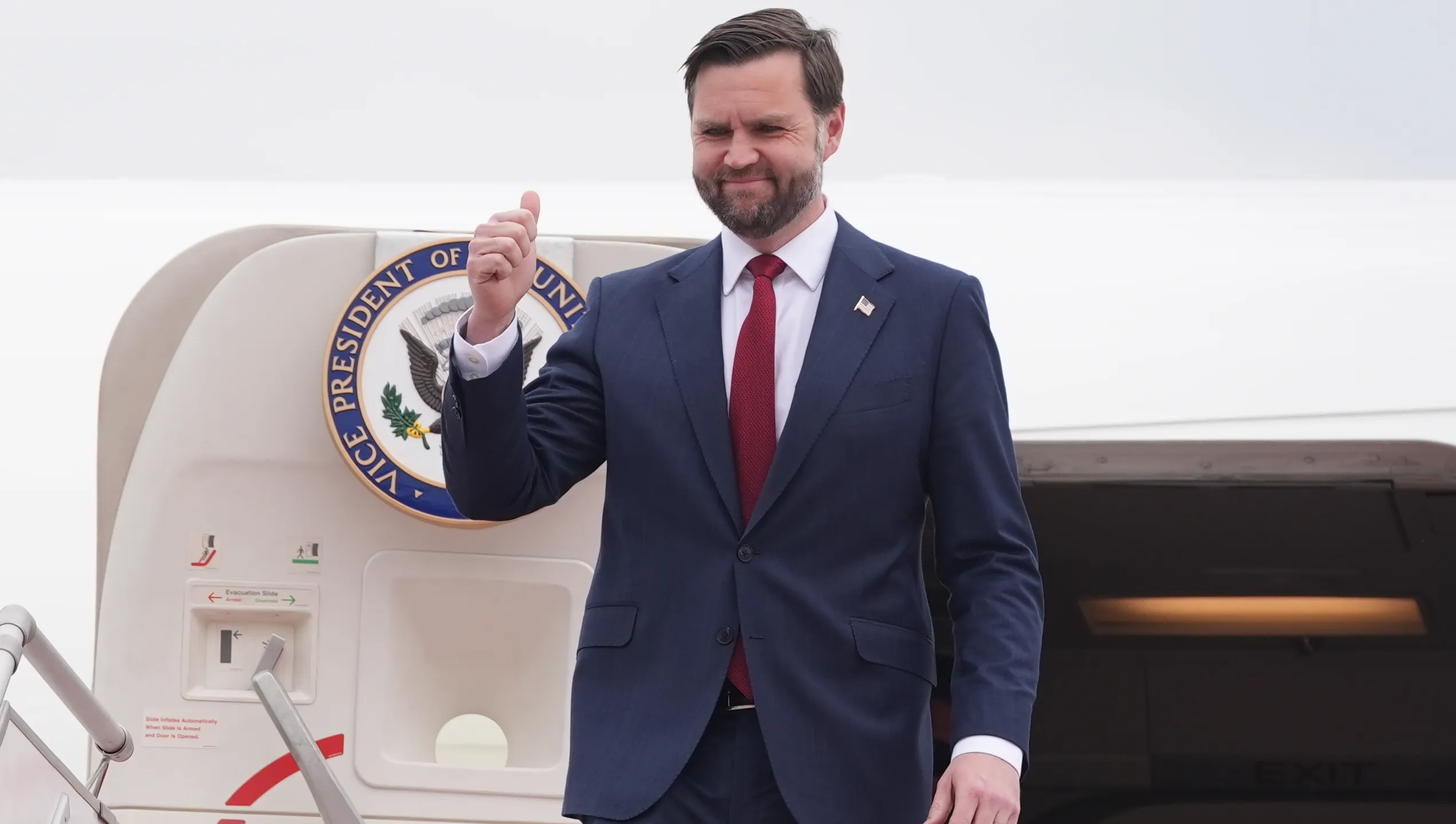
- U.S. delegation: Vice President JD Vance (accompanied by Special Envoy Steve Witkoff and Jared Kushner), leading a 300-member team.
- Iranian delegation: Parliament Speaker Mohammad Bagher Ghalibaf, a former Revolutionary Guards commander.
- Moderator: Pakistan, represented by Field Marshal Asim Munir and Foreign Minister Mohammad Ishaq Dar.
Structure and Duration
The talks lasted 21 hours across three rounds. The first round was conducted indirectly via Pakistan’s mediation; the second and third rounds were direct face-to-face negotiations — an extraordinary development given the two nations’ nearly 47-year estrangement.
Outcome
The teams reportedly agreed on most points of a proposed 10-point ceasefire framework. The two remaining sticking points were:
- The Strait of Hormuz — Iran demanded a linked timeline between Strait reopening and U.S. troop withdrawal from the region.
- Iran’s nuclear program — Washington and Tehran remained far apart on the scope, timeline, and verification mechanisms for any nuclear commitments.
No formal agreement or memorandum of understanding was signed. A second round of talks was expected.
9. The Strait of Hormuz: The Deal-Breaker Issue
No issue has been more persistently central to the 2026 negotiations than the Strait of Hormuz. Understanding the Strait’s significance — and why it has become the primary bargaining chip — is essential.
What Is the Strait of Hormuz?
The Strait of Hormuz is a narrow waterway — only about 21 miles wide at its narrowest point — between the Persian Gulf and the Gulf of Oman. Before the 2026 war, it was the world’s single most important oil chokepoint:
- Approximately 25% of the world’s seaborne oil trade passed through it.
- Around 20% of global LNG was exported through the Strait.
- Any disruption to Hormuz immediately affects energy prices globally.
Iran’s Leverage and America’s Response
By closing the Strait, Iran deployed its most powerful economic weapon. The IRGC boarded merchant ships, laid mines, and made passage dangerous even for vessels Iran nominally permitted. The impact on global energy markets was immediate and severe.
On April 13, the U.S. responded with a naval blockade of Iranian ports — creating a “dual blockade” that brought the region’s maritime commerce to a near standstill and tightened economic pressure on Iran.
The Negotiations
As of May 23, Trump announced that a deal was “largely negotiated” and would include reopening the Strait. The proposed framework reportedly includes:
- Iran clearing the mines it deployed in the Strait.
- Iran ceasing to control traffic through the waterway.
- The U.S. lifting its counter-blockade of Iranian ports.
- Iran receiving some frozen asset releases as part of a phased deal.
However, Iran’s state media quickly disputed Trump’s characterization, signaling Tehran intended to maintain control over the Strait as leverage in ongoing negotiations.
10. The Nuclear Question
The Iranian nuclear program is simultaneously the deepest fault line in the negotiations and the original justification for the entire war.
What the US Wants
Trump has been unequivocal: Iran must understand it “cannot develop or procure a Nuclear Weapon or Bomb.” The U.S. demands include:
- A complete halt to uranium enrichment.
- Surrender of Iran’s existing stockpile of highly enriched uranium.
- Comprehensive international verification and inspections.
- A binding, permanent legal framework — not a temporary executive agreement of the JCPOA type.
What Iran Has Offered
Iran has been willing to:
- Pause new enrichment activities during the negotiation period.
- Provide verbal commitments about the scope of concessions it is willing to make on enrichment suspension.
- Enter into negotiations over the future of its nuclear program in the 30-60 day period following any initial MOU.
Critically, as of May 24, Iran has not agreed to surrender its HEU stockpile — a core U.S. demand. A senior Iranian source told Reuters that the nuclear issue was not part of the preliminary MOU being negotiated.
This gap is not trivial. Highly enriched uranium is the most direct pathway to a nuclear weapon. The U.S. wants it gone; Iran regards it as a fundamental security asset and domestic political symbol.
11. Sanctions, Frozen Assets & Reconstruction
The economic dimensions of the negotiations are as complex as the military ones.
Frozen Iranian Assets
Iran has billions of dollars in assets frozen under U.S. and international sanctions — a figure that ballooned during the Trump administration’s “maximum pressure” campaign from 2018 onward. According to the Financial Times, a potential deal would:
- Ease sanctions on Iran.
- Unfreeze Tehran’s overseas assets.
- Provide a framework for further sanctions relief as Iran verifiably implements its commitments.
The U.S. Position on Sanctions
The U.S. has been clear that sanctions relief can only be implemented after verifiable implementation of Iran’s commitments — not promised in advance. This “sanctions-for-compliance” sequencing has been a perennial sticking point in every U.S.-Iran nuclear negotiation since 2013.
Post-War Reconstruction
Iran has suffered enormous civilian and infrastructure damage. Oil facilities, power plants, bridges, and urban infrastructure have been destroyed. Any durable peace that Iran’s leadership can sell domestically needs to include a credible path to reconstruction financing — likely involving access to frozen assets and lifting of economic sanctions.
12. Pakistan’s Role as Peace Broker
One of the most extraordinary features of the 2026 US-Iran negotiations has been the emergence of Pakistan as the indispensable mediator — a role traditionally held by Qatar and Oman, both of which were sidelined when Iran retaliated against their infrastructure.
Why Pakistan?
Pakistan fits the mediator role for several converging reasons:
- It does not recognize Israel, removing Iran’s main objection to an intermediary.
- It shares a 900-kilometer border with Iran and has longstanding bilateral ties.
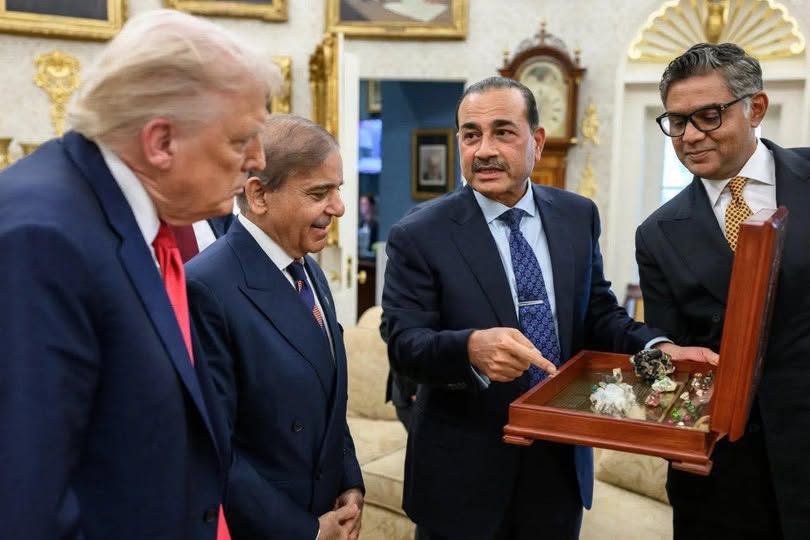
- It has cultivated an exceptional personal relationship between Field Marshal Asim Munir and President Trump — Munir was hosted at the White House in June 2025, the first such meeting with a senior Pakistani official.
- Pakistan nominated Trump for the Nobel Peace Prize after the 2025 India-Pakistan ceasefire — a calculated act of flattery that built enormous goodwill in the White House.
What Pakistan Has Done
- Hosted the March 29 regional foreign ministers’ meeting with Saudi Arabia, Egypt, and Turkey.
- Co-signed a joint five-point peace plan with China on March 31.
- Brokered the April 8 ceasefire.
- Hosted the historic Islamabad Talks of April 11-12.
- Conducted continuous shuttle diplomacy through May 2026, with Munir personally visiting Tehran and meeting with Iranian President Pezeshkian, Foreign Minister Araghchi, and Parliament Speaker Ghalibaf.
As of May 24, Pakistan’s Defense Minister Khawaja Asif stated that mediation efforts were “slowly moving closer to a positive result.”
13. Global Stakes: Oil, Economy & Geopolitics
The 2026 Iran War and its negotiations are not a bilateral affair — the consequences reverberate across every corner of the global economy and geopolitical order.
Energy Markets
The Hormuz closure triggered the worst global energy crisis in decades, according to Gulf states. Before the ceasefire, Brent crude had soared sharply above $100/barrel. The IEA’s 32 member countries released 400 million barrels of emergency oil reserves in an attempt to stabilize prices — the largest coordinated strategic reserve release in history.
Inflation and the U.S. Economy
Higher energy prices fed directly into U.S. consumer inflation, creating political pressure on the Trump administration and raising the prospect of Federal Reserve interest rate increases that could slow U.S. economic growth.
China’s Stake
China, which imports most of its oil and gas through the Strait of Hormuz, faces an acute economic emergency. Beijing’s support for Pakistan’s mediation and co-signing of the five-point peace plan reflects its urgent interest in a rapid resolution. China’s economic leverage over Iran — as Tehran’s largest trading partner — also gives it quiet influence in the negotiations.
European and Allied Response
The UK permitted the U.S. to use the Diego Garcia base (British Indian Ocean Territory) and RAF Fairford for “defensive operations” supporting the military campaign — a significant decision that created political controversy in Britain. The UK Parliament’s House of Commons Library has been tracking the negotiations closely, reflecting the European stakes in any resolution.
14. What a Final Deal Might Look Like
Based on available reporting from Axios, CNN, CNBC, and the Financial Times, a final US-Iran agreement would likely include:
- Full reopening of the Strait of Hormuz with no Iranian-imposed tolls or access restrictions.
- Iran mine-clearing of the Strait under international verification.
- Lifting of the U.S. naval blockade of Iranian ports.
- Unfreezing of Iranian overseas assets, phased with verifiable implementation.
- A framework for nuclear negotiations — not immediate dismantlement, but a structured 60-day process for Iran to agree to monitored limits on enrichment.
- A ceasefire in Lebanon ending the Israel-Hezbollah conflict.
- U.S. troop drawdown from the region, tied to Iranian compliance milestones.
- Sanctions relief, graduated and tied to Iran’s verifiable commitments.
This structure would represent a significant diplomatic achievement — not a permanent resolution of the nuclear issue, but a durable framework for continued negotiation under more stable conditions.
15. Obstacles to a Lasting Agreement
Several formidable obstacles stand between the current moment of “encouraging progress” and a durable peace deal.
The Nuclear HEU Gap
Iran’s unwillingness to surrender its highly enriched uranium is a fundamental obstacle. Without HEU transfer or verified destruction, any nuclear agreement will be viewed by many in Washington — and in Israel — as dangerously incomplete.
Domestic Politics in Both Countries
- In Iran, hardliners in the IRGC and the conservative political establishment oppose any deal that looks like capitulation to American military pressure. The new Supreme Leader needs to show domestic strength.
- In the U.S., some Republican senators have expressed concerns that a deal with Iran would signal “American weakness.” Trump must balance his deal-making instincts against the hawkish wing of his own party.
Israel’s Position
Israel, whose strikes on Iran launched the entire conflict, has its own set of demands — particularly regarding Iran’s nuclear program and the Israel-Hezbollah ceasefire provisions. Israel’s consent to any framework is effectively a necessary condition for a deal to hold, and Tel Aviv has historically been willing to disrupt diplomatic processes it views as insufficiently robust.
Trump’s Unpredictability
The Trump administration’s approach to foreign policy has been characteristically volatile. As Axios noted, Trump and his advisers “thought they were close to a deal several times” at earlier stages of the war — only to have each of those moments fail to materialize. Overconfident announcements from the president can actually complicate negotiations by creating pressure that neither side can manage.
Verification
Any nuclear agreement requires credible verification mechanisms. Iran has historically resisted intrusive inspection regimes, while the U.S. and Israel have insisted that verification is non-negotiable. Designing an inspection architecture both sides can accept is a technically and politically complex challenge.
16. Conclusion
The 2026 US-Iran negotiations represent one of the most consequential diplomatic processes of the 21st century. They emerged from a war that neither side fully anticipated would produce such catastrophic economic and human costs — a conflict that killed thousands, triggered the worst global energy crisis in decades, and threatened to metastasize into a broader regional conflagration.
Both sides came to the table for rational but distinct reasons: the U.S. because the war’s domestic political and economic costs were mounting faster than its strategic benefits; Iran because its military infrastructure had been devastated and its economy could not sustain indefinite confrontation.
As of May 24, 2026, a deal is closer than at any previous point. A two-phase framework centered on reopening the Strait of Hormuz, freezing the nuclear standoff, and establishing a structured 30-60 day process for comprehensive talks is within reach. Pakistan’s extraordinary mediation, the China-Pakistan five-point plan, and months of painstaking shuttle diplomacy by Field Marshal Munir have built the architecture for agreement.
Yet the core issues — Iran’s HEU stockpile, the ultimate status of its nuclear program, and the long-term regional security architecture — remain unresolved. A final deal is possible. It is not yet certain. What is certain is that the world is watching the outcome of these negotiations with an urgency it reserves for history-defining moments.
17. Frequently Asked Questions (FAQ)
Q: Why did US-Iran negotiations start in 2026?
A: The 2026 negotiations were driven by the human, economic, and military costs of the war that began on February 28, 2026. Both the U.S. and Iran faced powerful domestic and economic pressures to reach a settlement — the U.S. from rising inflation and public opposition to the war, Iran from the devastation of its military infrastructure and economy.
Q: What are the main issues in the US-Iran negotiations 2026?
A: The primary issues are: (1) reopening the Strait of Hormuz; (2) Iran’s nuclear program and its HEU stockpile; (3) Iran’s ballistic missile program; (4) U.S. sanctions and frozen Iranian assets; (5) a Lebanon-Hezbollah ceasefire; and (6) a long-term regional security framework.
Q: Who is mediating the US-Iran talks in 2026?
A: Pakistan is the primary mediator, led by Field Marshal Asim Munir. China co-signed a five-point peace plan with Pakistan and provides background support. Qatar and Oman, the traditional mediators, were sidelined when Iran targeted their infrastructure in retaliation for the initial U.S.-Israeli strikes.
Q: Did the US and Iran reach a deal in 2026?
A: As of May 24, 2026, a deal has not been finalized. President Trump declared a deal was “largely negotiated,” but Iran disputed his characterization. Both sides have made progress on a two-phase MOU framework, but key gaps remain on the nuclear issue and Strait of Hormuz control.
Q: What is the Strait of Hormuz’s role in the 2026 Iran negotiations?
A: The Strait is Iran’s primary bargaining chip — closing it gave Tehran immediate economic leverage over the U.S. and the global economy. Reopening the Strait is the central demand of U.S. negotiations, and any deal’s first phase is expected to address Hormuz as the most immediately actionable issue.
Q: What happened at the Islamabad Talks in April 2026?
A: Held on April 11-12, 2026, the Islamabad Talks were the highest-level direct US-Iran talks since 1979. Led by U.S. Vice President JD Vance and Iranian Parliament Speaker Ghalibaf, they lasted 21 hours but failed to produce a signed agreement, with the Strait of Hormuz and the nuclear program remaining the key sticking points.
Q: What does Iran want from the 2026 negotiations?
A: Iran’s primary demands include: unfreezing of its overseas assets, lifting of U.S. sanctions, a U.S. military drawdown from the region, recognition of its right to a nuclear program (without weaponization), and international legitimacy for its new post-Khamenei leadership.
Q: What is the global economic impact of the 2026 Iran War on negotiations?
A: The Hormuz closure triggered the worst energy crisis in decades. Oil prices exceeded $100/barrel, U.S. consumer inflation spiked, and the IEA released 400 million barrels of emergency reserves. These economic costs accelerated both sides’ motivation to negotiate — particularly the Trump administration’s domestic political vulnerability on inflation.