
Last Updated on 2 months ago by TodayWhy Editorial
The Strait of Hormuz — the narrow waterway between Iran and Oman — carries about a fifth of the world’s seaborne oil. When Iran effectively closed it at the start of the 2026 war, the forecasts were apocalyptic. Analysts talked about $150 a barrel. Some said $200. A 1973-style oil shock, on steroids.
It did not happen.
Strait of Hormuz oil prices did spike hard in March. Then they came all the way back down — to pre-war levels — and even now, with the war resuming and a naval blockade back in force, Brent sits only modestly above where it was before a single bomb fell.
That is the real story, and it is a far more interesting one than the doom forecasts. Here is what actually moved the oil price, what didn’t, and why the biggest threat to your fuel bill is no longer the bombs.
Strait of Hormuz oil price tracker: the full round trip
The numbers tell the story better than any argument:
| Date | Brent crude | What moved it |
|---|---|---|
| Late Feb 2026 | ~$72 | Pre-war baseline |
| Early March | $100–$114 | Iran closes the strait; tanker attacks begin |
| Mid-March | Above $102 | Largest US strike wave; Gulf producers cut output |
| Early April | Above $109 (dated Brent past $140) | Peak panic — highest since 2008 |
| April 8 | ~$92 (−16% in a day) | Pakistan-brokered ceasefire |
| June 7 | ~$93 | Ceasefire holding, barely |
| Mid-June | Back to pre-war levels | The 14-point MOU is signed; strait reopens |
| Late June | ~$73 | Traffic resumes; risk premium collapses |
| July 13 | ~$83 (+9.7% in a day) | Blockade reinstated; Trump announces a 20% toll |
| Aug 3 | ~$83.51 Brent / ~$79.87 WTI | Trump pauses planned strike after Saudi, UAE, Qatar appeals; new Iran talks announced |
| Aug 5 | ~$79.43 Brent / ~$75.27 WTI | US-Iran-Oman negotiate 60-day interim deal to manage strait traffic; Houthis attack Saudi vessel in Red Sea same day, partly offsetting the relief |
| Date | Brent crude | What moved it |
|---|---|---|
| Aug 13–14 | ~$83–$88 | Blockade enforcement continues; Trump signals territory claim |
| Aug 18–20 | $91–$94 | Trump posts “NEW U.S. Territory” map; no talks declared; traffic hits new lows |
| Aug 21–22 | ~$93–$94 | Traffic remains near single digits; war-risk costs stay elevated |
By 21–22 August 2026 Brent was trading around $93–94 — roughly 30% above the pre-war baseline of ~$72, but still far below the $150–$200 forecasts of March. The gap between the oil price and the near-collapse of shipping traffic remains the central puzzle of the crisis.
The quiet recovery on the southern lane
One under-appreciated reason oil prices have not climbed higher is that the U.S. Navy has partially restored a working export channel.
Kpler data for the two weeks to mid-August show that more than 80% of commercial vessels crossing the strait used the southern corridor through Omani waters — the lane protected by American escorts. A month earlier almost no traffic used that route. The U.S. operation, which began in May, was moving roughly 5 million barrels per day through the protected southern lane by July. Combined with oil diverted around the high-risk zone, total volumes leaving the Gulf reached approximately 15 million barrels per day in recent weeks, according to U.S. Energy Secretary Chris Wright — not far from the pre-war average of 20 million.
CENTCOM claims more than 1,000 safe transits so far. Recent American airstrikes reduced Iranian radar coverage, lowering the accuracy of drone and missile attacks. Successful hits on the southern route fell from at least 15 vessels in June to one in August (UKMTO figures).
The recovery is incomplete and expensive. Overall traffic remains a fraction of normal levels, war-risk premiums stay extreme, and several tankers (including ADNOC vessels) have still been struck. Major container lines continue to avoid the strait. Nevertheless, the ability to keep a substantial volume of oil moving under naval escort has capped the upside in crude prices and helps explain why the market has absorbed repeated escalations without returning to the panic levels of March and April.
Why the Strait of Hormuz closure did not push oil prices sky-high
Six things went right — or at least, went differently than expected.
1. OPEC+ kept opening the taps. The cartel approved output quota hike after output quota hike through the spring and summer. Every barrel added outside the Gulf chipped away at the shortage the market was pricing in.
2. The stranded tankers eventually moved. Millions of barrels sat floating in the Gulf for months, unable to transit. When the strait partially reopened, that backlog hit the market at once — a supply surge arriving at the worst possible moment for bulls.
3. Demand never fully recovered. High prices in March and April did what high prices do: they destroyed demand. By the time supply fears eased, buyers had already trimmed their needs.
4. Refiners quietly rewired their supply chains. This is the underrated one. Long-haul procurement forces buyers to commit weeks ahead, so refiners spent the spring structurally reducing their exposure to Middle Eastern crude. Those decisions do not reverse when the shooting stops. The market has permanently de-risked a little.
5. Traders learned the difference between two blockades. A US blockade of Iranian ports removes Iranian barrels. A closure of the strait removes Saudi, Emirati, Iraqi, Kuwaiti and Qatari barrels too. The first is a nuisance; the second is a catastrophe. It took the market a month to internalise that distinction — and once it did, each new escalation moved prices less. We break down that distinction in full in our explainer on what a US blockade of the Strait of Hormuz actually does.
6. Risk-premium fatigue. The tenth round of strikes simply does not frighten a trading desk the way the first did. As one market analyst put it after the July escalation, “a repeat of the earlier spike appears unlikely.”
But shipping never recovered — and that is the hidden cost
Here is what the calm oil price conceals. The strait is nowhere near normal.
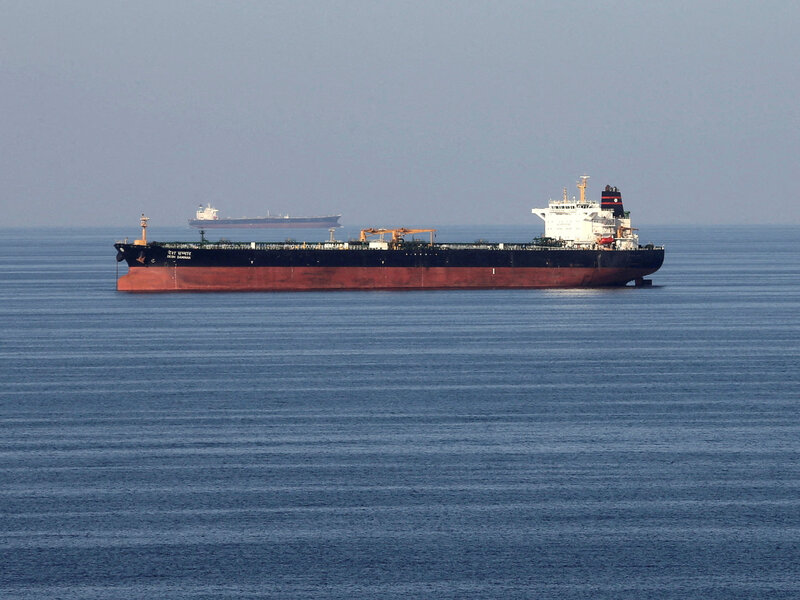
Before the war, roughly 100 ships crossed the Strait of Hormuz every day, about half of them oil tankers. After the June 17 reopening, only 513 ships transited in the first 18 days — an average of 28 a day. That is roughly a quarter of pre-war traffic, during the calmest stretch of the entire war.
Then it got worse. As strikes resumed in July, daily crossings fell into the single digits on some nights. Around 6,000 seafarers remain stranded in the Gulf, stuck aboard ships that cannot safely transit.
And the shipping lanes themselves have fractured. The central channel — where mines are most feared — is largely abandoned. Traffic now splits between a northern corridor through Iranian waters and a southern one through Omani waters under US escort, with Iran’s Revolutionary Guard threatening ships that use the wrong one. At least five commercial vessels have been attacked since the June ceasefire, including a Qatari LNG tanker set alight and a Saudi supertanker damaged mid-transit.
So the oil price is stable while the shipping system underneath it is broken. That gap is filled by insurance premiums, war-risk surcharges and longer routes — costs that reach consumers slowly, through freight rates rather than the oil futures screen.
The new price driver: tolls, not bombs
This is the part that changes the outlook, and it is why the July escalation matters more than the ones before it.
On July 13, Trump announced the US would reinstate its naval blockade of Iran, declare itself guardian of the strait, and collect 20% of the value of all cargo passing through in exchange for providing security. Brent jumped nearly 10% that day.
Run the arithmetic and you see why. At current prices, a 20% levy would cost roughly $32 million for a single supertanker — against previous Iranian transit charges of up to $2 million.
That is a sixteen-fold increase, and it is a fundamentally different kind of price pressure. A missile strike creates a temporary supply scare that decays. A permanent 20% tax on every barrel leaving the Gulf is a structural cost, and structural costs do not decay. They get passed to the consumer, forever.
Iran, for its part, intends to impose its own transit fees once the 60-day transition window closes. Two tollbooths, one strait. Whoever wins, shipping pays — and so does everyone who buys fuel. The legal question of whether either side may charge anything at all is one we examine separately in who owns the Strait of Hormuz.
By early August a third front had opened. Yemen’s Houthis — Iran’s ally — declared a maritime blockade against Saudi Arabia specifically and began targeting the pipeline that feeds Yanbu, the Red Sea port Saudi Arabia built its Hormuz workaround around. That is not a coincidental second crisis; it is an attack on the escape valve itself. We break down why that route matters so much, and why a Hormuz deal wouldn’t automatically fix it, in our explainer on why Red Sea tensions threaten to push fuel prices higher.
How the ceasefire collapsed
The oil market’s June optimism rested on a document that did not survive the summer.
The 14-point memorandum signed on June 17 formalised the ceasefire, ended the US naval blockade, reopened the strait and promised Iran a broad waiver on oil sanctions. It also left the central question — who polices passage — to be settled over 60 days.
It never was. Iran attacked commercial vessels; the US struck back; Iran hit US bases in Gulf states. After a third round, Washington revoked Iran’s licence to sell oil internationally, gutting the deal’s main economic concession, and Trump declared the ceasefire over.
The US position was never ambiguous. As Vice President JD Vance put it, “That artery has got to remain open.” The disagreement was never about whether the strait should be open. It was about who gets to say so — and who gets paid.
For the diplomacy that produced and then destroyed the deal, see our guides to the US-Iran negotiations and Pakistan’s role as broker.
Where oil prices go from here
Base case — the upper $70s to mid-$80s. As of early August, that band is holding: Brent has traded between roughly $76 and $84 through the first week of the month, moving on Hormuz diplomacy in one direction and Red Sea attacks in the other. Analysts expect Brent to hold in this band through late summer, with occasional spikes and dips. The war continues, the blockade holds, traffic stays depressed, and the market shrugs. This is simply the last three months, extended.
Bull case for prices — the tolls become real. If either a US 20% levy or an Iranian fee regime is actually enforced, the cost enters the price permanently rather than temporarily. This is now the most plausible route to sustained higher prices — not another airstrike.
Tail risk — mines. Iran has repeatedly named attacks on its coast and islands as the trigger for mining the strait. The reinstated blockade attacks its coast by definition. If Tehran mines Hormuz in response, traffic stops completely and the $130-plus forecasts finally come true. This has not happened in four and a half months of war. It remains the one scenario that would break the market’s composure.
The bottom line
The Strait of Hormuz closure was supposed to send oil prices sky-high and keep them there. Instead it produced a violent spike, a complete round trip, and a stubborn single-digit premium — while quietly breaking the shipping system that moves the oil.
The lesson is that markets adapt faster than governments escalate. But that adaptation has limits, and a 20% tollbooth on the world’s only exit from the Persian Gulf would test every one of them.
Frequently asked questions
How high did oil prices go during the Strait of Hormuz closure?
Brent crude climbed above $109 a barrel in early April 2026, with dated Brent briefly passing $140 — the highest since 2008. Prices then fell back to pre-war levels by mid-June and traded around $83 in mid-July.
Why didn’t oil hit $150 as forecast?
OPEC+ raised output quotas repeatedly, stranded tankers eventually released their cargoes, high prices destroyed demand, refiners structurally reduced their Middle East exposure, and traders learned that blockading Iran is not the same as closing the strait.
Is the Strait of Hormuz open now?
Effectively no. As of late August 2026 commercial transits average only a handful of vessels per day against a pre-war norm of more than 130. Independent trackers describe the waterway as closed or severely restricted on Day 174 of the disruption. Physical transit is still possible under extreme risk and restricted routing, but normal commercial use has stopped.
What would Trump’s 20% Hormuz toll cost?
At current prices, roughly $32 million for a single supertanker — compared with Iranian transit charges of up to $2 million. Unlike a temporary supply scare, a permanent levy would be passed through to consumers indefinitely.
What would actually send oil prices sky-high now?
Mining of the strait. Iran has named strikes on its coast and islands as the trigger, and the reinstated US blockade targets exactly that. A full mining event would halt traffic and push Brent well past $130.