
Last Updated on 5 months ago by TodayWhy Editorial
Explore the complete hantavirus map — from the United States and South America to Europe and Asia. Understand where cases occur, how live outbreak maps work, and how to protect yourself in high-risk regions.
1. What Is a Hantavirus Map and Why Does It Matter?
A hantavirus map is a geographic visualization that shows where hantavirus infections have been reported in humans, where rodent carriers (reservoirs) are known to live, and which regions are considered endemic for specific virus strains. These maps are produced by health agencies such as the CDC (Centers for Disease Control and Prevention), WHO (World Health Organization), ECDC (European Centre for Disease Prevention and Control), and PAHO (Pan American Health Organization).
Understanding a hantavirus map matters for several groups of people:
- Travelers planning outdoor or rural activities in endemic zones
- Healthcare providers who need to recognize exposure risk in patients
- Residents living near wilderness areas, farms, or aging buildings with rodent activity
- Researchers and public health officials monitoring disease trends
- Hikers, campers, and hunters operating in areas where deer mice and other rodent reservoirs are common
Because hantavirus can be fatal — with case fatality rates ranging from less than 1% to as high as 50% depending on the strain and region — knowing the geographic landscape of this disease is a genuine lifesaving tool.
2. Global Overview: Where Hantavirus Exists Worldwide
Hantavirus is a global zoonotic disease, meaning it circulates naturally in animal reservoirs (primarily rodents) and occasionally spills over into human populations. According to the WHO, an estimated 10,000 to over 100,000 hantavirus infections occur worldwide each year, with the largest burden concentrated in Asia and Europe.
At the broadest level, hantaviruses are divided into two major groups based on geography:
Old World Hantaviruses (Europe and Asia)
- Cause Hemorrhagic Fever with Renal Syndrome (HFRS) — a kidney-damaging illness
- Associated with rodent species such as bank voles, striped field mice, and brown rats
- Key strains: Hantaan, Seoul, Puumala, Dobrava-Belgrade
- Case fatality rate: less than 1% to 15%, depending on the strain
New World Hantaviruses (The Americas)
- Cause Hantavirus Cardiopulmonary Syndrome (HCPS) — a severe respiratory and cardiac illness
- Associated with deer mice, rice rats, and cotton rats
- Key strains: Sin Nombre, Andes, Black Creek Canal, Bayou
- Case fatality rate: up to 50% in the Americas for HPS cases
This geographic split is not just academic — it determines the type of illness a patient may develop, how it is diagnosed, and how it is clinically managed.
3. Hantavirus Map in the United States
The United States has maintained one of the most detailed hantavirus surveillance programs in the world. As of the end of 2023, 890 cases of hantavirus disease have been reported in the U.S. since surveillance began in 1993 — all laboratory-confirmed cases that include Hantavirus Pulmonary Syndrome (HPS) and non-pulmonary hantavirus infection.
Geographic Concentration
The U.S. hantavirus map clearly shows a strong western bias. The vast majority of American cases are clustered in:
- Four Corners region (Arizona, Colorado, New Mexico, Utah) — where the 1993 outbreak first brought the disease to national attention
- Montana, Wyoming, and the Dakotas — where deer mouse populations are dense
- California — 79 cases with determined county of exposure have been recorded between 1980 and 2024, representing 93 total cases in California residents
- Texas, Oklahoma, and Kansas — sporadic but consistent case reporting
Cases are far less common east of the Mississippi River, though they have been reported in nearly every state, underscoring that no region is entirely risk-free.
The Deer Mouse Connection
The Sin Nombre virus is the predominant cause of HPS in the United States. Its primary reservoir is the deer mouse (Peromyscus maniculatus), a species found throughout North America. Because the deer mouse’s range is vast, the geographic footprint of hantavirus risk in the U.S. is similarly broad — but case density follows the mouse’s habitat preferences: high-elevation forests, shrublands, and agricultural fields in the American West.
Why County-Level Data Is Restricted
The CDC’s public hantavirus map displays data at the state level only. County-level data is intentionally withheld to protect the identities of individuals who contracted hantavirus, given the disease’s rarity and the potential for affected individuals to be identified. Anyone needing local information should contact their state or local health department.
Seasonality on the U.S. Map
Case data from California, echoed by national trends, shows that infections peak during spring and summer, when people engage in outdoor activities and are more likely to encounter rodent-contaminated environments. This seasonal pattern is an important layer of context when interpreting any U.S. hantavirus distribution map.
4. Hantavirus Distribution in South America
South America carries the heaviest mortality burden from hantavirus globally. In 2025 alone, eight countries in the Americas reported 229 cases and 59 deaths, yielding a case fatality ratio of 25.7%, according to WHO surveillance data.
The Andes Virus: A Uniquely Dangerous Strain
The Andes virus (ANDV) is the most significant hantavirus strain in South America. It is endemic primarily in Argentina and Chile, with detections also in Uruguay, Paraguay, and Bolivia. What makes Andes virus stand out — and what makes South American hantavirus maps particularly important to monitor — is that it is the only hantavirus strain known to spread from person to person, though this transmission requires close and prolonged contact.
High-Risk Countries and Regions
The hantavirus map of South America identifies several chronically affected zones:
- Argentina: The Patagonian region, particularly the provinces of Río Negro, Neuquén, and Chubut, reports the majority of Argentine cases
- Chile: The lake district and rural southern zones are consistently flagged as endemic
- Brazil, Paraguay, Uruguay: Cases reported annually, with Sin Nombre-related strains and local variants circulating in rodent populations
- Bolivia and Peru: Surveillance is more limited, making the true geographic distribution harder to map
Travelers and outdoor workers (naturalists, researchers, conservation workers) in these areas face the highest risk, particularly if working in or near long-grass meadows, forest edges, or rural buildings.
5. Europe and Asia: Old World Hantavirus Zones
Despite causing a different clinical syndrome than in the Americas, hantavirus is a significant public health problem in Europe and Asia — carrying the world’s highest case volumes.
Europe
The European hantavirus map centers on two major strains:
Puumala virus (PUUV) is the most commonly identified hantavirus in Europe, particularly in:
- Scandinavia (Finland, Sweden, Norway)
- Belgium, France, Germany, and parts of Russia
- Its reservoir is the bank vole (Myodes glareolus)
Dobrava-Belgrade virus circulates across the Balkans and Central Europe, with a more severe disease profile.
In 2023, 1,885 hantavirus infections were reported in the European Region (0.4 per 100,000 people), which the ECDC noted as the lowest rate observed between 2019 and 2023.
Infection risk in Europe spikes during forest and rural outdoor activities, especially in years when rodent populations boom due to oak and beech mast years (high acorn/seed production).
Asia
Asia — particularly China and the Republic of Korea — accounts for a substantial portion of the world’s annual hantavirus burden. Hantaan virus causes HFRS in these regions, with case counts in the tens of thousands annually, though incidence has declined in recent decades due to improved vaccination programs in China.
The Seoul virus is globally unique because its reservoir — the common brown rat (Rattus norvegicus) — is distributed worldwide, including in urban environments. This makes Seoul virus a potential hantavirus risk essentially everywhere, though it causes relatively mild HFRS.
6. Hantavirus Live Map: Real-Time Outbreak Tracking
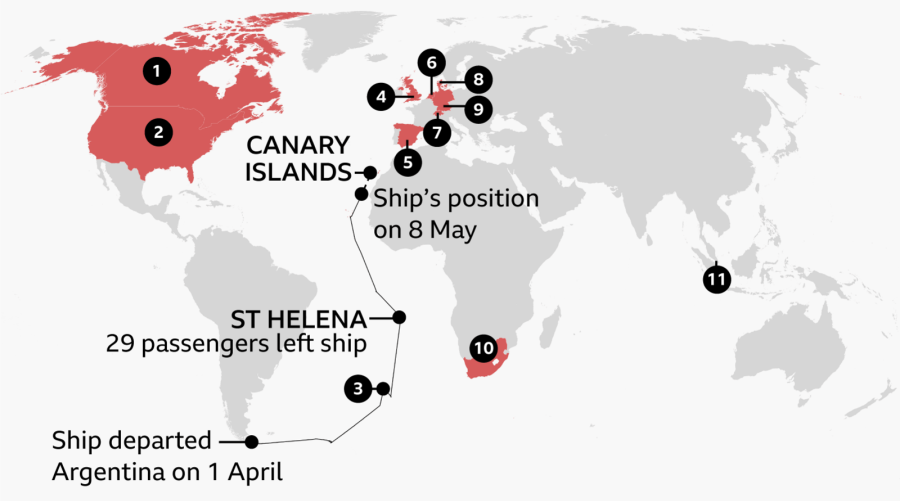
A hantavirus live map provides real-time or near-real-time visualization of active hantavirus events, suspected cases, and confirmed cases as they are reported by health authorities. These tools became especially prominent during the 2026 cruise ship cluster, which involved Andes virus cases linked to passengers from multiple countries.
What Live Hantavirus Maps Show
Modern hantavirus live maps typically display:
- Confirmed cases: Countries or regions with laboratory-confirmed hantavirus infection
- Suspected cases: Individuals under investigation or showing compatible symptoms
- Deaths: Fatalities attributed to the outbreak
- Contacts under monitoring: People who may have been exposed but have not yet tested positive
- Color coding: Red for confirmed, yellow for suspected, grey for contacts being monitored
- Timeline: A chronological log of WHO and national health authority announcements
Official Sources for Live Tracking
The most authoritative live data sources for hantavirus mapping include:
- WHO Disease Outbreak News (DON): who.int
- CDC Hantavirus Cases Page: Updated periodically with surveillance totals
- ECDC Communicable Disease Threats Report: Weekly European surveillance data
- PAHO/WHO Regional Updates: Americas-specific epidemiological alerts
Several independent tracking sites aggregate and visualize WHO and CDC data in interactive map formats. These can be useful tools, but users should always verify information against the primary official sources listed above.
Limitations of Live Maps
It is important to understand what hantavirus live maps cannot show:
- Underreporting: In regions with limited healthcare infrastructure, many cases are never diagnosed or reported. Actual case counts are likely higher than official figures in many countries.
- Surveillance variability: Countries publish different surveillance measures and timelines, making cross-country comparisons difficult.
- Rodent distribution: A hantavirus map shows human cases, not rodent carrier populations. The absence of human cases does not mean an area is rodent-free or risk-free.
7. How to Read a Hantavirus Distribution Map
Whether you are looking at the CDC’s state-level map or an international distribution chart, understanding the key elements helps you extract the most relevant information.
Case Count vs. Incidence Rate
A map showing raw case counts may make densely populated countries appear more affected than they are. An incidence rate (cases per 100,000 population) is a more meaningful comparison. Always check which metric a map is using.
Cumulative vs. Annual Data
CDC’s U.S. data represents cumulative cases since 1993. European ECDC data is typically annual. WHO outbreak maps often show event-specific clusters. Mixing these figures leads to misinterpretation.
Rodent Range Overlays
The most informative hantavirus maps overlay rodent species distribution alongside human case data. This helps explain why certain counties or regions have higher risk even if no human cases have been reported yet.
Temporal Patterns
Seasonal overlays reveal that spring and summer are peak periods in the Northern Hemisphere, while the Southern Hemisphere’s southern cone (Argentina, Chile) sees peaks during austral summer months.
8. High-Risk Activities and Environments by Region
Understanding the hantavirus map also means understanding who is most at risk and why.
United States: Activities That Elevate Risk
- Cleaning cabins, barns, or storage buildings that have been closed for winter
- Camping or hiking in areas where deer mice are present
- Working in agricultural settings
- Opening up vacation homes in rural mountain areas
- Disturbing rodent nests in attics or crawlspaces
South America: Field Work and Ecotourism
- Birdwatching, wildlife photography, and nature tourism in Patagonia and the Andean foothills
- Agricultural fieldwork during harvest seasons
- Rural overnight camping or stays in remote lodges
Europe: Forest and Outdoor Recreation
- Activities in forests with high vole populations, especially in banner years for rodent populations
- Camping in Scandinavian or Eastern European forests
- Hunting or trapping in PUUV-endemic areas
Asia: Urban and Rural Exposure
- Farming in rice-growing regions of China and Korea
- Contact with brown rats in urban environments (Seoul virus risk)
- Military exercises or construction work in forested, rodent-rich environments
9. Key Hantavirus Strains and Their Geographic Range
| Strain | Geographic Range | Reservoir Host | Syndrome | CFR |
|---|---|---|---|---|
| Sin Nombre virus | North America (primarily western U.S.) | Deer mouse | HPS/HCPS | ~35–38% |
| Andes virus | Argentina, Chile, southern South America | Long-tailed pygmy rice rat | HCPS | Up to 50% |
| Hantaan virus | China, Korea, Russia (Far East) | Striped field mouse | HFRS | 5–15% |
| Seoul virus | Worldwide (follows Rattus norvegicus) | Brown rat | HFRS (mild) | <1% |
| Puumala virus | Europe (especially Scandinavia, Russia) | Bank vole | HFRS (nephropathia epidemica) | <1% |
| Dobrava-Belgrade virus | Balkans, Central Europe | Yellow-necked mouse | HFRS | 5–12% |
| Bayou virus | Southeastern U.S. | Rice rat | HPS | ~35% |
| Black Creek Canal virus | Florida | Cotton rat | HPS | Rare; limited data |
This table underscores a critical insight for interpreting any hantavirus map: geography determines not just where risk exists, but what kind of disease is at risk.
10. Prevention Tips Based on Your Location
No matter where the hantavirus map places you, a consistent set of prevention principles applies — with some geographic adjustments.
Universal Precautions
- Never dry sweep rodent droppings; always wet surfaces first with a disinfectant solution (1 part bleach to 10 parts water is a standard recommendation)
- Ventilate enclosed spaces for at least 30 minutes before entering rodent-infested areas
- Wear gloves and an N95 respirator when cleaning areas with visible rodent activity
- Seal food in rodent-proof containers
- Block entry points in buildings using steel wool, caulk, and hardware mesh
In the American West (Sin Nombre Virus Zone)
- Inspect and clean cabins before staying in them after extended closure
- Keep firewood stacked away from homes; do not store it indoors
- Set traps (with care) if mice are detected near living areas
- Avoid handling wild rodents
In South America (Andes Virus Zone)
- Follow heightened caution given the Andes virus’s limited person-to-person transmission capability
- Practice rigorous hand hygiene and wear PPE in field settings
- Consult local health advisories before entering endemic rural zones
In Europe (Puumala/Dobrava Zone)
- Be especially cautious in forests with active rodent cycles
- Avoid sleeping directly on forest floors without appropriate barriers
- Be aware that risk spikes significantly during rodent population boom years
11. Frequently Asked Questions
Is there a real-time hantavirus live map I can access?
Yes. Several independent tracking sites aggregate and visualize WHO and national health authority data in interactive formats. However, for the most accurate and verified information, always consult official sources: the CDC, WHO Disease Outbreak News, and ECDC.
Does the hantavirus map change frequently?
The U.S. CDC map is updated annually with final surveillance data. International WHO data is updated event-by-event during active outbreaks. During significant events — such as the 2026 cruise ship cluster — live maps are updated within hours of new announcements.
Can hantavirus spread to Europe from South America?
Individual cases can and do appear outside endemic zones when travelers carry the infection. The 2026 outbreak confirmed this. However, community transmission in non-endemic regions is not expected because the rodent reservoirs for strains like the Andes virus are not present in Europe, North America, or Asia.
Which U.S. states have the most hantavirus cases?
Based on CDC data, the highest case counts since 1993 are concentrated in New Mexico, Colorado, Arizona, Utah, California, Montana, and Texas — the core of the Four Corners endemic zone and surrounding western states.
What is the difference between HPS and HFRS on a hantavirus map?
The geography of a hantavirus map directly corresponds to the disease type: regions in the Americas are associated with HPS (Hantavirus Pulmonary Syndrome), which attacks the lungs. Regions in Europe and Asia are associated with HFRS (Hemorrhagic Fever with Renal Syndrome), which damages the kidneys. Both can be life-threatening without intensive medical care.
Is there a vaccine against hantavirus?
As of 2026, there is no licensed hantavirus vaccine available in the United States or most of the world. China has developed vaccines targeting Hantaan and Seoul viruses, which are used domestically in high-burden regions. In all other areas, prevention through rodent avoidance is the only currently available protection.
Summary
A hantavirus map is more than a simple plot of data points — it reflects the ecological relationship between rodent species, their habitats, and the human communities that share that landscape. The disease looks different across geographic zones: life-threatening lung damage in the Americas, kidney failure in Europe and Asia, and anywhere the Andes virus circulates, a rare but real person-to-person transmission risk.
The most important takeaway from any hantavirus live map or distribution chart is this: hantavirus risk is local, seasonal, and tied to specific rodent species. Understanding your region’s risk profile — and taking targeted, practical prevention steps — is the most effective tool available for reducing exposure.
Sources: U.S. Centers for Disease Control and Prevention (CDC); World Health Organization (WHO); European Centre for Disease Prevention and Control (ECDC); Pan American Health Organization (PAHO); California Department of Public Health (CDPH); National Center for Biotechnology Information (NCBI/PMC).