
Last Updated on 5 months ago by TodayWhy Editorial
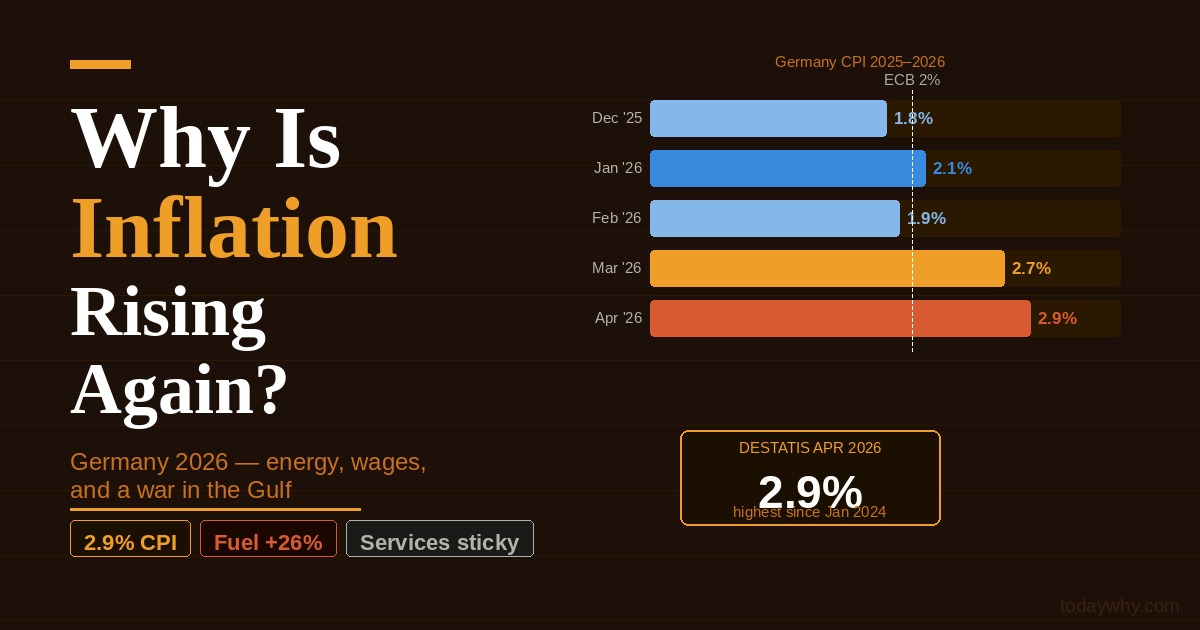
For a brief moment at the end of 2025, it looked like Germany’s inflation problem was finally behind it. In December 2025, the country’s consumer price index fell to 1.8% — below the European Central Bank’s symbolic 2% target for the first time in years. Economists breathed a cautious sigh of relief. Bundesbank officials spoke carefully of a “normalisation.”
Then came February 28, 2026.
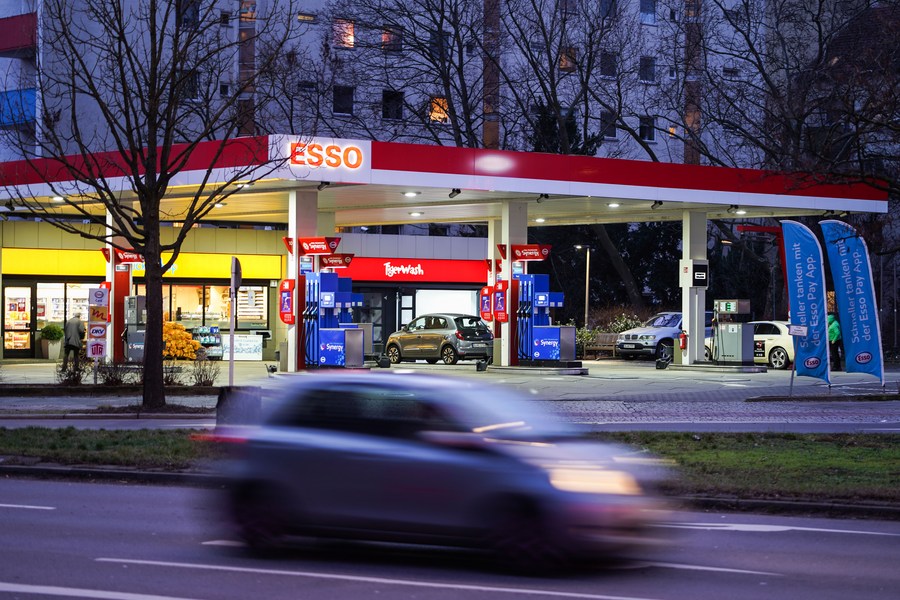
US and Israeli forces launched strikes against Iran, triggering a conflict that partially closed the Strait of Hormuz — the narrow waterway through which roughly 25% of the world’s traded oil passes. Within weeks, oil prices surged past $100 per barrel. Petrol prices at German forecourts climbed above €2 per litre for the first time since the Russia-Ukraine energy crisis of 2022. And Germany’s inflation rate, which had been drifting quietly toward its target, reversed course sharply.
By March 2026, inflation stood at 2.7%. By April, it had reached 2.9% — the highest level recorded since January 2024.
This is the story of why prices in Germany are rising again, who is feeling it most, and what the government is doing about it.
The Number on the Dashboard: What 2.9% Actually Means
When economists and statisticians say inflation is 2.9%, they mean that a basket of goods and services that cost €100 in April 2025 now costs €102.90 in April 2026. That might not sound dramatic. But inflation compounds, and it builds on earlier price increases.
Germany’s consumer prices are measured monthly by the Federal Statistical Office (Destatis), which tracks changes across a defined basket of goods and services — groceries, rent, energy, transport, insurance, restaurants, healthcare, clothing, and more. The overall rate is the weighted average of all of these moving at different speeds.
What makes the 2026 picture unusual is not just the headline number, but the combination of forces driving it. There are two distinct inflations happening simultaneously in Germany right now — one external shock hitting from outside the country, and one structural pressure building from within — and they are feeding off each other.
Driver #1 — The Iran War and the Energy Price Shock
The most visible and immediate cause of Germany’s inflation resurgence in 2026 is energy.
The US-Israeli military campaign against Iran that began in late February 2026 triggered what the International Energy Agency (IEA) has described as the largest oil supply disruption in the history of global energy markets. Attacks on fossil fuel infrastructure in the Persian Gulf, combined with the near-closure of the Strait of Hormuz by Iranian forces, sent crude oil markets into a historic shock. Brent crude futures surged above $100 per barrel in late April and early May 2026 — levels not seen since 2022.
Germany does not source large volumes of oil directly through the Strait of Hormuz. But global oil markets are priced as a single market: a supply disruption anywhere raises prices everywhere. The country felt the impact almost immediately.
What the numbers show:
According to Destatis official data, energy prices in Germany were 10.1% higher in April 2026 compared to April 2025. Within that category, motor fuels — petrol and diesel — rose by 26.2% year on year. Light heating oil prices had already surged 44.4% by March. These are not gradual, structural shifts — they are the sharp, acute effect of a geopolitical shock landing on consumer prices within weeks.
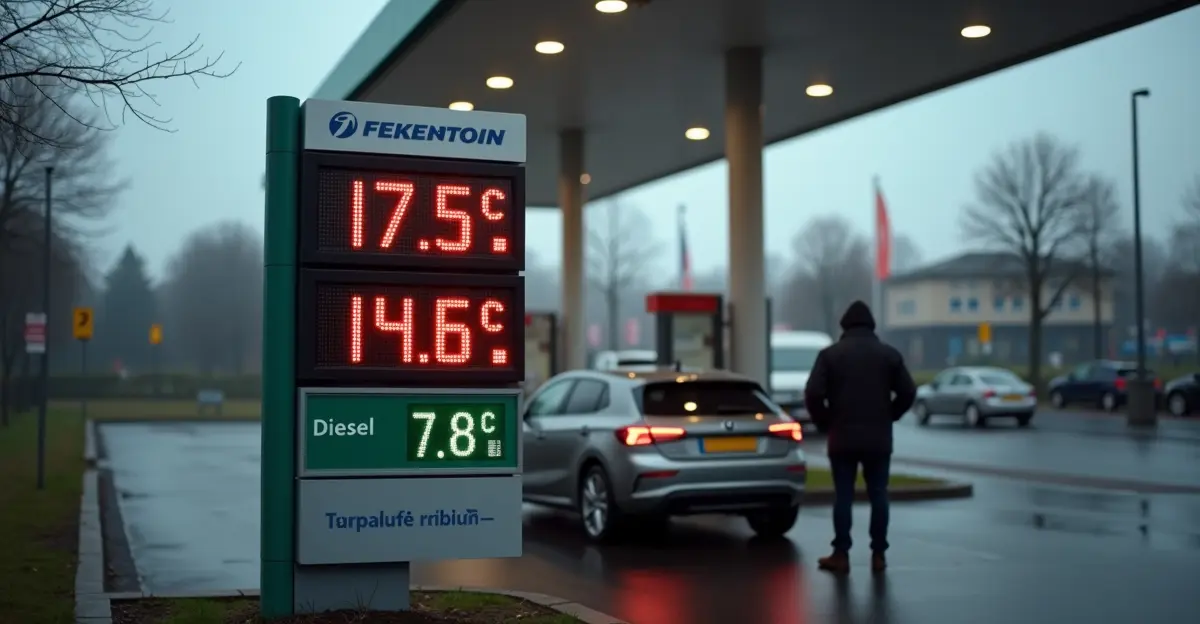
By mid-March 2026, photographs of Berlin petrol stations showing E10 above €2.10 per litre were circulating widely on German social media. The government moved quickly: on March 16, it introduced emergency regulations limiting petrol stations to one price increase per day, after data showed some stations had been adjusting prices up to 22 times in a single day.
The knock-on effect:
Energy prices do not exist in isolation. When fuel costs rise, they raise the cost of transporting goods — which raises the price of almost everything else sold in shops. Airlines increase fares. Logistics companies pass energy surcharges to their customers. Heating costs rise. The IEA described the combined effects of the Iran war on global energy security as “the greatest threat in history,” and economists began revising their German growth and inflation forecasts upward within days of the conflict beginning.

Driver #2 — Sticky Service Prices and the Wage-Price Loop
While energy prices delivered the 2026 shock, a second, more persistent force has been pushing German inflation above target since 2024: services.
Services — restaurant meals, car insurance, vehicle repairs, healthcare, rents, combined transport — have been rising faster than overall inflation in Germany every single month since January 2024. This is not a new trend that the Iran war created; it was already well established when the energy shock hit.
What the Destatis data shows for March and April 2026:
- Social protection services: +6.8 to +7.0% year on year
- Combined passenger transport (including the Germany ticket price rise): +6.2%
- Vehicle maintenance and repair: +4.8 to +5.0%
- Health insurance: +4.4%
- Restaurant and café services: +3.2 to +3.3%
- Insurance services: +3.2%
- Net rents (excluding heating): +1.8 to +2.1%
Why are services so expensive? The answer is wages.
The wage-price dynamic:
Germany’s minimum wage increased again on January 1, 2026 — a deliberate government policy to raise living standards after years of real wage erosion during the 2022–2023 inflation surge. Wage growth across the economy has been strong: according to data published in late May 2026, mining and quarrying sector wages rose by 6.9%, financial and insurance services by 6.5%, and energy supply workers by 5.9% year on year in Q1 2026.
Higher wages are good news for workers — and real wages have indeed been rising faster than prices for over two years in Germany. But for businesses, particularly in labour-intensive service sectors like restaurants, hospitality, healthcare and transport, wages are the dominant cost. When labour costs rise, those businesses raise their prices. The customer pays more. Inflation stays elevated.
Bundesbank President Joachim Nagel has described this dynamic plainly, warning in early 2026 that inflation’s decline was proving “stickier than thought,” with rising wages and services prices preventing the fall toward the ECB’s 2% target.
The Two Inflations in One Chart
To understand what German households are actually experiencing, it helps to separate the inflation picture into its two main components:
Energy inflation in 2026: Triggered by the Iran war. Acute, sudden, externally caused. Energy prices were falling in late 2025 (down 1.9% in February 2026), then jumped +7.2% in March and +10.1% in April as the oil shock transmitted through to retail prices.
Core inflation in 2026: Excludes food and energy. Remained at 2.3–2.5% throughout early 2026 — stubbornly elevated, driven by services and wages, entirely domestic in origin.
The core inflation figure is significant for central bankers because it captures the underlying price pressure in the economy that monetary policy can actually influence. The fact that core inflation has sat above 2% consistently means the ECB’s job is not done, even without the energy shock.
What the Government Did: The 2026 Tankrabatt
Faced with fuel prices above €2 per litre and public frustration growing, Chancellor Friedrich Merz’s coalition government reached an agreement in mid-April 2026 on a temporary relief package. The centrepiece was a fuel tax cut — officially the Second Energy Tax Reduction Act — which came into force on May 1, 2026.
The measure reduced the energy tax on both petrol and diesel by 14.04 cents per litre. Including the elimination of VAT on that tax portion, the effective reduction at the pump was approximately 17 cents per litre — roughly the same scale as the first Tankrabatt introduced during the Russia-Ukraine crisis in 2022.
The measure is temporary: it runs until June 30, 2026, at a cost to the public finances of approximately €1.6 billion.
The government also introduced a second measure: an optional tax-free employer bonus (Entlastungsprämie) of up to €1,000, which employers can choose to pay to employees without tax or social contributions until the end of 2027. This is not mandatory — employers are not required to pay it — but those who do can deduct it as a business expense.
Deutsche Bahn also announced it would freeze long-distance train ticket prices from May 2026 until May 2027, suspending its usual autumn price increase round.
Did the Tankrabatt work?
Partially. On May 1, the morning the tax cut took effect, the ADAC motoring association measured E10 prices dropping by 10.7 cents per litre and diesel by 10.4 cents — less than the full 17-cent theoretical reduction. The Bundeskartellamt (Federal Cartel Office) said the partial pass-through was expected, as petrol stations had to sell through pre-cut inventory before the full reduction could reach pump prices. By mid-May, fuller pass-through was observed.
However, critics — including climate groups and energy transition researchers — pointed out that the fuel tax cut exclusively benefits drivers of combustion engine vehicles, does nothing to accelerate the shift away from fossil fuels, and offers no direct relief to lower-income households who may not own a car.
The Trajectory: Where Is Inflation Heading?
As of May 2026, Germany’s inflation trajectory depends heavily on whether the Iran conflict stabilises or escalates.
Scenarios:
If the Middle East ceasefire announced in late April 2026 holds and oil supply gradually recovers, energy prices could start declining again in the second half of 2026. The fuel tax cut was explicitly designed as a bridge to that moment.
If the conflict deepens or oil infrastructure damage proves longer-lasting, the energy component of German inflation could remain elevated well into 2027.
The European Commission’s economic forecast (published May 2026) projects German HICP inflation at 2.9% for 2026, declining to 2.7% in 2027 — the former driven by the energy shock, the latter by continued services pressure.
The Ifo Institute, before the Iran war, had forecast inflation at 2.2% for 2026. That forecast is now outdated.
Core inflation — the measure that strips out food and energy — is expected to ease gradually as wage growth moderates. But Destatis data shows it remained at 2.3–2.5% through early 2026, and no sharp decline is expected.
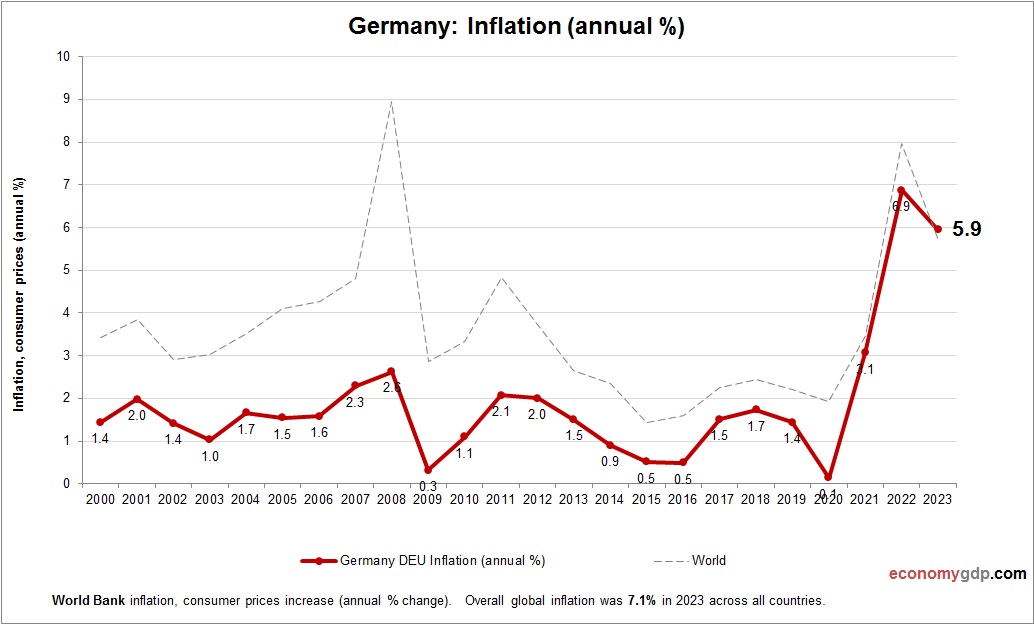
For ordinary households, the practical takeaway from economists is clear: prices are not going to fall back to where they were before the pandemic. They may stop rising as fast. Real wages are rising faster than prices — meaning people are, in aggregate, gradually recovering purchasing power lost in 2022 and 2023. But the absolute level of prices — what a restaurant meal, a tank of fuel, or a car insurance policy costs — is permanently higher than it was five years ago.

Why This Matters Beyond Germany
Germany’s inflation story in 2026 matters for the rest of Europe for two reasons.
First, Germany is the eurozone’s largest economy. What happens to German inflation feeds directly into the ECB’s calculations. The ECB cut rates several times in 2024 and early 2025 as inflation was falling. The 2026 energy shock complicates that path and could delay further rate cuts — affecting borrowing costs for households and businesses across all 20 eurozone member states.
Second, Germany’s energy dependency is a structural vulnerability that has been exposed twice in four years — first by Russia’s invasion of Ukraine in 2022, and now by the Iran conflict in 2026. The same reliance on global fossil fuel markets that made Germany vulnerable to Russian gas shutoffs makes it vulnerable to Middle Eastern oil disruptions.
Key Numbers: Germany Inflation 2025–2026
| Month | Inflation rate (CPI) | Key driver |
|---|---|---|
| December 2025 | 1.8% | Energy costs falling |
| January 2026 | 2.1% | Food prices rising; services sticky |
| February 2026 | 1.9% | Energy still declining; food eased |
| March 2026 | 2.7% | Iran war — energy +7.2% |
| April 2026 | 2.9% | Energy +10.1%; motor fuels +26.2% |
| Category | Year-on-year change (April 2026) |
|---|---|
| Energy (total) | +10.1% |
| Motor fuels | +26.2% |
| Social protection services | +6.8% |
| Combined passenger transport | +6.2% |
| Vehicle maintenance/repair | +5.0% |
| Restaurants and cafés | +3.2% |
| Net rents | +1.8% |
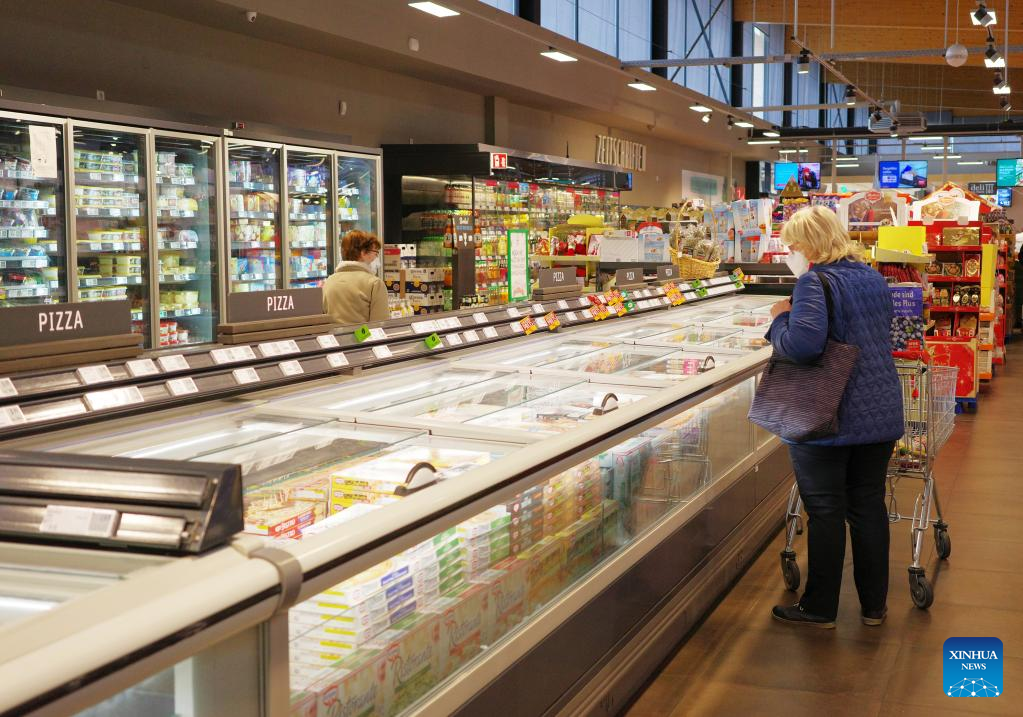
| Food | +1.2% |
| Core inflation (excl. food + energy) | +2.3% |
Frequently Asked Questions
Why is inflation rising in Germany in 2026?
Two main forces: an acute energy price shock triggered by the Iran war and the partial closure of the Strait of Hormuz in early 2026, and a persistent structural pressure from services inflation driven by strong wage growth. Germany’s inflation rate hit 2.9% in April 2026 — the highest since January 2024.
What caused energy prices to rise so sharply?
The US-Israeli military campaign against Iran that began on February 28, 2026 caused significant disruption to global oil supply, including the near-closure of the Strait of Hormuz, through which roughly 25% of the world’s traded oil passes. Brent crude oil prices surged past $100 per barrel. Germany’s energy prices rose 10.1% year-on-year in April 2026 alone, with motor fuels up 26.2%.
What is Germany’s Tankrabatt 2026?
The German government introduced a temporary fuel tax cut of 14.04 cents per litre (around 17 cents including VAT) on petrol and diesel, effective from May 1 to June 30, 2026. The measure cost approximately €1.6 billion and was designed to provide short-term relief to drivers during the energy price shock caused by the Iran war.
Why are German restaurant and service prices still so high?
Service sector inflation in Germany has been running above overall inflation since January 2024. The main driver is strong wage growth: higher labour costs for businesses in restaurants, hospitality, healthcare, and transport are passed on to consumers through price increases. Germany’s minimum wage rose again on January 1, 2026.
Is Germany’s inflation related to the 2022 energy crisis?
Yes and no. The mechanism is similar — a geopolitical shock raising global energy prices — but the trigger is different. In 2022 it was Russia’s invasion of Ukraine cutting off gas supply; in 2026 it is the Iran war disrupting oil supply via the Strait of Hormuz. Germany’s core inflation, however, has roots in the 2022–2023 crisis: the wage catch-up that workers negotiated after those years of high inflation is now itself a driver of services inflation.
Will inflation come down in Germany?
The European Commission forecasts German HICP inflation at 2.9% for 2026, declining to 2.7% in 2027. The trajectory depends heavily on the Middle East situation. Core inflation — which excludes food and energy — is expected to ease slowly as wage growth moderates, but is unlikely to return to sub-2% levels in the short term.
Is German inflation higher than in other EU countries?
Germany’s 2.9% in April 2026 was slightly below the eurozone average, which was influenced by higher readings in southern EU member states. Spain, for example, reached 3.5% HICP in April 2026.
Sources: Federal Statistical Office (Destatis) consumer price data January–April 2026; European Commission Economic Forecast May 2026; Bundesbank; Ifo Institute; Clean Energy Wire; The Local Germany; Euronews; CNBC; ADAC