
Last Updated on 4 months ago by TodayWhy Editorial
Few landmarks capture the soul of London quite like Westminster Bridge. Stretching 252 metres across the River Thames with Big Ben looming to the north and the London Eye glittering to the south, it is the city’s most photographed bridge — and arguably its most storied. Whether you’re a first-time visitor lining up for that perfect shot, or a curious Londoner who has crossed it a thousand times, Westminster Bridge has far more to offer than a scenic backdrop.
1. Westminster Bridge: Key Facts at a Glance
| Feature | Detail |
|---|---|
| Location | River Thames, London, UK |
| Connects | City of Westminster (north) & Lambeth (south) |
| Length | 252 metres (820 ft) |
| Width | 26 metres (85 ft) |
| Number of arches | 7 elliptical iron arches |
| Construction material | Cast iron & wrought iron |
| Architectural style | Gothic Revival |
| Designed by | Thomas Page (engineer), Sir Charles Barry (detailing) |
| Opened | 24 May 1862 |
| Listed status | Grade II* (since 1981) |
| Colour | Parliamentary Green |
| Nearest Tube station | Westminster (Jubilee, Circle, District lines) |
2. History of Westminster Bridge
The Long Fight to Build a Bridge
The story of Westminster Bridge is, above all, a story of opposition. For more than 600 years — from at least 1129 until 1729 — London Bridge was the only fixed crossing of the Thames downstream of Kingston. Any proposal to build a new bridge was met with fierce resistance from the powerful City of London Corporation, whose merchants feared losing control of trade, and from the Company of Watermen, whose livelihoods depended on ferrying passengers across the river all day long.
A bridge at Westminster was formally proposed in 1664. The watermen argued that if they lost their jobs to a bridge, there would be fewer skilled oarsmen available to the Royal Navy in wartime. Their most effective tactic, however, was financial: the City Corporation offered King Charles II an interest-free loan of £100,000. The King accepted the bribe and refused permission to build. Further opposition held sway again in 1722.
The First Westminster Bridge (1739–1750)
The breakthrough finally came in 1736, when Parliament approved the scheme. Funded through private capital, state lotteries, and grants, the first Westminster Bridge was built between 1739 and 1750 under the supervision of Swiss engineer Charles Labelye. The finished structure had fifteen stone arches and was described at its opening ceremony as “the most magnificent monument of our times.”
It was the second fixed bridge across the Thames in London — and it was free to cross from the very beginning, a deliberate statement against the toll-heavy London Bridge. The opening in November 1750 caused such a sensation that many people still had to cross by ferry because the bridge was overwhelmed by crowds.
The City of London quickly responded: it hired Labelye himself to improve London Bridge, widening it and removing the medieval buildings that had crowded its deck since the 13th century.
The Replacement Bridge (1854–1862)
By the mid-19th century, the first Westminster Bridge was in serious trouble. Unequal settlement of the piers — caused by inconsistent construction contracts for different arches — had left the structure subsiding badly and expensive to maintain. The decision was taken to build an entirely new bridge.
Construction began in 1854. The new bridge was designed by engineer Thomas Page, with Gothic architectural detailing by Sir Charles Barry — the same architect responsible for the adjacent Palace of Westminster. It opened on 24 May 1862, Queen Victoria’s 43rd birthday. The Queen herself was absent: still in deep mourning for Prince Albert, who had died in December 1861, she did not attend the ceremony.
The 1862 bridge remains standing today. Since the demolition of Rennie’s New London Bridge in 1967, it has been the oldest surviving road bridge across the Thames in central London.
3. Architecture and Design
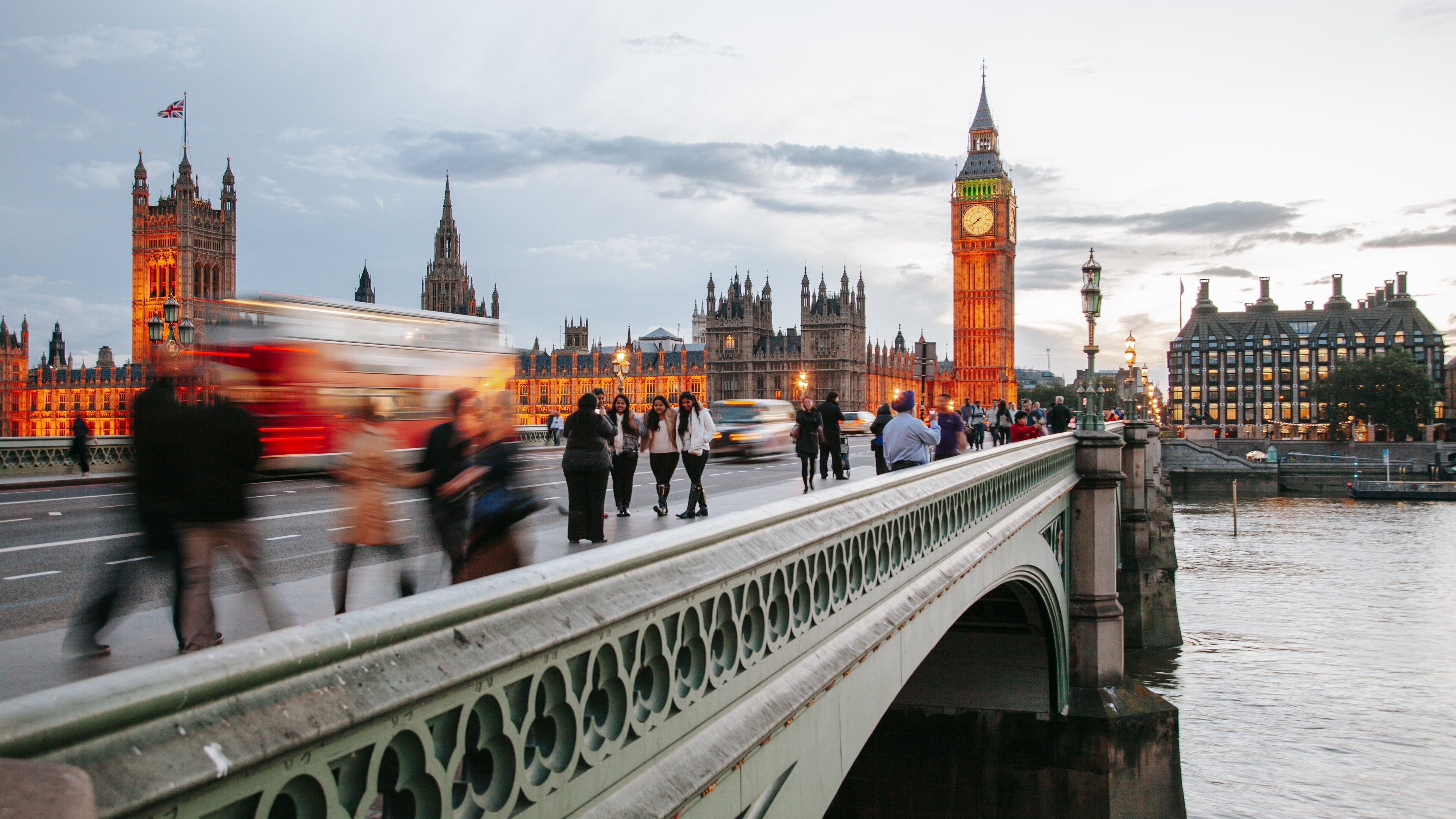
Westminster Bridge is a seven-arch cast-iron bridge with Gothic Revival detailing, making it a seamless architectural companion to the Palace of Westminster directly across the road. Its seven elliptical arches — the most of any Thames bridge — give it a low, elegant sweep across the water.
The ornate iron fascias along the sides of the bridge are covered in intricate Gothic motifs, including trefoil cut-outs, heraldic crests, and decorative balustrades. The lamp posts carry entwined V & A monograms — a tribute to Queen Victoria and Prince Albert — and were refurbished between 2005 and 2007 with gold leaf and a verdigris chemical finish to restore their original Victorian appearance.
Sir Charles Barry’s contribution to the detailing ensured a visual harmony between the bridge and the Parliament buildings: the same pointed arches, the same Gothic tracery, the same sense of Victorian civic grandeur on both sides of the road.
Westminster Bridge was granted Grade II listed building status* in 1981, recognising it as more than just a road crossing — it is a work of architecture in its own right.
4. Why Is Westminster Bridge Green?
Westminster Bridge is painted in a distinctive shade known as Parliamentary Green — and the reason is a charming piece of British constitutional symbolism.
The colour matches the green leather upholstery of the benches in the House of Commons, the lower chamber of Parliament, which sits on the Westminster side of the Palace of Westminster closest to the bridge. When you stand on Westminster Bridge looking north, you are, in a sense, looking at the colour-coded kingdom of British democracy.
The colour was officially adopted in 1970, though the bridge had been associated with shades of green since its opening in 1862.
The contrast with its neighbour is equally deliberate: Lambeth Bridge, a short distance upstream, is painted red — matching the red leather benches of the House of Lords, the upper chamber, which is closest to that bridge. Green for the Commons, red for the Lords: London’s most colourful constitutional joke, told in iron and paint.
5. The Cheeky Secret: London’s “Naughty Bridge”
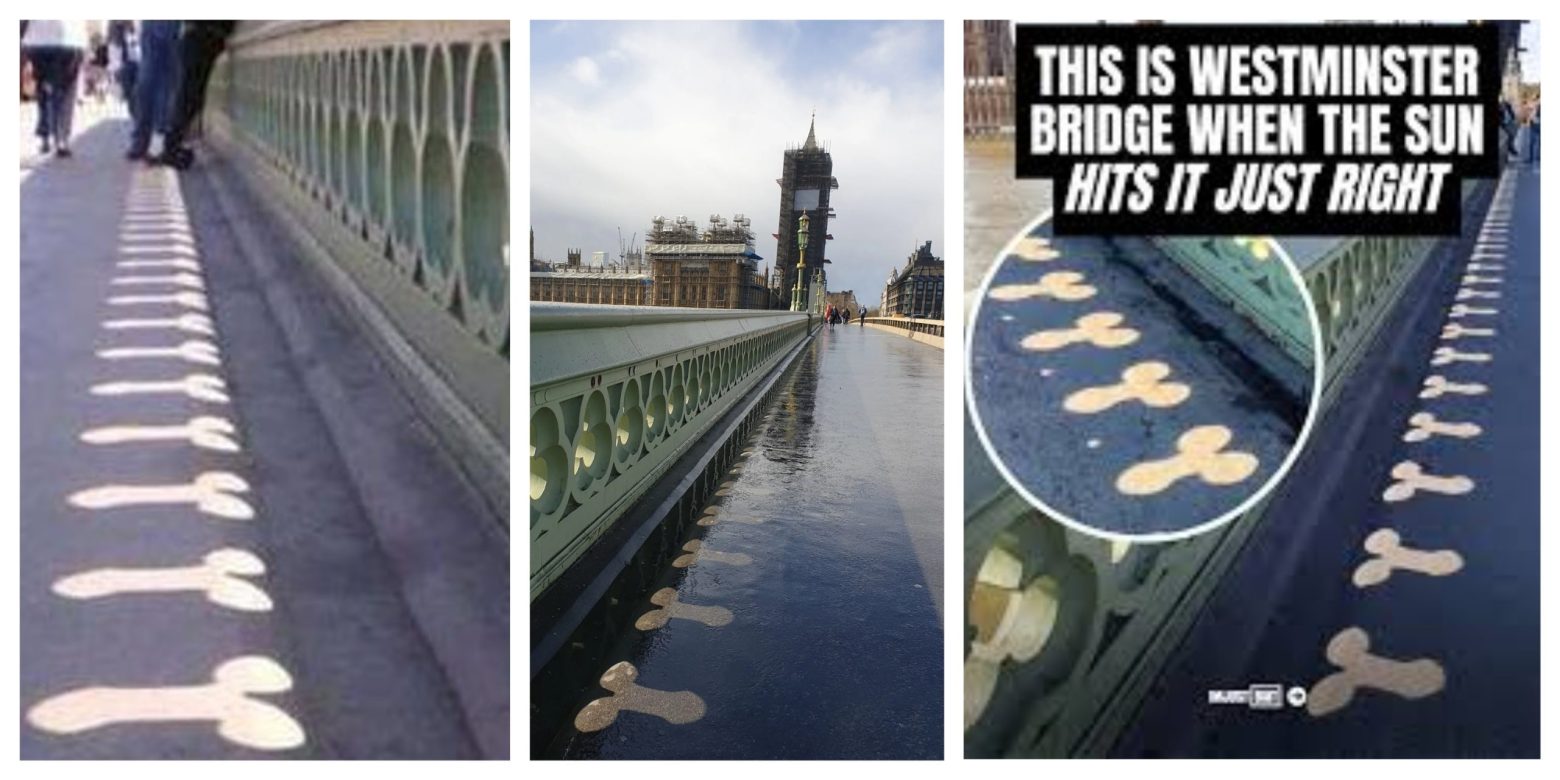
Westminster Bridge has earned a quietly notorious nickname among those in the know: London’s naughty bridge — or, in German-speaking tour circles, Londons unanständige Brücke. The reason is one of the most amusing unintentional (or intentional?) architectural jokes in the city’s history.
The Trefoil Shadow Phenomenon
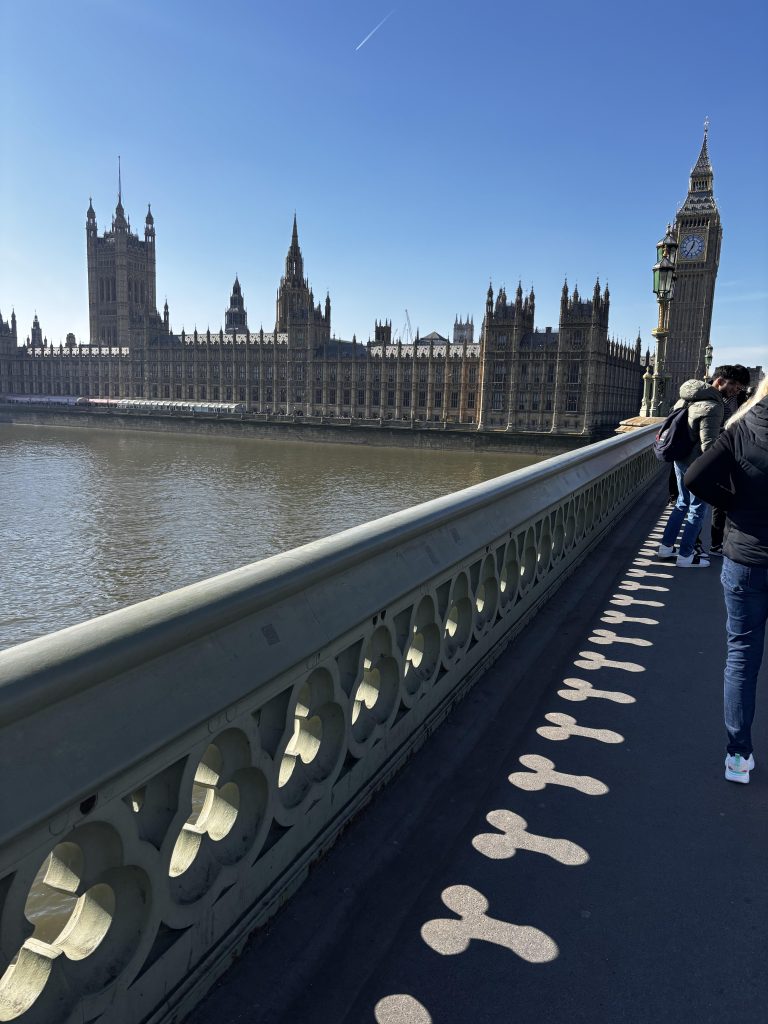
Under the right conditions — on a sunny day, around 1pm, when the light strikes the iron fascias from a particular angle — the beautiful trefoil cut-outs in the bridge’s ornamentation perform a remarkable piece of shadow theatre. The two lower “leaves” of each trefoil hold their shape, while the top leaf stretches out into an unmistakably phallic silhouette. London bloggers have affectionately dubbed these fleeting apparitions “sunny schlongs.”
Whether Sir Charles Barry and his team engineered this optical effect deliberately — a private joke hidden in plain sight for 160 years — or whether it is a magnificent coincidence of geometry and sunlight, remains delightfully unclear. What is certain is that the trefoil shapes visible today are the same ones present since the bridge opened in 1862. This is no modern photographic trick.
The phenomenon is seasonal and weather-dependent. On overcast days, the bridge keeps its secret. On bright, clear days around midday, Westminster Bridge briefly becomes London’s most unexpectedly risqué landmark — right under the nose of Parliament.
6. Westminster Bridge in Art and Literature
William Wordsworth
The bridge’s most famous literary appearance predates the current structure by sixty years. On the morning of 3 September 1802, the poet William Wordsworth crossed the first Westminster Bridge and was so struck by the stillness and beauty of London at dawn that he composed one of his most celebrated sonnets: Composed upon Westminster Bridge, September 3, 1802. In it, he describes the city lying “open unto the fields, and to the sky” in the early morning hush — a far cry from the roaring tourist crowds of today.
Canaletto
The Venetian master Giovanni Antonio Canal, known as Canaletto, painted the first Westminster Bridge in 1747 — three years before it officially opened. He completed the painting partly from imagination, including architectural elements that were planned but never built. Those inaccuracies were faithfully copied into his later depictions and even reproduced by other artists of the period, a charming case of art perpetuating its own errors.
Claude Monet
The French Impressionist Claude Monet included the second Westminster Bridge in his painting The Thames Below Westminster, created around 1871. Monet visited London multiple times and was fascinated by the Thames light — he painted several series of the river in fog, rain, and winter sun, with Westminster Bridge appearing in a number of works.
J.M.W. Turner
J.M.W. Turner‘s dramatic 1835 painting The Burning of the Houses of Lords and Commons shows Westminster Bridge on the right edge of the composition, silhouetted against the inferno that destroyed the old Palace of Westminster — an event that led directly to the Gothic Revival rebuilding that Charles Barry designed, and which gave us the Parliament buildings we see today.
7. Westminster Bridge in Film and TV
Westminster Bridge has one of the most impressive filmographies of any bridge in the world:
- 28 Days Later (2002) — The film’s most iconic sequence: a deserted Westminster Bridge and an eerily empty London at dawn, establishing the post-apocalyptic horror to come.
- Spectre (2015) — James Bond crosses the bridge in the film’s London sequences.
- Die Another Day (2002) — Another Bond outing featuring the bridge.
- Mission: Impossible — Rogue Nation (2015) — Action sequences on Westminster Bridge.
- 101 Dalmatians (1996) — The bridge appears in the London street scenes.
- Wimbledon (2004) — Featured in establishing shots of London.
- Doctor Who — Westminster Bridge appears in multiple episodes, most memorably in The Dalek Invasion of Earth (1964), where Daleks glide across a deserted bridge in one of British television’s most enduring images.
8. What to See From Westminster Bridge
Westminster Bridge offers what many consider the single finest viewpoint in London. Standing at the midpoint of the bridge, you can see:
Looking North (upstream-left):
- The Palace of Westminster and its intricate Gothic towers
- Elizabeth Tower (Big Ben) — the clock tower whose bell strikes the hours heard around the world
- Parliament Square
Looking South (across the river):
- County Hall — the former home of London’s city government
- The London Eye — the 135-metre observation wheel that has become as synonymous with London as Big Ben itself
- St Thomas’ Hospital
Looking Downstream (east):
- Hungerford Bridge and the Golden Jubilee Bridges
- The distant City of London skyline
Looking Upstream (west):
- Lambeth Bridge in the distance
- Lambeth Palace, the official London residence of the Archbishop of Canterbury
No other spot in the city compresses so much iconic London into a single 360-degree panorama.
9. How to Get to Westminster Bridge
Westminster Bridge is one of the easiest landmarks in London to reach by public transport.
By Underground (Tube): Westminster station (Jubilee, Circle, and District lines) is directly beside the north end of the bridge — exit the station and you are on the bridge within 30 seconds.
Waterloo station (Bakerloo, Jubilee, Northern lines) is a short walk from the south end of the bridge across Lambeth North.
By Bus: Numerous bus routes stop at Westminster Bridge Road and Parliament Square, including routes 3, 12, 53, 77, 159, 211, and 381.
By Boat: Thames Clipper river bus services stop at Westminster Pier, just north of the bridge, with connections along the Thames in both directions.
On Foot: Westminster Bridge is part of several popular walking routes, including the South Bank Walk, which runs along the eastern side of the river from Lambeth Bridge to Tower Bridge.
10. Visitor Tips
Best time to visit for photography: Sunrise is exceptional — the bridge is nearly empty, and the light catches the Elizabeth Tower from the east. Aim for the blue hour just before sunrise for reflections on the Thames.
Avoid peak tourist hours: Between 10am and 4pm the bridge is extremely busy, particularly in summer. For a more contemplative visit, come early morning or after dark when the bridge is illuminated.
The naughty trefoils: If you want to spot the famous shadow phenomenon, visit on a clear sunny day around midday. Stand on the bridge and look at the iron fascia panels — patience and sunlight are the only requirements.
Look down at the river: The Thames tidal range in central London is over 7 metres. Depending on the tide, the river can look dramatically different — from a broad silver mirror at high tide to a ribbon of exposed mudflats at low tide.
Lamp posts and monograms: Take a close look at the decorative lamp posts and the iron railings. The entwined V & A monograms honouring Victoria and Albert are a small detail that most visitors walk straight past.
11. Frequently Asked Questions (FAQ)
What is Westminster Bridge?
Westminster Bridge is a road and pedestrian bridge crossing the River Thames in London. It connects the City of Westminster on the north bank with the London Borough of Lambeth on the south bank, and provides iconic views of the Palace of Westminster, Big Ben, and the London Eye.
When was Westminster Bridge built?
The current bridge was opened on 24 May 1862. An earlier bridge stood on the same site from 1750 until it was demolished to make way for the new structure.
Who designed Westminster Bridge?
The bridge was engineered by Thomas Page. The Gothic decorative detailing was designed by Sir Charles Barry, the architect of the Palace of Westminster.
Why is Westminster Bridge painted green?
The bridge is painted Parliamentary Green to match the colour of the leather benches in the House of Commons, which is on the Westminster side of the Palace of Westminster — the end of the palace closest to the bridge.
Is Westminster Bridge free to cross?
Yes. Westminster Bridge is a public road and footway; there is no charge to cross it at any time.
What is the “naughty bridge” nickname about?
The trefoil (three-leaf clover) cut-outs in the bridge’s ornamental iron fascias cast shadows that, at certain times of day and year when the sun is at the right angle, take on an unmistakably phallic shape. This optical effect has been there since 1862. Whether it was deliberate or accidental remains unknown.
What is the nearest Tube station to Westminster Bridge?
Westminster station (Jubilee, Circle, and District lines) is directly adjacent to the north end of the bridge.
Has anything significant happened on Westminster Bridge?
On 22 March 2017, a terrorist attack began on Westminster Bridge when an attacker drove a vehicle into pedestrians. Five people were killed and more than 50 were injured. The attack is commemorated by a memorial on the bridge.
Can you walk across Westminster Bridge?
Yes. There are wide pedestrian pavements on both sides of the road. The walk from one end to the other takes only a few minutes and offers outstanding views in all directions.
What other bridges are near Westminster Bridge?
Lambeth Bridge is immediately upstream (to the west). Hungerford Bridge and the Golden Jubilee Footbridges are downstream (to the east).
Conclusion
Westminster Bridge is more than a way to cross the Thames. It is a living monument to centuries of London history — from the watermen who fought its construction to the Victorian engineers who gave it its iconic Gothic bones; from Wordsworth’s dawn meditation to Monet’s misty impressions; from Dalek invasions to James Bond. It is the bridge that colour-codes democracy in green and red, that hides an architectural blush in its iron ornaments, and that frames what may be the most recognisable skyline view in the world.
Cross it slowly. Look in every direction. And if the sun is out around noon, keep an eye on those trefoils.
Last updated: May 2026