
Last Updated on 5 months ago by TodayWhy Editorial
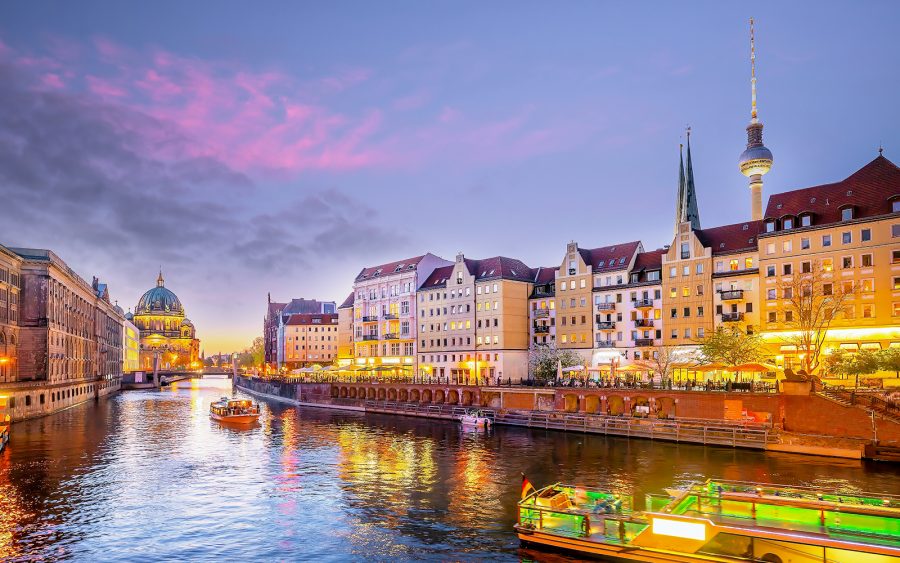
Flowing through the heart of Berlin for approximately 46 kilometres within the city’s boundaries, the River Spree is far more than a geographical feature. It is a living witness to the entire history of the German capital. Every bend in the river carries the memory of centuries: from medieval Slavic settlements and the grandeur of the Kingdom of Prussia, through the wounds of war and the Cold War division of East and West, to the remarkable reconstruction that followed reunification in 1990.
The story of planning the Spree is Berlin in miniature — a story of power, architecture, cultural identity, and a debate that has never been fully resolved: who does the river belong to?
Part I: Origins — A City Born from a River
Prehistory and the Founding of Berlin
Human settlement along the Spree predates the city of Berlin by millennia. Around 2,000 BCE, communities had already gathered along the banks of the Spree and the Havel, laying the foundations for the Lusatian culture. From the 7th century CE, Slavic tribes — most notably the Hevelli and the Sprevane — came to dominate the region. The very name “Spree” is thought to derive from an Old Slavic root referring to a broad, spreading flow or a river prone to wide flooding.
In the 12th century, German settlement began in earnest when the Margraviate of Brandenburg was founded in 1157 by Albert the Bear (Albrecht der Bär). Against this backdrop, two historically significant twin towns were established on the banks of the Spree: Berlin and Cölln (also written Kölln). Berlin occupied the northern riverbank, while Cölln was built on a small island in the middle of the Spree — the very island that today forms the world-famous Museumsinsel (Museum Island).

Both towns appear in written records from the early 13th century: Spandau is first mentioned in 1197, Köpenick in 1209, and Berlin itself around 1244. Their strategic position at the intersection of major trade routes, with the Spree serving as a natural commercial highway, transformed these twin settlements into an increasingly important economic centre.
The Spree Under the Kingdom of Prussia
When the Electors of Brandenburg (Kurfürsten von Brandenburg) began consolidating their power in the late 17th century, the River Spree was consciously harnessed as a tool of urban planning. Friedrich I — the first King of Prussia from 1701 — and his successors transformed Berlin into a magnificent Baroque capital, with the Spree as the backbone of the city’s layout.
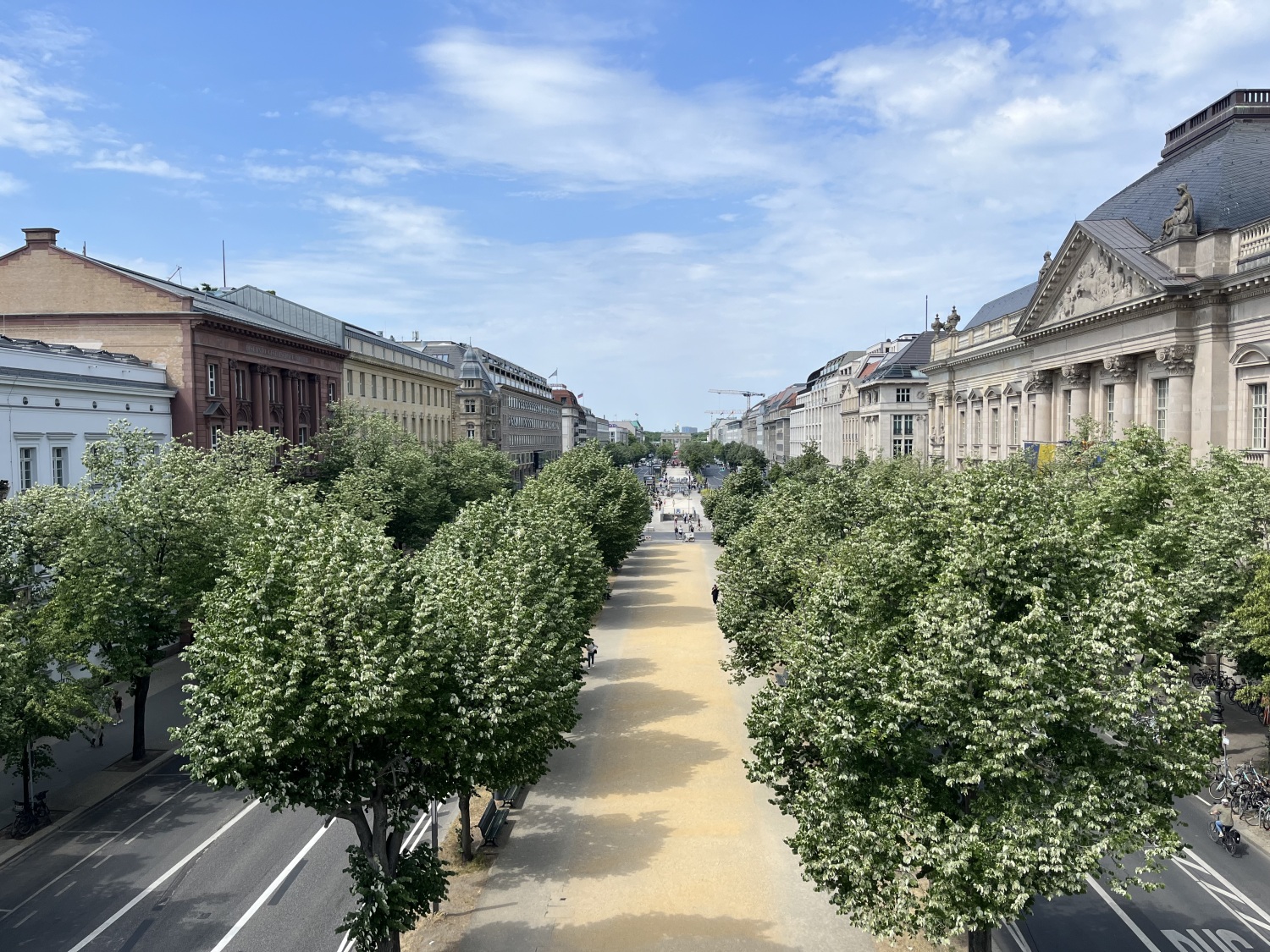
This era saw the formation of Unter den Linden — the grand tree-lined boulevard along the riverside, connecting the Brandenburg Gate to the Royal Palace. Along the Kupfergraben canal (an artificial channel dug from the Spree), landmark buildings gradually rose: the Arsenal (Zeughaus, 1695–1730), royal residences, and palaces.
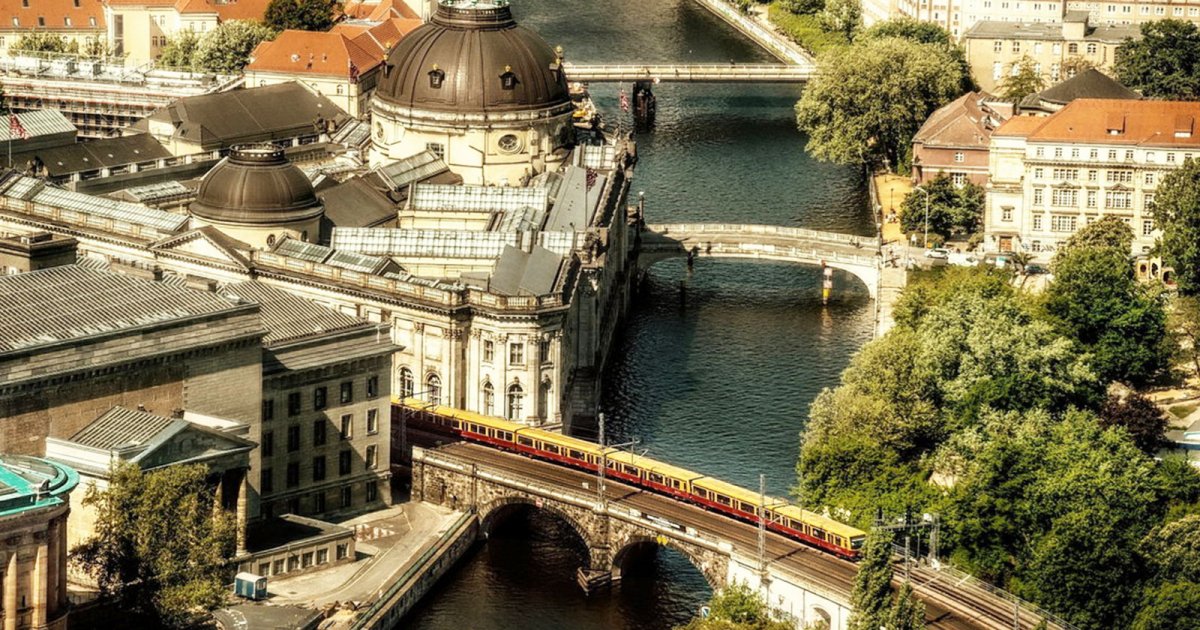
Yet the most ambitious Spree planning of the Prussian era was arguably the Museumsinsel project — a long-term cultural vision that unfolded across nearly a century. King Friedrich Wilhelm III conceived the idea of concentrating the royal art collections on the island in the Spree at the beginning of the 19th century. Architect Karl Friedrich Schinkel designed the Altes Museum (Museum of Antiquities, opened 1830) in a pure Neoclassical style, marking the birth of a museum complex without precedent in Europe. It was followed by the Neues Museum (1855), the Alte Nationalgalerie (1876), the Bode Museum (1904), and the Pergamon Museum (1930).
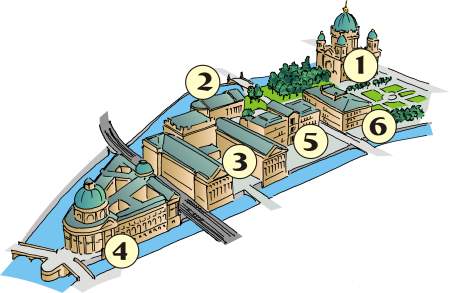
This was one of the boldest urban planning visions in the world at the time: transforming a small island in the middle of a city into an “Athens on the Spree” (Athen an der Spree) — a sobriquet that endures today as shorthand for Berlin’s identity as a capital of intellect and art.
Part II: The Industrial Age — The River of Labour and Pollution
The Industrial Revolution and Its Brutal Consequences
The 19th century brought a revolutionary transformation in the relationship between Berlin and the Spree. During the Gründerzeit (roughly 1871–1914), a violent wave of industrialisation drew millions of workers to the city, turning Berlin into one of the largest industrial centres in Europe.
The Spree was no longer the picturesque river of the Baroque age; it became an industrial transport artery. Factories, iron foundries, warehouses, and inland harbours multiplied along both banks. Major industrial names such as AEG (Allgemeine Elektricitäts-Gesellschaft), associated with Werner von Siemens, built vast factory complexes near the riverbank. Berlin’s first railway line opened in 1838, and the rapidly expanding rail network was closely tied to the riverside freight yards.
The environmental consequences were catastrophic. The Spree became a vast receptacle for industrial and domestic sewage. Cholera epidemics that ravaged Berlin in 1831, 1837, and 1866 were partly rooted in the river’s severe contamination. It was only after the great engineer James Hobrecht completed Berlin’s sewage and clean water infrastructure (1873–1893) — one of the largest urban engineering projects of the 19th century — that conditions began to improve meaningfully.
The Hobrecht Plan and Berlin’s First Comprehensive Urban Vision
Hobrecht’s project was far more than a sanitation exercise: it was Berlin’s first comprehensive urban plan. Approved in 1862, the Hobrecht-Plan divided the city into concentric expanding zones, integrating the drainage network with the street infrastructure, and indirectly determined the physical form of the working-class housing districts — the infamous Mietskaserne (rental barracks), the dense tenement blocks that became a defining feature of 19th-century Berlin.

Along the Spree, clear social stratification was etched into the urban landscape. To the west and centre stood the royal monuments and bourgeois districts; to the east and south — in Friedrichshain and Kreuzberg — crowded working-class neighbourhoods pressed against the riverbanks. These impoverished but vital communities would later become the cradle of Germany’s labour movement and socialist politics.
Part III: The Twentieth Century and Its Open Wounds
War and Destruction
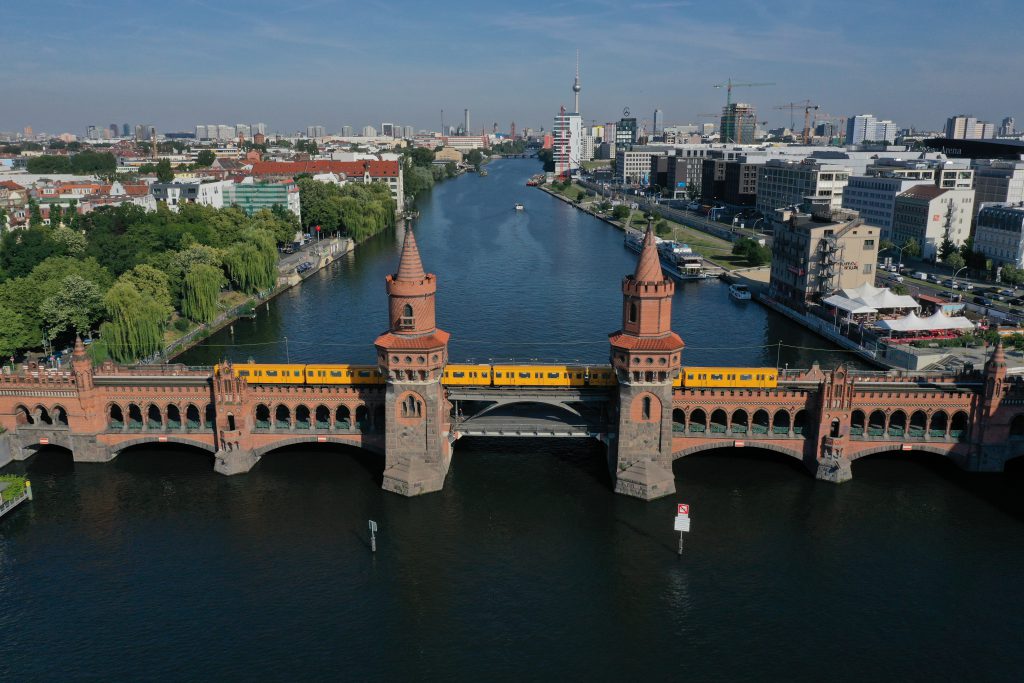
Both World Wars left indelible marks of destruction on the Spree and its banks. In the final months of World War II (1944–1945), Berlin became one of the most ferociously contested battlegrounds on the Western Front. Soviet forces advanced from the east, crossing the Spree in brutal engagements. Numerous bridges spanning the river were demolished to impede the Red Army’s advance — among them the celebrated Oberbaumbrücke, the double-decked brick bridge connecting Friedrichshain with Kreuzberg, partially destroyed in April 1945.
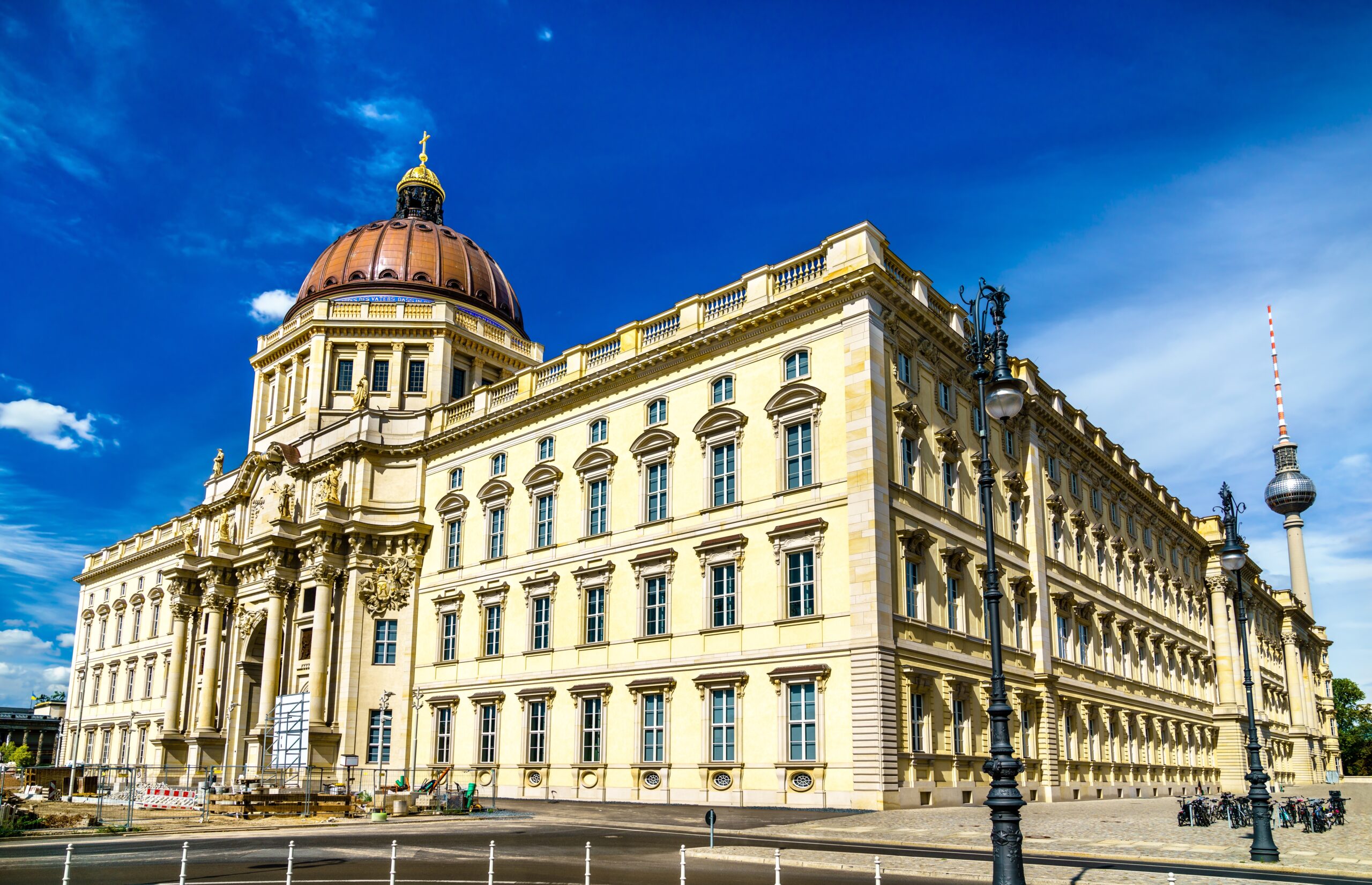
After the war, the architectural heritage along the riverbanks lay in ruins. Museumsinsel had been bombed and reduced to a shell. The Berlin City Palace (Berliner Stadtschloss), standing directly on the riverfront, was demolished on the orders of the East German government in 1950 — a profoundly political act aimed at erasing a symbol of Prussian monarchy.
The Berlin Wall and the Severed River
In 1961, the Berlin Wall was erected, and the Spree became part of the border dividing the city. Along several stretches, the river itself formed the boundary between East and West Berlin. The northern bank belonged to East Berlin (the GDR); the southern bank to West Berlin (the FRG).
Riverbanks that had once bustled with commerce became forbidden zones, placed under strict border guard control. People who attempted to swim across the Spree to reach West Berlin were shot. The Oberbaumbrücke — the Gothic brick double bridge that had opened in 1896 as a busy crossing — was closed entirely to ordinary traffic; from 1963 onwards it functioned only as a restricted border checkpoint.
This division produced two entirely different planning models on opposite banks of the same river:
The East (East Berlin): The GDR state pursued large-scale socialist housing projects built in the plattenbau style (standardised prefabricated concrete panel construction). Along the eastern Spree bank, workers’ housing blocks appeared with their characteristically functional and monotonous architecture.
The West (West Berlin): Financially supported by West Germany and the Western Allies, West Berlin followed a more liberal urban model, with inner-city regeneration projects and new cultural spaces along the river.
Throughout this period, much of both Spree riverbanks along the border zone lay abandoned — a strange, eerie emptiness at the heart of a living city.
Part IV: The Great Rebirth — Planning the Spree after Reunification (1990–2010)
9 November 1989 and the Colossal Planning Challenge
When the Wall fell on the night of 9 November 1989, and Germany formally reunified on 3 October 1990, Berlin faced an urban planning challenge with no real precedent in modern history: to stitch together two halves of a city that had grown apart across forty years of division.
On 20 June 1991, the German Bundestag voted by a narrow but historic margin to transfer the capital from Bonn back to Berlin. The decision set in motion enormous planning ambitions: Berlin had to become a capital worthy not just of a reunified Germany but of an expanding Europe.
And the River Spree sat at the centre of every one of those plans.
Spreebogen — The Government Quarter at the River’s Historic Curve
The first focus of post-reunification planning was the Spreebogen (Spree Curve) — the land lying within the famous bend of the river, where the Reichstag building stands watching over the water. This was to be the physical heart of the new national government quarter.
In 1992, an international design competition for the Spreebogen attracted an extraordinary 800 entries from around the world — a record that spoke volumes about the project’s global significance. The masterplan ultimately selected was that of architects Axel Schultes and Charlotte Frank. Their concept, the Bandförmiger Stadtgrundriss (Band-Shaped Urban Plan), proposed a long east-west axis piercing the river bend — a symbolic gesture of connection between former East and West Berlin.
The Spreebogen masterplan set three overriding goals: to integrate government buildings into the broader urban fabric (avoiding “single-function, desolate districts”); to concentrate parliamentary buildings along the riverfront; and to expand transport infrastructure and green space. This planning framework went on to coordinate over 40 separate planning processes and authorised 2,140 real estate and building approvals between 1993 and 2007.
The Reichstag and Norman Foster: A Story of Democracy on the Riverbank
No building is more intimately bound to the post-reunification planning of the Spree than the Reichstag — the parliament building that has stood on its bank for over a century.
The Reichstag’s history is Germany’s history in miniature. Designed by Paul Wallot and completed in 1894, it served as the forum of the German Empire, then witnessed the collapse of the Weimar Republic following the notorious arson of 1933 (exploited by Hitler to dismantle democracy), was heavily bombed in World War II, and then lay dormant for forty years of the Cold War, stranded on the edge of the Western sector’s border with the East.
In 1992, British architect Norman Foster was invited to enter the Reichstag design competition alongside 80 German architects. It was an unusual contest: all three finalists proved to be non-Germans — Foster, Santiago Calatrava, and Pi de Bruijn. Foster’s original competition scheme proposed a vast steel-and-glass canopy enveloping the historic building and extending northward to physically connect with the River Spree itself — a powerful symbolic image of democracy reaching out to nature and the city’s founding waterway.
However, Axel Schultes’ Spreebogen masterplan subsequently forced Foster to redesign entirely from scratch, reducing the scheme’s floor area by 60 per cent. The final design — featuring the celebrated glass cupola proposed by artist-architect Gottfried Böhm and approved by a Bundestag vote (against Foster’s original intentions) — became one of the great architectural statements of the 20th century.
Before construction began, one of the most memorable artistic events in Berlin’s post-reunification story unfolded in June 1995: artists Christo and Jeanne-Claude wrapped the entire Reichstag building in shimmering silver fabric. The project, which had been in development since 1971 but was only made possible after the fall of the Wall, drew over five million visitors to Berlin. The parliamentary debate over whether to permit the project was televised across the European Union; the Bundestag voted 292 to 223 in favour. On 19 April 1999, the reborn Reichstag formally opened.
Today, the Reichstag’s glass dome gazing down over the Spree has become one of Germany’s most visited landmarks — a literal and metaphorical embodiment of transparent, open government.
The Government Quarter (Regierungsviertel)
Alongside the Reichstag project, an entire national administrative district arose along both banks of the Spree throughout the 1990s and 2000s. The Federal Chancellery (Bundeskanzleramt, 2001) — designed by Axel Schultes and Charlotte Frank, affectionately nicknamed “the Washing Machine” (Waschmaschine) or “the Big-Headed One” (Kohlosseum) by irreverent Berliners — rose directly on the riverbank opposite the Reichstag, creating a new axis of power within the Spree Curve.
Further east, Berlin Central Station (Berlin Hauptbahnhof), opened in 2006 to a design by Meinhard von Gerkan, positioned its vast glass-and-steel structure at the river’s edge, becoming the most modern main-line railway station in Europe at the time and a key node in the new post-reunification city fabric.
Part V: The Mediaspree Battleground — When Capital Confronted Community
From Wasteland to Investment Target
While the western Spree (the Reichstag and Tiergarten zone) was being shaped into the national administrative centre, the eastern stretch — in Friedrichshain and Kreuzberg — was undergoing an entirely different journey.
This area had been industrial land and a desolate border wasteland, left almost completely empty after 1989. That very emptiness became fertile ground for one of the most fascinating urban cultures in the world: hundreds of nightclubs, art galleries, creative spaces, and spontaneous community projects took root along the banks. Tresor, Watergate, Berghain — venues that became globally synonymous with Berlin’s nightlife and cultural identity — were all born in this riverside vacuum.
But from the mid-1990s, the Berlin Senate began looking at this same territory as a vast economic opportunity. In 1994, real estate investor Roland Ernst organised the first architectural competition for the Treptower riverside site; by 1998 the Treptower Tower, at 125 metres one of the first skyscrapers of reunified Berlin, had been completed.
The Mediaspree Project: Visionary Plan or Sell-Out?
In the early 2000s, the Mediaspree project was formalised — one of the largest property redevelopment schemes in Berlin’s history. It encompassed approximately 180 hectares along 3.7 kilometres of the Spree riverbank in the Friedrichshain-Kreuzberg district, aiming to convert abandoned warehouses and vacant lots into office complexes, luxury lofts, hotels, and entertainment venues, targeting media, telecommunications, and creative industries.
The early results were impressive. In 2002, Universal Music relocated its European headquarters to the Spree bank. MTV Europe followed in 2004. In 2008, the Mercedes-Benz Arena (capacity 17,000) opened, becoming Berlin’s largest entertainment venue. Corporations including BASF, Coca-Cola, Daimler, and WeWork all established presences in the Mediaspree zone.
From the perspectives of economic development and urban regeneration, this was a success story. From the perspective of social equity and community culture, it was the beginning of a bitter conflict.
“Mediaspree Versenken!” — The Movement to Sink Mediaspree
The Mediaspree plans proposed more than a dozen high-rise towers, hundreds of thousands of square metres of offices, hotels and luxury apartments running along both riverbanks — effectively privatising virtually the entire waterfront and demolishing the public and cultural spaces that had organically flourished there.
The reaction from Berliners — especially residents of Friedrichshain and Kreuzberg — was fierce. In 2006, the “Mediaspree Versenken!” (Sink Mediaspree!) movement was founded, led by architect Carsten Joost. Under the rallying cry “Spreeufer für alle!” (Spree Riverfront for Everyone!), the movement organised “neighbourhood walks,” demonstrations, exhibitions, and political campaigns.
The movement’s argument was pointed: the riverbank is public property belonging to all Berliners, and cannot be handed over to private developers simply to create privatised river views for luxury apartments. Mediaspree would drive up rents, destroy the social fabric of existing neighbourhoods, and extinguish the cultural identity that made Berlin genuinely distinctive.
The confrontation reached its climax in the referendum of 13 July 2008: residents of Friedrichshain-Kreuzberg voted overwhelmingly in favour of requiring at least 50 metres of free public space along the riverfront, and rejecting the planned high-rises and proposed new road bridge across the Spree.
The referendum result was legally advisory rather than binding, but the political pressure forced the city to adjust: building densities were reduced, and public riverside spaces were made somewhat wider than originally planned. The movement nonetheless maintained that the concessions were insufficient.
Holzmarkt — A Story of Community Victory
While most riverside sites were absorbed by major investors, the Holzmarkt (Timber Market) area on the Spree became a rare example of a different path. When the city of Berlin put the land up for sale, a coalition of artists, cultural activists, and local residents successfully bid for it and acquired the site to develop as a mixed-use cultural, leisure, and community space under a non-profit model. The Holzmarkt story demonstrated that, when communities are genuinely empowered, viable alternatives to corporate redevelopment are entirely achievable.
Part VI: Museumsinsel — The Restoration of the Museum Island
UNESCO Heritage and the Long Work of Recovery
Running in parallel with the battles over Mediaspree, a very different riverside planning project — one commanding far broader consensus — was unfolding at the city’s heart: the extraordinary restoration of Museumsinsel (Museum Island).
In 1999, UNESCO inscribed the complex of five museums on the Spree island as a World Heritage Site, recognising the architectural and cultural significance of a collection of buildings spanning the years 1830 to 1930. But after the losses of war and decades of underinvestment during the East German era, the buildings were in serious decay.
The comprehensive Museumsinsel restoration masterplan spans multiple decades and billions of euros. At its centrepiece is the Archaeologische Promenade (Archaeological Promenade) — an underground corridor connecting all five museums, allowing visitors to move between institutions without stepping outside.
The Neues Museum — the most severely damaged in the war, left as a ruin for fifty years — was reconstructed by British architect David Chipperfield according to a philosophy of “restoration without concealment”: bullet marks, collapsed sections of wall, and wartime scars were deliberately retained alongside new materials, creating a sustained dialogue between past and present. Completed in 2009, it is widely regarded as one of the finest architectural restoration projects in the world.
The James Simon Galerie — the shared entrance hall and visitor centre for the entire Museumsinsel — opened in 2019, also to Chipperfield’s design, presenting a new civic facade toward the Spree and completing the island’s cultural identity for the 21st century.
Part VII: The Environmental Challenge — When the River Cried Out
Pollution and the Effort to Recover
Threading through the entire narrative of urban planning is a pressing environmental question: the water quality of the River Spree. The combination of 19th-century combined sewer systems (where stormwater and sewage share the same pipes) and ever-increasing urban pressure has continuously endangered the river.
During heavy rainfall, stormwater overwhelms the treatment capacity of the system, causing raw sewage to overflow directly into the Spree, carrying bacteria and pollutants with it. This has repeatedly forced the city to ban swimming in the river during the summer months.
To address the problem, Berlin and the water utility BWB (Berliner Wasserbetriebe) established a dedicated stormwater management agency. The city passed new building regulations requiring all new developments to include separate stormwater capture and management systems, preventing rainwater from mixing with the sewage network. Green roofs, ecological retention ponds, permeable paving, and natural filtration systems have been actively promoted across the city.
Part VIII: Berlin Today — A River of Contradictions and Vitality
A Contemporary Portrait Along the Spree
In 2026, the River Spree reflects a Berlin that is full of contradictions but also brimming with life. Viewed from above, across the 46 kilometres of river flowing through the city, every layer of Berlin’s history coexists simultaneously:
Mitte and Museumsinsel: Where culture, history, and tourism converge. The historic bridges across the river — the Schlossbrücke with its white Hellenic marble sculptures, the Oberbaumbrücke with its red Gothic brick towers — have been meticulously restored.
Spreebogen (the Government Quarter): The seat of German power, with the Reichstag and the Federal Chancellery standing on the riverfront. Every day, thousands of visitors climb the glass dome of the Reichstag to look out over the river and the city laid out below.
Friedrichshain-Kreuzberg (the Mediaspree zone): A complex interweaving of Universal Music’s glass office towers, legendary nightclubs, stretches of still-wild riverbank, and community projects in the spirit of Holzmarkt.
East Side Gallery: The 1.3-kilometre surviving stretch of the Berlin Wall directly on the riverbank — now the largest open-air gallery in the world, with over 100 painted murals, standing as a symbol of freedom and reconciliation.
A Debate Without End
The arguments surrounding the planning of the Spree continue to this day. Berlin saw the fastest-rising rents in Europe during the 2010s, and the wave of gentrification continues to push lower-income communities away from the centre and the riverbanks.
In 2021, another referendum shook Berlin’s political landscape: 59% of eligible voters backed the expropriation of apartments owned by large property companies — over 250,000 homes across the city. Legally the question remains enormously complex and the outcome has yet to be implemented, but the vote reveals the deep tensions in Berlin’s society over the ownership of urban space.
The struggle over the Spree — over who owns the riverbank and what the river is for — is not merely a local Berlin question. It is a compressed version of a global debate about urbanisation, inequality, and the right to public space.
Conclusion: A River as Living Memory
The Spree was flowing through Berlin for thousands of years before the city was born, and it will continue to flow regardless of the planning ambitions of each successive generation. But the way each generation of Berliners has planned, used, and fought over their river has faithfully reflected their values and their contradictions.
King Friedrich Wilhelm III saw a cultural Athens in that small island in the current. The industrialists of the 19th century saw a transport artery and an industrial water source. The GDR government saw a border to be strictly guarded. The post-reunification investors saw a golden real estate opportunity. And the citizens of movements like “Spreeufer für alle!” saw a public asset that cannot and must not be privatised.
Perhaps this is precisely what makes the planning story of the Spree both uniquely Berliner and profoundly universal: it reminds us that the rivers flowing through cities are never merely geography — they are the spaces through which societies define themselves.
Today, standing on the Oberbaumbrücke on an autumn afternoon — looking east from its red Gothic towers toward the East Side Gallery where history bleeds into art, then turning west toward the office windows of media corporations reflected in the water — one can feel the full depth of that story. One river, centuries of history, and a city that is still, and always, in the process of reinventing itself.
This article draws on the following sources: Wikipedia (Berlin, Mediaspree, Reichstag), the American Planning Association (Planning Magazine, March 2015), Foster + Partners, ArchDaily, Grokipedia (Mediaspree), The Local Germany, and urban planning research documents from the Berlin Senate Department for Urban Development and the Environment.