
Last Updated on 5 months ago by TodayWhy Editorial
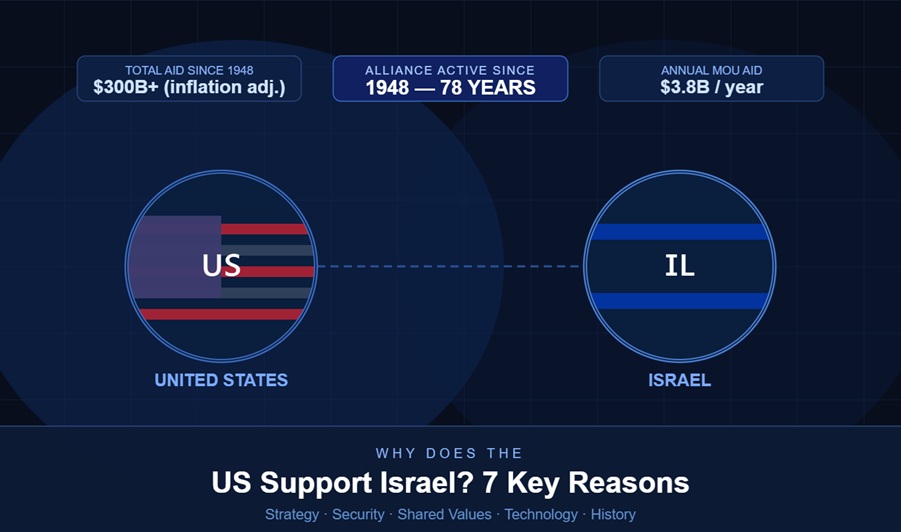
Few relationships in modern geopolitics are as consistent, as well-funded, or as debated as the alliance between the United States and Israel. Since 1948, the US has provided Israel with over $300 billion in total economic and military assistance (inflation-adjusted), making Israel the largest cumulative recipient of American foreign aid in history, according to the Council on Foreign Relations. Every US president across 13 administrations and both parties has maintained this support — a record of consistency without parallel in American foreign policy.
But why? The question sounds simple. The answer is genuinely complex. Why does the US support Israel — not just symbolically, but with $3.8 billion in annual military aid, diplomatic protection at the UN Security Council, joint weapons development, and in 2026, strategic bombers and carrier strike groups deployed in direct support of Israeli military operations against Iran?
The honest answer involves seven overlapping and mutually reinforcing reasons — some strategic, some moral, some economic, some political — that have accumulated over 78 years into one of the most entrenched alliances in the modern world.
Related reading:
- Why Israel is so powerful
- Why the IDF is one of the best armies in the world
- Why Israel is stronger than Iran militarily
1. Historical Roots: 1948 and the First Recognition
The foundation of the US–Israel relationship was laid in a single decisive moment. On May 14, 1948, eleven minutes after Israel declared independence, President Harry S. Truman recognized the new state — becoming the first world leader in history to do so. That act was not strategically inevitable. Truman’s own State Department, led by Secretary of State George Marshall, strongly advised against recognition, fearing it would destabilize Arab relations and threaten US access to Middle Eastern oil.
Truman overruled them. His reasoning was layered: a post-Holocaust moral conviction that the Jewish people deserved a secure homeland, personal relationships with Jewish advisors and friends, and a reading of American public opinion that saw broad sympathy for Jewish statehood. That founding recognition seeded a moral and cultural affinity that has informed US policymaking ever since, according to The Conversation.
The significance cannot be overstated: a nation born in crisis, surrounded by hostile neighbors, received immediate legitimacy from the world’s most powerful democracy. That original act of recognition has been cited by every subsequent administration as a cornerstone commitment that predates Cold War calculations, oil politics, or domestic lobbying.
2. Cold War Strategy: Israel as America’s Regional Anchor
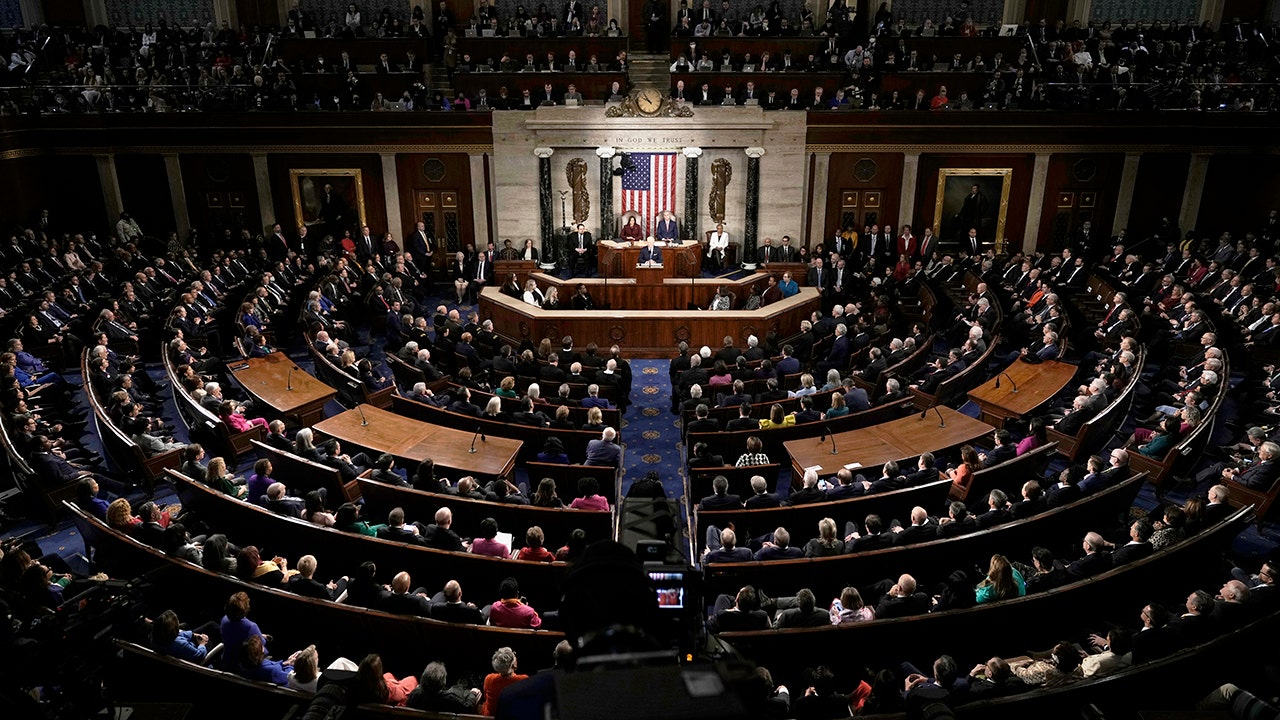
The relationship transformed from moral commitment to strategic imperative after June 1967. Israel’s stunning Six-Day War victory — defeating the combined armies of Egypt, Jordan, and Syria, all Soviet-equipped and Soviet-aligned — was a watershed moment for American strategic thinking. Washington had just watched a small ally, with no US troops committed, neutralize Soviet client states in under 100 hours. The implication was unmistakable.
As The Conversation documents, from that point onward US policymakers framed Israel as a pillar of Middle East strategy — “a bulwark against Soviet influence and a counter to Arab nationalism.” President Lyndon B. Johnson sharply increased arms transfers, providing advanced F-4 Phantom aircraft. Intelligence-sharing arrangements were significantly expanded.
The Cold War is over, but the structural logic has not disappeared. It has simply updated: Iran and its network of proxies have replaced the Soviet Union as the primary regional threat to US interests. Israel remains the same thing it was in 1967 — a reliable, capable, democratic military partner in a region where reliable, capable, democratic partners are scarce. According to the Washington Institute for Near East Policy, Israel “remains a counterweight against radical forces in the Middle East, including political Islam and violent extremism,” and has prevented further weapons-of-mass-destruction proliferation by targeting Iraq’s and Syria’s nuclear programs.
3. Shared Democratic Values and Cultural Affinity
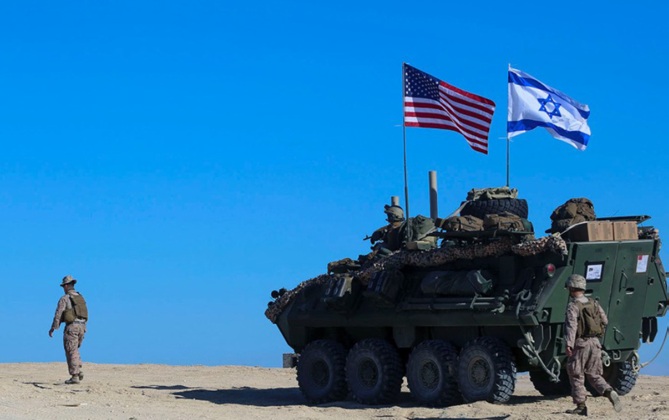
The US State Department’s official position frames the relationship plainly: the partnership is “built on mutual interests and shared democratic values,” with “Israelis and Americans united by their commitment to democracy, economic prosperity, and regional security,” according to the State Department’s security cooperation page.
This framing is not mere diplomatic language. Israel is one of the very few functioning multiparty democracies in the Middle East — with an independent judiciary, free press, regular contested elections, and robust civil society. For US policymakers who frame American foreign policy as a global project of supporting and extending democratic governance, Israel represents a rare success story in a region otherwise dominated by authoritarian states.
There is also a deep cultural and religious dimension. The Judeo-Christian tradition — foundational to American identity — creates a natural affinity with the Jewish state and with Jerusalem as a city of shared spiritual significance. Evangelical Christian communities, in particular, represent tens of millions of American voters who view support for Israel through an explicitly theological lens.
These values-based connections are difficult to quantify but extremely durable. They operate independently of strategic calculations: even when it is strategically inconvenient, American leaders face sustained public pressure to maintain support for Israel based purely on shared democratic identity and religious ties.
4. Intelligence Sharing: America’s Eyes in the Middle East
One of the least publicly discussed but most strategically significant pillars of the US–Israel relationship is intelligence cooperation. As the Begin-Sadat Center for Strategic Studies documents, Israel’s wars against Soviet-equipped Arab armies provided “invaluable insights into Soviet military doctrine and weapons systems” that the CIA could not obtain any other way. In the late 1970s and early 1980s, Israeli intelligence on Soviet ICBMs revealed that the technology was of “inferior quality than the CIA had believed” — a direct input into US nuclear strategy and deterrence calculations.
That intelligence relationship has evolved and deepened. Today, Israel and the US share signals intelligence, counterterrorism assessments, and real-time threat data on Iran, Hezbollah, Hamas, and other regional actors. Unit 8200 — Israel’s NSA equivalent — feeds intelligence directly to American partners. Mossad operations provide on-the-ground human intelligence that US agencies often cannot gather independently given the constraints of operating in the region.
The practical value is concrete: US forces across the Middle East — in Qatar, Bahrain, Kuwait, Iraq — face threats from Iranian-linked groups. Israel’s intelligence network on those groups’ leadership, weapons, and logistics is one of the most detailed in the world, and much of it is shared with Washington. For the US military, that intelligence is worth far more than the dollar cost of military aid.
5. Defense Technology: Iron Dome, Arrow, and the Innovation Pipeline
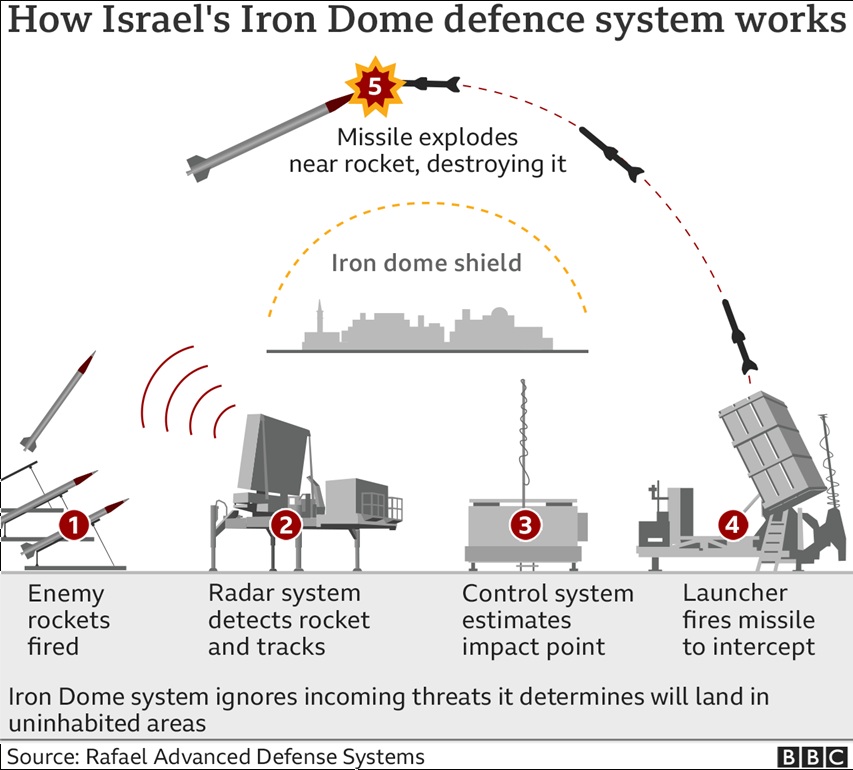
The US–Israel defense technology partnership has produced systems that protect American forces and shape global weapons markets. The most prominent example is the Iron Dome missile defense system — co-developed and partly funded by the United States, which has provided over $1.5 billion specifically for missile defense programs. The US Army subsequently purchased Iron Dome batteries for its own ground forces, a remarkable reversal in which a small ally’s weapons system was adopted by the world’s largest military.
The Arrow 3 exo-atmospheric interceptor — capable of destroying ballistic missiles in space before they re-enter the atmosphere — was developed jointly with Boeing. David’s Sling was developed with Raytheon. The F-35I “Adir” was customized with Israeli avionics and electronic warfare systems, and the combat data generated from its unprecedented real-world use (over 15,000 flight hours across multiple conflict theaters as of early 2025) flows back to Lockheed Martin and the US Air Force.
This technology pipeline is increasingly recognized as one of the core strategic benefits of the alliance. As the Heritage Foundation notes, Israel “is unusually effective at quickly fielding cutting-edge military technologies” — and the US, which often struggles to move from R&D to operational deployment, benefits directly from that speed and battle-testing.
The 2027 National Defense Authorization Act currently under debate in Congress contains Section 224, a “United States-Israel Defense Technology Cooperation Initiative” that would significantly deepen bilateral R&D, co-production of weapons, joint ventures, and licensing agreements across essentially every area of defense technology — from AI to hypersonics to drone countermeasures. According to Al Jazeera, this represents the most ambitious expansion of US-Israeli military-industrial integration ever proposed.
6. Economic and Trade Partnership: $50 Billion and the Startup Nation
The US–Israel relationship is not only a security alliance — it is increasingly an economic and technological partnership with tangible benefits to the American economy. According to the US State Department, bilateral trade in goods and services stands at approximately $50 billion annually, with the United States serving as Israel’s largest trading partner since the signing of the 1985 US–Israel Free Trade Agreement — notably, the first free trade agreement the United States ever signed with any country.
Israel’s innovation ecosystem — the “Startup Nation” — is the most productive in the world on a per-capita basis outside the US itself. Companies founded or built by Israeli entrepreneurs and Unit 8200 alumni include: Check Point (network security), CyberArk (identity security), Wiz (cloud security), Mobileye (autonomous driving), and dozens of others that are deeply integrated into American enterprise infrastructure.
Major US corporations maintain significant R&D centers in Israel: Intel, Google, Microsoft, Apple, Amazon, Cisco, and Meta all operate major Israeli research facilities. This creates a direct employment and innovation pipeline that serves American economic interests. As the Hudson Institute has argued, Israel “functions as a secure, institutionally aligned partner within a democratic technology ecosystem, reinforcing resilience in the broader AI and critical infrastructure contest” — a counterweight to opaque, state-directed technology investment by China and others.
7. Domestic Politics: Congress, Bipartisan Tradition, and Pro-Israel Advocacy
No explanation of why the US supports Israel is complete without acknowledging the domestic political dimension. Pro-Israel advocacy — most prominently through AIPAC (American Israel Public Affairs Committee) but also through a network of Jewish-American organizations, Evangelical Christian groups, and institutional donors — has been one of the most consistently effective lobbying forces in Washington for decades.
The practical results are documented: Congress has never successfully blocked a weapons sale to Israel in over 75 years, according to the Council on Foreign Relations. The 2026 National Defense Authorization Act included $500 million for Israeli missile defense, $80 million for anti-tunneling operations, and $70 million for joint drone countermeasures — voted through by strong bipartisan majorities. The 2026 State Department appropriations act provided an additional $3.3 billion in military aid.
Bipartisan support has been a defining feature of the relationship: every president from Truman to Trump has maintained it, and members of Congress from reliably liberal and reliably conservative districts alike have consistently voted for Israel aid packages. For decades, supporting Israel has been one of the safest political positions in Washington regardless of party.
However, this consensus is under greater strain than at any point in the modern era. Younger Americans and progressive Democrats have become significantly more critical of unconditional support for Israel in the aftermath of the Gaza conflict and subsequent military operations. AIPAC’s influence, while still formidable, faces organized counter-lobbying from groups like J Street. The political calculus, while still favorable to Israel, is more contested than it was a decade ago.
What America Actually Gets in Return
Critics often frame the US–Israel relationship as one-directional — a wealthy superpower subsidizing a smaller ally out of historical guilt or political pressure. The reality is substantially more reciprocal than that framing suggests. Here is what the United States concretely receives from the alliance:
- Real-time intelligence on Iranian military capabilities, Hezbollah structure, and regional threat networks — intelligence that has directly protected US forces across the Middle East
- Combat-tested weapons data from IDF operations — every F-35 sortie over Iran generates performance data that feeds back to the US Air Force and Lockheed Martin
- Co-developed defense systems (Iron Dome, Arrow 3, David’s Sling) that protect US military assets and have been adopted by the US Army itself
- A forward-deployed democratic partner that absorbs Iranian military pressure and proxy activity without requiring a single US soldier stationed on Israeli soil
- $50 billion in annual bilateral trade including critical cybersecurity, pharmaceutical, and technology exports that strengthen the American economy
- Counter-proliferation operations — Israel’s strikes on Iraq’s Osirak reactor (1981) and Syria’s Al-Kibar nuclear facility (2007) prevented nuclear proliferation that would have directly threatened US interests and regional stability
The Washington Institute for Near East Policy frames it succinctly: this is an alliance based on “tangible, steadily increasing security and economic interests, not just shared values.” The $3.8 billion in annual military aid — the figure most often cited by critics — needs to be weighed against what the US receives in exchange, much of which never appears in a line item on a government budget.
Critics and Evolving Tensions
A fair account of why the US supports Israel must also acknowledge the growing chorus of criticism — both within the United States and globally. The concerns are substantive and cannot be dismissed as simply anti-American or antisemitic:
- Humanitarian costs — the conduct of Israeli military operations in Gaza and Lebanon has generated widespread international condemnation and significant civilian casualty figures that create genuine moral and legal questions about the limits of unconditional support
- Shifting American public opinion — polling consistently shows declining support for unconditional backing of Israel among Americans under 35 and among non-white voters, representing a long-term political challenge for the alliance
- Entanglement risk — the 2026 US military involvement in strikes against Iran directly alongside Israel raised questions about whether the alliance draws America into conflicts it would not otherwise choose
- Cost vs. benefit debate — critics at organizations like the Quincy Institute argue that $21.7 billion in military aid since October 2023 alone, combined with US regional military operations, represents a disproportionate expenditure of American resources for the strategic return received
These tensions are real, and they are producing the most sustained domestic debate about the alliance since its founding. However, as the War on the Rocks analysis of February 2026 notes, the institutional depth of the alliance — the MOU framework, the joint weapons programs, the intelligence-sharing architecture, the bipartisan Congressional support — creates enormous structural inertia that policy debates have not yet moved.
Conclusion: Seven Reasons, One Enduring Alliance
The answer to why the United States supports Israel is not one thing. It is seven things, all operating simultaneously and reinforcing each other across 78 years of history. The original moral commitment of 1948 created the foundation. Cold War strategy gave it strategic depth. Shared democratic values gave it cultural resilience. Intelligence cooperation gave it concrete operational value. Defense technology partnerships gave it economic dimension. The trade relationship gave it financial weight. And domestic political architecture gave it institutional durability.
No single reason explains the alliance. Remove any one of them — the strategic logic, the shared values, the domestic politics, the technology partnership — and the others keep the relationship intact. That layered quality is precisely why the US–Israel alliance has survived assassinations, wars, diplomatic crises, changes of government in both countries, and the end of the Cold War that originally gave it its strategic framing.
Whether the alliance in its current form continues to serve American interests at its current scale — a question that is genuinely contested — is a different matter. But understanding why it exists requires taking all seven reasons seriously, not just the ones that fit a particular political narrative.
See also: Why Israel is so powerful: military, economic, and geopolitical factors · Why Israel is stronger than Iran militarily — 2026 comparison
Frequently Asked Questions
Why does the US support Israel so strongly?
US support for Israel rests on seven overlapping pillars: historical commitment dating to 1948, Cold War strategic logic that identified Israel as a vital regional anchor, shared democratic values and cultural affinity, deep intelligence-sharing that benefits US national security, joint defense technology development including Iron Dome and Arrow systems, a $50 billion annual trade relationship, and durable bipartisan domestic political support. These factors have reinforced each other for over 75 years, creating one of the most entrenched alliances in modern international relations.
How much money has the US given Israel in total?
The Council on Foreign Relations estimates the US has provided over $300 billion in total economic and military assistance to Israel since 1948, adjusted for inflation — more than any other country in history. Annual military aid under the current Memorandum of Understanding stands at $3.8 billion per year. Since the October 7, 2023 Hamas attack, the US has committed an additional $21.7 billion in military aid, plus tens of billions more in approved arms sales for future delivery.
When did the US start supporting Israel?
Formal US support began on May 14, 1948, when President Truman recognized Israel just 11 minutes after its declaration of independence. Strategic military cooperation deepened significantly after the 1967 Six-Day War, and the current formal aid framework — the 10-year Memorandum of Understanding — was first established under President Reagan in the early 1980s.
Does the US benefit from supporting Israel?
Yes, concretely. The US benefits through: real-time intelligence on regional threats, combat data from IDF operations that improves US weapons systems, jointly developed defense systems now used by the US Army (Iron Dome), a $50 billion annual trade relationship, Israeli cybersecurity technology protecting US critical infrastructure, and a democratic partner that absorbs Iranian military pressure without requiring US troops on Israeli soil.
Is US support for Israel bipartisan?
Historically, yes — it has been one of the most reliably bipartisan positions in American foreign policy, supported by every president since Truman. Congress has never blocked a weapons sale to Israel in 75+ years. However, public opinion has become more divided since 2023, particularly among younger voters and progressive Democrats, creating the most significant challenge to the political consensus in the alliance’s modern history.
What is the US-Israel Memorandum of Understanding?
The MOU is a 10-year security assistance agreement, most recently signed in 2016 under President Obama, committing $38 billion in military aid over 2019–2028 ($3.8 billion per year). It covers Foreign Military Financing grants, missile defense co-funding, and joint technology development. A new MOU covering the period beyond 2028 is currently under negotiation, with both sides reportedly discussing a larger and potentially more integrated framework.