

Last Updated on 4 months ago by TodayWhy Editorial
In a volatile region surrounded by adversaries, Israel stands out as one of the most formidable nations on Earth. Despite its small size—roughly the area of New Jersey—and a population of about 10.3 million, Israel consistently ranks among the world’s top military powers, innovation leaders, and high-income economies.
TodayWhy dives deep into why Israel is so powerful, examining its unmatched military capabilities (why Israel is so strong), extraordinary economic resilience (why Israel is so rich), technological edge, human capital, strategic alliances, and cultural DNA of innovation under pressure. Whether you’re researching geopolitics, business, or global affairs, these insights reveal how a young nation transformed existential threats into sources of strength.
A Nation Born From Necessity
Israel was established in 1948, immediately facing a coordinated military assault from five neighboring Arab states. This founding trauma — existential threat as a baseline condition — shaped every dimension of Israeli society. Defense was never optional; it was the prerequisite for survival.
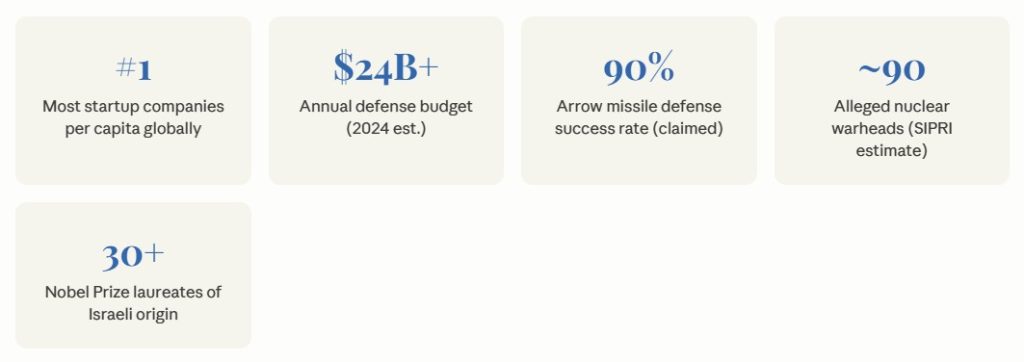
This context explains why Israel consistently invests more than 5% of its GDP in defense, why compulsory military service applies to nearly all citizens, and why the country has developed one of the most advanced domestic arms industries in the world. Vulnerability, paradoxically, became the engine of strength.
1. Military Power: Why Israel Is So Strong
Israel’s defense posture is the cornerstone of its power. Ranked 15th out of 145 countries in the 2026 Global Firepower Index (with a PowerIndex score of 0.2707), Israel outperforms larger neighbors like Iran (ranked 16th) despite having far fewer personnel and resources.
Key factors driving this strength include:
- Mandatory Military Service and Elite Training: Universal conscription for both men and women (with reserves) creates a highly skilled, battle-tested force. Elite units like Unit 8200 (cyber/intelligence) and Sayeret Matkal have produced world-class leaders who later fuel the tech sector.
- Advanced Defense Technology: Israel’s multi-layered missile defense—Iron Dome, David’s Sling, and Arrow systems—has achieved interception rates above 90% in real-world conflicts. The Iron Dome, co-developed with the U.S., remains a global benchmark for short-range protection.
- Record Defense Budget and Exports: In 2026, Israel’s defense budget reached approximately $34.6 billion, fueling next-generation R&D in AI, drones, robotics, and autonomous systems. Defense exports hit historic highs—nearly $15 billion in 2024—with demand surging from Europe, the U.S., and India for proven battlefield technology.
- Intelligence Dominance: Mossad’s legendary operations and Unit 8200’s cyber capabilities provide unmatched strategic foresight. From preemptive strikes to real-time battlefield intelligence, Israel’s intel apparatus turns defense into offense.
From Iron Dome to the IDF
The Israel Defense Forces (IDF) is widely regarded as one of the most capable militaries on Earth relative to its size. Several factors drive this assessment:

Air Superiority
Israel operates one of the most advanced air forces in the Middle East, equipped with F-35I “Adir” stealth fighters. The IAF (Israeli Air Force) has demonstrated remarkable precision-strike capabilities across multiple conflicts.
Multi-Layered Missile Defense
Israel has developed the most sophisticated layered missile defense architecture in the world: Iron Dome (short range), David’s Sling (medium range), and the Arrow system (long-range ballistic missiles). No other nation of comparable size fields such a comprehensive defensive umbrella.
Cyber Warfare
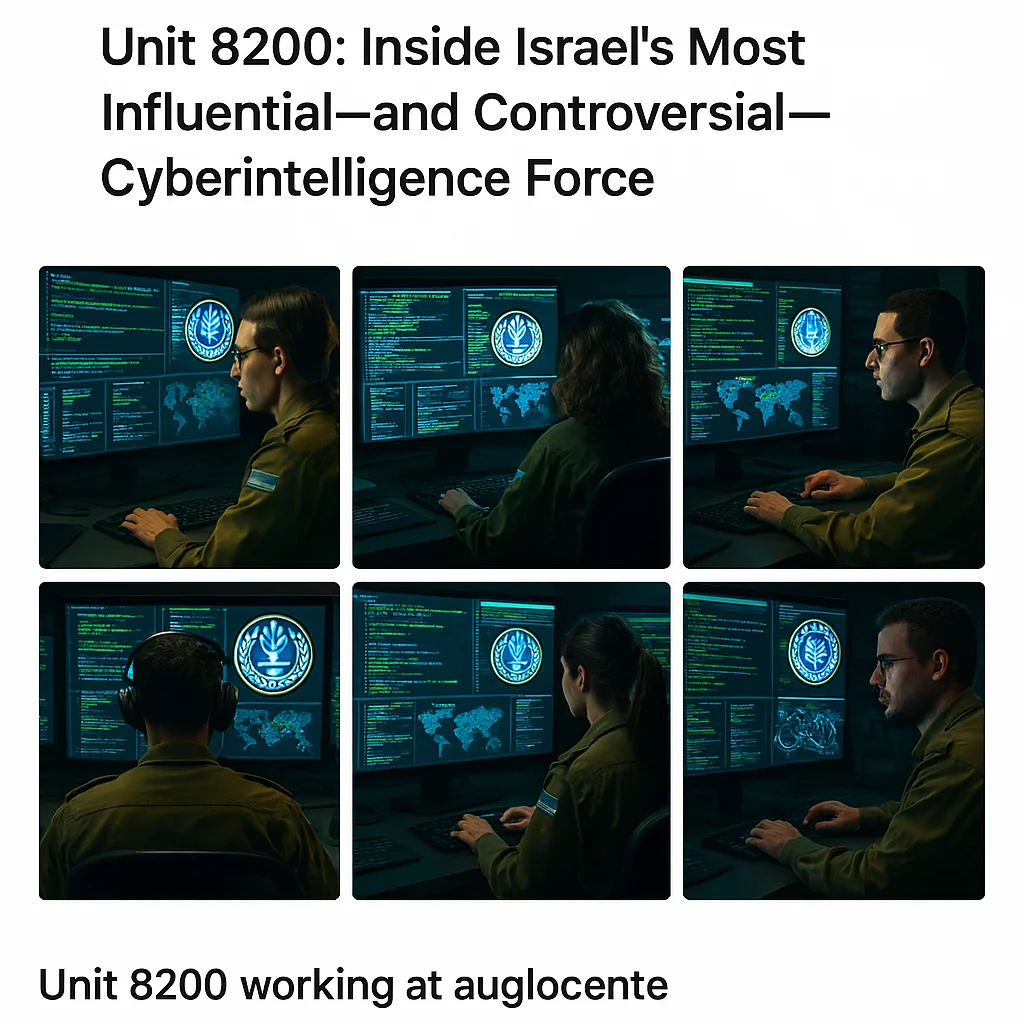
Unit 8200 — Israel’s signals intelligence and cyberwarfare unit — is frequently compared to the NSA in terms of capability. Israel was one of the first nations to weaponize cyber tools at a state level (Stuxnet being the most publicly known example), and its offensive and defensive cyber capabilities remain among the world’s most advanced.
“Israel has built a military culture that turns constraints into advantages — limited manpower demands maximum technological leverage, which in turn drives world-class innovation across defense and civilian sectors.” — Former NATO analyst
2. Economic Powerhouse: Why Israel Is So Rich
Israel’s GDP per capita stands at around $54,000–$60,000+ (nominal, with PPP estimates exceeding $60,000 in 2025–2026 projections), placing it among the world’s wealthiest nations despite limited natural resources. Total GDP exceeds $500 billion, and the economy rebounded strongly with 3.1% growth in 2025 after wartime slowdowns.
Why Israel is so rich boils down to these drivers:
- The “Startup Nation” Phenomenon: Israel boasts the highest number of startups per capita globally. In 2025 alone, Israeli tech companies raised $15.6 billion in funding—up from previous years—and produced major exits like Wiz (acquired for $32 billion).
- Tech as Economic Engine: Cutting-edge technologies account for 17% of GDP, 11.5% of jobs, and 57% of exports. Cybersecurity, AI, semiconductors, and defense-tech lead the charge.
- Resilient Recovery and Diversification: Despite regional conflicts, the shekel strengthened, equity markets rose, and high-tech capital inflows continued. Natural gas discoveries and water/agriculture tech (drip irrigation, desert farming) add self-sufficiency.
- Venture Capital Density: Israel has one of the highest concentrations of VC funds per capita outside Silicon Valley, attracting global giants like Google, Intel, and Microsoft to establish major R&D centers.
Economic Resilience
Israel’s GDP per capita (~$55,000) places it among the wealthiest countries in the world — comparable to France and Japan, and well ahead of its regional neighbors. This wealth funds a robust welfare state, world-class universities, and — critically — a defense industrial complex that does not rely solely on imports.
Elbit Systems, Rafael Advanced Defense Systems, and Israel Aerospace Industries (IAI) are among the world’s top 50 defense contractors. Israel is a net weapons exporter, selling systems to more than 130 countries. This industrial base means Israel can sustain prolonged military operations without becoming supply-dependent on any external partner.
This combination of high R&D spending (among the world’s highest as a percentage of GDP), risk-tolerant culture, and battlefield-tested innovation makes Israel’s economy remarkably rich and adaptable.

3. The Silicon Wadi: Israel’s Tech Dominance
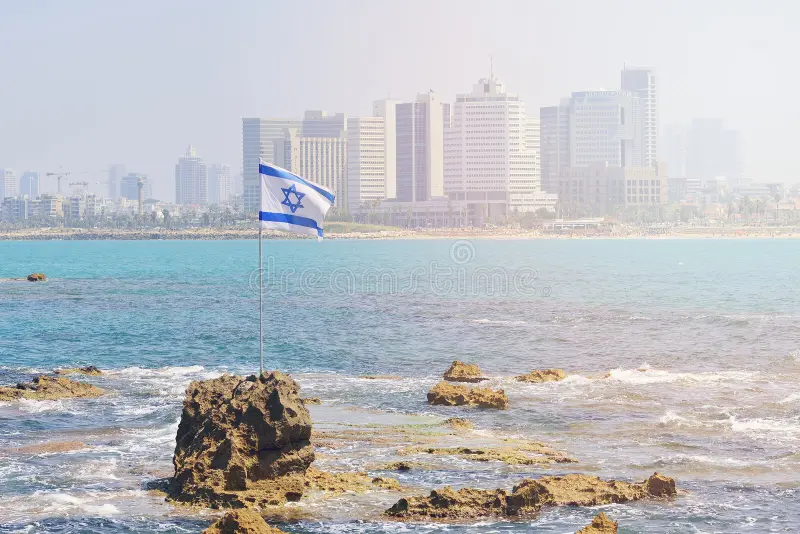
Tel Aviv has earned the nickname “Silicon Wadi” for good reason. Israel produces more NASDAQ-listed companies per capita than any country other than the United States — an extraordinary achievement for a nation of under 10 million people.
Key sectors where Israel leads globally include:
- Cybersecurity — companies like Check Point, CyberArk, and Wiz have made Israel a world leader in enterprise security software.
- Agricultural technology — drip irrigation, developed by Netafim, has transformed global water-scarce farming.
- Medical technology — companies like Given Imaging (swallowable capsule cameras) and ReWalk Robotics demonstrate Israel’s biotech depth.
- Semiconductors and chip design — Intel, Qualcomm, and Google all operate major R&D centers in Israel, drawn by exceptional engineering talent.
This technological density has a direct military application: innovations move fluidly between civilian startups and defense procurement, creating a virtuous cycle that keeps Israel’s military tech ahead of regional adversaries by decades.
Technology Innovation Power
Israel’s power isn’t just about size—it’s about brains. Nicknamed the “Startup Nation,” the country invests heavily in turning necessity into invention.
- Defense-Tech Boom: Post-2023 conflicts, defense startups nearly doubled by mid-2025. AI, autonomy, and robotics now dominate, with real-world combat validation driving global demand.
- Cybersecurity Leadership: Israeli firms protect critical infrastructure worldwide; many Fortune 500 companies rely on Israeli cyber tools.
- Civilian Spin-Offs: Military tech transfers to civilian sectors—Waze (navigation), Mobileye (autonomous driving), and countless medical breakthroughs—fuel economic growth.
Government policies via the Israel Innovation Authority, combined with a culture that celebrates failure as a stepping stone, sustain this edge.
4. Human Capital and Cultural Resilience
Israel’s greatest asset is its people:
- World-Class Education: High secondary and tertiary enrollment rates, with emphasis on STEM from an early age.
- Immigrant Talent: Waves of skilled Jewish immigrants (and others) bring diverse expertise.
- Chutzpah Culture: Risk-taking, questioning authority, and rapid iteration—honed by history and military service—drive entrepreneurship.
- Unity in Adversity: Mandatory service and national service foster networks that last a lifetime.
This human capital explains why a resource-poor nation outperforms many larger ones.
Mandatory Military Service
Israel’s universal conscription policy (men serve 32 months, women 24 months) means the IDF functions as a national talent development system. High-performing individuals are funneled into elite units — 8200, Talpiot, Mamram — where they receive world-class training in engineering, cybersecurity, and systems thinking while still teenagers.
Upon discharge, these veterans carry extraordinary skills and networks directly into the startup ecosystem. The IDF is widely credited as Israel’s largest and most effective technology incubator. Companies like Check Point, Waze, and Samsara trace their founding teams directly to elite military units.
5. Strategic Alliances and Geopolitics
No discussion of why Israel is so powerful is complete without its ironclad U.S. partnership. Annual military aid (primarily for Iron Dome and qualitative military edge) combines with intelligence sharing and joint R&D. The U.S. gains battle-tested technology and a reliable Middle East foothold.
Israel also cultivates ties with Europe, India, Gulf states (via Abraham Accords), and others through trade, tech, and security cooperation.
Geopolitical Alliances & Diplomacy
The U.S.-Israel strategic relationship is the cornerstone of Israeli security. The United States provides approximately $3.8 billion in annual military aid, guaranteed access to advanced weapons systems, and an implicit (and sometimes explicit) security guarantee. This relationship gives Israel diplomatic cover in international forums and access to technology sharing unavailable to most other nations.
Beyond the U.S., the Abraham Accords (2020) normalized relations with the UAE, Bahrain, Sudan, and Morocco — dramatically reshaping Israel’s regional position. Previously isolated, Israel now has open economic and security cooperation with key Gulf states, creating new strategic depth.
Overcoming Challenges: From Desert to Global Player
Israel transformed arid land into fertile fields via drip irrigation and desalination. Offshore gas fields now make it an energy exporter. These feats mirror its broader story: turning existential threats into innovation catalysts.
Conclusion: Why Israel’s Power Matters
Why Israel is so powerful ultimately stems from a perfect storm of military ingenuity, economic dynamism, technological leadership, and unbreakable human spirit. It is strong because it must be—and rich because it innovates relentlessly.
As global threats evolve (cyber, drones, AI warfare), Israel’s model offers lessons for nations worldwide. Its defense exports, tech ecosystem, and resilience position it as a pivotal 21st-century power—small in size, enormous in impact.
For businesses, investors, or policymakers, understanding these factors isn’t optional—it’s essential. Israel isn’t just surviving; it’s thriving and shaping the future.
Frequently Asked Questions
Why is Israel’s military so strong despite its small size?
Israel’s military strength stems from compulsory service, high defense spending (5%+ of GDP), world-class domestic arms production, elite intelligence services, and a culture that treats technological innovation as a security imperative. Size is compensated by quality, technology, and strategic depth through alliances.
How does Israel compare to its neighbors militarily?
By most conventional measures — air power, cyber capability, missile defense, and intelligence — Israel holds a decisive qualitative advantage over any individual regional adversary. Its F-35 fleet, multilayered missile defense, and cyber capabilities have no regional equivalent.
Does the U.S. give Israel special military support?
Yes. The U.S. provides approximately $3.8 billion in annual military assistance, technology co-development programs, and preferential access to advanced platforms including the F-35. Israel is the only country currently cleared to operate the F-35I variant with its own electronic warfare modifications.
What role does innovation play in Israeli power?
Innovation is central. Israel has more tech startups per capita than any country except the U.S., and its defense industry is a global arms exporter. The military-to-civilian talent pipeline means defense R&D drives broader economic competitiveness, and vice versa.
Does Israel have nuclear weapons?
Israel neither confirms nor denies nuclear weapons possession. Most independent assessments, including SIPRI, estimate approximately 90 warheads. Israel has not signed the Nuclear Non-Proliferation Treaty (NPT), maintaining deliberate strategic ambiguity.
More stories: