
Last Updated on 2 months ago by TodayWhy Editorial
What happens if the US blockades the Strait of Hormuz? When this article first asked that question, it was a thought experiment. It is not one anymore. The United States has now blockaded Iran twice — once in April 2026, and again starting July 14, 2026. We no longer have to guess. We have receipts.
This is a rewritten answer, built on what actually happened rather than what analysts predicted would happen. The short version: the blockade did not close the Strait. It did not trigger World War III. But it did something more interesting — and more dangerous — than either of those.
What happens if the US blockades the Strait of Hormuz? The answer, twice tested
A US blockade of the Strait of Hormuz is not a blockade of the Strait at all. That distinction matters more than any other point in this article.
Washington has never tried to shut the waterway. It has tried to shut Iran — stopping ships from entering or leaving Iranian ports while leaving the shipping lanes themselves open to everyone else. Trump was blunt about the naming on Truth Social, calling it the “IRANIAN BLOCKADE” precisely because it targets Iran’s ships and Iran’s customers, not the strait.
So the honest answer to “what happens if the US blockades the Strait of Hormuz” is: the oil keeps moving, but Iran’s oil stops moving, and the strait becomes a place where two navies test each other every week. That is what happened. Here is how.
Blockade #1: April 13 to June 17, 2026
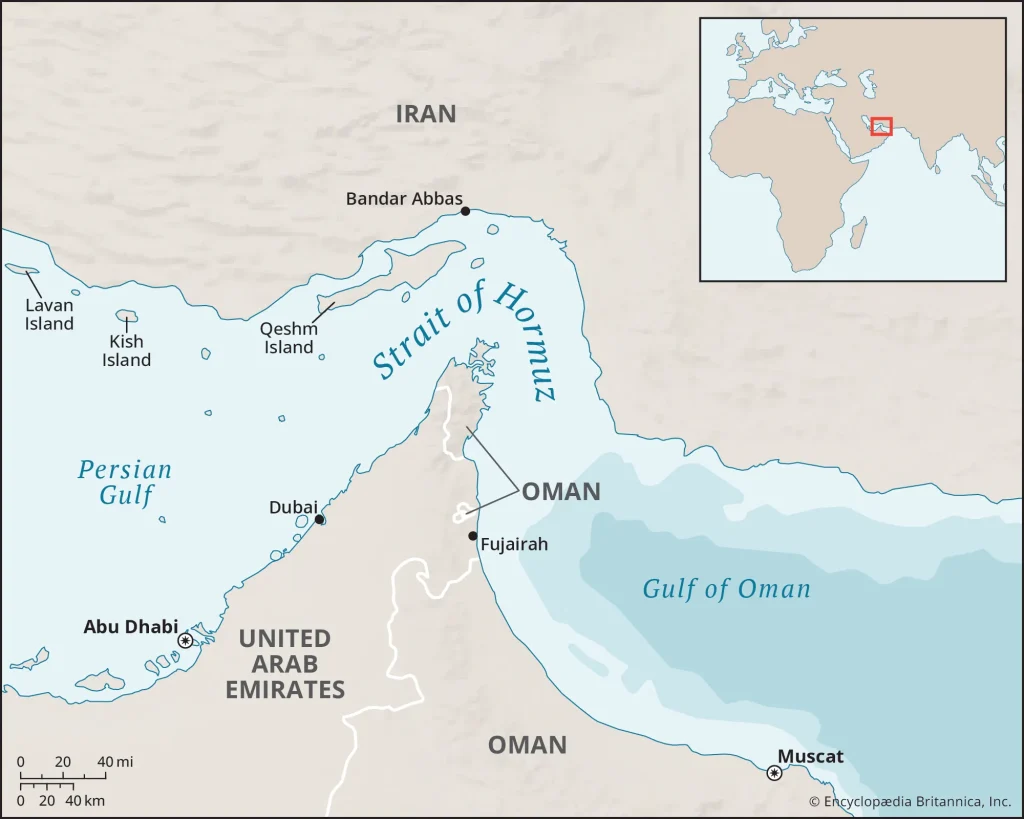
The first US blockade began the day after the Islamabad talks collapsed. For two months the region lived under a strange double squeeze: Iran was interdicting traffic through the strait, and the US Navy was sealing Iranian ports.
The results were lopsided. Iran’s crude exports fell roughly 84% in May, according to Lloyd’s List — a hammer blow to a war economy already running on fumes. Global oil, meanwhile, stayed high but did not break. The world’s oil kept flowing; Iran’s did not.
That asymmetry is the whole strategic logic of the blockade, and it is why the blockade became the single most valuable bargaining chip Washington held. When the two sides finally signed a 14-point memorandum of understanding on June 17, the deal formalized the ceasefire, ended the US naval blockade, reopened the Strait of Hormuz, and dangled a broad oil-sanctions waiver in front of Tehran. We covered why that deal looked like a win at the time in our analysis of the Versailles framework.
The blockade was lifted. It lasted nine weeks.
Why the blockade came back on July 14
The MOU died over a single ambiguous sentence. The text asked Iran to use its “best efforts” for safe passage, with no charges — but only for 60 days. It said nothing about what happens on day 61, and it never ruled out Iranian “service fees” later.
Tehran read that as an admission that it still administers the waterway. Washington read it as a countdown to a fully open strait. Both sides were reading the same sentence and seeing opposite futures.
The collapse then ran on a loop, and the loop repeated three times: Iran hits a commercial vessel in the strait → the US answers with contained strikes → Iran fires on US bases in Gulf states. It happened after Iran struck Kuwait and Bahrain, and again when Iranian missiles flew at a Jordanian air base.
By early July the loop broke in a worse direction. After Iran hit three vessels, the US revoked Iran’s license to sell oil internationally — killing the MOU’s central economic concession. Trump then declared the ceasefire over at the NATO summit in Ankara. On July 13 he announced the blockade was returning, effective 20:00 GMT on July 14, with US Central Command striking Bandar Abbas and Kish Island as the announcement landed.
Iran’s chief negotiator, parliamentary speaker Mohammad Bagher Ghalibaf, gave the Iranian position in one line: “Hormuz will only open with Iranian arrangements, not American threats.”
What the blockade actually did to oil prices
This is where the 2026 record contradicts almost every forecast — including the ones in the original version of this article.
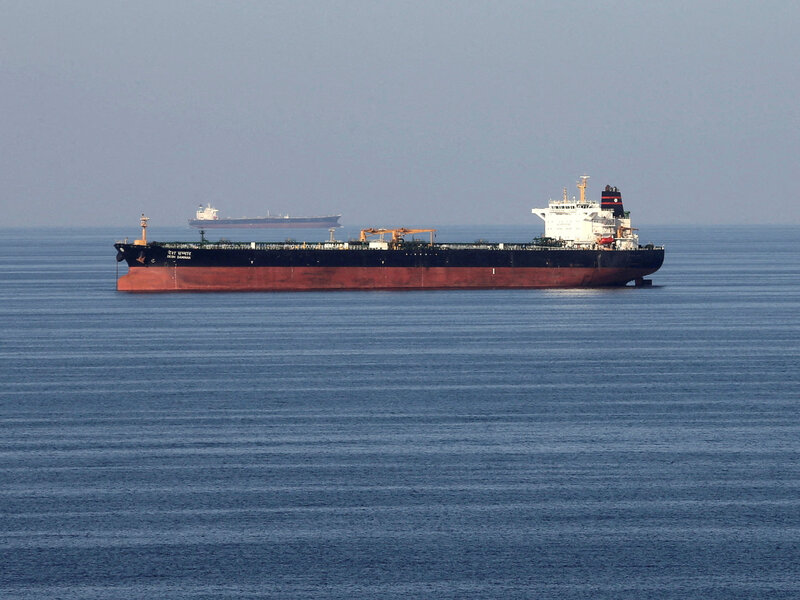
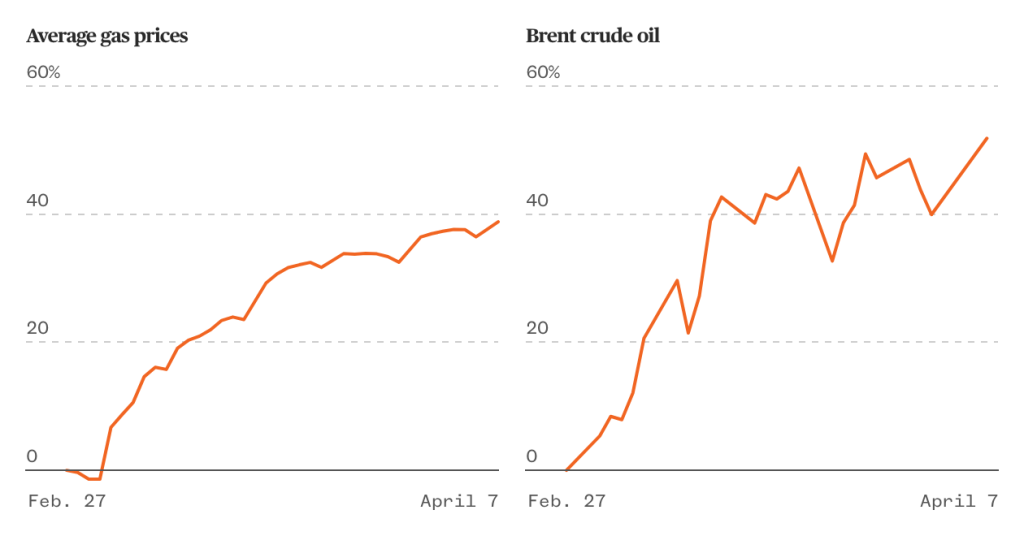
The predictions said $150 a barrel. The reality was messier and, in the end, milder. Brent did spike above $102 in March when Iran first closed the strait, and dated Brent briefly touched levels not seen since 2008. But the blockade itself did not push prices to catastrophe. By July 13, with strikes resuming and the blockade returning, Brent climbed just over 4% to about $78.82 — elevated, but nowhere near crisis pricing.
Why so calm? Three reasons the doom forecasts missed:
- The market learned the difference. A US blockade of Iranian ports removes Iranian barrels only — a modest slice of the roughly 20 million barrels a day that cross the strait. Blocking Iran is not blocking Hormuz, and traders eventually priced that in.
- Saudi, UAE and Iraqi cargoes kept sailing. The southern corridor through Omani waters stayed usable, with the US Navy escorting traffic through it.
- Fatigue is a price suppressant. After five months of headlines, each new escalation moves markets less than the last. The risk premium is already priced in.
The deeper price story — how the strait’s closure moved oil from $72 to $114 and back — is traced in full in our Strait of Hormuz oil price tracker.
The new twist: Trump wants a 20% toll
The July 2026 blockade comes with something no previous blockade in modern history has attempted. Trump announced the US would become the self-declared “Guardian of the Hormuz Strait” and be reimbursed at 20% of the value of all cargo shipped through it.
That is not a blockade. That is a tollbooth.
And it walks straight into a legal wall. The International Maritime Organization — the UN body that governs shipping — stated flatly that there is no legal basis for mandatory transit fees in the Strait of Hormuz. The IMO has said the same thing to Iran, which has spent the entire war trying to charge its own fees.
The irony is thick. Washington spent five months arguing that Iranian tolls were economic blackmail that violated freedom of navigation. It is now proposing a toll ten times larger, on the same water, under the same law.
August 2026 update: traffic near zero, territory claim, and “no talks”
By late August the second blockade had produced the lowest shipping volumes of the entire war. Kpler data showed daily commodity transits repeatedly falling into single digits (as low as 1–7 vessels on some days). Independent monitors described the strait as effectively closed or “severely restricted” on Day 174 of the disruption that began 28 February 2026.
On 14–18 August President Trump escalated further, stating he would declare the strait U.S. territory and posting a map labelled “NEW U.S. Territory.” He simultaneously claimed the waterway was “open and operating” and free of mines — claims contradicted by shipping data and insurer behaviour.
Trump also declared there were “no talks or conversations going on, or scheduled” with Iran. The United Arab Emirates, after reported Iranian missile activity near its vessels, suspended trade and financial dealings with Iran.
Iran maintained that the strait would remain closed until its conditions (lifting of the blockade, sanctions relief, release of frozen assets) were met. Attacks on commercial shipping continued.
How the U.S. Navy is rewriting the southern corridor
The second blockade did not simply seal Iranian ports. It was accompanied by an increasingly effective escort operation that has begun to reverse the practical balance inside the strait.
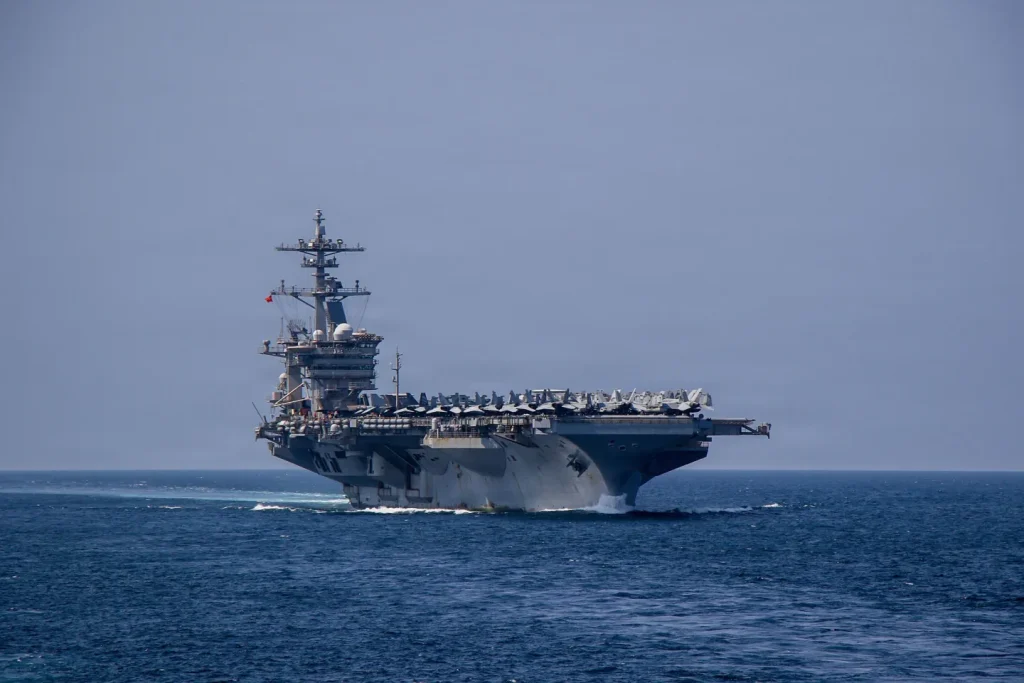
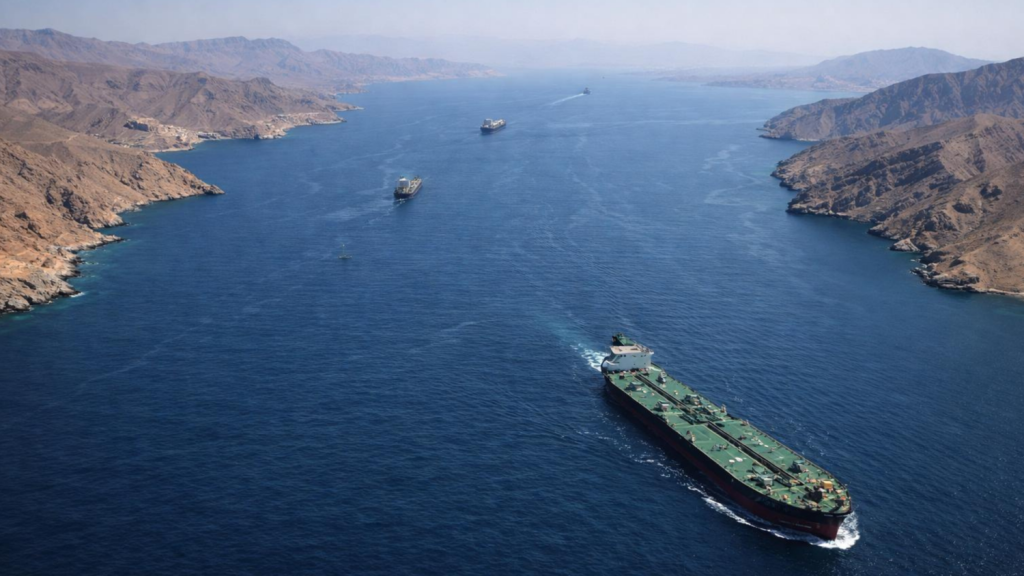
According to Kpler, more than 80% of commercial transits in the two weeks ending mid-August used the southern (Omani) corridor under U.S. protection — the opposite of the situation a month earlier. The U.S. Navy, operating roughly 20 warships in the Gulf of Oman including two aircraft carriers, organises night-time convoys that often sail with AIS switched off. CENTCOM states it has already shepherded more than 1,000 vessels safely through the waterway.
U.S. airstrikes in recent weeks degraded Iranian radar and maritime surveillance near the strait, forcing the IRGC to launch drones and missiles with far less precision. The result is visible in the attack statistics: at least 15 vessels on the southern route were hit in June, causing casualties; by August successful hits had dropped to a single vessel, according to UKMTO.
Oil volumes reflect the change. Protected southern-lane tanker traffic alone moved about 5 million barrels per day in July. When diverted cargoes are included, total oil leaving the Gulf reached roughly 15 million barrels per day — approaching the pre-war average of 20 million, according to U.S. Energy Secretary Chris Wright.
The recovery remains fragile. Major carriers still largely avoid the strait, several ADNOC and Greek-owned tankers have been hit even on the protected route, and U.S. logistics are strained after the near-destruction of its Bahrain base. Iran continues to declare the waterway closed and to demand that vessels use its northern corridor. Yet the data show that the side able to provide credible protection is currently shaping which ships move and which do not.
What Iran can still do
Iran’s navy is largely gone. Its air defenses have been ground down for five months. And yet Tehran retains genuine escalation options, which is precisely why the blockade is dangerous rather than decisive:
- Mines. The cheapest, most disruptive tool Iran owns. Tehran has repeatedly threatened to mine the strait if its coast or islands are attacked — and the blockade attacks its coast by definition.
- Small boats and anti-ship missiles. Iran has already hit UAE-flagged tankers in Omani waters. It does not need a navy to make insurers panic.
- Gulf states as hostages. Every US base in Bahrain, Kuwait, Qatar and Jordan is a target Iran can reach. It has used all of them.
- Regional proxies. The Houthis remain capable of closing a second chokepoint at Bab el-Mandeb.
The uncomfortable truth: the blockade strangles Iran’s revenue, but it does not remove Iran’s ability to make the strait terrifying. It removes Iran’s incentive not to.
Three scenarios from here
1. Grinding stalemate (most likely). The blockade holds, Iranian exports collapse again, tit-for-tat strikes continue, and shipping volumes stay depressed but non-zero. Brent trades $75–$95. Talks limp on. This is simply the last three months, extended.
2. Negotiated administration (the off-ramp). Iran and Oman jointly administer transit under an internationally supervised protocol, with service fees but no tolls. The US lifts the blockade in exchange. This requires both Trump and Tehran to drop their toll demands — which is why it has not happened yet.
3. Mining and full closure (the tail risk). Iran mines the strait in response to blockade enforcement on its coast. Traffic stops entirely. Brent goes past $130. This is the scenario that has been forecast since March and has not arrived — but the blockade is exactly the trigger Iran named for it.
The bottom line
What happens if the US blockades the Strait of Hormuz? We now know: it does not break the global economy, and it does not break Iran. It creates a permanent, low-grade naval war in the world’s most important waterway, with a 20% toll bolted on top and no legal basis for any of it.
The original version of this article treated the blockade as a decisive move that would end the war quickly. Five months of evidence says the opposite. The blockade is not the endgame. It is the new normal — and both sides have now learned they can live in it indefinitely.
Frequently asked questions
Is the Strait of Hormuz open right now?
Partially. Traffic is reduced but not stopped. The US Navy escorts vessels through a southern corridor in Omani waters, while Iran insists ships use a northern route through its own territorial waters. Both sides publish contradictory claims about the strait’s status, which is itself part of the standoff.
Can the US legally charge tolls in the Strait of Hormuz?
No — at least not according to the body that governs global shipping. The International Maritime Organization has said there is no legal basis for mandatory transit fees in the strait, the same position it has taken against Iranian tolls. Trump’s 20% cargo levy has no precedent in modern maritime law.
Does the blockade stop the world’s oil?
No. It stops Iran’s oil. The shipping lanes remain open to everyone else, which is why the price shock was far smaller than forecasters expected.
Could Iran actually close the strait?
Yes, and it has done so before — with mines, drones and missiles rather than a navy. Tehran has repeatedly named attacks on its coast and islands as the trigger. The blockade attacks its coast by definition, which is what makes this the most dangerous phase of the war so far.
Is the Strait of Hormuz open right now?
No — not in any practical sense. As of 21–22 August 2026 (approximately Day 174 of the disruption), commercial traffic runs at 4–9 vessels per day versus a pre-war average above 130. War-risk insurance is priced at extreme multiples of normal rates. Major container lines have suspended use of the strait. Physical passage remains possible under highly restricted and dangerous conditions, but normal commercial navigation has effectively stopped.