
Last Updated on 5 months ago by TodayWhy Editorial
When the 2026 Iran War erupted on February 28, 2026, following coordinated U.S.-Israeli airstrikes on Iran, the world scrambled for a diplomatic off-ramp. The traditional mediators — Qatar and Oman — were knocked out of the running when Iran retaliated against their infrastructure. Into this vacuum stepped an unlikely candidate: Pakistan.
A country long associated with political instability, military rule, and regional tensions, Pakistan has reinvented itself as an indispensable peace broker in one of the most dangerous conflicts of the 21st century. But how did this happen? Why Pakistan — and why now?
TodayWhy unpacks every dimension of Pakistan’s surprising role in the 2026 Iran War, from strategic geography to personal diplomacy, examining the forces that positioned Islamabad at the center of global peacemaking.
1. Background: The 2026 Iran War
The 2026 Iran War began on February 28, 2026, when the United States and Israel launched coordinated airstrikes targeting Iran’s military and nuclear infrastructure. The conflict escalated rapidly: Iran responded with retaliatory missile attacks on U.S. military bases across the region and moved to close the Strait of Hormuz, the critical chokepoint through which roughly 20% of the world’s traded oil flows.
Over the following weeks, an estimated 5,000 people were killed across a dozen nations, including more than 1,600 Iranian civilians. Global energy markets convulsed, supply chains were disrupted, and the specter of a broader regional — or even global — war loomed large. The international community urgently needed a credible third party to bring the belligerents to the table.
2. Why Traditional Mediators Failed
Historically, Qatar and Oman have served as the Middle East’s preferred back-channel mediators. Qatar hosted Hamas political leadership and had brokered multiple ceasefires between Israel and Gaza. Oman maintained a rare, quiet line of communication with Tehran stretching back decades, having quietly facilitated early U.S.-Iran contacts that eventually led to the 2015 nuclear deal.
But the 2026 war changed the calculus dramatically:
- Qatar was effectively sidelined after Israeli strikes on Doha in late 2025 destroyed its credibility and neutrality as a host for negotiations.
- Oman was forced out of the broker role when Iran, in its broad regional retaliation, targeted Omani ports, ships, and coastal towns, making Muscat a party to the conflict rather than a neutral venue.
With both traditional intermediaries neutralized, the diplomatic world needed a new actor — one with open channels to Washington, credibility with Tehran, and no compromising ties to Israel.
3. Pakistan’s Unique Diplomatic Position
Pakistan fits this profile in ways that are almost tailor-made for the moment:
Geographic and Historical Links to Iran
Pakistan shares a 900-kilometer border with Iran — one of the longest Iran shares with any country. The two nations have deep historical, religious, and economic ties. Large communities of Shia Muslims in Pakistan maintain cultural and spiritual connections to Iran, while Pakistani Sunnis maintain strong ties with Saudi Arabia, giving Islamabad a rare ability to speak to both sides of the region’s sectarian divide.
No Diplomatic Relations With Israel
Unlike Qatar or Oman — both of which had developing, if discreet, ties with Israel — Pakistan does not recognize Israel and has never established diplomatic relations with it. This is a crucial asset: Iran’s leadership would not sit at a table arranged by a country perceived as an Israeli ally or interlocutor. Pakistan’s absence of Israeli ties removes a major objection Tehran could raise against the mediation.
A Trusted U.S. Partner — Again
After years of difficult relations with Washington (particularly following the 2011 raid that killed Osama bin Laden on Pakistani soil), Islamabad had rebuilt its standing with the Trump administration. Pakistan was notably exempted from a $397 million foreign aid freeze in February 2025, a signal of goodwill from Washington. Pakistan also hosted the U.S.-brokered India-Pakistan ceasefire of 2025, and Prime Minister Shehbaz Sharif nominated President Trump for the Nobel Peace Prize in its wake — a gesture that earned enormous goodwill in the White House.
No Track Record — But That’s an Advantage
Counterintuitively, Pakistan’s lack of a prior history as a Middle East mediator worked in its favor. Countries like China, Turkey, or Egypt carried their own regional baggage. Pakistan arrived as a relatively fresh face with no previous failed negotiations to defend or vested interests to protect.
4. Field Marshal Asim Munir: The Man Behind the Mediation
At the center of Pakistan’s diplomatic offensive is Field Marshal Syed Asim Munir, the Chief of Army Staff and de facto power behind Pakistan’s military-dominated government. Understanding Munir is essential to understanding why Pakistan, specifically, became the mediator.
Munir is the first Pakistani officer to hold the rank of Field Marshal in decades, and his personal relationships with key players on both sides of the conflict are extraordinary:
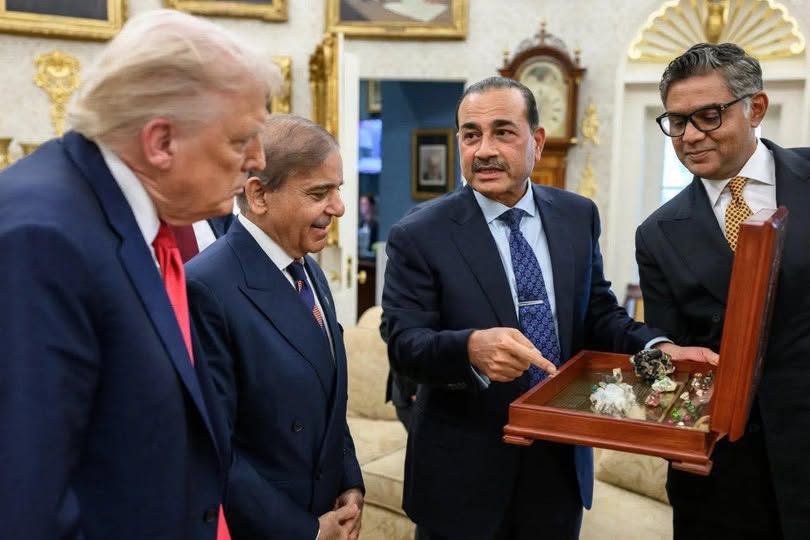
- He met with President Trump at the White House in June 2025, the first such meeting between a senior Pakistani official and Trump in his second term.
- He has cultivated ties with Iranian officials over years of bilateral military and intelligence engagements.
- He traveled personally to Tehran multiple times during the mediation — once in April 2026 and again in May 2026 — meeting with Iranian President Masoud Pezeshkian, Foreign Minister Abbas Araghchi, and Parliament Speaker Mohammad Bagher Ghalibaf.
As analysts noted, Munir was specifically selected for his dual track record with Tehran and with Trump — a rare combination in global diplomacy.
5. The “Flattery as Foreign Policy” Strategy
One of the most analytically interesting dimensions of Pakistan’s mediation role is the strategy that got it there. Political scientist Aqil Shah of McDaniel College in Maryland has described Pakistan’s approach as “flattery as foreign policy.”
The strategy began during the 2025 India-Pakistan conflict, when Trump intervened to broker a ceasefire. While India was reluctant to credit Trump, Pakistan did the opposite: Islamabad enthusiastically embraced Trump as a peacemaker, publicized his role, and formally nominated him for the Nobel Peace Prize.
This calculated flattery served multiple objectives:
- It gave Trump a foreign policy win he could tout domestically.
- It positioned Pakistan as a willing partner in Trump’s deal-making approach to diplomacy.
- It built personal goodwill between Munir and Trump that would pay dividends when a larger crisis demanded a trusted intermediary.
When the Iran War began, Trump and his administration already viewed Pakistan — and Munir personally — as reliable allies who understood the president’s ego and his desire to be seen as a dealmaker.
6. Pakistan’s Ties With Both Washington and Tehran
Pakistan’s ability to maintain simultaneous relationships with ostensibly opposing camps is the bedrock of its mediating credibility.
With the United States
The Trump administration’s warming toward Pakistan culminated in several concrete signals:
- The $397 million security assistance exemption from aid freezes.
- Trump’s personal reception of Munir at the White House.
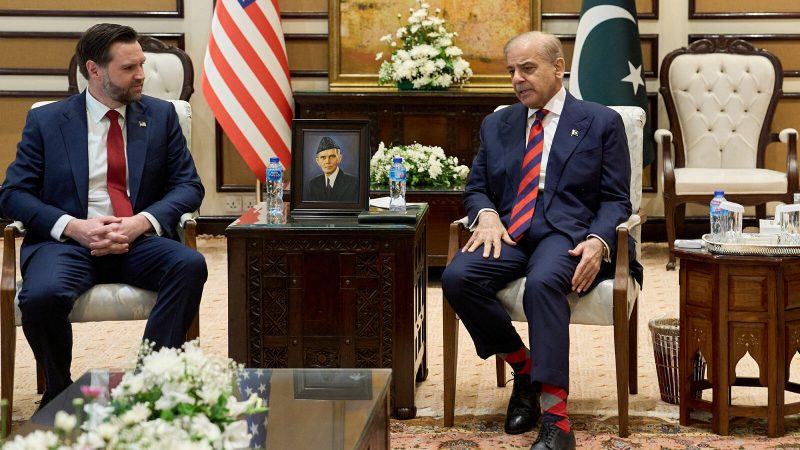
- U.S. endorsement of Pakistan’s mediation and participation in the Islamabad Talks at the highest levels, with Vice President JD Vance leading the 300-member U.S. negotiating team.
With Iran
Pakistan’s ties with Tehran are multidimensional and long-standing:
- The shared border creates unavoidable economic interdependence.
- Pakistan relies heavily on energy imports from the region; the closure of the Strait of Hormuz directly harms Pakistan’s economy.
- Pakistan’s large Shia Muslim population creates cultural bonds with Iran.
- Islamabad carefully avoided joining any anti-Iran military coalition, instead condemning strikes by all sides while maintaining open lines of communication with Tehran.
This approach — what analysts called “limited alignment without military entanglements” — preserved Pakistan’s credibility as a neutral party even as it expressed sympathy for regional peace.
7. The Pakistan-China Peace Plan
Pakistan’s mediation effort received a significant boost on March 31, 2026, when Pakistan and China jointly signed a five-point peace plan to end the Iran War. This was a landmark development for several reasons:
- China’s economic stake in the conflict is enormous — Beijing imports most of its oil and gas through the now-blockaded Strait of Hormuz. A quick resolution is a Chinese economic imperative.
- The joint plan gave Pakistan’s initiative international legitimacy and the backing of a permanent U.N. Security Council member.
- China’s existing diplomatic credibility with Iran — having brokered the 2023 Saudi-Iranian reconciliation — lent additional weight to the framework.
The five-point plan reportedly focused on a structured ceasefire, reopening the Strait of Hormuz, a moratorium on Iranian nuclear development in exchange for sanctions relief, security guarantees for regional states, and a framework for post-war reconstruction talks.
8. The Islamabad Talks: April 11–12, 2026
The crowning diplomatic achievement — so far — of Pakistan’s mediation role was hosting the Islamabad Talks at the Islamabad Serena Hotel on April 11 and 12, 2026. These were the highest-level direct talks between the United States and Iran since the 1979 Islamic Revolution — a staggering historical milestone.
Key Participants
- United States: Vice President JD Vance (accompanied by Special Envoy Steve Witkoff and Jared Kushner), leading a 300-member negotiating team.
- Iran: Parliament Speaker and former Revolutionary Guards commander Mohammad Bagher Ghalibaf.
- Moderator: Pakistan, represented by Field Marshal Asim Munir and Deputy Prime Minister and Foreign Minister Mohammad Ishaq Dar.
Structure
The talks lasted 21 hours across three rounds. The first round was conducted indirectly, with Pakistan shuttling proposals between the delegations; the second and third rounds were direct face-to-face negotiations.
Outcome
The talks ended without a final agreement. The two sides reportedly aligned on most points of a proposed 10-point ceasefire framework, but stumbled over two critical sticking points:
- The Strait of Hormuz — Iran demanded guarantees regarding the reopening timeline and security arrangements.
- The Iranian Nuclear Program — Washington and Tehran remained far apart on verification, enrichment caps, and the timeline for any sanctions relief.
Despite the lack of a signed agreement, the Islamabad Talks were widely considered a diplomatic success simply by occurring. A second round of talks was widely expected.
9. Ongoing Shuttle Diplomacy: May 2026
The failure to reach agreement at the Islamabad Talks did not derail Pakistan’s mediating role — if anything, it intensified it.
In the weeks following April’s talks, Field Marshal Munir conducted continuous shuttle diplomacy between Islamabad, Riyadh, Washington, and Tehran. By May 22, 2026, Munir was in Tehran for what his team described as a third round of intensive talks, meeting with Iranian Foreign Minister Abbas Araghchi, President Pezeshkian, and Parliament Speaker Ghalibaf.
Pakistan’s Defense Minister Khawaja Asif stated publicly that mediation efforts were “slowly moving closer to a positive result.” The Pakistan Army confirmed that “negotiations over the past 24 hours have led to encouraging progress toward a final understanding.” Iran’s Foreign Ministry spokesperson Esmaeil Baghaei acknowledged that “we have reached a turning point or a decisive situation,” even while noting that “gaps between Tehran and Washington are deep and significant.”
U.S. Secretary of State Marco Rubio acknowledged “slight progress” in the negotiations — diplomatic language that, in context, represented meaningful forward movement.
10. What Pakistan Gets Out of This
Pakistan’s mediation is not purely altruistic. Islamabad has significant strategic and economic stakes in a peaceful resolution:
Economic Interests
- Pakistan is heavily dependent on energy imports from the Gulf region. The blockade of the Strait of Hormuz has severely disrupted these supplies, exacerbating a domestic energy crisis.
- Several million Pakistani expatriates work in Gulf states, and their remittances are a lifeline for Pakistan’s economy. War-driven instability threatens these inflows.
- A peaceful Gulf means restored trade routes and lower oil prices — both vital for an economy that has required successive IMF bailouts.
Strategic Rehabilitation
For years, Pakistan was seen internationally as a pariah state — a country associated with terrorism, nuclear proliferation risk, and chronic instability. A successful mediation would achieve what no amount of conventional diplomacy could: a genuine rebranding of Pakistan as a responsible international actor.
Leverage With the United States
The mediation gives Pakistan enormous leverage with Washington. At a moment when the Trump administration has shown goodwill toward Islamabad, successfully brokering an Iran deal would cement Pakistan’s position as an indispensable U.S. partner — with implications for debt relief, military assistance, and diplomatic support on issues like Kashmir.
Regional Influence
Pakistan’s profile as a mediator recognized by Saudi Arabia, Egypt, Turkey, China, and both warring parties positions it as a genuine regional power rather than a perpetual supplicant. This shifts the geopolitical calculus in South Asia and the Middle East.
11. Regional Reactions: India, Saudi Arabia, and Beyond
Saudi Arabia and Qatar
Both nations — which have been targeted by Iranian strikes — have publicly endorsed Pakistan’s mediation role. Saudi Arabia’s foreign minister attended the March 29, 2026, regional meeting in Islamabad, alongside the foreign ministers of Egypt and Turkey, signaling multilateral support for Pakistan’s initiative.
India
India’s reaction has been notably measured. Analyst Harsh V. Pant of the Observer Research Foundation told reporters that Indian policymakers are “not particularly perturbed” by Pakistan’s involvement. However, he noted that Prime Minister Modi’s ability to maneuver is “getting constrained because of the Pakistan factor” — a subtle acknowledgment that Pakistan’s rising profile complicates India’s own diplomatic positioning with the U.S. and in the Gulf.
Turkey and Egypt
Both countries’ foreign ministers participated in the March 29 Islamabad consultations, lending regional legitimacy to Pakistan’s framework.
The UAE
Notably, the United Arab Emirates has not publicly endorsed Pakistan’s mediation, suggesting some residual skepticism or competing interests.
12. Challenges and Obstacles Ahead
Despite remarkable progress, Pakistan’s mediation faces significant structural challenges:
The Nuclear Issue
Iran’s nuclear program remains the deepest fault line. Washington insists on verifiable rollback; Tehran frames its nuclear capability as a non-negotiable sovereign right. Pakistan has no particular expertise or leverage on this issue that other mediators lack.
Iran’s Domestic Politics
Iran’s hardliners remain deeply suspicious of any talks with the United States. Any agreement that looks like capitulation could destabilize Pezeshkian’s government domestically.
Pakistan’s Own Instability
Pakistan itself is fighting a war with Afghanistan simultaneously and faces a severe domestic energy crisis. Sustaining the bandwidth for intensive international mediation while managing these domestic crises is an extraordinary ask.
The Strait of Hormuz Deadlock
Reopening the Strait — vital for global oil flows and specifically for China — requires Iran to stand down without receiving guarantees it considers adequate. This remains the most immediate and concrete obstacle to any ceasefire extension.
13. Conclusion: A Remarkable Diplomatic Rebrand
Pakistan’s emergence as the peace broker in the 2026 Iran War is one of the most remarkable geopolitical stories of the decade. A country that was widely written off as a failing state — drowning in debt, fractured by political violence, and viewed as a spoiler in regional affairs — has reinvented itself as an indispensable diplomatic actor in the world’s most dangerous active conflict.
The reasons are multiple and mutually reinforcing: a 900-kilometer border with Iran that makes stability a vital national interest; the absence of ties with Israel that gives Pakistan credibility with Tehran; a carefully cultivated personal relationship between Field Marshal Asim Munir and President Trump; the strategic collapse of the traditional mediators Qatar and Oman; and a calculated “flattery as foreign policy” approach that positioned Pakistan as Washington’s most willing partner.
The Islamabad Talks of April 11–12, 2026 — the highest-level U.S.-Iran engagement since 1979 — stand as a testament to what Pakistan has achieved. Whether it can translate that achievement into a lasting peace deal remains to be seen. As of late May 2026, Munir’s shuttle diplomacy continues, with “encouraging progress” reported even as the gaps between Washington and Tehran remain “deep and significant.”
What is already certain is this: Pakistan has fundamentally changed its international image. Whatever the final outcome of the 2026 Iran War, no future analysis of global diplomacy will be able to dismiss Pakistan as merely a regional problem. It has made itself part of the solution — and the world is watching.
14. Frequently Asked Questions (FAQ)
Q: When did the 2026 Iran War begin? A: The war began on February 28, 2026, with coordinated U.S.-Israeli airstrikes on Iran’s military and nuclear infrastructure.
Q: Why was Pakistan chosen as peace broker and not Qatar or Oman? A: Qatar was sidelined after Israeli strikes on Doha compromised its neutrality, while Iran targeted Omani ports and towns in retaliation, making Oman a party to the conflict. Pakistan, which does not recognize Israel and maintains ties with both Washington and Tehran, stepped into the vacuum.
Q: Who is Field Marshal Asim Munir? A: Asim Munir is Pakistan’s Chief of Army Staff and Chief of Defense Forces — the de facto most powerful figure in Pakistan’s military-dominated government. He is the central figure in Pakistan’s mediation, having personally conducted talks in Tehran and hosted U.S. Vice President JD Vance in Islamabad.
Q: What were the Islamabad Talks? A: Held on April 11–12, 2026, the Islamabad Talks were the highest-level direct negotiations between the United States and Iran since the 1979 Islamic Revolution. They lasted 21 hours and failed to produce a final agreement, but made progress on most points except the Strait of Hormuz and Iran’s nuclear program.
Q: What does Pakistan gain from mediating the Iran War? A: Pakistan benefits economically from restored Gulf trade routes and energy supplies, strategically from improved standing with the United States, and globally from a rebranding as a responsible diplomatic actor rather than a pariah state.
Q: What is the current status of the mediation as of May 2026? A: As of May 24, 2026, Field Marshal Munir completed a high-intensity visit to Tehran, with the Pakistan Army reporting “encouraging progress toward a final understanding.” However, Iran’s foreign ministry noted that gaps between the parties remain “deep and significant,” and no final agreement has been signed.
Q: What role does China play in Pakistan’s mediation? A: On March 31, 2026, Pakistan and China jointly signed a five-point peace plan. China’s involvement lends international credibility to Pakistan’s initiative and reflects Beijing’s urgent economic interest in reopening the Strait of Hormuz, through which most of China’s energy imports flow.
Last updated: May 24, 2026. Sources include reporting from the Washington Times, Foreign Policy, the Council on Foreign Relations, Al Jazeera, Reuters, Time Magazine, The Independent, NPR, and Pakistan Today.