

Last Updated on 6 months ago by TodayWhy Editorial
On February 28, 2026, the United States and Israel launched coordinated surprise airstrikes on Iran, triggering what is now known as the 2026 Iran War — one of the most consequential military conflicts in modern Middle Eastern history. But this war did not happen overnight. It was the product of decades of escalating tension, failed diplomacy, nuclear brinkmanship, and regional proxy warfare.
TodayWhy breaks down the full story: why the Iran war started, what led to it, and what the key turning points were along the way.
What Is the 2026 Iran War?
The 2026 Iran War refers to the active armed conflict that began on February 28, 2026, when the United States and Israel launched surprise airstrikes targeting Iranian military facilities, government infrastructure, and nuclear sites. The strikes also assassinated several senior Iranian officials, including Supreme Leader Ali Khamenei.
Iran retaliated with missile and drone strikes against Israel, U.S. military bases in the region, and American-allied Arab countries. Iran also closed the Strait of Hormuz — a critical global oil shipping lane through which approximately 20% of the world’s oil passes — causing significant disruption to global energy markets.
The conflict grew out of decades of hostility between the United States, Israel, and the Islamic Republic of Iran, crystallized by disputes over Iran’s nuclear program and its regional ambitions.
Root Causes: The Historical Background
Understanding why the Iran war started requires looking back more than four decades.
The 1979 Islamic Revolution
The turning point in U.S.–Iran relations came with the Iranian Revolution of 1979, when the pro-Western Shah Mohammad Reza Pahlavi was ousted and replaced by Ayatollah Ruhollah Khomeini’s theocratic Islamic Republic. Khomeini labeled the United States the “Great Satan” and declared ideological opposition to both the U.S. and Israel. The revolution also triggered a 444-day hostage crisis, in which 66 Americans were held captive in Iran.
This event fundamentally transformed the two countries from Cold War allies into bitter adversaries — a hostility that has persisted ever since.
Decades of Mutual Hostility
In the years following the revolution, a series of incidents deepened the rift:
- U.S. support for Iraq during the Iran-Iraq War (1980–1988)
- Iran’s sponsorship of Hezbollah, which carried out attacks on American and Israeli targets throughout the 1980s and 1990s
- Multiple incidents in the Persian Gulf, including the U.S. downing of an Iranian civilian aircraft in 1988
- Iran’s designation as a state sponsor of terrorism by the U.S. government
- The assassination of IRGC Quds Force Commander Qasem Soleimani by the U.S. in January 2020, followed by Iranian retaliatory strikes on U.S. bases in Iraq
Each of these events layered more distrust onto an already deeply fractured relationship.
Video: The Beginning of “2026 Iran War”
The Nuclear Program: The Central Flashpoint
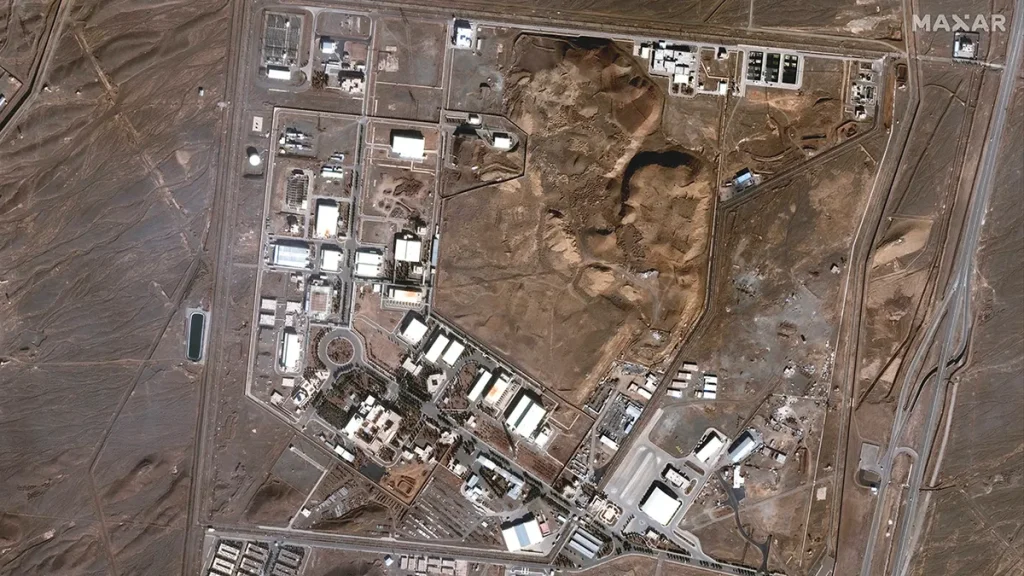
No single issue has driven the Iran war more directly than Iran’s nuclear program.
In the early 2000s, Iran was revealed to have a secret nuclear enrichment program, raising alarm among Western governments and Israel about the possibility of Iran developing nuclear weapons. Iran maintained that its nuclear activities were exclusively for civilian energy purposes — a claim consistently disputed by Western intelligence agencies and nuclear watchdogs.
By June 2025, the International Atomic Energy Agency (IAEA) reported that Iran had accumulated enough enriched uranium to potentially produce nine nuclear warheads. Iran’s repeated refusals to allow comprehensive IAEA inspections only amplified concerns.
Iran’s Supreme Leader Ali Khamenei had issued a fatwa (religious decree) against nuclear weapons in 2003, and Iran repeatedly stated it was not seeking to build a bomb. However, its growing stockpiles of highly enriched uranium and ballistic missile program made these assurances increasingly difficult to accept for the U.S. and Israel.
The JCPOA: Rise and Collapse of the Nuclear Deal
The 2015 Deal
In July 2015, after years of negotiations, Iran and the five permanent members of the UN Security Council plus Germany (P5+1) signed the Joint Comprehensive Plan of Action (JCPOA). Under the deal, Iran agreed to significantly curtail its nuclear program in exchange for sanctions relief.
The IAEA verified that Iran was meeting its obligations under the agreement.
Trump Withdraws in 2018
In May 2018, President Donald Trump withdrew the United States from the JCPOA, describing it as the “worst deal in history” and arguing that it failed to address Iran’s ballistic missile program or its support for regional proxy groups. Trump reimposed sweeping economic sanctions on Iran under a “maximum pressure” strategy.
Although Iran initially continued to comply with the deal, it eventually began enriching uranium to progressively higher levels, and the IAEA lost the ability to fully monitor Iran’s nuclear activities. By 2025, Iran’s nuclear stockpile had grown dramatically — well beyond anything permitted under the JCPOA.
Failed Diplomatic Efforts (2025–2026)
After returning to office, Trump pursued a second term of maximum pressure while also initiating indirect nuclear talks with Iran, mediated by Oman. However, multiple rounds of negotiations failed to bridge the gap — particularly on the core issues of Iran’s enriched uranium stockpile and control of the Strait of Hormuz.
In September 2025, the United Nations reimposed sanctions on Iran through the “snapback” mechanism, further weakening the Iranian economy, crashing the currency, and triggering widespread food price increases. By December 2025, U.S. Treasury Secretary Scott Bessent called the currency collapse the strategy’s “grand culmination.”
Iran’s Proxy Network and Regional Aggression
A major grievance driving Western and Israeli hostility toward Iran has been Tehran’s support for regional proxy militias and armed groups, collectively known as the “Axis of Resistance.”
For decades, Iran has armed, funded, and directed:
- Hezbollah in Lebanon — Iran’s most powerful proxy, capable of launching tens of thousands of rockets at Israel
- Hamas in Gaza — the Palestinian militant group behind the October 7, 2023, attacks
- Houthi rebels in Yemen — who attacked commercial shipping in the Red Sea
- Iraqi Shia militias — responsible for attacks on U.S. forces in Iraq and Syria
These proxy networks allowed Iran to project power across the region without direct confrontation, but they also provided the U.S. and Israel with a continuous stream of justifications for viewing Iran as an existential threat.
The October 7 Attacks and Escalation (2023–2024)
The October 7, 2023 Hamas attacks on Israel — the deadliest day for Jews since the Holocaust, killing approximately 1,200 people and taking over 200 hostages — dramatically reshaped the regional dynamics. Iran had long supported Hamas, and Israel held Tehran partly responsible for enabling the attack.
The resulting Gaza War and broader Middle Eastern crisis drew in Iran’s proxy network across the region. Key developments included:
- April 2024: Iran launched its first-ever direct missile and drone attack on Israel following an Israeli strike on the Iranian consulate in Damascus
- October 2024: A second Iranian direct strike on Israel in retaliation for the assassination of Hamas political leader Ismail Haniyeh
- Both attacks were largely intercepted by Israeli, U.S., and allied air defense systems
- Israel decimated Hezbollah in Lebanon through a series of targeted strikes in September–November 2024, killing its top leadership and severely degrading its capabilities
- The fall of Bashar al-Assad’s regime in Syria in December 2024, facilitated partly by Hezbollah’s weakening, stripped Iran of a critical regional ally
These events left Iran militarily weakened, its proxy network degraded, and its strategic position in the Middle East at its lowest point in decades.
The Twelve-Day War: June 2025
The Twelve-Day War of June 2025 was the first direct, open military confrontation between Israel and Iran — and a decisive precursor to the full-scale 2026 war.
On June 13, 2025, Israel launched a surprise attack on dozens of Iranian nuclear facilities, military bases, and infrastructure installations. In the early hours, the Israeli Air Force used more than 200 fighter jets to drop over 330 munitions on approximately 100 targets, including the Natanz Nuclear Facility. The Mossad also conducted sabotage operations against Iran’s air defense and missile infrastructure.
Iran retaliated with over 550 ballistic missiles and more than 1,000 drones, some of which penetrated Israeli and U.S. missile defenses. The conflict ended after the United States struck underground nuclear facilities at Fordow, Natanz, and Isfahan using GBU-57 “bunker buster” bombs.
A ceasefire was announced on June 24, 2025 — but the war left Iran severely damaged:
- Air defense systems crippled
- Key nuclear facilities damaged or destroyed
- Prominent military leaders, nuclear scientists, and politicians killed
- Iran’s strategic vulnerability fully exposed
The Final Months Before War: Late 2025 – Early 2026
Despite the ceasefire, the path to full-scale war continued.
- September 2025: UN snapback sanctions reimposed, crushing Iran’s economy further
- December 2025: The Iranian currency reached historic lows
- January 2026: A wave of mass protests swept all 31 Iranian provinces. Iranian security forces allegedly massacred thousands of civilians and arrested tens of thousands in a brutal crackdown
- February 2026: Trump claimed at his State of the Union address that Iran had restarted its nuclear program and was developing missiles capable of striking the United States
- The IAEA reported that Iran had stored highly enriched uranium in an underground facility that survived the 2025 bombing. Iran refused to allow inspections of previously bombed sites
- Further indirect nuclear talks collapsed, with no agreement reached
The combination of Iran’s internal weakness, damaged military, and continued nuclear defiance convinced U.S. and Israeli strategists that the moment was strategically favorable for a decisive military strike.
Why Did the U.S. and Israel Launch the February 2026 Strikes?
The Trump administration offered multiple, sometimes shifting, justifications for starting the war:
- Preventing Iranian nuclear weapons — The primary stated objective was to permanently eliminate Iran’s ability to develop nuclear weapons
- Stopping an imminent threat — Officials claimed Iran was preparing an attack on Israel or U.S. forces in the region
- Destroying missile capabilities — Iran’s growing ballistic missile stockpile, which Iran aimed to expand from around 2,000 to 10,000 missiles, posed a growing threat to Israeli air defenses
- Forestalling Iranian retaliation after an expected future Israeli strike
- Regime change — Some officials indicated a goal of bringing Iran’s opposition movement to power
- Seizing Iran’s oil resources — This rationale was also cited in some administration communications
Iranian officials and some U.S. critics rejected the claim that Iran had been preparing an imminent attack. The IAEA stated that while Iran had an ambitious nuclear program, there was no confirmed evidence of an active nuclear weapons program at the time strikes were launched.
Critics argued that the administration’s inconsistent public rationales and the timing of strikes during ongoing nuclear negotiations suggested that political motivations — including domestic pressures — influenced the decision to go to war.
Iran’s Response and the Broader Conflict
Iran’s retaliation was swift and multi-pronged:
- Missile and drone strikes on Israel, U.S. bases across the region, and Gulf state allies
- Closure of the Strait of Hormuz, disrupting approximately 20% of global oil trade
- Attacks on oil infrastructure in neighboring countries
- Hezbollah continued near-daily attacks on northern Israel, even amid broader ceasefire talks
- Iran’s Houthi allies in Yemen launched missiles toward Israel and threatened to block the Bab el-Mandeb Strait, potentially disrupting Red Sea shipping as well
The conflict spread beyond Iran’s borders into Lebanon and Iraq, widening into a regional war with global economic consequences.
As of early May 2026, the U.S. Navy has enforced a naval blockade of Iranian ports. Iran’s leadership views the conflict as existential, and analysts assess that Tehran is pursuing a strategy of prolonged war of attrition rather than a quick settlement, calculating that its population can endure sustained conflict better than the U.S. and its Gulf allies.
International Reaction
The war has provoked significant international controversy:
- UN Secretary-General António Guterres condemned the U.S.–Israeli strikes on Iran
- The UN Security Council passed a resolution condemning Iran’s retaliatory strikes on Gulf states
- France, Germany, and the UK (the E3) had already stated on record that Iran had violated the JCPOA since 2019
- Several uninvolved countries condemned the initial U.S.–Israeli attacks as a violation of international law
- The IAEA was left unable to verify Iran’s nuclear status after Iran suspended access to its facilities
Video: The Iran War Explained: Nuclear Threat, Ballistic Missiles, and What Comes Next
Frequently Asked Questions (FAQ)
When did the Iran war start?
The 2026 Iran War began on February 28, 2026, when the U.S. and Israel launched coordinated surprise airstrikes on Iran.
Why did the U.S. attack Iran?
The U.S. cited multiple reasons, including preventing Iran from developing nuclear weapons, stopping an imminent threat, and destroying Iran’s missile infrastructure. Critics argued the rationales were inconsistent and politically motivated.
Did Iran have nuclear weapons?
No. The IAEA found no confirmed evidence of an active Iranian nuclear weapons program. However, Iran had accumulated significant quantities of highly enriched uranium by mid-2025.
What is the Twelve-Day War?
The Twelve-Day War was a June 2025 conflict between Israel and Iran, in which Israel launched surprise strikes on Iranian nuclear and military facilities. The U.S. joined by bombing underground nuclear sites. A ceasefire was reached on June 24, 2025.
What is the Strait of Hormuz, and why does it matter?
The Strait of Hormuz is a narrow waterway connecting the Persian Gulf to the Arabian Sea. About 20% of the world’s oil passes through it. Iran’s closure of the strait has caused significant disruption to global energy markets.
Is the Iran war still ongoing?
As of May 2026, active hostilities continue, with the U.S. enforcing a naval blockade of Iranian ports. Ceasefire negotiations remain ongoing.
Conclusion
The 2026 Iran War did not have a single cause — it was the culmination of decades of ideological conflict, failed diplomacy, nuclear brinkmanship, and regional proxy warfare. The 1979 Islamic Revolution set the foundational hostility. Iran’s nuclear ambitions and the collapse of the JCPOA raised the stakes. The October 7 attacks and the Gaza war reshaped the regional balance of power. The Twelve-Day War of June 2025 revealed Iran’s military vulnerabilities. And the failure of late-stage diplomatic negotiations in early 2026 closed the door on a peaceful resolution.
Whether the decision to launch full-scale war was justified remains deeply contested — but the historical path that led to it is now painfully clear.
Last updated: May 2026. This article will be updated as the conflict develops.
More stories: