
Last Updated on 4 months ago by TodayWhy Editorial
In February, the Supreme Court demolished the legal foundation of Donald Trump’s signature economic policy, ruling that emergency powers do not let a president impose tariffs. Four months later, the tariffs are still here — the revenue, by the Treasury’s account, essentially unchanged — and the administration is methodically rebuilding the entire system on different legal ground.
While the Iran war has dominated front pages, this quieter project may shape the US economy longer than any single strike or ceasefire. Here is why the rebuild is happening, how the new engine works, and what it means for prices.
What the Supreme Court Actually Struck Down
On February 20, 2026, the Court ruled 6–3 that the International Emergency Economic Powers Act (IEEPA) — the 1977 law letting presidents regulate commerce during foreign-threat emergencies — does not authorize tariffs. Chief Justice Roberts wrote the opinion; Justices Thomas, Alito, and Kavanaugh dissented. The ruling, analyzed in depth by the Council on Foreign Relations, voided the legal underpinning of both pillars of the 2025 tariff regime: the universal “reciprocal” tariffs and the “fentanyl” duties on Canada, Mexico, and China.
Trump called the decision disappointing — and within hours announced he would find other ways to impose tariffs without Congress. He was not bluffing.
The Rebuild: From Emergency Powers to Durable Tools
Step 1: The Section 122 Bridge
The same day as the ruling, Trump invoked Section 122 of the Trade Act of 1974 — which addresses international payments imbalances — to impose a universal 10% tariff for 150 days, through July 24, 2026, with exemptions for critical minerals, energy products, and fertilizers; he subsequently moved to raise the rate to 15%. It was always designed as a bridge, and it has taken legal fire of its own: in early May, a Court of International Trade panel found the administration lacked justification for the measure.
Step 2: The Section 301 Pivot
The permanent solution is Section 301 — the Trade Act authority that lets the US Trade Representative investigate harmful foreign trade practices and respond with tariffs. In June, the administration released a report proposing tariffs of 10%–12.5% on 60 countries over forced-labor concerns. Two features make Section 301 the cornerstone of the new engine: it survived legal challenge when Trump used it against China in his first term, and it carries no statutory limits on tariff level or duration. CNN’s reporting describes the shift as deliberate — a quiet, methodical rebuild using slower but far more precise tools than the emergency orders the Court rejected.
Step 3: Banking the China Understanding
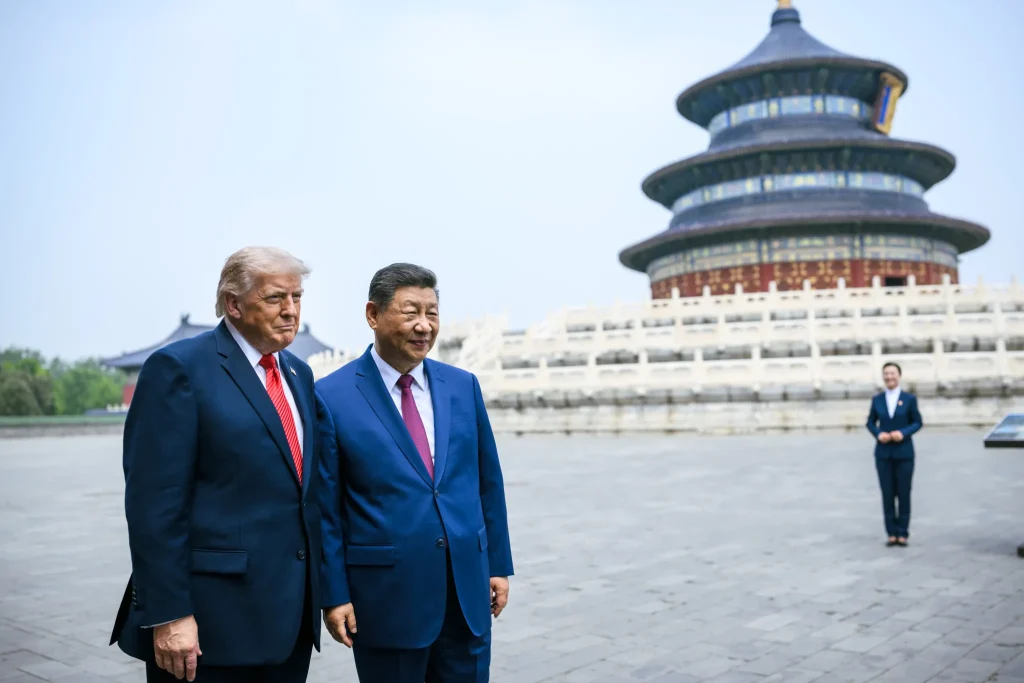
Running parallel to the legal rebuild is the diplomatic track with Beijing: the October 2025 Busan summit, Trump’s spring trip to China, and a package of arrangements spanning a new bilateral trade mechanism, Boeing aircraft purchases, agricultural commitments, and mutual tariff reductions and pauses. The administration presents the understanding as the model — pressure produces deals — even as analysts note the Supreme Court ruling handed Beijing leverage and that implementation details remain thin.
The Case the Administration Makes
Seen from the White House, the rebuild demonstrates three things supporters consider vindication. First, resilience: Treasury Secretary Scott Bessent has said tariff revenue will remain essentially unchanged in 2026 despite the rulings — the policy survived its worst-case legal outcome. Second, legitimacy: by migrating to Section 301, the administration is rebuilding on authority Congress explicitly granted and courts have upheld, answering the core objection rather than defying it. Third, results: the China arrangements, in this telling, prove tariffs are leverage that converts into purchases and market access. Trump frames the entire structure as essential to rebuilding American manufacturing.
The Counter-Ledger
The costs are equally documented. The Tax Foundation’s tariff tracker estimates the 2026 regime is the largest US tax increase as a share of GDP since 1993 — averaging roughly $1,500 per household this year. Tariff pass-through was feeding consumer prices even before the Iran war’s energy shock, and the OECD expects tariffs and the war together to keep inflation pressure elevated longer than a one-time shock would — directly complicating Trump’s promise that prices fall once the war ends. And the legal ground, while firmer, is not finished: the Section 122 bridge expires July 24, the Court of International Trade has already pushed back once, and Section 301 actions on 60 countries will draw challenges of their own.
What to Watch
Three dates and processes will define the next phase. July 24: the Section 122 bridge tariff expires — whether Section 301 measures are ready to replace it will reveal how far the rebuild has progressed. The Section 301 docket: which of the 60 countries face final tariffs, at what rates, and how trading partners retaliate or negotiate. And the China track: whether Beijing’s purchase commitments materialize on schedule, the administration’s main exhibit that the engine produces deals rather than just duties.
The throughline: the Supreme Court changed how Trump can impose tariffs, not whether. The rebuilt engine is slower, more lawyered, and likely more durable — which is precisely why it may outlast every other story in this news cycle. For how the trade front connects to the war, inflation, and the rest of the agenda, see the pillar guide: Why Trump Dominates the News in 2026.
FAQ: Trump’s Tariff Rebuild
Why is Trump rebuilding his tariffs?
Because the Supreme Court ruled 6–3 in February 2026 that IEEPA does not authorize presidential tariffs, voiding his reciprocal and fentanyl duties. Trump considers tariffs central to his agenda and immediately pivoted to other legal authorities.
What did the Supreme Court rule?
That the 1977 emergency-powers law cannot be used to impose tariffs — an opinion by Chief Justice Roberts, with Thomas, Alito, and Kavanaugh dissenting.
What replaced the struck-down tariffs?
A temporary universal tariff under Section 122 (10%, later moved to 15%, expiring July 24, 2026) as a bridge, and a pivot to Section 301 as the permanent foundation — including a June proposal for 10%–12.5% tariffs on 60 countries over forced-labor concerns.
What is Section 301 and why does it matter?
A Trade Act authority letting the US Trade Representative impose tariffs in response to harmful foreign practices. It survived legal challenge in Trump’s first term and has no statutory limits on level or duration — making it far more durable than the emergency route.
What is in the Trump–Xi understanding?
Arrangements from the Busan summit and Beijing trip covering a bilateral trade mechanism, Boeing and agricultural purchases, and mutual tariff reductions and pauses. The administration calls it proof the method works; analysts note thin implementation detail.
What do tariffs cost households?
Roughly $1,500 per household in 2026 on average, per the Tax Foundation — the largest US tax increase relative to GDP since 1993. The Treasury counters that revenue remains unchanged despite the court rulings.
The Why Trump series: Why Trump Dominates the News in 2026 | Why Trump Says Inflation Will Fall Once the Iran War Ends | Why Trump Canceled the Strikes on Iran