
Last Updated on 4 months ago by TodayWhy Editorial
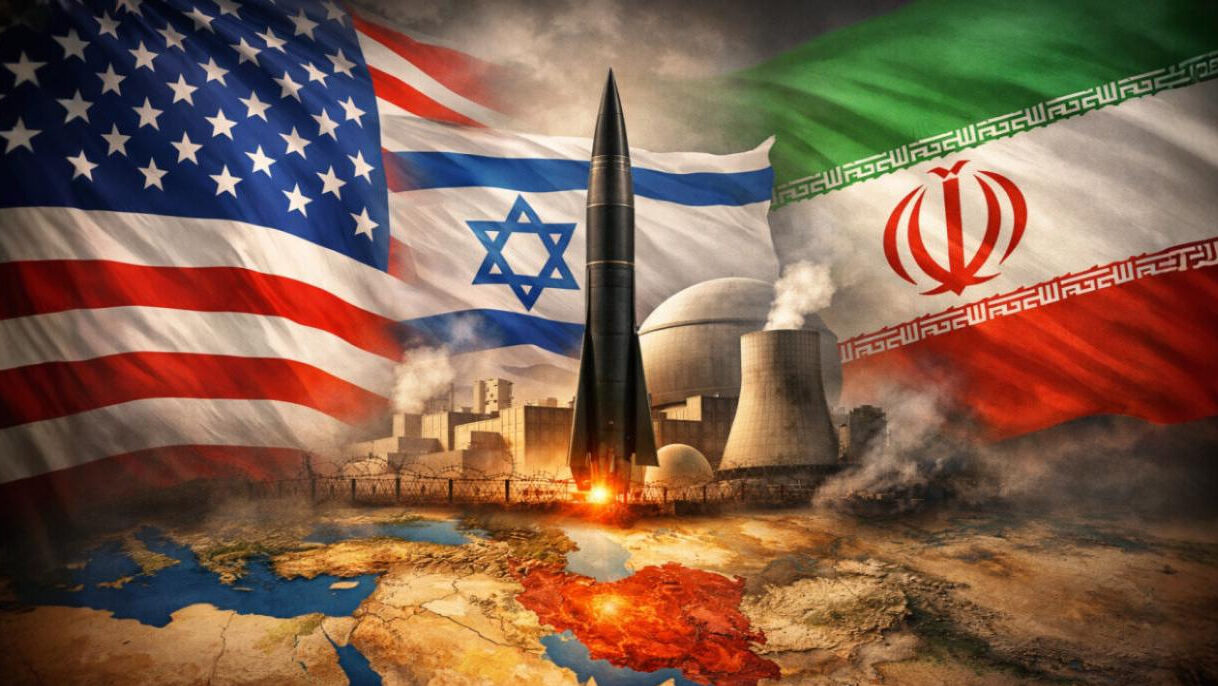
June 8, 2026 — Day 100. One hundred days ago, on February 28, 2026, the United States and Israel launched one of the most consequential military operations in modern Middle East history. Supreme Leader Ali Khamenei was killed in the opening hours. Iran’s nuclear sites at Fordow, Natanz, and Isfahan were struck. The Strait of Hormuz was closed. And President Trump promised the campaign would be resolved “very fast.”
It has not been very fast.
On this 100th day, Israel and Iran exchanged their worst strikes since the ceasefire began in April, Asian markets plunged more than 2,500 points, and a final peace deal remains unsigned. A grinding, unpredictable deadlock has replaced the lightning campaign the Trump administration envisioned.
This is TodayWhy‘s full assessment: what the war has actually achieved, what it hasn’t, who won and who lost, and what comes next.
1. How It Started: The Goals Trump Set Out
To evaluate what the war has accomplished, we first need to understand what it was supposed to accomplish. In the first week after the February 28 strikes, President Trump and his administration offered — by one congressional count — at least four different explanations for why the US went to war. The stated objectives included:
- Eliminating Iran’s nuclear program before Tehran could weaponize its enriched uranium stockpile
- Destroying Iran’s ballistic missile capability, which US planners said posed an imminent threat to US forces and regional allies
- Regime change — Trump explicitly stated the goal was to help Iranians “overthrow their government,” though the administration later softened this language
- Reopening the Strait of Hormuz, once Iran closed it in retaliation on March 1–2
The confusion about objectives was not just rhetorical. It has directly complicated the subsequent negotiating process: when your war aims are multiple and contradictory, defining what “winning” looks like becomes almost impossible.
For the full background on why the war started, see: Why Did the Iran War Start in 2026? Causes, Timeline, and Key Events
2. What Was Achieved: The Military Scorecard
On purely military terms, the US-Israeli campaign achieved more than its critics expected and less than its advocates claimed.
Iran’s Ballistic Missile Program: Largely Destroyed
Iran’s ballistic missile program — the centerpiece of its deterrent strategy and the weapon with which it had held the wider Middle East under threat for two decades — was effectively dismantled. By Day 13, CENTCOM reported ballistic missile launches from Iran were down 86% from Day 1. Iran’s navy was decimated: CENTCOM reported over 90 Iranian vessels destroyed or damaged within the first two weeks of operations.
Nuclear Sites: Enormous Damage, Disputed Permanence
The nuclear facilities at Fordow, Natanz, and Isfahan — into which the Islamic Republic had poured decades of effort and tens of billions of dollars — were struck repeatedly. The IAEA’s own post-strike assessment was unambiguous: the damage was enormous. The CIA’s John Ratcliffe said new information indicated damage that would take years to rebuild.
However, a leaked low-confidence assessment from the Defense Intelligence Agency painted a more sobering picture: Iran had reportedly moved much of its highly enriched uranium (HEU) stockpile before the strikes took place, and some underground facilities were not fully collapsed. The DIA assessed the program may have been set back by only months, not years. The Trump administration dismissed this as a “political” leak. The truth likely lies somewhere between the two assessments.
What is not in dispute: Iran still possesses an estimated 440.9 kilograms of uranium enriched to 60% U-235 — enough material for approximately 10 nuclear weapons if further enriched to weapons grade — and IAEA inspectors still cannot fully account for where it is.
Source: GlobalSecurity.org — Iran War Day 100 Update | Britannica — 2026 Iran War
The Regime: Wounded, but Not Overthrown
The killing of Supreme Leader Ali Khamenei was the single most dramatic act of the entire campaign. And yet the regime did not collapse. Mojtaba Khamenei — the late Supreme Leader’s son — was named his successor on March 8, 2026. Despite initial questions about his legitimacy and reports that he was severely wounded in the February 28 strikes, the Islamic Republic has largely rallied around the new leadership. The hard-line IRGC has become especially influential under a leader whose whereabouts and condition remain uncertain — a dynamic with its own dangerous implications.
3. What Wasn’t Achieved: The Unresolved Questions
At Day 100, three core US objectives remain unmet.
The Strait of Hormuz: Still Closed
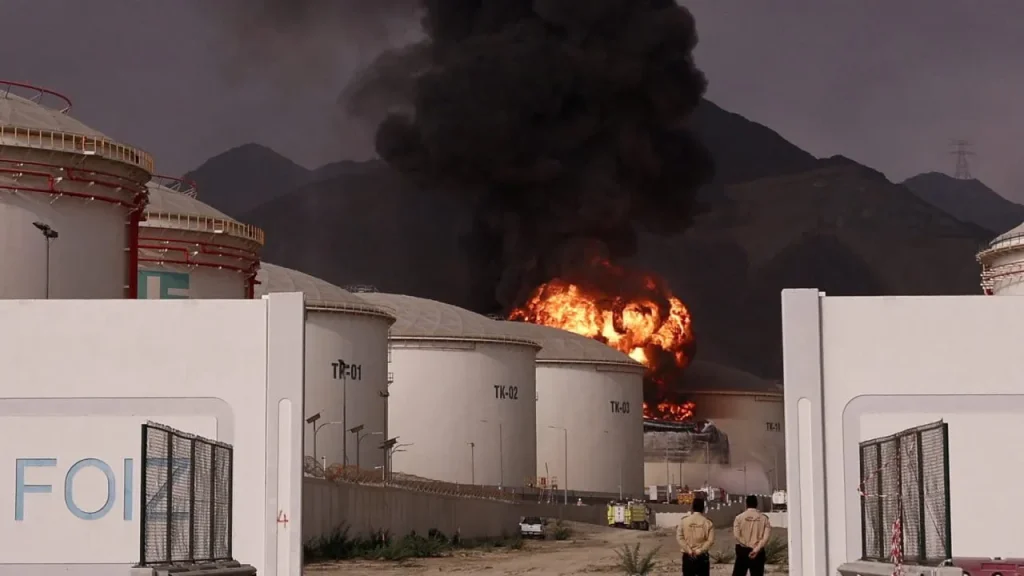
This is the most economically consequential failure. The Strait has been effectively closed or severely disrupted for 100 days. June 7 was the 56th day of the simultaneous US naval blockade of Iranian ports — a counter-blockade that was itself a response to Iran’s closure. The result is a dual-blockade standoff that has brought Gulf maritime commerce to a near standstill.
For a full breakdown of the Strait’s status and impact on global energy markets, see: Why the Strait of Hormuz Closure in 2026 Is Pushing Oil Prices Sky-High
The Nuclear HEU Stockpile: Unaccounted For
Despite the destruction of Iran’s nuclear facilities, the HEU stockpile — the actual material from which a bomb could be built — has not been surrendered or destroyed. This remains the single biggest obstacle to a final deal and the reason Trump himself said after the Islamabad Talks that “the only point that mattered, NUCLEAR, was not” agreed.
Regime Change: Did Not Happen
The Trump administration’s loosely stated goal of helping Iranians “overthrow their government” did not materialize. The protests that swept Iran in January 2026 — encouraged by the US in the aftermath of the June 2025 Twelve-Day War and its economic consequences — did not translate into revolution once the war began. Iran’s population, whatever its grievances against the Islamic Republic, largely did not welcome a foreign military campaign on its soil.
4. The Human Cost: Deaths, Displacement, and Economic Pain
The human and economic toll after 100 days is staggering.
Casualties
- Iran: At least 3,468 dead, per available official figures — likely an undercount given ongoing fighting and restricted press access
- Lebanon: At least 3,593 killed and more than one million displaced as Israel expanded its military operations in parallel with the Iran campaign, razing entire villages in the south
- United States: At least 13 confirmed deaths and hundreds of casualties. Six US service members were killed at Kuwait’s Shuaiba port on March 1; six more died in a KC-135 tanker crash in western Iraq on March 12; one died from wounds sustained at Prince Sultan Air Base in Saudi Arabia
- Israel: 50 deaths and 8,923 injuries in the Iran war proper, per the Institute for National Security Studies in Tel Aviv
Economic Damage
- US consumers have paid an extra $54.9 billion — over $418 per household — in fuel costs since the war began, per Brown University researchers
- US CPI hit 3.8% annual inflation in April 2026, its highest in nearly three years
- Iran’s crude exports fell 84% in May versus the prior month
- ACLED recorded nearly 270 property destruction events in Lebanon between March and June, with an estimated $3 billion in damage
- Iran’s finance ministry estimated at least $3 billion in domestic property damage
- The Pentagon’s operational cost estimate for Operation Epic Fury stood at $29 billion as of May 2026 — not including damage to US assets
5. Iran’s Power Vacuum: The IRGC’s Quiet Takeover
One of the most consequential and underreported developments of the 100 days is what has happened inside Iran’s political structure.
With Mojtaba Khamenei’s condition and whereabouts unclear for weeks following the February 28 strikes, the Islamic Revolutionary Guard Corps (IRGC) moved rapidly to fill the vacuum. According to reporting by Iran International and Fox News, the IRGC has effectively assumed control of key state functions, blocking presidential appointments and operating without civilian oversight. IRGC commander Ahmad Vahidi reportedly insisted that “under wartime conditions, all critical and sensitive positions must be chosen and managed directly by the Revolutionary Guard until further notice.” President Pezeshkian has reached what analysts describe as a “complete political deadlock” as his administration is sidelined by military leadership.
This matters enormously for the peace talks. The IRGC — not the civilian government — controls Iran’s remaining military assets, including the drones being fired at the Strait of Hormuz and the HEU stockpile’s location. Any deal that the civilian negotiating team agrees to must have IRGC buy-in to be implemented. And the IRGC has every institutional reason to resist a deal that strips it of the weapons that justify its existence and power.
Newsweek’s reporting notes that the IRGC “is widely assessed to have become especially influential under an absentee yet likely vengeful ruler who has the authority to rescind his late father’s official ban against nuclear weapons.”
Source: Fox News — IRGC Seizes Control of Iran State Functions | Newsweek — How 100 Days of Iran War Exposed US Vulnerability
6. The Ceasefire That Isn’t: 100 Days of “Talks and Attacks”
The Pakistan-brokered ceasefire of April 8, 2026 was supposed to be a turning point. And in some ways it was — it ended the acute hot phase of the war and created a framework for negotiations. But it did not end the fighting.
The pattern that emerged — both sides conducting strikes while nominally honoring the ceasefire — has now become entrenched. Each side accuses the other of violating the truce first. The US calls its strikes “self-defense.” Iran’s IRGC calls its attacks “legitimate reciprocal responses.” Both are technically correct, in their own framing. Neither is stopping.
On the war’s 100th day itself — June 8, 2026 — Israel and Iran exchanged what CNN described as “the worst strikes since the shaky ceasefire began in April.” Asian stock markets plunged. Brent crude rose nearly $7 a barrel in just one month.
The diplomat from the Middle East Council on Global Affairs told Al Jazeera: “Twice now, war has broken out in the middle of negotiations — first in June 2025, and again on February 28, 2026.” Iran does not trust that Trump will comply with any agreement he signs. The US does not trust that Iran’s civilian negotiators speak for the IRGC. Neither side can afford to look weak domestically. This is the structural impasse underlying the deadlock.
For the full negotiating picture, see: Why US-Iran Negotiations 2026: Causes, Timeline, Key Issues & Latest Updates
7. Winners and Losers at Day 100
Winners
Israel (on the military front): Despite the cost in casualties and the threat of escalation, Israel has achieved more of its stated objectives than any other party. Iran’s nuclear sites were struck. Its missile program was largely destroyed. Israel has eliminated an estimated 3,000 Hezbollah fighters in the Lebanon operation, and its military position in southern Lebanon has significantly expanded. The Axis of Resistance — Hezbollah, Hamas, the Houthis, and Iranian-backed Iraqi militias — has been severely degraded, though not destroyed.
Pakistan: Islamabad has transformed itself from a regional afterthought into the world’s most important diplomatic intermediary, hosting the highest-level US-Iran talks since 1979, proposing the ceasefire that ended the hot war, and maintaining the back-channel through continuous shuttle diplomacy. See: Why Is Pakistan Involved in the 2026 Iran War as Peace Broker?
The IRGC: Counterintuitively, the IRGC may have emerged more powerful within Iran, not less. With civilian institutions sidelined, the Revolutionary Guard now controls the Iranian state’s most critical functions. Its leverage in any future deal — and its ability to spoil one — has never been greater.
Losers
Iran’s civilian population: At least 3,468 dead, a collapsed economy, 84% drop in oil export revenue, the destruction of critical infrastructure, and displacement across the country’s major cities. Whatever one thinks of the Islamic Republic, the people bearing the cost of this war are overwhelmingly civilians.
Lebanon: Caught between Israel’s expanded military operations and Iran’s use of Hezbollah as a bargaining chip. Over 3,593 dead, one million displaced, entire villages razed. Lebanon’s president has publicly accused Iran of using his country as a pawn in its negotiations with the United States.
Gulf Arab states: Saudi Arabia, the UAE, Kuwait, and Bahrain all suffered Iranian missile and drone attacks despite their attempts at neutrality. Kuwait’s airport was shut down. Bahrain intercepted multiple Iranian missiles targeting civilian areas. The UAE left OPEC after nearly 60 years, a seismic institutional rupture driven in part by the war’s disruption of the oil market architecture.
8. What Happens Next: The Scenarios for 2026’s Second Half
Three variables will likely determine the trajectory of the next 100 days.
The nuclear HEU question: Russia has offered to take Iran’s enriched uranium stockpile for storage — the same mechanism used in the 2015 JCPOA. If Iran accepts, the single largest US demand could be satisfied without Tehran being seen as “surrendering” directly to Washington. The US has not formally responded. This offer is potentially the most important diplomatic variable in play right now.
Whether a major incident shatters the ceasefire: The pattern of daily drone and missile exchanges is a game of escalatory chicken. A US strike that kills large numbers of Iranian civilians, or an Iranian strike that kills substantial numbers of US service members, could collapse the negotiating framework entirely and trigger a return to full-scale war. The June 8 exchange — the worst in two months — illustrates how close the line is.
The 60-day MOU window: US and Iranian negotiators reportedly reached a tentative agreement in late May to extend the ceasefire by 60 days and open a formal round of nuclear talks. Trump has reportedly not yet signed off on this. The window for this MOU to be formalized — likely June or July 2026 — will define whether there is a diplomatic off-ramp before domestic political pressures on both sides foreclose that possibility.
Source: CSIS — Latest Analysis: War with Iran | Al Jazeera — 100 Days of the Iran War
100 days in, the war launched on a promise of speed has produced the grinding, costly, unresolved standoff that its critics feared. It is not over. It may not end soon. But it has already changed the Middle East — and the world — in ways that will take years to fully understand.
Frequently Asked Questions
How long has the Iran War been going on?
The 2026 Iran War began on February 28, 2026, when the United States and Israel launched coordinated strikes on Iran. As of June 8, 2026, the war has entered its 100th day.
Has the US achieved its goals in the Iran War after 100 days?
Partially. The US and Israel significantly degraded Iran’s ballistic missile program, navy, and nuclear facilities. However, the Strait of Hormuz remains largely closed, no final peace deal has been signed, and Iran’s HEU stockpile has not been surrendered — which Trump himself identified as the key unresolved issue after the Islamabad Talks.
How many people have died in the Iran War?
At least 3,468 people have died in Iran and at least 3,593 in Lebanon, where Israel expanded military operations. The US has suffered at least 13 confirmed deaths and hundreds of casualties. These figures are likely undercounts.
Is there still a ceasefire in the Iran War?
A Pakistan-brokered ceasefire has technically been in place since April 8, 2026, but both the US and Iran have conducted strikes against each other repeatedly throughout the ceasefire period. The 100th day of the war saw the worst exchange of fire since the ceasefire began.
What is blocking a final peace deal between the US and Iran?
The primary obstacle is Iran’s nuclear HEU stockpile. The US demands Iran surrender it as an upfront condition; Iran refuses. Beyond the nuclear issue, the future of the Strait of Hormuz, sanctions relief sequencing, and the Lebanon conflict are also unresolved. Analysts also point to deep structural distrust: Iran does not trust Trump to honor any agreement he signs, based on his withdrawal from the JCPOA in 2018 and the experience of negotiations being interrupted twice by US-Israeli military strikes.
Related reading on TodayWhy: Why Did the Iran War Start in 2026? | Why US-Iran Negotiations 2026: Full Guide | Why the Strait of Hormuz Closure Is Pushing Oil Prices Sky-High | Iran Nuclear Program: Why Tehran Persists Despite Sanctions and Strikes