
Last Updated on 4 months ago by TodayWhy Editorial
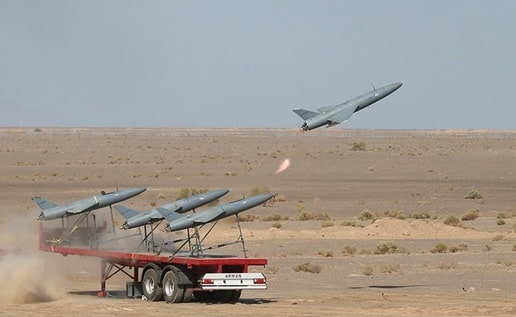
A Pakistan-brokered ceasefire has been technically in place since April 8, 2026. Peace talks are ongoing. Trump says a deal is “largely negotiated.” And yet, on almost every single day since the ceasefire began, Iran has fired drones or missiles — at the Strait of Hormuz, at Gulf state infrastructure, at US military bases. On the war’s 100th day alone, Israel and Iran exchanged what international media called the worst attacks since the ceasefire started.
So why won’t Iran stop? The answer has four layers: who actually controls Iran’s military right now, what the IRGC gains by continuing to fight, how the “ceasefire” was defined from the start, and what stopping would cost Iran domestically.
1. What the Ceasefire Actually Said — and Didn’t Say
Before asking why Iran is violating the ceasefire, it is worth asking: what exactly did the ceasefire say?
The short answer is: less than most people assume. The April 8 ceasefire brokered by Pakistan was announced by both sides, but no joint text reflecting mutual agreement was ever publicly released. From the moment of the announcement, the US and Iran described its terms differently. Trump declared the US had already achieved its military goals. Iran’s Supreme National Security Council claimed a “historic victory” and asserted the US had accepted Tehran’s 10-point plan. Both sides declared they had won — a classic sign of an agreement struck in bad faith or with deliberately ambiguous terms.
Iran’s Foreign Minister Abbas Araghchi subsequently clarified Tehran’s interpretation in a post on X: “the ceasefire between Iran and the US is unequivocally a ceasefire on all fronts, including in Lebanon. Its violation on one front is a violation of the ceasefire on all fronts.”
Under this framing, every Israeli strike in Lebanon — which continued within hours of the ceasefire announcement — is itself a ceasefire violation that Iran says entitles it to respond. The US rejects this linkage entirely. The disagreement about what the ceasefire even covers has made it structurally impossible to enforce.
For the full negotiating history behind the ceasefire, see: Why US-Iran Negotiations 2026 Failed: Causes, Timeline, Key Issues
2. The IRGC Takeover: Who Actually Controls Iran’s Trigger
To understand why Iran’s military hasn’t stopped, you have to understand who is currently making military decisions inside Iran — and it is not who you might expect.
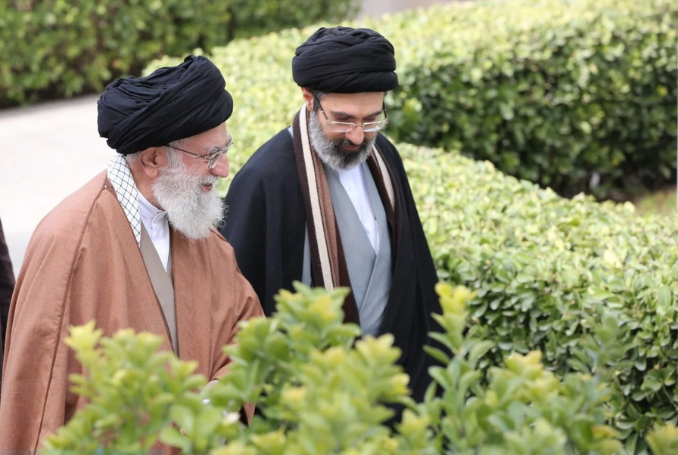
Iran’s constitution vests supreme military authority in the Supreme Leader, who commands the IRGC. When Ali Khamenei was killed on February 28, that chain of command fractured. His son, Mojtaba Khamenei, was named the new Supreme Leader on March 8. But Mojtaba was reportedly severely wounded in the February 28 strikes and has not made a single public video or in-person appearance since. His communications have come exclusively through written statements.
In this power vacuum, the IRGC moved decisively. According to reports from Iran International and Fox News, the IRGC has effectively assumed control of key state functions that were previously under civilian oversight, including blocking presidential appointments and managing “all critical and sensitive positions” directly. IRGC commander Ahmad Vahidi explicitly stated this was justified by wartime conditions. President Pezeshkian has reached what analysts describe as a “complete political deadlock” — his administration has been functionally sidelined.

The consequence for the ceasefire is stark: even if Iran’s civilian negotiating team agrees to stop firing, the IRGC does not report to the civilian government. And the IRGC has institutional and ideological reasons to keep firing.
Source: Fox News — IRGC Seizes Control of Iran State Functions | RFE/RL — Iran, US Exchange Attacks as Tensions in Gulf Rise
3. The IRGC’s Logic: Why Stopping Is Not an Option
From inside the IRGC’s institutional framework, continuing to fire is not irrational. It is the only rational choice available.
Institutional Survival
The IRGC’s entire existence is predicated on being Iran’s indispensable military force, the guardian of the revolution, and the instrument of deterrence against external enemies. The February–April war destroyed its ballistic missile arsenal, decimated its navy, and killed senior commanders. If the IRGC now stops entirely — accepting a deal that strips away its remaining capabilities (Hormuz leverage, drone warfare, proxy networks) — it ceases to be the power it has been for four decades. Continued fighting, even at a tactical level, is proof of survival.
Deterrence Signaling
Every drone the IRGC fires at the Strait of Hormuz sends the same message to Washington, Riyadh, and Tel Aviv: we are still here, we are still capable, and any final deal must account for our interests. The moment the IRGC goes quiet, it loses its seat at the negotiating table. Noise is leverage.
The Hormuz Weapon
Iran’s closure of the Strait of Hormuz is its most powerful economic weapon — the one tool it has that directly inflicts pain on the entire global economy, not just on its immediate enemies. The IRGC Navy has explicitly stated it is “firmly carrying out intelligent control” over the Strait. Giving that up without meaningful concessions in return — sanctions relief, frozen asset release, security guarantees — would be seen internally as surrendering Iran’s last trump card for nothing.
See: Why the Strait of Hormuz Closure in 2026 Is Pushing Oil Prices Sky-High
Domestic Political Calculus
The new Supreme Leader Mojtaba Khamenei — whoever is actually making decisions in his name — cannot afford to appear weak. His legitimacy as a leader is entirely untested; he has no base of independent political authority, no public track record, and inherited power only because his father was killed by a foreign military operation. Ordering the IRGC to stop fighting unconditionally, before a deal is signed, would be politically fatal to an already fragile new leadership. Newsweek analysts note he is widely assessed to be “his father on steroids” in terms of hardline orientation — if anything, more hawkish than Ali Khamenei, not less.
4. It’s Not Just Iran: The US Is Also Firing
Western coverage of ceasefire violations often focuses on Iranian strikes. But the US has conducted its own strikes throughout the ceasefire period — which Iran points to as justification for its own actions.
The pattern is documented in CENTCOM’s own public statements:
- May 25: CENTCOM conducted “self-defense strikes” near Bandar Abbas in response to 24 hours of Iranian IRGC missile, drone, and small-boat launches near the Strait of Hormuz
- June 3: US and Iran exchanged missile and drone attacks. CENTCOM intercepted multiple Iranian missiles aimed at Bahrain and Kuwait. Iran’s IRGC confirmed it struck a US airbase in retaliation for an attack on an Iranian communications tower on Sirik Island
- June 5: CENTCOM shot down four Iranian attack drones launched toward the Strait; US forces then struck Iranian radar sites at Goruk and a ground control station on Qeshm Island
- June 7–8: Israel and Iran traded the worst strikes since ceasefire began; Asian markets plunged over 2,500 points
The US frames all of its strikes as “self-defense” actions that do not constitute ceasefire violations. Iran frames all of its strikes as “legitimate reciprocal responses” to US violations. Both framings are self-serving. The operational reality is that both sides are fighting a low-intensity war while calling it a ceasefire.
Source: GlobalSecurity.org — Iran War 2026 Daily Update Calendar | Al Jazeera — Iran’s IRGC Launches Retaliatory Strike After US Attacks
5. The Absent Supreme Leader: Mojtaba Khamenei’s Shadow Role
One of the most unusual features of the current Iranian political situation is that the head of state has not been seen in public for over three months.
Mojtaba Khamenei was reportedly severely wounded in the February 28 strikes that killed his father. Trump himself acknowledged in an interview that Mojtaba is “involved in negotiations and approving Tehran’s stance” — but added: “I would like to meet him, and we probably will meet at some point, depending on how it all works out.” The fact that the US president cannot even confirm whether he will meet the Iranian Supreme Leader is a measure of how opaque the current Iranian leadership situation is.
Pakistan’s Interior Minister Naqvi, conducting shuttle diplomacy between Washington and Tehran, was received in Tehran on June 6–8 and delivered a personal letter from Pakistan Army Chief Asim Munir to Mojtaba Khamenei — confirming that some form of communication is reaching him. But whether decisions attributed to the supreme leader reflect his actual wishes, IRGC interpretation of those wishes, or something else entirely is unknown.
This opacity is itself a destabilizing factor. US negotiators cannot verify who has actual authority to implement any deal they sign. Iran’s civilian negotiators may be making commitments that the IRGC will simply ignore.
For context on Pakistan’s unique mediation role, see: Why Is Pakistan Involved in the 2026 Iran War as Peace Broker?
6. Military Pressure as Diplomatic Leverage
There is one more layer to why Iran keeps firing: it works, at least partially, as a negotiating tool.
Every time the IRGC fires drones at the Strait of Hormuz, oil prices move. Every missile that forces a Gulf airport to close makes another government call Washington and demand a deal. Every day the ceasefire frays, the international pressure on Trump to close a deal increases. Iran is using military action to create the conditions under which it can extract better terms from a negotiation it entered from a position of military weakness.
This is not a new Iranian strategy. It is a variant of the same logic Tehran used throughout the 2015 JCPOA negotiations — maintaining pressure through the nuclear program to force Western concessions. The tools are different in 2026 (drones instead of centrifuges), but the logic is identical: keep hurting your adversary’s allies and economic interests until they offer you enough to stop.
The evidence that this strategy is having some effect: Trump told reporters he is “close to achieving a very good deal.” Iranian negotiators reportedly secured a tentative agreement to extend the ceasefire by 60 days and open formal nuclear talks. Iran’s demand for $24 billion in frozen asset releases is on the table as a serious negotiating point, not a fantasy opening bid.
Source: NewsNation — Iran Shoots Down US Drone, Threatens Retaliation Over Ceasefire Breaches | Congressional Research Service — US-Iran Ceasefire and Negotiations: Assessment and Issues for Congress
7. How Does This End? The Conditions for a Real Ceasefire
The “talks and attacks” pattern will continue until one of three things changes:
A formal MOU is signed — covering the Strait of Hormuz reopening, a nuclear talks framework, phased sanctions relief, and Lebanon. This would give both sides a public face-saving narrative and create enough immediate economic benefit (oil prices falling, frozen assets moving) to incentivize compliance. US and Iranian negotiators reportedly reached a tentative 60-day ceasefire extension and nuclear talks framework in late May; it awaits Trump’s sign-off.
The IRGC is brought into the deal — explicitly or implicitly. No agreement that Iran’s civilian government signs will hold if the IRGC can simply ignore it. Any durable deal must either include IRGC commanders in the negotiating framework, or offer the IRGC institutional incentives (survival guarantees, face-saving security arrangements) that make compliance rational from their perspective.
A major escalation forces a genuine ceasefire — a catastrophic event that is so damaging to both sides that even the IRGC calculates the cost of continued fighting exceeds the benefit. This is the worst-case path. The June 8 exchange was the most dangerous since April. If the next exchange kills large numbers of US service members or Iranian civilians, the entire diplomatic architecture could collapse.
The fundamental answer to why Iran keeps firing is this: the ceasefire is not a ceasefire. It is an armed standoff with a diplomatic veneer, in which both sides are continuing to pursue their objectives through military means while nominally negotiating. That will not change until a real deal — with real terms, real verification, and real buy-in from the IRGC — is signed. And that has not happened yet.
Frequently Asked Questions
Why is Iran still firing missiles if there is a ceasefire?
Iran’s IRGC frames each strike as a “legitimate reciprocal response” to US and Israeli ceasefire violations — particularly continued Israeli operations in Lebanon, which Iran says are themselves violations of the April 8 truce. The IRGC, which has effectively taken over key Iranian state functions in the leadership vacuum following Khamenei’s death, also has institutional reasons to continue demonstrating military capability during negotiations.
Who controls Iran’s military now that Khamenei is dead?
Mojtaba Khamenei was named Supreme Leader on March 8, 2026, but has not appeared publicly since reportedly being wounded in the February 28 strikes. In his effective absence, the IRGC has assumed control of key state and military functions, sidelining civilian President Pezeshkian’s government. The IRGC is currently the most powerful institution in Iran.
Has the ceasefire between the US and Iran broken down?
Not formally — but in operational terms, both sides have struck each other repeatedly throughout the ceasefire period. The US calls its strikes “self-defense.” Iran calls its strikes “legitimate reciprocal responses.” Neither side is stopping. Analysts describe the current situation as a “talks and attacks” phase — a low-intensity armed standoff conducted under the nominal cover of a truce.
What does Iran gain from continuing to fire drones during the ceasefire?
Iran maintains leverage in the ongoing negotiations, signals domestic political strength under the new Khamenei leadership, tests US red lines, and demonstrates the IRGC’s continued operational capability. Continued military pressure has also contributed to keeping oil prices elevated — which increases international pressure on the US to close a deal that reopens the Strait of Hormuz.
Related reading: Why Did the Iran War Start in 2026? | Why US-Iran Negotiations 2026: Full Guide | Why the Strait of Hormuz Closure Is Pushing Oil Prices Sky-High | Why Is Pakistan Involved in the 2026 Iran War as Peace Broker?