
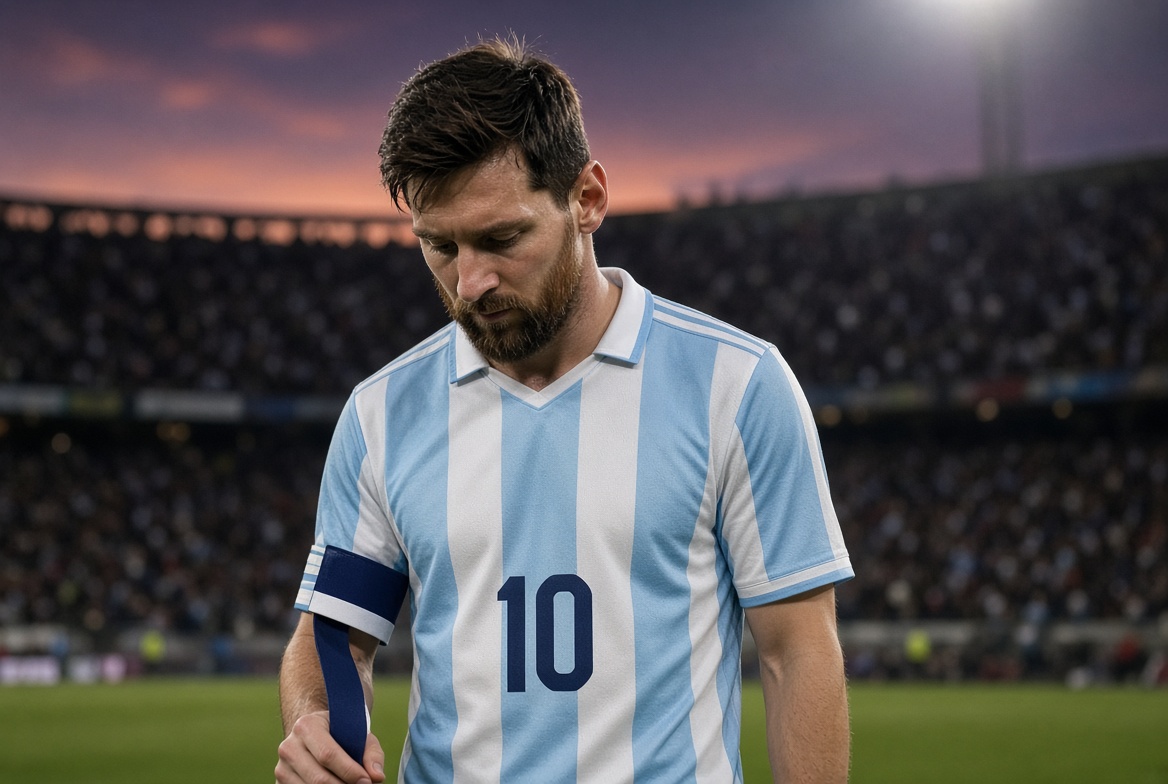
Last Updated on 1 month ago by TodayWhy Editorial
On Monday, 31 August 2026, Lionel Messi posted a handwritten letter on Instagram. Within hours, the internet search lists filled with the same cluster: messi retired, did Messi retire, Messi retirement, did Messi retire from international football. The phrase people actually needed was narrower. Why did Messi retire from the Argentina national team — and why did he wait six weeks after the World Cup final to say it.
The short answer is three stacked reasons, not one viral rumor. The 2026 World Cup final on 19 July was his last match in the albiceleste. He wrote the letter two days later. He sat on it while his father, Jorge Messi, was dying. Jorge died in Rosario on 8 August, aged 68. On 31 August the son published the words he had already chosen, and added one line: after what happened to his dad, he was more convinced than before.
He is 39. He is still under contract at Inter Miami through the 2028 MLS season. That is the whole story. Everything else is a search box flattening a national-team farewell into “Messi retired.”
Why did Messi retire from Argentina — the letter itself
Messi did not hold a press conference. He did not walk out of a mixed zone. He posted a letter he said he wrote on 21 July, two days after Spain beat Argentina 1–0 in extra time in the World Cup final at MetLife Stadium. Ferran Torres scored in the 106th minute. It was Messi’s sixth World Cup and his third final. He finished the tournament with eight goals and four assists, second in the Golden Boot race behind Kylian Mbappé.
The published text is short and specific. He is retiring from the national team. The decision “hurt — and still hurts — deep in my soul,” but “the time has come.” He swore he always gave everything for the shirt, not only in the years Argentina finally won everything. He said he has nothing more to give, and that younger players deserve the place. He will miss hearing the crowd from the pitch. He becomes one more person in the stands. He thanked family, coaches, teammates, staff. He thanked God for making him Argentine. He closed with “Vamos Argentina.”
The last paragraph is the one the search spike is really about. “I wrote these words on July 21st, two days after the final. Today, after what happened to my dad, I’m even more convinced than before.” That is why the announcement landed on 31 August and not on 21 July. The retirement was already written. Grief set the publish date.
Did Messi retire from football? No.
This is the sentence most “Messi retired” headlines skip. He retired from international football. Club football is a separate contract.
Inter Miami extended him in October 2025 through the 2028 season, when he will be 41. Transfermarkt lists the deal to 31 December 2028. Over the weekend before the letter went up, he scored four times in a 7–1 win over CF Montreal. A player who retires from the sport does not put four past Montreal on Saturday and leave the national team on Monday.
The confusion is old. In English, “retired” without a qualifier sounds total. In Spanish the post said he was stepping away from la Selección. US queries — “did Messi retire,” “is Messi retired,” “Messi retirement date” — do not carry that distinction unless someone writes it. That is the job of this page.
The same mix-up hit Brazil in July. After Norway knocked the Seleção out of the last 16, Neymar said it was over with the yellow shirt. Weeks later he confirmed the national-team chapter was closed while he kept playing for Santos. We unpacked that split in why Neymar retired from Brazil. Messi’s letter is the Argentine version of the same sentence: the country jersey comes off; the club jersey does not.
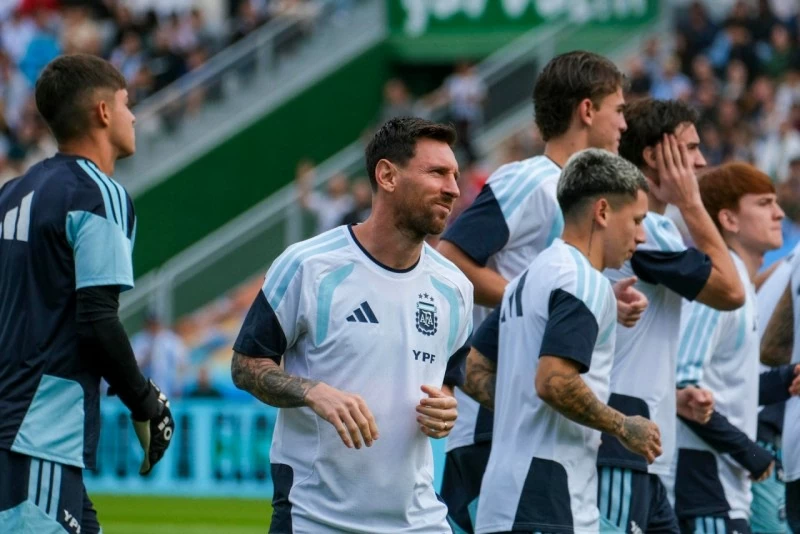
Why the World Cup final was the last Argentina match
Argentina’s next Copa América is in 2028. Messi would be 41. The 2030 World Cup is scheduled to open with single matches in Uruguay, Argentina and Paraguay before moving to Spain, Portugal and Morocco. He would turn 43 during that tournament. The calendar itself was an argument.
So was the body of work. He leaves as Argentina’s most-capped player and all-time leading scorer: 207 appearances, 125 goals. Javier Mascherano is second in caps at 147. Gabriel Batistuta is second in goals at 56. No other Argentine is close. He scored 21 times at World Cups across 34 matches. He captained 133 times. Clarín counted 16,367 minutes.
The trophy case finally matched the numbers after a decade of near-misses. Copa América 2021 in Brazil ended the 28-year drought. The 2022 Finalissima followed. Qatar 2022 delivered the World Cup he had been told he would never win. Copa América 2024 in the United States made it two continental titles in three years. He had already won Olympic gold with the U23 side in Beijing in 2008. Once those boxes were ticked, the case for a seventh World Cup cycle was sentiment, not a sporting plan.
The 2026 campaign was not a farewell tour in disguise. He scored eight times. He briefly became the World Cup’s all-time leading scorer after the group game against Austria, before Mbappé finished on 22. He reached a third final, a club only Cafu had previously joined among outfield players in the men’s tournament. Then Spain won in extra time. Two days later he wrote the letter. The competitive argument was already over. The personal one was not.
Why Jorge Messi’s death decided the date
Jorge Messi was not a side character in the career. He was the father, the first agent, the man who moved the family to Barcelona when Lionel was 13 so the club would pay for growth-hormone treatment. He negotiated the contracts that built the fortune people now search as “Messi net worth.” He was 68 when he died in Rosario on 8 August 2026. He had been too ill to attend the 2026 World Cup in person.
Earlier in August, Messi had already written publicly about doubting how much longer he wanted to play. The 31 August letter does not say his father ordered the retirement. It says the opposite: the words existed on 21 July. What changed after 8 August was certainty. Grief did not invent the decision. It removed the last reason to delay telling the country.
That is also why “Messi dad” and “Jorge Messi” broke out on the same US trend list as “did Messi retire.” People were not only asking whether the player had quit. They were reconstructing the two weeks between a death in Rosario and a letter on Instagram.
Why 2016 is the wrong comparison
Messi has retired from Argentina before. After the 2016 Copa América Centenario final, which Argentina lost to Chile on penalties, he said he was done. He was 29. He had no senior major title with the national team. The country talked him back within weeks. He returned, and the next ten years produced the trophies the first ten had refused him.
The 2026 letter is a different document. In 2016 he was walking away from unfinished business. In 2026 he is walking away from a completed set: World Cup, two Copas, Finalissima, Olympic gold, 125 goals, 207 caps. He names the young players who should inherit the shirt. He does not leave a door propped open in the last line. The 2016 retirement was a wound. This one reads like a will.
Could he reverse it again? In football, anyone can. The letter does not invite that reading. Treat a possible 2028 cameo as fan fiction until he writes a second letter.
Why is everyone searching “did Messi retire” today?
Four things hit the same hour.
- The post. An eight-time Ballon d’Or winner publishing a handwritten farewell is a global news event. Recaps recycled the same six sentences. Search followed the recaps.
- The missing qualifier. “Messi retired” is shorter than “Messi retired from Argentina and will keep playing in MLS.” Short phrases win the autocomplete.
- The family line. Father, agent, death, delayed letter — that is a story structure people already understand. They type “Messi dad” and “Messi announcement” to check it.
- The Ronaldo reflex. “Did Ronaldo retire” rose on the same list. The two careers have been compared for fifteen years. One international farewell immediately prompts the other name. Ronaldo has not announced an equivalent step as of 31 August 2026.
None of those four is a club retirement. Inter Miami still has a Designated Player who scored four goals on Saturday. The useful search is not “Messi retirement date” as if a career ended. It is “why did Messi retire from Argentina.”
What he leaves, in numbers that will not move
- 207 caps for Argentina — national record
- 125 international goals — national record, second worldwide behind Cristiano Ronaldo’s 146
- 21 World Cup goals in 34 World Cup matches
- Six World Cups, three finals (2014 runner-up, 2022 champion, 2026 runner-up)
- Copa América 2021 and 2024; Finalissima 2022; Olympic gold 2008
- Eight Ballon d’Or awards
- Debut: 17 August 2005 vs Hungary
- Last match: 19 July 2026 World Cup final vs Spain
Club football continues in Fort Lauderdale, then at Miami Freedom Park. Luis Suárez’s Inter Miami deal runs only to the end of 2026. The Barcelona core around Messi is thinning. That is a roster story for next season, not a reason he posted the letter today.
What this is not
It is not a retirement from Inter Miami. It is not a confirmed date for hanging up the boots entirely. It is not a political statement. It is not a contract dispute. It is not a health announcement, though age and a summer tournament are part of the timing. It is not a replay of 2016 unless he writes one.
The World Cup that framed the decision was itself a strange American summer — the same tournament that sent Norway to a historic quarter-final with a team that even shipped its own fish to camp, as we covered in why Norway brought 300kg of fish to the 2026 World Cup. Messi’s last night in the shirt was in New Jersey. The letter went public from the other end of that calendar.
Frequently asked questions
Why did Messi retire?
He retired from the Argentina national team because he decided, two days after the 19 July 2026 World Cup final, that the cycle was finished. He published that decision on 31 August after his father Jorge died on 8 August, which he said made him more certain. He is 39. The next Copa América is 2028.
Did Messi retire from football completely?
No. The letter is about the national team. He remains an Inter Miami player on a contract through 2028 and scored four goals for the club the weekend before the announcement.
When did Messi retire from Argentina?
The last match was the World Cup final on 19 July 2026. The public announcement was 31 August 2026. He wrote the text on 21 July.
Is this like Neymar’s Brazil retirement?
In structure, yes: international door closed, club career open. Neymar said it was over after Brazil’s last-16 exit to Norway, then confirmed the national-team chapter in late July while staying at Santos. See why Neymar retired from Brazil.
Did Messi retire in 2016 too?
He announced a national-team retirement after the 2016 Copa América final and reversed it weeks later. He had no senior Argentina trophy then. He has the full set now. Do not treat 2016 as a template unless he says so.
Will Messi play at Copa América 2028 or World Cup 2030?
Not on current words. He would be 41 and 43. The letter points at younger players. A later reversal would need a new statement.
What about Messi’s Inter Miami contract and net worth searches?
The contract runs through 2028. Owner Jorge Mas has described total annual compensation, including ownership, in the $70–80 million range. “Messi net worth” spiked because retirement headlines always drag money queries with them. Net worth is not why he posted the letter.
Bottom line
Why did Messi retire? Because the World Cup final on 19 July was the last Argentina match he was willing to play, because he wrote that down on 21 July, and because his father’s death on 8 August took away the reason to keep the letter in a drawer. That is an international farewell. It is not the end of Lionel Messi the footballer.
If the autocomplete still says “did Messi retire,” the accurate completion is “from Argentina, on 31 August 2026, after 207 caps and 125 goals.” The club season in Miami is still on the fixture list.