
Last Updated on 3 weeks ago by TodayWhy Editorial
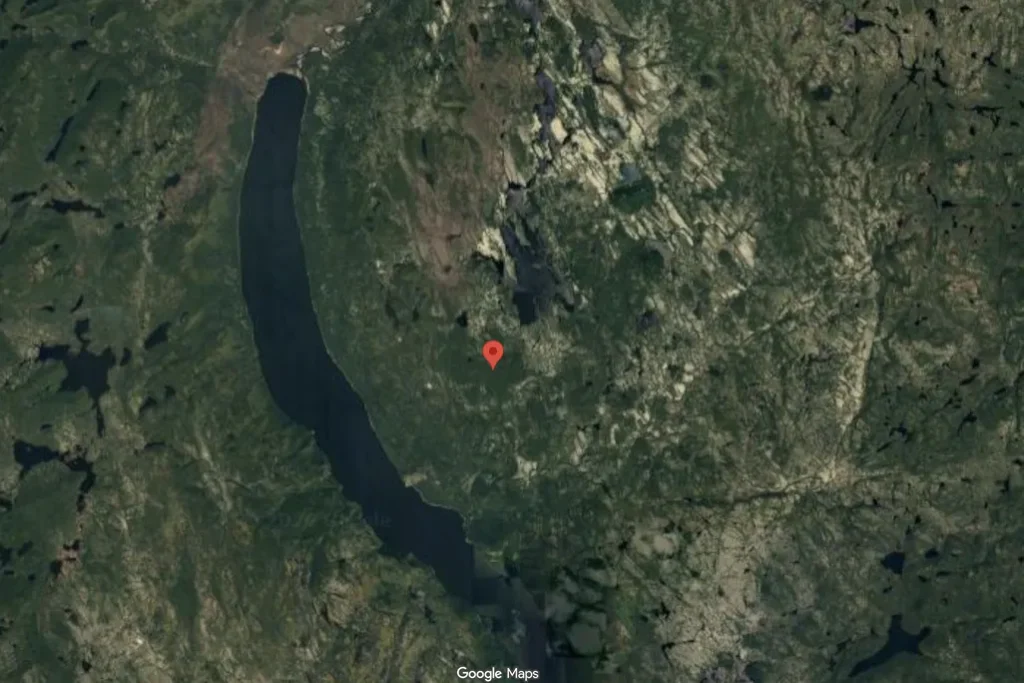
A Canadian camper was scrolling through Google Maps to plan a hiking route when he noticed something odd: a near-perfect ring, 15.5 miles across, sitting in the middle of the Quebec wilderness. Scientists have now confirmed what he suspected. This is the story of how a meteorite crater hiding in plain sight for 390 million years finally got discovered — through an app most of us use to check traffic.
Why did it take 390 million years to find this crater?
The crater sits in the remote Côte-Nord region of Quebec, centered on Lake Marsal, far from major roads or towns. Because almost no one lives nearby or has reason to survey the ground on foot, the impact scar simply blended into the landscape. It took a satellite view — and someone curious enough to zoom in — to notice the ring shape at all.
Canada has more confirmed meteorite craters than any other country, not because it gets hit more often than anywhere else, but because its bedrock is exceptionally old and stable. Unlike regions with active volcanoes, earthquakes, or heavy erosion, this terrain has preserved evidence of ancient impacts for hundreds of millions of years without being erased.
Why did an amateur spot it before scientists did?
Amateur astronomer Joël Lapointe found the formation in 2024 while mapping out a camping trip on Google Maps. His first instinct was actually to dismiss it. He assumed something that obvious would already be catalogued. When he checked existing crater databases and found nothing, he decided to contact professional geologists instead of letting it go.
This matters because it shows how satellite mapping tools have quietly turned millions of ordinary users into potential citizen scientists. Professional researchers can’t manually scan every square mile of remote terrain on Earth. Someone plotting a hiking trip, with no scientific training, can.
Why was an expedition necessary to confirm it?
A ring shape alone isn’t proof of an impact. Circular formations can also come from volcanic activity, glacial erosion, or plain coincidence. Planetary geologist Gordon Osinski of Western University, who runs a crater-tracking database, is used to false alarms; by his own account, roughly 99 out of 100 reported “craters” turn out to be something else.
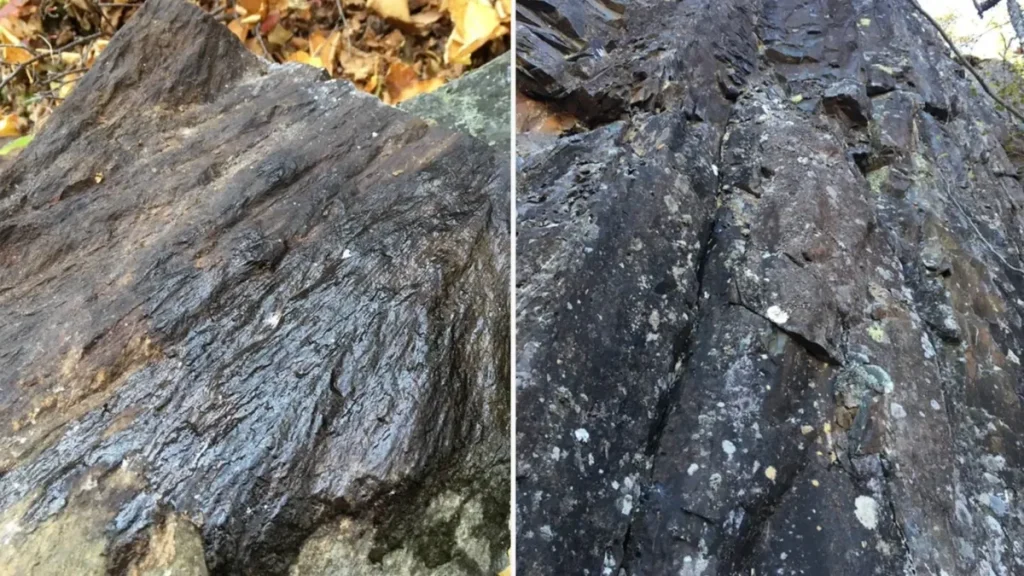
To settle the question, his team traveled to the remote site in October 2025 for what he described as one of the most physically demanding expeditions of his career. On the second day, they found the evidence that matters most: shatter cones, distinctive branching rock fractures that only form under the extreme shock pressure of a meteorite impact, along with large deposits of impact melt rock created by the heat of the collision.
Why does this specific discovery matter scientifically?
Only around 200 confirmed meteorite impact craters are known on Earth, and researchers typically confirm just one or two new ones per year. A crater this size, at roughly 25 kilometers across, ranks among the larger structures identified in recent memory, making it a meaningful addition to a very short global list.
The team will formally present the findings at the 88th Annual Meteoritical Society Meeting in Germany this August. Following consultation with the Ekuanitshit Innu Council, which represents the Indigenous community governing the area, the crater has been officially named Uhaachatik.
What this means going forward
The discovery is a reminder that huge geological events can sit undetected in plain view for hundreds of millions of years, even in an age of satellite imagery covering the entire planet. It also highlights a genuinely new pathway for scientific discovery: as mapping tools get sharper and more people spend time browsing them, unexpected finds by non-experts may keep surfacing rare geological history.
Frequently asked questions
How old is the newly confirmed crater?
Around 390 million years old, based on geological dating of the impact rock at the site.
Who discovered it, and how?
Amateur astronomer Joël Lapointe spotted the ring-shaped formation on Google Maps in 2024 while planning a camping trip, then flagged it to professional geologists.
How do scientists prove something is really an impact crater?
The key evidence is shatter cones and impact melt rock — physical rock formations that only form under the extreme pressure and heat of a meteorite collision, confirmed through an on-site expedition.
How rare is a discovery like this?
Very. Only about 200 confirmed impact craters exist on Earth, and new ones are typically confirmed at a rate of just one or two per year.
Source: Smithsonian Magazine. More Tech & Science explainers on TodayWhy.