

Last Updated on 3 months ago by TodayWhy Editorial
As Belgium’s “Red Devils” play through Group G at the 2026 World Cup, you may run across an old nickname for their home country that has nothing to do with aviation: the “Cockpit of Europe.” It sounds strange until you learn the original meaning of the word “cockpit” — and once you see why historians reached for it, it becomes one of the more fitting nicknames in European geography.
It’s not about planes — it’s about cockfighting
Long before “cockpit” referred to where a pilot sits, the word described something much bloodier: a small, enclosed pit where roosters were set against each other to fight. Historians borrowed that image to describe a piece of land that repeatedly became an arena for other people’s wars — a confined space where outside powers came to fight each other, while the local population had little say in the matter. Belgium, more than almost any other territory in Europe, fits that description.
A flat, exposed crossroads with no natural defenses
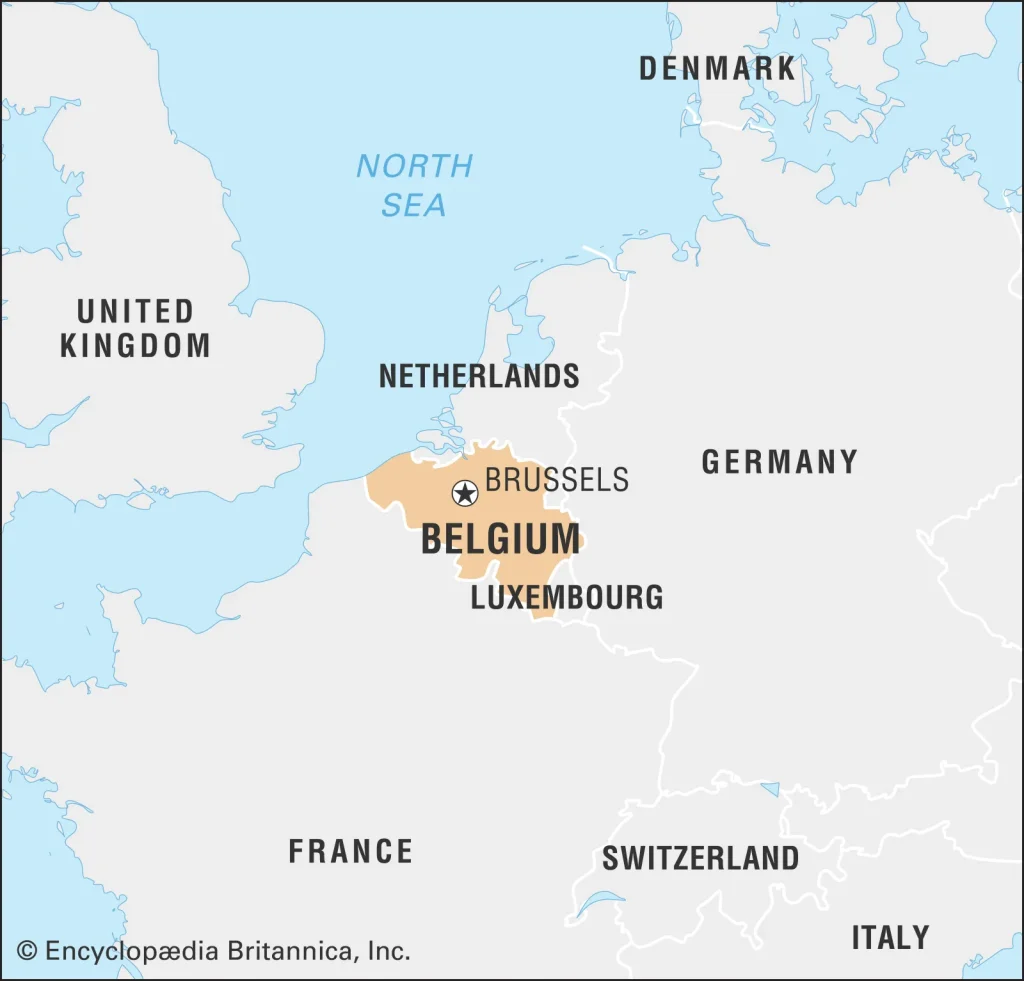
Geography is the root cause. Belgium sits directly between France and Germany, with easy access to the North Sea coast — meaning any army moving between Western Europe’s major powers, or trying to reach Britain’s doorstep, had strong incentives to pass directly through Belgian territory. Unlike Switzerland’s Alps or France’s river lines, Belgium’s terrain is largely flat, with few mountains or wide rivers to slow an advancing force. That made the country easy to cross and extremely difficult to defend — a combination that turned it into a default battlefield for centuries of conflicts that had nothing to do with Belgium itself.
Waterloo: the battle that cemented the reputation
The most famous single event behind the nickname is the Battle of Waterloo on 18 June 1815, fought just south of Brussels. The Duke of Wellington’s allied force of British, Dutch, Belgian, and German troops, together with a Prussian army under Field Marshal Blücher, defeated Napoleon’s French army in what became the final battle of the Napoleonic Wars — 23 years of near-continuous warfare across Europe. Belgium wasn’t a combatant in any meaningful sense; it was simply the ground on which two coalitions of much larger powers chose to settle the matter, a pattern that would repeat itself a century later.
1839: a treaty meant to protect Belgium — and why it failed
After breaking away from the Netherlands in an 1830 revolution, the new Kingdom of Belgium was formally recognized by Europe’s major powers in the 1839 Treaty of London, which bound Belgium to permanent neutrality and obligated Britain, France, Austria, Prussia, and Russia to guarantee that neutrality. The arrangement worked for 75 years. It collapsed in August 1914, when the German Empire invaded Belgium anyway in order to reach France faster — a violation Britain used as its legal justification for declaring war on Germany, helping trigger the First World War on a continental scale. The very treaty designed to keep Belgium out of future wars ended up being the reason an even larger one engulfed it.
Twice in one generation
What makes Belgium’s case so distinctive is that this happened twice within 26 years. Trench warfare around the Belgian town of Ypres became some of the deadliest fighting of World War I, and barely two decades later Belgium was invaded again by Germany in May 1940. The country found itself back on the front line a third time during the Battle of the Bulge in the winter of 1944–45, when German forces launched their last major offensive of World War II through the hilly Ardennes region in southeastern Belgium. Three times in 130 years, the largest armies in Europe chose Belgian soil as the place to decide a continental war — without Belgium itself being the cause of any of them.
From battleground to peacemaker
The aftermath shaped how Belgium positioned itself in the 20th century. Rather than continuing to rely on a neutrality that history had shown could be ignored, Belgium became one of the strongest institutional supporters of collective European security and integration after 1945. Brussels now hosts both the headquarters of NATO and the seat of the European Union’s main institutions — a deliberate shift from being Europe’s battlefield to becoming, in a sense, its boardroom. For more on how naming and historical identity intersect elsewhere in Europe, see TodayWhy’s explainer on why Iran used to be called Persia.
Frequently Asked Questions
Why is Belgium called the “Cockpit of Europe”?
Because its flat terrain and central location between France, Germany, and the North Sea made it a recurring battleground for wars between larger European powers, much like a cockfighting pit where outside fighters were thrown together to fight.
Does “cockpit” in this nickname refer to aircraft?
No. The term predates aviation and originally referred to a cockfighting arena — a small enclosed space built for combat.
What was the most famous battle fought on Belgian soil?
The Battle of Waterloo on 18 June 1815, where the Duke of Wellington and Prussian forces under Blücher defeated Napoleon, ending the Napoleonic Wars.
Did a treaty try to protect Belgium from future wars?
Yes. The 1839 Treaty of London guaranteed Belgium’s permanent neutrality, but Germany violated it by invading in August 1914, which helped trigger Britain’s entry into World War I.
How many times was Belgium invaded in the 20th century?
Twice by Germany as a full-scale invasion route — in 1914 and again in 1940 — plus the Battle of the Bulge fought partly on Belgian soil in the winter of 1944–45.
Is Belgium still seen as a battleground today?
No — since 1945, Belgium has repositioned itself as a center of European cooperation, hosting both NATO headquarters and the main institutions of the European Union in Brussels.