
Last Updated on 4 months ago by TodayWhy Editorial
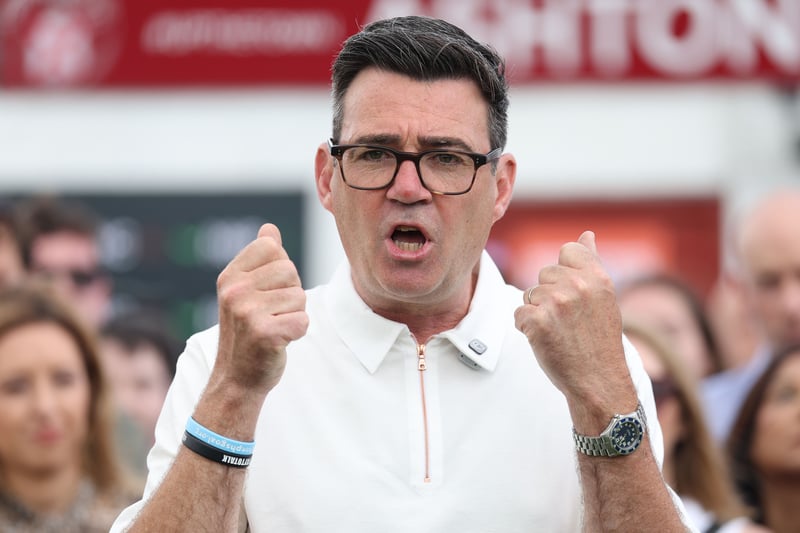
Greater Manchester is heading into an unplanned mayoral by-election on July 30, 2026, after Andy Burnham gave up the post to take his seat in Parliament. The vacancy is a direct consequence of Burnham’s decisive win in the June 18 Makerfield by-election, and it marks the first time anyone other than Burnham has held the role since it was created in 2017.
Why the Seat Became Vacant
Under UK law, the Mayor of Greater Manchester cannot simultaneously serve as a Member of Parliament, because the mayoral role carries the statutory powers of a police and crime commissioner — a function legally incompatible with a Commons seat. When Burnham won Makerfield with 54.8 percent of the vote, he was automatically disqualified from continuing as mayor and resigned the post on June 19, the day after the count.
It is a peculiar bit of timing: Burnham had only just been re-elected to a third term as mayor in May 2024, with 63 percent of the vote, before national politics pulled him away less than two years into that term.
Who’s Running the Region in the Meantime
Paul Dennett, the Mayor of Salford and Burnham’s deputy at the Greater Manchester Combined Authority (GMCA), is serving as acting mayor until the by-election result is declared. The GMCA itself continues to function day to day — it chairs decisions over transport, housing, policing, and fire services across the ten boroughs that make up Greater Manchester — but the directly elected mayor’s office, and its public profile, has been without its long-serving occupant for the first time in nine years.
What the Job Actually Controls
The mayoralty is one of the most powerful devolved offices outside London. Whoever wins on July 30 will chair the Greater Manchester Combined Authority, overseeing a budget of more than £3 billion, the region’s bus and tram network through the “Bee Network,” a housing investment fund aimed at delivering thousands of new homes, and the powers of police and crime commissioner for Greater Manchester Police. It is widely seen as the most influential job in English local government after the Mayor of London.
Who Could Replace Burnham
No single successor has emerged with anything like Burnham’s profile, and the contest is expected to be fought largely among senior Greater Manchester Labour figures, with Dennett himself considered a plausible candidate given his caretaker role and existing relationships across the ten boroughs. Labour’s selection process for its candidate, and the wider field of contenders from other parties, is expected to firm up through July as nominations close ahead of the vote.
Why This Matters Beyond Manchester
The by-election is also a live test of the political mood Burnham is hoping to ride into Downing Street. Reform UK finished a distant second to Burnham in Makerfield, but the party has been gaining ground in opinion polls nationally, and a strong Reform showing in the mayoral race — even in defeat — would be read in Westminster as evidence that Burnham’s personal popularity does not automatically transfer to whoever Labour puts forward next. A weak Labour performance, conversely, would complicate the case that “Manchesterism” can be replicated by someone other than its original architect.
More stories: