
Last Updated on 13 minutes ago by TodayWhy Editorial
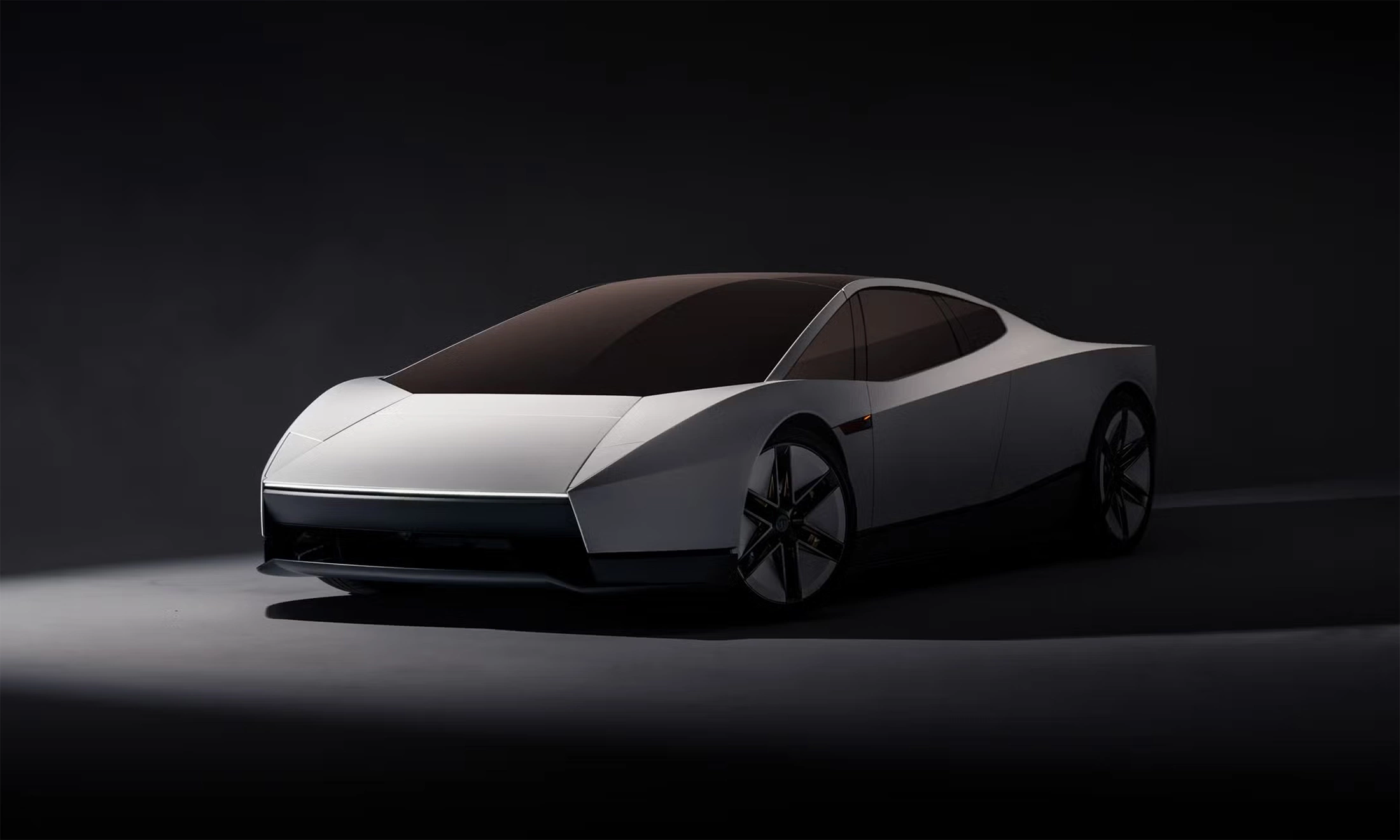
Tesla Roadster can briefly fly. On 15 October 2026 Tesla showed a redesigned two-seat Roadster lift off compressed-air thrusters at a SpaceX site in Texas. Production is still promised for 2028, and no retail price was named.
That is the whole search. People typing Tesla Roadster after the livestream are not asking for the 2008 original. They want the car that drove upside down, flipped over a line of Teslas, and left the ground. The short answer is cold-gas thrusters, borrowed from SpaceX, fed by a tank of compressed air. The longer answer is that “it can fly” is a trim, not a standard feature, and the trim is invite-only.
The car was first shown as a prototype in November 2017, with deliveries promised for 2020. Nine years later the reveal finally happened, at SpaceX’s rocket test site near McGregor, outside Waco. Elon Musk called it the best of the last of the human-driven cars. He also said it is not necessarily a safety-optimised car.
What the Tesla Roadster did on 15 October
The demonstration was short, under half an hour, and built around stunts rather than a spec sheet. The car drove up a tall curved ramp until it was hanging inverted, held by downforce and a suction system. It then used thrusters to lift over a parked lineup that included a Model 3, Model Y, Cybertruck, Semi and Cybercab, and completed what Tesla’s engineering lead Lars Moravy called a kickflip. A later run claimed a 0–60 mph time under one second.
None of that is ordinary car physics. A production sports car does not leave the ground on purpose. Tesla’s own page for the Rocket trim puts it plainly: “So yes, it can fly.” The same page adds a note that the flight features are not approved for public road use, and that the Rocket trim is not available in all regions.
Why the Tesla Roadster can fly
The hardware is compressed air, not a jet engine and not a battery-powered fan alone. Moravy described about ten thrusters connected to roughly 600 litres of compressed air. Musk called them attitude-control thrusters plus main thrusters in the rear, so the car can “fly like a rocket” for a few seconds. TechCrunch and Wired both reported cold-gas thrusters of the kind SpaceX uses for small corrections on rockets: a puff of high-pressure gas, steered by fast electric valves.
Cold gas is a deliberate choice, not a shortcut. A small jet turbine would give more thrust and more duration, and it would also make the car an aircraft in every legal sense, with fuel, heat and a maintenance regime no road car has. Compressed air is simpler, quieter and already certified in other forms. It is also why the hop ends quickly. Once the tank pressure drops, the thrusters stop. Tesla has not said how many hops a full tank allows, or how the tank is refilled. Those are the questions a buyer would ask and a demonstration does not answer.
The suction system on the road-going trims is the less theatrical half of the same idea. Instead of pushing the car up, it pulls the car down, increasing grip in a corner or on the inverted ramp. That is closer to existing race-car technology, active aero and fans, than to a rocket. It is also the part most likely to survive into a car you can register. A suction system does not need an aircraft certificate. A perimeter thruster that lifts the car does.
The Performance trim does not fly at all. It has active aerodynamics and a multi-mode suction system for downforce. Thrust adds rear thrusters aimed at acceleration. Only Rocket puts thrusters around the perimeter and is described as “air ready.” So the honest answer to “why does the Tesla Roadster fly” is: one version of it, briefly, on compressed air, in a demonstration, and not on a public road.
The three trims, and what a reservation actually buys
| Trim | Seats | What it adds | Claimed 0–60 | How to get one |
|---|---|---|---|---|
| Performance | 2 | Active aero, suction system | Under 1.6 s | Reservation |
| Thrust | 2 | Rear cold-gas thrusters | Under 0.9–1.0 s | Limited release |
| Rocket | 1 | Perimeter thrusters, can fly | Under 0.6 s | Invite only |
Tesla’s Roadster page lists the three levels. Performance is “road ready.” Thrust is “race ready,” with rear thrusters that Tesla says propel the car from 0–100 in under a second. Rocket is “air ready,” seats one, and is the only version that flies. Electrek’s post-event breakdown put Performance under 1.6 seconds, Thrust under 0.9, and Rocket under 0.59, with a claimed top speed above 230 mph. Treat those as company claims from the night, not independent tests.
The reservation is the part people can act on today. Tesla asks for $5,000 now, called fully refundable, and another $45,000 within ten days, or the hold is cancelled. That is the same $50,000 deposit structure used in 2017. Reports on the night said Thrust reservations were being taken at a much higher figure, around $250,000, and that Rocket is invite-only. No retail price for any trim was published. A deposit is not a purchase price.
Why production is still 2028
The delay is the other half of the search. The Roadster was unveiled in November 2017 as the fastest production car Tesla intended to build, with a 2020 delivery date. That date slipped repeatedly. The production-car reveal itself was pushed, most recently from 1 October to 15 October because of weather. On stage Musk said production would begin in 2028, “actually, for real.” The same week, the fuel-price story was still about oil and the Strait of Hormuz. The Roadster is the other end of that argument: a car that does not burn fuel, and that still is not for sale.
That is a claim, not a factory schedule. Tesla has not named a plant, a battery size, or a firm price. Some coverage reported a claimed 300-mile range and a top speed above 230 mph for the new car. Tesla’s older Roadster page still shows the 2017-era figures in places, including four seats and a 620-mile range. Those two sets of numbers cannot both describe the same car. Until Tesla publishes one spec sheet, the October 2026 claims and the old page should be read as separate.
The original deposits from 2017 are part of the story. Some buyers put down $50,000 for a car then advertised around $200,000. A few, including OpenAI’s Sam Altman, later complained about how hard it was to cancel. Anyone reserving now is joining a queue that has already waited nine years.
What “not approved for public roads” means
The flight system is the legal problem. Tesla’s own footnote says the Rocket features are not approved for public road use. A car that can leave the ground is an aircraft for regulatory purposes the moment it does, and aircraft rules are not car rules. Cold-gas thrusters also raise questions about noise, residual gas, and what happens if a thruster fires in traffic.
Musk said on the night that the car is not necessarily safety-optimised. That is an unusual line for a company selling a road car. It fits a demonstration vehicle better than a product you can register tomorrow. Expect the road-legal version, if one arrives in 2028, to be the Performance trim, or Thrust with the thrusters limited. The flying Rocket is a show car until a regulator says otherwise.
Frequently asked questions
Did the Tesla Roadster actually fly?
Yes, in a demonstration on 15 October 2026 at a SpaceX site in Texas. It lifted on cold-gas thrusters, flipped, and landed. That was a controlled hop on compressed air, not sustained flight.
Which Tesla Roadster can fly?
Only the Rocket trim. Performance is a road car with a suction system. Thrust adds rear thrusters for acceleration. Rocket adds perimeter thrusters and seats one. Tesla says Rocket is invite-only and not approved for public roads.
How much does the Tesla Roadster cost?
No retail price was announced. A reservation is $5,000 now and $45,000 within ten days. Thrust was reported at a much higher reservation figure. Rocket is invite-only.
When will the Tesla Roadster be built?
Tesla says production in 2028. The car was first promised for 2020. Treat 2028 as the current company target, not a delivery date.
Is this the same Roadster as 2008?
No. The 2008 Roadster was Tesla’s first car, a converted Lotus. This is the second-generation sports car announced in 2017 and revealed in production form in October 2026.
How does it fly without wings?
Cold-gas thrusters. High-pressure air is released through nozzles, the same principle SpaceX uses for small rocket manoeuvres. The supply is limited, so the hop is short.
The point of the Tesla Roadster
The Tesla Roadster people are searching for is a demonstration that worked: a car that left the ground on compressed air, on a rocket range, in front of cameras. The product you can reserve is mostly a deposit. Performance is the road car. Thrust is the fast one. Rocket is the one that flies, and Tesla has already said it is not for public roads. Production remains a 2028 promise, nine years after the first one. Until a price and a single spec sheet appear, the honest description is a stunt that landed, and a car that has not.