
Last Updated on 2 months ago by TodayWhy Editorial
On May 8, 2026, the United States Department of Defense made history by releasing the first tranche of what it described as “new, never-before-seen” files on Unidentified Anomalous Phenomena (UAP) — a term that has largely replaced the culturally loaded acronym UFO in official government communications.
The release marks one of the most significant transparency moves in modern American history regarding unexplained aerial encounters — and it was only the beginning. As of this update, the Department of War has published five tranches under PURSUE, arriving roughly every three to five weeks since May 2026, with no end date announced.
TodayWhy covers everything you need to know: what was released, what the files reveal, what remains unanswered, and where to access the documents yourself.
What Is the PURSUE Program?
The declassification effort operates under the official name PURSUE — the Presidential Unsealing and Reporting System for UAP Encounters. It is a multiagency initiative overseen by the Department of War (formerly the Department of Defense) at the direct order of President Donald Trump.
The program coordinates the efforts of multiple federal agencies, including:
- The Department of Defense (DoD)
- The White House
- The Office of the Director of National Intelligence (ODNI)
- The Department of Energy
- NASA
- The Federal Bureau of Investigation (FBI)
- The Department of State
All declassified materials are hosted publicly at war.gov/UFO — no security clearance required. Since the portal launched on May 8, 2026, the site has received over one billion visits, reflecting an extraordinary level of public interest.
How Did This Happen?
In February 2026, President Trump publicly directed the Pentagon and all relevant federal agencies to “begin the process of identifying and releasing Government files related to alien and extraterrestrial life, unidentified aerial phenomena (UAP), and unidentified flying objects (UFOs).”
Shortly after the May 8 release, Trump posted on Truth Social, characterizing the effort as one of “complete and maximum transparency,” and encouraged the public to review the files and “decide for themselves, ‘WHAT THE HELL IS GOING ON?'”
Defense Secretary Pete Hegseth framed the release in equally dramatic terms: “These files, hidden behind classifications, have long fueled justified speculation. It’s time the American people see it for themselves.”
NASA Administrator Jared Isaacman also praised the initiative, stating: “We will remain candid about what we know to be true, what we have yet to understand, and all that remains to be discovered.”
Tranche 1 (May 8): A Breakdown of the 162 Files
Scale and Scope
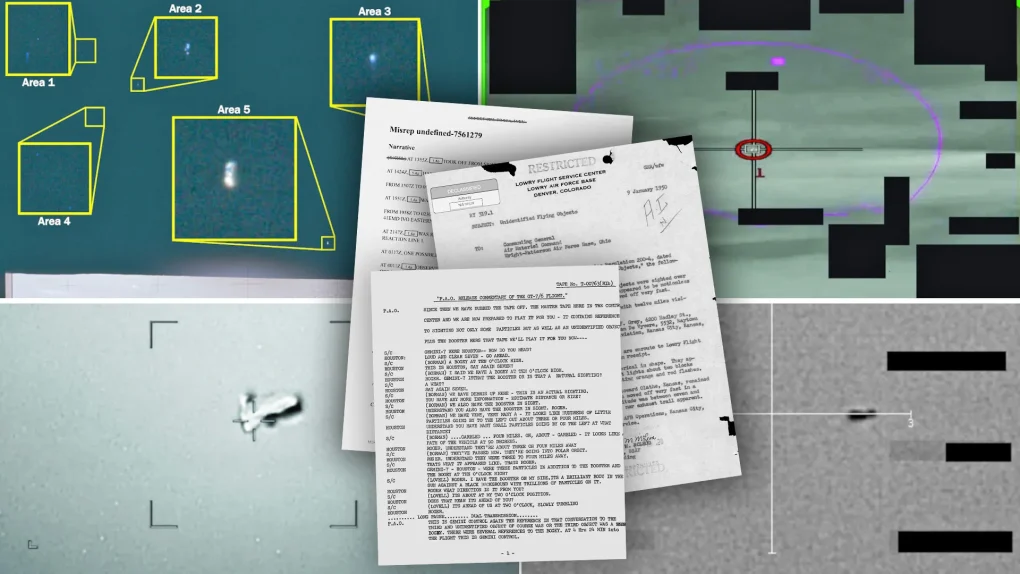
The initial tranche includes 162 files detailing more than 400 individual UAP incidents from locations around the globe, spanning from the late 1940s to early 2026. The materials include:
- Declassified videos (approximately two dozen, totaling 41 minutes of footage)
- Infrared still images from U.S. military systems
- Internal military memos and incident reports
- FBI case files with fewer redactions than previously released versions
- State Department diplomatic cables
- NASA archival imagery from Apollo missions
These Are the 28 Videos Released From the Pentagon’s First batch of UFO files
The Videos
The roughly 24 declassified videos were recorded between 2020 and 2026 and show reported encounters from locations across the world. Most consist of infrared camera footage tracking white objects that appear as small specks moving through the air. Notable highlights include:
- A 2023 video from Greece showing an object making multiple “90-degree turns” at approximately 80 miles per hour
- A video from the Indo-Pacific showing an object described as resembling a football
- Footage from Syria showing two semi-transparent, irregularly shaped orange areas, each appearing for approximately two seconds
FBI Files: 1947–1968
A large FBI case file — identified as 62-HQ-83894 — runs hundreds of pages and contains eyewitness testimonies and public reports about UFO sightings spanning from 1947 to 1968. The Pentagon noted that the FBI had previously released portions of this file, but Friday’s version includes fewer redactions and “several newly declassified pages.”
Included in this file is a historical memo from the FBI’s Dallas field office, in which an agent reports that a U.S. Air Force major contacted the bureau to state “that an object purporting to be a flying disc was recovered near Roswell, New Mexico” — a reference to the famous 1947 Roswell incident.
Modern Military Incident Reports
The bulk of the modern documents feature incident reports from active military personnel describing encounters with strange objects or unexplained phenomena in locations including:
- Iraq (2022): internal military memos describing “one possible small UAP”
- Syria (2024): reports of “multiple glares or light from an unknown origin”
- Greece (2023): a pilot described seeing a “triangular and metallic UAP” flying at 25,000 feet over the Mediterranean
- Africa (2025): a U.S. military operator reported encountering a UAP while operating within African airspace
- The United States (December 2025): an infrared still image captured of an unidentified object over the western United States
- Additionally: incidents in the Persian Gulf, Strait of Hormuz, Gulf of Aden, Japan, Kuwait, and elsewhere
State Department Cables
State Department files feature diplomatic cables from U.S. embassies around the world, sent from posts in Papua New Guinea, Kazakhstan, Turkmenistan, Georgia, Mexico, and Tajikistan, among others, detailing various UAP incidents. The dates on these cables range from 1985 to late 2025.
One notable cable from the U.S. Embassy in Tajikistan in 1994 relayed the experience of a commercial air pilot and crew who reported seeing a strange object at 41,000 feet.
Cold War-Era Documents
A large portion of the historical incidents cluster in the 1950s and 1960s, particularly in Cold War-era hotspots like Germany and locations near the Soviet Union. Many of the reported sightings during this period were concentrated near active military operations — a pattern that analysts say has continued into the present day.
The Apollo Missions: What Astronauts Saw
One of the most compelling sections of the release involves NASA archival materials from the Apollo lunar missions.
Apollo 11 (1969)
In a post-mission debriefing, astronaut Buzz Aldrin reported seeing “little flashes inside the cabin, spaced a couple of minutes apart,” while attempting to sleep. He also described seeing “what appeared to be a fairly bright light source” which the crew tentatively attributed to a possible laser.
Apollo 12 (1969)
Astronaut Alan Bean reported “flashes of light” that he described as “sailing off into space.” A newly released photo of the Apollo 12 landing site also features a highlighted area of interest slightly above the horizon where unidentified phenomena are visible.
Apollo 17 (1972)
Archival imagery from the Apollo 17 mission shows three lights above the lunar terrain, highlighted in a yellow box in the released materials. The Pentagon stated it is re-examining the Apollo imagery to better understand what the footage may depict, although the photographs themselves are not new.
Tranche 2 (May 22): 51 Videos, NASA Audio, and a Speechless Intelligence Officer
On May 22, 2026 — two weeks after the initial release — the Department of War published its second major tranche of UAP files. This batch focuses heavily on video footage and includes the first official audio recordings ever released under the PURSUE program.
What’s in the Second Tranche
The release consists of 64 new files in total: 51 infrared and sensor videos from military platforms, 6 PDF documents, and 7 NASA mission audio recordings. Unlike Tranche 1, which drew on files from multiple agencies, this release is the first to include contributions simultaneously from the CIA, ODNI, NASA, and the Department of Energy alongside the Department of War.
Standout Videos and Documents
Four-UAP formation near Iran (August 26, 2022 — ID: DOW-UAP-PR050) Infrared footage captures four objects in what appears to be coordinated flight formation over water in the CENTCOM area of responsibility. The objects move in synchrony without any apparent means of propulsion visible to the sensor.
Syrian UAP — instant acceleration (2021 — ID: DOW-UAP-PR051) Drone footage from Syria shows an object executing what the accompanying report describes as “instant acceleration” and directional changes that exceed the performance envelope of any known aircraft.
F-16 engagement over Lake Huron (February 12, 2023 — ID: DOW-UAP-PR071) An Air National Guard F-16C intercepts and shoots down an object described as octagonal or balloon-like over Lake Huron, Michigan. The infrared video shows the engagement and the object’s fragmentation upon impact. Debris was recovered afterward. This is one of the few cases in the PURSUE archive where a UAP resulted in a documented military engagement.
Senior intelligence officer testimony (2025 — ID: ODNI-UAP-D001) A declassified narrative from a senior official within the U.S. Intelligence Community describes a helicopter encounter in the western United States involving orange orbs that split apart, changed direction independently, and appeared to interact with accompanying fighter jets. The officer’s account states: “We were virtually speechless after these observations.”
Sandia Base historical records (1948–1950 — ID: DOW-UAP-D017) Documents detail 209 UAP sightings near Sandia Base in New Mexico — a highly sensitive military installation with connections to nuclear weapons research — including reports of green fireballs and orbs observed repeatedly by military and civilian personnel.
NASA mission audio (1969) Seven audio recordings from NASA missions are included in this release, among them an Apollo 12 medical debriefing tape from November 1969 in which crew members describe unexplained light phenomena observed during the mission.
An audio recording from Mercury-Atlas 7 on May 24, 1962, featured pilot Scott Carpenter describing reflective white particles that moved at “random” and appeared to “look exactly like snowflakes.” He said the phenomena moved faster than his spacecraft. Additional “little white objects” were also reported months later during the Mercury Atlas 8 mission.
New batch of Pentagon UFO files released: See all 50 videos:
What AARO Says
The All-domain Anomaly Resolution Office (AARO) has noted that the majority of UAP cases in the PURSUE archive “resolve to conventional explanations — drones, balloons, birds, weather phenomena, or sensor artifacts”. However, a meaningful subset of the cases in Tranche 2, including the formation flying over Iran and the instant acceleration in Syria, currently lacks a clear conventional explanation.
NSA Top Secret Umbra Records Released via FOIA
On May 18, 2026 — four days before Tranche 2 — a separate but parallel disclosure occurred that has received less mainstream attention despite its significant historical weight.
The Disclosure Foundation, a nonprofit advocacy organization focused on UAP transparency, won a Freedom of Information Act appeal against the National Security Agency, compelling the release of hundreds of pages of UAP-related records. The NSA had initially denied the request in its entirety. After a lengthy appeal, the agency’s own appeals authority acknowledged that the blanket denial was improper.
What “Top Secret Umbra” Means
Many of the released documents carry the classification marking TOP SECRET UMBRA — one of the most sensitive classification levels historically used in signals intelligence (SIGINT). UMBRA was a codeword associated with the most sensitive communications intercept programs. The NSA retired the UMBRA codeword in 1999, but the records it protected remained classified.
The significance of UAP-related information appearing inside NSA signals intelligence channels is considerable. The NSA does not collect civilian witness reports. Its systems collect, intercept, analyze, and report on foreign signals and communications. When UAP incidents appear inside SIGINT records, it indicates the U.S. intelligence apparatus was treating those incidents as matters of genuine intelligence interest — not merely filing away civilian calls.
What the Records Show
The production runs to over 300 pages, the majority of which remain heavily redacted despite being decades old. What is visible includes:
- References to multiple UAP sightings treated as sensitive intelligence matters
- Analytical caveats including some objects tentatively attributed to balloons
- Incidents in which objects behaved in ways inconsistent with known explanations
- Sightings in which the appearance of an object was inconsistent with any identified aircraft type
The Disclosure Foundation’s Chief Legal Officer Hunt Willis stated: “It is simply unacceptable for security classification exemptions to remain on government documents that pre-date the Civil Rights Act.” The Foundation has indicated it will continue challenging the remaining redactions in court.
Why This Matters Beyond the Headlines
The Umbra records do not prove extraterrestrial technology. What they prove is something more subtle and, in some respects, more consequential: the United States intelligence community treated UAP as a real and sensitive national security concern for decades, classified related information at the highest available levels, and actively resisted making that information public even after its operational sensitivity had long expired.
Tranche 3 (June 12): CIA’s Zimbabwe UFO and the “Are You Seeing This” Orbs
On June 12, 2026, the Department of War published its third tranche of UAP files, shifting the tone of the disclosure program noticeably toward civilian and law-enforcement witnesses rather than military sensor footage alone.
What’s in the Third Tranche
The release totals approximately 72 files: 53 documents, 10 images, 6 videos, and 3 NASA audio recordings, sourced from the FBI (29 files), CIA (18), the Department of War (12), NASA (11), and single files from the intelligence community and an unspecified agency. By this point the official PURSUE portal had logged over 1.7 billion visits since its May 8 launch.
The Zimbabwe Airport Disc
The standout document is a previously unreleased CIA report describing a July 2008 incident at Harare International Airport in Zimbabwe. Observers tracked an object both visually and by radar, describing it as disc-like with a hollow center and rotating lights on its underside; at one point, witnesses reported “beams” emanating from it before it changed color and ascended out of view. The sighting was serious enough to reach the White House Situation Room, and officials debated at the time whether it represented foreign reconnaissance technology or something else entirely. It remains unresolved.
“Are You Seeing This?”
A cluster of 2023 reports from five federal law enforcement agents describes strange orbs spotted on the horizon during separate incidents, including one exchange in which an agent’s partner asked, “Are you seeing this?” as a glowing orb lit the sky. The FBI produced digital renderings to accompany several of these accounts, including a translucent, “potato”-shaped object with a creamy, opalescent, faintly scaled surface reported near Cheyenne Mountain, Colorado — home to NORAD’s underground command complex.
The 1950s CIA “Debunking” Memo
Tranche 3 also surfaced a 1952–53 CIA Scientific Advisory Panel record concluding that “flying saucers” posed no direct physical threat to national security — but recommending a public “policy of debunking” to strip the subject of its mystery and counter what the panel called a “sensationalist press.” It is one of the clearest documented examples in the archive of the government treating public UFO belief itself, rather than the objects, as the thing to be managed.
As with every tranche, AARO’s standard caveat applies: unresolved does not mean unexplainable, and several of the luminous “orb” reports in this batch were flagged by analysts as consistent with sky lanterns.
Tranche 4 (July 10): The Smallest Release Yet, and a UFO Over a Nuclear Plant
The fourth PURSUE release landed on July 10, 2026 and immediately stood out for a different reason than its predecessors: it was the smallest batch to date, just 40 files — a quarter the size of the opening tranche.
What’s in the Fourth Tranche
The 40 files break down as 14 documents, 19 videos, 4 audio recordings, and 3 images, drawn from AARO, NASA, the CIA, the FBI, and — for the first time since Tranche 1 — the Department of Energy. Material spans nearly eight decades, from 1948’s Project Sign paperwork through 2025.
“Unlike Anything I Had Seen”
The headline document is a 2019 account from a veteran military pilot with 28 years of Air Force and Navy service, who tracked a small, fast-moving rectangular object over the eastern United States before it shot out of view during a zoom-in attempt. He wrote that its flight was unlike anything he had seen in nearly three decades of flying, and that more experienced colleagues aboard could not explain it either.
A UFO Over a Nuclear Weapons Plant
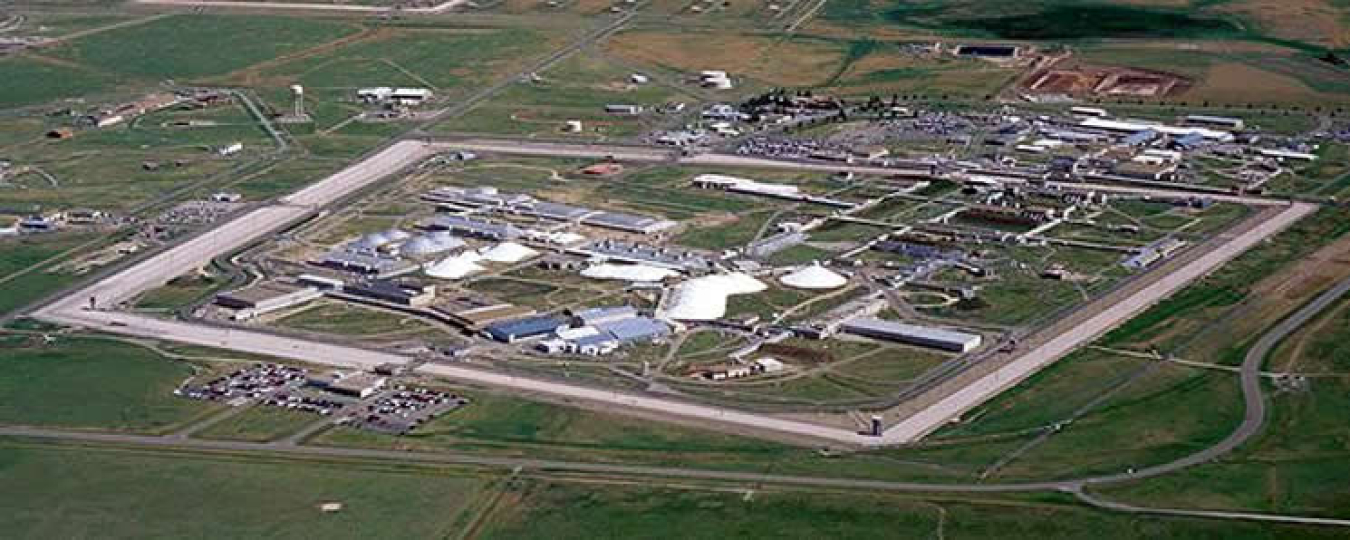
The most consequential file may be the quietest one: a Department of Energy report describing an unidentified object intruding into the airspace over the Pantex Plant near Amarillo, Texas — where the United States assembles and dismantles nuclear weapons — on September 1, 2015. It extends a pattern that recurs throughout the PURSUE archive of UAP activity reported near sensitive nuclear and military infrastructure.
Green Fireballs and a Six-Pointed Star
Tranche 4 also included a transcript from a 1949 Los Alamos conference where physicists who had worked on the Manhattan Project tried and failed to explain a wave of “green fireballs” over nuclear labs, and — 77 years later — a 2025 US Indo-Pacific Command case tracking a six-pointed star shape over the Yellow Sea and a separate object over the East China Sea.
Analysts remain split on why the release shrank so sharply: some read it as the government front-loading its least sensitive material in earlier tranches, others as a rolling review process where batch size simply reflects how much material cleared declassification that month. Tranche 5 would go on to complicate that theory further — see below.
Tranche 5 (August 7): Cold Orbs Over the Gulf of Oman
The fifth and most recent tranche arrived on August 7, 2026 — 41 files pulled from the widest set of contributing agencies of any release so far: the Pentagon, FBI, CIA, State Department, and the Executive Office of the President.
Cold Orbs That Reacted to Cannon Fire
The headline case is a September 2021 encounter recorded by a US Special Operations AC-130J gunship crew during a live-fire exercise over the Gulf of Oman. After dropping a flare as a mock target, the crew’s infrared cameras picked up two roughly four-foot “cold orbs” hovering nearby; when the plane’s cannon fired, the orbs shot away instantly. Over the exercise the crew logged around 25 similar objects moving at speeds between 250 and 1,300 miles per hour with no detected propulsion source. AARO could not resolve the case. Harvard astrophysicist Avi Loeb, who chairs the White House’s UAP Science Advisory Council, published an independent analysis noting the “cold” signature rules out jet exhaust or combustion — while also acknowledging that coordinated drone swarms, already fielded technology by 2021, would produce a similar behavioral pattern.
A 500-Foot Triangle Over Bagram — and a 22-Year Pattern
A 2002 report from Bagram Airfield, Afghanistan describes a silent, unlit, equilateral-triangular object roughly 500 feet across passing overhead at a steady 150 knots — larger than any aircraft ever built. The same FBI file bundles that account together with a separate cluster of light sightings from one of the same pilots between 2023 and 2024, suggesting a recurring pattern rather than a single incident.
A Clock That Ran Fast
The tranche’s oddest file has no video or image at all: an FBI report describing a witness whose analog clock ran 20 minutes ahead of two digital clocks following a UAP encounter, with the discrepancy persisting afterward. Independent analysis suggests electromagnetic interference with the digital clocks’ circuitry as the more physically plausible explanation, since a time discrepancy of that scale is difficult to reconcile with gravitational effects that would have caused other obvious disturbances.
Measured by file count, Tranche 5’s 41 files were one more than Tranche 4. Measured by data volume, it was the smallest release yet — continuing the shrinking trend first visible in Tranche 4, even as the file count ticked back up.
For a full case-by-case breakdown, including how to critically read a PURSUE file, see our complete Tranche 5 report.
All five releases are explicitly labeled as part of a rolling process, and the Department of War has confirmed additional tranches will continue posting to war.gov/UFO on an ongoing basis. Based on the pattern since May — roughly every three to five weeks — a sixth tranche is likely within weeks of this update.
The bigger open question is no longer whether files keep coming, but whether Congress can compel release of the raw technical sensor data and physical-material claims that still sit outside the PURSUE archive — cellphone footage of a sensor display, however striking, is not the same evidentiary category as unprocessed telemetry. That was the central theme of the Disclosure Forum on Capitol Hill in June, and remains the thread to watch.
The Disclosure Foundation’s Mandatory Declassification Review requests for UAP-related congressional briefings, and its ongoing legal challenge to the remaining NSA Umbra redactions, are also both still active as of this update.
What Comes Next?
Both releases are explicitly labeled as part of a rolling process. The Department of War has confirmed that additional tranches will be posted at war.gov/UFO on an ongoing basis as more materials are reviewed and declassified.
The Disclosure Foundation has also submitted Mandatory Declassification Review requests for UAP-related congressional briefings that federal law required agencies to provide to Congress — materials that have not yet been made public. Legal challenges to the remaining NSA redactions are also ongoing.
Where to Access Everything
All PURSUE files are publicly available at: war.gov/UFO
NSA FOIA production: disclosure.org/news/nsa-top-secret-umbra-uap-foia-release
No login, subscription, or security clearance is required for the PURSUE portal.
Key Takeaways
A sixth tranche is expected within weeks, continuing the rolling release cadence.
- Between May 8 and August 7, 2026, the Department of War released five tranches of PURSUE files, totaling several hundred individual records spanning the 1940s to 2026.
- Tranche 1 (May 8): 162 files, 400+ incidents, including the FBI’s Roswell-referencing 1947–68 case file and Apollo-era astronaut accounts.
- Tranche 2 (May 22): 64 files — 51 videos plus first-ever PURSUE audio — including the Lake Huron F-16 shootdown and a four-object formation near Iran.
- NSA Top Secret Umbra records (May 18): 300+ pages released via a separate FOIA appeal, the first UAP material at that classification level made public.
- Tranche 3 (June 12): 72 files, including a 2008 CIA report on a disc-shaped object over Harare Airport, Zimbabwe, and a 1950s CIA memo recommending a public “debunking” policy.
- Tranche 4 (July 10): 40 files — the smallest release to date — including a UAP sighting over the Pantex nuclear weapons plant in Texas.
- Tranche 5 (August 7): 41 files, headlined by a 2021 Gulf of Oman “cold orbs” encounter and a 500-foot silent triangle reported over Bagram, Afghanistan in 2002.
- Across all five tranches, every file is labeled unresolved — meaning investigators could not identify the object, not that they confirmed anything extraordinary.
- A sixth tranche is expected within weeks, continuing the rolling release cadence.
Frequently Asked Questions (FAQ)
Q: What is the PURSUE program?
A: PURSUE stands for Presidential Unsealing and Reporting System for UAP Encounters. It is a multiagency U.S. government initiative ordered by President Trump to declassify and publicly release UFO/UAP-related government records.
Q: How many tranches have been released so far? A: As of June 2026, two tranches have been released — Tranche 1 on May 8 (162 files, 400+ incidents) and Tranche 2 on May 22 (64 files including 51 videos). A third tranche is in development.
Q: What was in the second batch of Pentagon UFO files? A: The second tranche contained 51 infrared and sensor videos, 6 PDF documents, and 7 NASA mission audio recordings. Highlights include a four-UAP formation over Iran, a Syrian UAP exhibiting instant acceleration, the Lake Huron F-16 shootdown video, and a 2025 senior intelligence officer account describing orange orbs that left him “virtually speechless.”
Q: What are the NSA Top Secret Umbra UAP records? A: On May 18, 2026, the NSA released hundreds of pages of UAP-related records previously classified TOP SECRET UMBRA — one of the most sensitive classification levels in U.S. signals intelligence — following a FOIA appeal by the Disclosure Foundation. The documents demonstrate that the NSA treated certain UAP incidents as serious intelligence matters over several decades.
Q: Where can I read the released UFO files? A: All PURSUE files are at war.gov/UFO — no clearance or account required. The NSA FOIA production is available at disclosure.org.
Q: Do the declassified files prove alien life exists? A: No. Across both tranches and the NSA release, no confirmed evidence of extraterrestrial beings or spacecraft has been presented. Many cases remain unexplained; unresolved is not the same as extraterrestrial.
Q: Were the Roswell files included? A: Yes. Tranche 1 includes a historical FBI memo referencing the 1947 Roswell incident, in which a U.S. Air Force major informed the FBI that a “flying disc” had been recovered in New Mexico.
Q: What is a UAP vs. a UFO? A: UAP stands for Unidentified Anomalous Phenomena and is the current official U.S. government term. It is broader than UFO (Unidentified Flying Object), encompassing objects observed in the sky, underwater, and potentially in space. The two terms are often used interchangeably in public discourse.
Q: What is Top Secret Umbra? A: UMBRA was a codeword classification used by the NSA to protect its most sensitive signals intelligence programs. Material marked TOP SECRET UMBRA was considered especially damaging to national security if improperly disclosed. The NSA retired the UMBRA codeword in 1999, but records bearing that marking remained classified until the 2026 FOIA release.
Q: How many tranches have been released so far?
A: As of this update, five tranches have been released: Tranche 1 (May 8, 162 files), Tranche 2 (May 22, 64 files), Tranche 3 (June 12, 72 files), Tranche 4 (July 10, 40 files), and Tranche 5 (August 7, 41 files). A sixth is expected within weeks.
Q: What was in the third, fourth, and fifth batches of Pentagon UFO files?
A: Tranche 3 (72 files) featured a 2008 CIA report on a disc-shaped object over Harare Airport, Zimbabwe, and orb sightings by federal law enforcement agents. Tranche 4 (40 files, the smallest release yet) included a 2019 pilot account and a UAP sighting over the Pantex nuclear weapons plant in Texas. Tranche 5 (41 files) was headlined by a 2021 Gulf of Oman “cold orbs” encounter and a 500-foot silent triangle reported over Bagram, Afghanistan.
Last updated: August 2026. Sources: U.S. Department of War (war.gov/UFO), Disclosure Foundation (disclosure.org), Avi Loeb, Scientific American, CBS News, NBC News, NewsNation, Internet UFO Database, Wikipedia — United States UFO files.