
Last Updated on 5 months ago by TodayWhy Editorial
Steven Spielberg says “all of this is true.” The U.S. government releases UFO files weeks before the film opens. Reddit explodes. Here is every theory, every piece of evidence — and the answers that may surprise you.
There is a moment in the final trailer for Disclosure Day that stopped the internet cold.
Steven Spielberg — not a character, not a narrator, but Spielberg himself, speaking directly to camera — delivers this line:
“I used to say to myself, wouldn’t it be wonderful if all of this turned out to be true. I’m now thinking, wouldn’t it be wonderful for people to know — all of this is true.”
The line is part of a longer mission statement Spielberg delivers in the final trailer, in which he declares: “I am much more inclined now than I was when I made Close Encounters to believe that we are not the only intelligent civilization in the universe. This is a story about us — all of us — up against the most extraordinary events in human history. How will disclosure change us? I believe for the better.”
Four words — “all of this is true” — sent shockwaves across Reddit, X, YouTube comment sections, and Substack threads within hours. What followed was one of the most intense pre-release conspiracy debates in modern Hollywood history. And unlike most internet rabbit holes, this one does not have a clean exit.

What Exactly Is the Disclosure Day Conspiracy Theory?
The theory, at its core, holds that Disclosure Day is being released to help the government prepare the masses to make first contact with aliens — that Spielberg, knowingly or unknowingly, is the delivery mechanism for a controlled, gradual societal preparation for the most destabilizing truth in human history.
As one X user wrote bluntly about the film: “Is this entertainment, or the first step in preparing the public for ontological shock?”
The phrase “ontological shock” — a term used by defense analysts and cognitive scientists to describe the psychological collapse that could occur if humanity suddenly learned it was not alone — is not fringe vocabulary. It appears in declassified government documents discussing UAP disclosure strategy. The fact that a summer blockbuster is prompting its use in casual social media posts tells you everything about the cultural moment we are in.
There are, broadly, five distinct theories circulating. Each deserves a serious examination.
Theory #1: The Government Is Financing the Film
The most elaborately constructed theory — and the one that prompted screenwriter David Koepp to break his silence — holds that the U.S. government secretly financed Disclosure Day and recruited Spielberg specifically because he is loved and trusted by the public. “My favorite that I read was that the government was financing this film and got Steven to do it because he’s loved and trusted by the public,” Koepp said publicly. “That’s a well-worked-out internet conspiracy theory, and I love it!”
The logic underpinning this theory is not entirely absurd. The CIA has a documented history of working with Hollywood studios — most famously during the Cold War — to produce films that shaped public perception. The idea that a government facing unprecedented pressure to disclose UAP evidence might seek to soften the blow through popular entertainment is, at minimum, a coherent hypothesis.
Spielberg himself addressed the theory directly during an appearance on The Rewatchables podcast, framing it explicitly: “The biggest urban legend that is occurring right now involves my movie coming out, Disclosure Day, that somehow I have made this movie in concert with deep state factions.” He denied it. But the very fact that a director of Spielberg’s stature felt compelled to publicly rebut a “deep state” theory about his own film — on a podcast ostensibly dedicated to Stanley Kubrick’s 2001: A Space Odyssey — says something about how seriously the theory had taken hold.

Verdict: No credible evidence supports government financing. But the theory’s internal logic is more sophisticated than most internet conspiracies.
Theory #2: The Pentagon UFO File Timing Is Not a Coincidence
This is the theory with the most real-world substantiation — because the timing genuinely is remarkable.
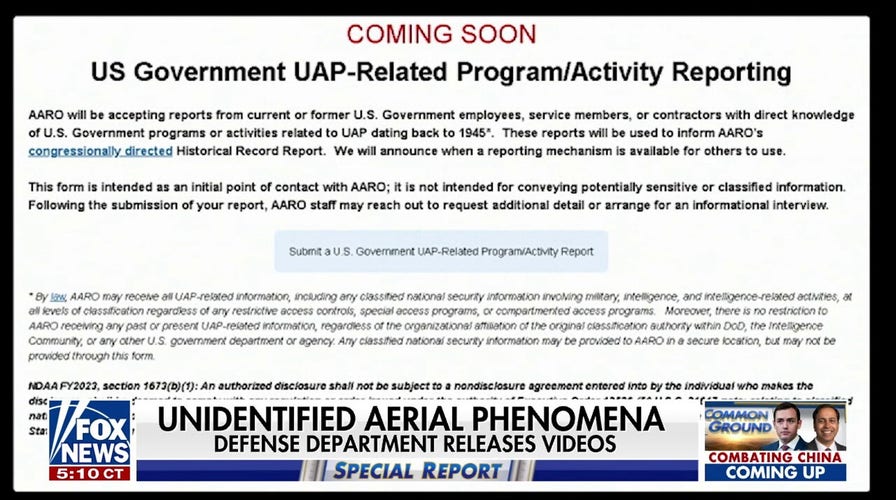
Just weeks before Disclosure Day opened in theaters, the U.S. government released two new batches of UFO-related files, fueling renewed public fascination with extraterrestrial phenomena and prompting online speculation about the timing of the film’s marketing rollout.
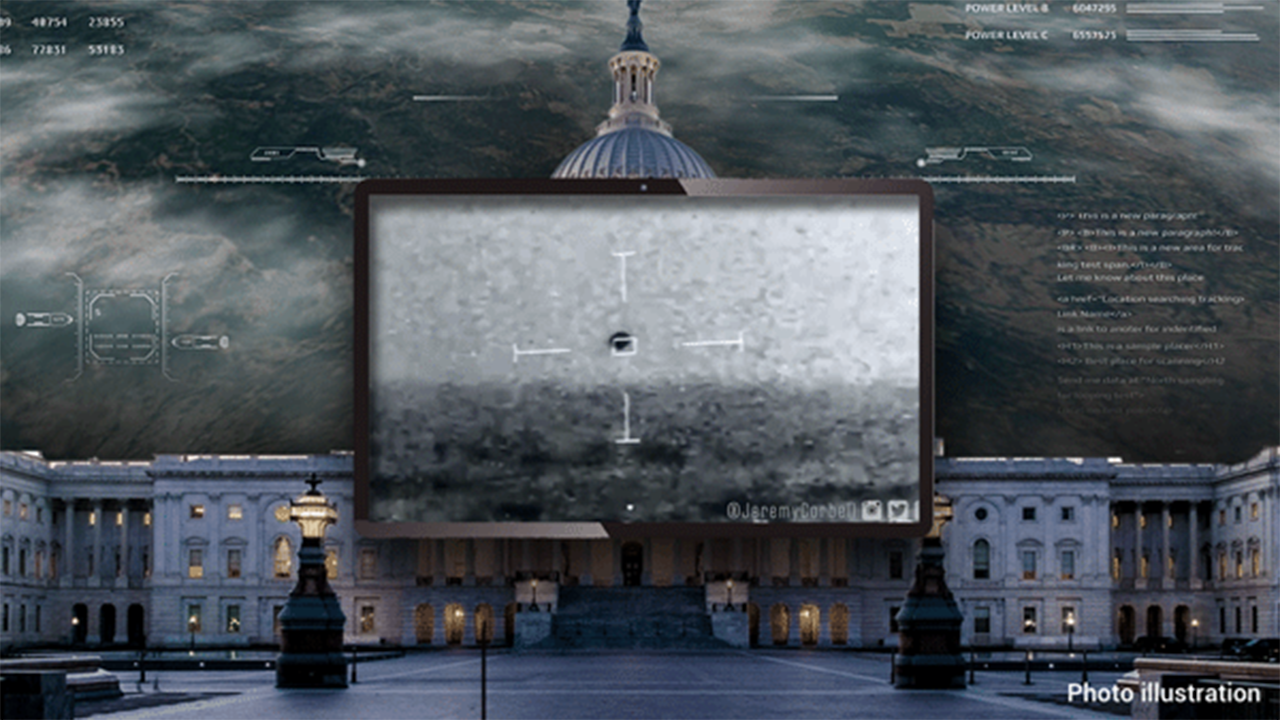
The files are being released on a rolling basis at war.gov/UFO as part of President Donald Trump’s promise to declassify certain government files, including those related to Unidentified Anomalous Phenomena. The first batch included photos and reports dating back nearly 80 years, along with archival photos, military video, and documents related to NASA’s Apollo 12, Apollo 17, and Gemini 7 missions — during which astronauts reported strange sightings.
On Reddit, users were quick to connect the dots. One pointed to the “uncanny timing of the Hollywood release, coinciding with Trump’s eventual release of the UFO files recently, after a longstanding promise to do so.”
The counterargument is straightforward: Disclosure Day has been in production for years. Its release date was set long before the specific timing of any government document dump. Spielberg has said he was inspired to make the film based on a 2017 New York Times article about the Pentagon’s UFO program — nine years before the film’s release. Movies do not get made in weeks to align with government document releases.
Verdict: The timing is striking but circumstantial. Production timelines make coordination nearly impossible.
Theory #3: Spielberg Is Personally “In the Know”
In the final trailer, toward the end of the footage, Spielberg says: “I used to say to myself, wouldn’t it be wonderful if all of this turned out to be true? I’m now thinking, wouldn’t it be wonderful for people to know?” After a quick cut to a film clip, he reappears and adds: “All of this is true.”
The internet parsed those final three words with the intensity of Kremlinologists reading a Soviet communiqué. Does “all of this is true” refer to the film’s story? To the existence of alien life? To the government cover-up depicted in the movie? Or — and this is the theory that sent followers of the UFO disclosure movement into overdrive — does it mean that Spielberg has been quietly briefed by government sources and is telegraphing real information through a fictional wrapper?
At the SXSW Film & TV Festival in Austin on March 13, 2026, Spielberg confirmed that he believes in extraterrestrial life — though he has never personally encountered a UFO. He did not claim special government access. But the gap between “I believe in aliens” and “I have been briefed on aliens” is precisely the gap that conspiracy theorists have chosen to inhabit.
Researcher Sara Bondink, writing on X, offered a more grounded analysis of the specific “Roswell footage” shown in the film’s trailers, noting: “We don’t know of any film from Roswell — so they wouldn’t be filming the Roswell crash as a psyop as that has never been released or used against the people.” Her point: if this were a genuine preparation operation using real classified footage, the government would not choose footage the public has never seen — it would choose something familiar.
Verdict: “All of this is true” is almost certainly promotional language calibrated for maximum virality. It worked.
Theory #4: The Kubrick Parallel — Hollywood as a Government Tool
Much of the online discussion centers not just on the film itself, but on Spielberg’s wider cultural legacy. For over five decades, Spielberg has shaped global imagination through films that define how audiences think about aliens, technology, fear, and government secrecy. Supporters of the psyop theory argue that because his storytelling has historically influenced how the public visualizes unknown phenomena, any new UFO narrative carries natural political weight.
The Kubrick parallel is instructive here. A durable conspiracy theory holds that Stanley Kubrick was recruited by NASA to fake the Apollo 11 moon landing footage, and that The Shining (1980) contains coded confessions of this collaboration. No credible evidence supports this theory either — but its structural logic (powerful filmmaker, government with something to hide, conveniently timed art) is identical to the Disclosure Day psyop theory.
Spielberg made this parallel explicit himself on The Rewatchables, linking the Disclosure Day conspiracy theories to the Kubrick moon landing theories. The implication — whether he intended it or not — is that these are recurring patterns of human pattern-recognition in the face of genuinely unsettling real-world events, not evidence of actual coordination.
Critics of the psyop view counter that Spielberg is simply reflecting societal anxieties rather than engineering them, pointing to historical examples where filmmakers respond to cultural fear rather than create it.
Verdict: The most intellectually interesting theory — and the least provable in either direction.
Theory #5: The “7 Billion People” Clue — Are Some of Us Not Human?
No list of Disclosure Day conspiracy theories is complete without the strangest one of all.
In the teaser trailer, Josh O’Connor’s character says that the truth “belongs to seven billion people.” Earth’s current population is approximately 8.2 billion. Some fans have taken that numerical inconsistency to mean that, within the film’s reality, over a billion people on Earth are not actually human — they are aliens living among us.
This “Future Human” theory connects to something Spielberg said in a 2023 interview with Stephen Colbert, in which he speculated that UAPs might not be from distant galaxies but could be “us, 500,000 years into the future” returning as anthropologists to document a pivotal century in our history. If the aliens in Disclosure Day are future humans — and if the “seven billion” line is a deliberate clue — the implication is that only the non-future-humans need to be told the truth.
Verdict: Almost certainly an unintentional script detail. But as fan theories go, it is extraordinarily well-constructed.
What Does the Evidence Actually Add Up To?
Here is what is verifiably true, sourced and documented:
Disclosure Day opens in theaters weeks after the Pentagon released its latest trove of UFO files, being made available at war.gov/UFO as part of President Trump’s declassification promise.
Spielberg confirmed his film was inspired by a 2017 New York Times article about the Pentagon’s UAP program — placing the film’s conceptual origin point nine years before its release.
Screenwriter David Koepp has explicitly and publicly denied any government involvement in the film’s production or financing.
Spielberg himself denied making the film “in concert with deep state factions” during a podcast appearance specifically dedicated to discussing such theories.
The debate has transformed a summer blockbuster release into a cultural flashpoint about influence, storytelling, and how public perception is shaped — a debate that is itself arguably more significant than anything in the film’s plot.
The most honest answer to the question “Is Disclosure Day a psyop?” is this: the fact that the question is being asked seriously, in 2026, by people who are not wearing tinfoil hats, is the most interesting data point of all. We have arrived at a cultural moment where the line between “preparing the public” and “reflecting the public’s existing anxieties” has become genuinely difficult to locate.
Even Glenn Beck, reviewing the film’s cultural moment for The Blaze, acknowledged the suspicious circumstances — a globally famous Spielberg emerging with a disclosure film at the exact moment the government is talking more about UFOs — while ultimately concluding that the “chief storyteller of the modern age” is not secretly working with the government or aliens.
The Deeper Question: Does It Matter Whether It’s Real?
For the UFO disclosure community — a movement that has been active since the 1990s and is built around the belief that the government knows far more than it is disclosing — Disclosure Day is not just a film. It is either the most sophisticated preparation operation ever executed, or the most perfectly timed piece of mainstream validation their movement has ever received. Either way, it serves their purposes.
And that, ultimately, is the most sophisticated thing Spielberg may have done — intentionally or not. By making a film so precisely calibrated to this specific cultural moment, so saturated with real-world documentary detail and so openly promoted with statements like “all of this is true,” he has created a work that functions equally well as entertainment, as cultural mirror, or as preparation.
Whether the government had anything to do with it or not, Disclosure Day is doing exactly what a psyop would do: it is changing what feels possible.
Disclosure Day opens in theaters worldwide on June 12, 2026.
Read next: Why Is Disclosure Day Releasing in 2026? The Real-World Forces Behind Spielberg’s Most Urgent Film
Sources:
- CinemaBlend — Koepp responds to government rumors
- Far Out Magazine — Spielberg denies Deep State link
- IBTimes UK — Psyop fears after reviews go viral
- Cybernews — Reddit reactions
- Maxim — Final trailer full quotes
- Newsweek — Pentagon UFO files timing
- NewsNation — Film praised amid Pentagon file release
- Parade / AOL — Fan theories breakdown
- The Blaze — Glenn Beck analysis
- Digital Trends — Final trailer analysis
- PBS NewsHour — Trump UFO files context
- People Magazine — Spielberg SXSW aliens belief