
Last Updated on 3 months ago by TodayWhy Editorial
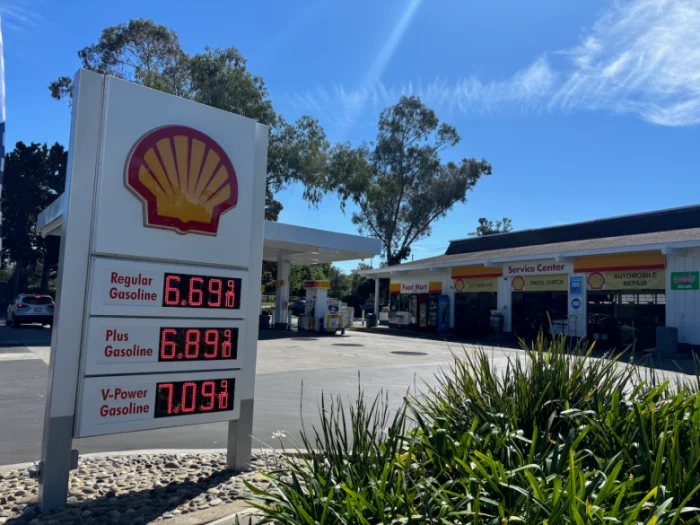
Gas prices have become one of the most talked-about economic topics in recent years. Whether you’re commuting to work, planning a road trip, or simply pulling into a gas station, the pain of high fuel prices is hard to ignore. With the national average for regular gasoline climbing sharply in 2025 and surging even higher into 2026, millions of Americans are asking the same question: why are gas prices so high?
The answer is never simple. Gas prices are the product of a complex web of global and domestic forces — from the geopolitics of oil-producing nations to the price of crude oil on international markets, from seasonal refinery maintenance to the ripple effects of war. In this comprehensive guide, we break down every major factor behind high gas prices and explain what you can do to protect your budget.
Video: Gas prices are climbing again. Here’s what the experts are saying
1. How Gas Prices Are Actually Determined
Before diving into specific causes, it helps to understand what actually goes into the price you see on a gas station sign.
According to the U.S. Energy Information Administration (EIA), the retail price of gasoline is made up of four main components:
- Crude oil cost — historically the largest share, accounting for roughly 51% of the price per gallon in recent years
- Refining costs and profits — approximately 14% of the price
- Distribution and marketing — around 17%
- Federal and state taxes — accounting for roughly 17%
This means that when you pay $4.50 per gallon, about $2.30 of that goes toward the raw cost of the crude oil used to make the fuel. This is why crude oil prices are the single most important driver of what you pay at the pump. When crude prices spike, gas prices follow — usually within days.
2. The Role of Crude Oil Prices
Crude oil is the foundational ingredient of gasoline. It is traded on global commodity markets, and its price is influenced by supply and demand dynamics that play out across more than 100 countries.
When crude oil is abundant and demand is weak, prices fall and consumers enjoy cheaper gas. When supply tightens or demand surges — or both — crude prices rise rapidly, and the effect shows up at every pump in America.
In 2022, crude oil prices spiked to their highest levels since 2014 after Russia’s full-scale invasion of Ukraine disrupted global energy markets. That sent gas prices soaring to record highs. Since then, U.S. retail gasoline prices had actually been declining year over year. In fact, the annual average retail price for regular grade gasoline fell to $3.10 per gallon in 2025, representing the third consecutive year of declining prices — down $0.21 per gallon from 2024.
However, this trend reversed dramatically in early 2026. As geopolitical tensions in the Middle East intensified, crude oil prices surged once again, pushing pump prices to their highest levels in four years.
3. Geopolitical Conflicts and the Iran War
Perhaps no single factor explains the current spike in gas prices more directly than the ongoing conflict involving Iran and its impact on global oil shipping routes.
The Strait of Hormuz — a narrow passage in the Persian Gulf — is one of the most strategically important waterways on earth. Roughly one-fifth of the world’s crude oil normally passes through it. When the conflict effectively shut down shipping through the strait, it triggered what the International Energy Agency called the largest supply disruption in the history of oil markets, briefly pushing crude as high as $112 per barrel in early April 2026.
The result for American drivers has been dramatic. The average price of a gallon of regular gasoline climbed to $4.48 per gallon, up roughly 50% since the conflict began, according to AAA. As of mid-May 2026, the national average had reached approximately $4.52 per gallon — levels not seen since the height of the post-Ukraine war energy crisis.
That peak did not hold. As shipping through the Strait of Hormuz picked back up in June and Gulf producers ramped exports, crude prices retreated sharply — and pump prices followed. By June 28, 2026, AAA’s national average had fallen to $3.87 per gallon, the second straight week below the $4 mark. AAA noted that crude prices kept easing as the US and Iran worked toward a longer-term deal, even as a record number of Americans prepared to travel for the Independence Day weekend. (AAA Newsroom)
The relief came with a caveat. A renewed exchange of strikes between the US and Iran over the weekend of June 28–29 pushed Brent crude back up to roughly $72.50 a barrel after it had briefly dipped near $69 — a reminder that the Strait of Hormuz situation is not fully resolved, and that pump prices could see it within days if the pattern continues. For the full play-by-play, see our companion piece: Why the Strait of Hormuz closure in 2026 to push oil prices sky-high.
Analysts have noted that the oil market is extremely sensitive to geopolitical signals. Every development in ceasefire talks, every disruption in the Strait of Hormuz, and every policy statement from Washington can cause oil prices — and therefore gas prices — to swing significantly within hours.
Making the situation more complex, the Trump administration’s decision to block Iranian oil exports as a punitive measure simultaneously increased pressure on Iran while further reducing global crude supply, adding additional upward pressure on prices.
4. OPEC+ Production Decisions
The Organization of the Petroleum Exporting Countries, along with allied producers known collectively as OPEC+, controls a significant share of global oil output. Their production decisions have an outsized influence on crude prices worldwide.
After holding back supply for much of 2023 and 2024 in order to stabilize and raise crude oil prices, OPEC+ began ramping up production again in 2025. However, the speed and scale of production increases have remained uncertain, keeping global markets on edge. Even a relatively small decrease in OPEC+ output can have significant consequences for global crude prices when demand remains strong — which it has, particularly in the U.S. and across Asia.
When OPEC+ decides to cut production, less oil flows into the market, prices rise, and American drivers pay more at the pump. When OPEC+ increases production, the reverse tends to happen. The challenge is that these decisions are made by a coalition of countries with their own political and economic interests, which means they can change without warning.
5. Refinery Capacity and Seasonal Blends
Crude oil doesn’t automatically become gasoline. It must be refined — a complex industrial process carried out at specialized facilities. The capacity and efficiency of America’s refinery network plays a major role in how much gas costs.
Several key refinery disruptions are currently influencing prices:
Refinery closures: The closure of LyondellBasell’s Houston refinery in early 2025 reduced domestic gasoline production, forcing the U.S. to increase net imports of motor gasoline. Phillips 66’s Los Angeles refinery was also slated for closure at the end of 2025. These closures reduce the country’s refining buffer, making supply more vulnerable to disruptions.
Seasonal blend switching: Refineries must switch from producing cheaper “winter blend” gasoline to more expensive “summer blend” gasoline in the spring. Summer blends are formulated to reduce smog in warmer months and evaporate more slowly — but they cost more to produce. This annual transition typically causes gas prices to rise each spring, regardless of what crude oil is doing.
Unplanned outages: Unexpected refinery shutdowns due to equipment failures, severe weather, or accidents can temporarily reduce the supply of refined gasoline in regional markets, causing localized price spikes.
6. Taxes and Distribution Costs
While crude oil grabs most of the headlines, taxes are a significant and unavoidable part of your gas bill. Federal excise tax on gasoline is 18.4 cents per gallon, and state taxes vary widely — from around 14 cents per gallon in some Southern states to more than 60 cents per gallon in California.
Distribution and marketing costs — covering the transportation of refined gasoline from refineries to regional storage terminals, and then to individual gas stations — also contribute to the final price. When fuel surcharges are added (as often happens when diesel prices spike), distribution costs rise, adding another layer to what consumers pay.
In states like California, the combination of high state taxes, strict environmental regulations that require special fuel formulations, and limited pipeline access to the rest of the country creates structurally higher gas prices year-round.
7. Seasonal Demand and the Summer Driving Season
Americans drive more in summer. A lot more. The warm months bring vacation road trips, weekend getaways, and longer commutes, and this surge in demand — known as the summer driving season — typically pushes gas prices to their annual peak.
Historically, gas prices tend to be highest in late spring and early summer, as refineries are still transitioning to summer blends while demand is already climbing. In 2025, the retail gasoline price peaked in early April at $3.24 per gallon before falling through the second half of the year. In 2026, with the added pressure of the Iran conflict and the Strait of Hormuz closure, the summer price peak is expected to be significantly higher.
Conversely, gas prices typically fall in autumn and winter, when demand drops and refineries can produce cheaper winter-blend fuel. This is part of why gas prices fluctuate so predictably throughout the year even when nothing dramatic is happening in global markets.
8. Domestic Production Trends
The United States is the world’s largest producer of oil and natural gas. The shale boom of the 2010s transformed America from a major importer to a net energy exporter in some years. Yet domestic production has not been enough to insulate American consumers from global price swings.
Several challenges are affecting U.S. oil output:
Matured shale fields: Many of the most productive shale drilling sites in places like the Permian Basin have passed their peak production rates. Operators must drill more wells to maintain the same output, which increases costs and limits the pace of production growth.
Investment hesitancy: With crude oil prices volatile and margins uncertain, many U.S. drillers are reluctant to significantly ramp up production. Some producers have warned that domestic output may have plateaued for the near term.
Efficiency gains: On the positive side, technological improvements mean that producers can bring oil to market more efficiently. The average number of wells completed per drilling location more than doubled from 2014 to 2024, according to the EIA. But efficiency alone cannot offset the fundamental supply constraints at work.
9. Inflation and Supply Chain Pressures
Gas prices don’t exist in isolation — they are part of a broader inflationary environment that affects every link in the supply chain.
Inflation in the U.S. surged to a three-year high of 3.8% by the end of April 2026, according to the Consumer Price Index. High fuel costs feed into the prices of nearly everything else, from groceries to manufactured goods, because transportation depends on diesel and gasoline. When fuel surcharges are added across the supply chain — from fishing boats and tractors to delivery trucks — those costs eventually find their way onto retail shelves.
Additionally, tariffs imposed by the Trump administration on a wide range of imported goods have added further inflationary pressure, compounding the effects of energy price increases on household budgets.
10. Why Gas Prices Vary by State
You may have noticed that gas prices can differ by more than a dollar per gallon depending on which state you’re in. Several factors explain this variation:
- State and local taxes: Higher taxes in states like California, Illinois, and Pennsylvania directly raise pump prices.
- Environmental regulations: States with stricter air quality standards (particularly California) require special fuel blends that are more expensive to produce.
- Access to supply: States close to major oil production or refining hubs — like Oklahoma, Texas, or Louisiana — typically enjoy lower prices due to cheaper transportation costs.
- Regional competition: Areas with more gas stations per capita often have more competitive pricing, while rural areas may see higher prices due to transport costs and lower competition.
In 2025, the annual average retail price for regular gasoline ranged from a low of $2.39 per gallon on the Gulf Coast to a high of $4.32 per gallon on the West Coast, illustrating just how much geography and policy shape what drivers pay.
11. How to Save Money on Gas
While you can’t control global oil markets, there are practical steps you can take to reduce your fuel costs:
Use gas price apps: Apps like GasBuddy, Waze, and AAA’s TripTik can show you the cheapest gas stations in your area in real time. Even saving 10–15 cents per gallon adds up quickly over a year.
Join loyalty programs: Many grocery store chains and warehouse clubs (like Costco, Sam’s Club, and Kroger) offer discounted gas to members or through points programs.
Improve fuel efficiency: Simple habits like maintaining proper tire inflation, avoiding aggressive acceleration, and removing unnecessary weight from your vehicle can meaningfully improve your gas mileage.
Plan your trips: Consolidating errands into a single trip reduces unnecessary miles driven. If you work remotely, maximize your remote days to cut commuting costs.
Consider carpooling: Sharing a ride with a colleague or neighbor splits fuel costs and reduces wear on your vehicle.
Monitor credit card rewards: Some credit cards offer 3–5% cash back on gas purchases, which can offset a meaningful portion of your fuel costs over time.
12. Will Gas Prices Go Down?
The outlook for gas prices depends heavily on how the geopolitical situation evolves — and the past month has shown both sides of that coin. As shipping through the Strait of Hormuz was restored through June, prices did retreat relatively quickly, exactly as analysts predicted: the national average fell from $4.52 in mid-May to $3.87 by late June. But the late-June flare-up between the US and Iran is a reminder that this recovery is reversible. Some experts continue to warn that if shipping lanes face another sustained disruption, crude prices could climb back toward $150 a barrel, potentially pushing gas to $5 or $6 per gallon nationally. For now, the trend is downward, but it remains hostage to the next development in the Strait of Hormuz.
Before the Iran conflict escalated, the EIA had forecast that average retail gasoline prices would decrease by roughly 3% in 2025 compared to 2024, and by a further 6% in 2026. Those projections were based on falling crude oil prices, declining gasoline consumption as vehicle fuel efficiency improves, and the growing share of electric vehicles in the U.S. fleet. Whether those trends can reassert themselves depends on a resolution to the current energy crisis.
Final Thoughts
Understanding why gas prices are so high requires looking at multiple interacting forces — the global crude oil market, geopolitical conflicts, OPEC+ decisions, domestic refinery constraints, seasonal demand, and policy choices. No single factor tells the whole story.
What is clear is that the pain at the pump in 2025–2026 reflects a genuine and acute global energy supply disruption, layered on top of structural challenges in refining capacity and long-term production trends. For drivers, the best response is to stay informed, drive efficiently, and take advantage of every tool available to reduce fuel costs while the situation works itself out.
Sources: U.S. Energy Information Administration (EIA), AAA, NerdWallet, PBS NewsHour, Time Magazine, LendEDU