
The question “why is the US blockading Cuba” remains one of the most debated topics in international relations. While Cuba often refers to US policy as “el bloqueo” (the blockade), the United States describes it as a long-standing economic embargo — a comprehensive set of trade, financial, and travel restrictions. In early 2026, this policy escalated with targeted actions against oil shipments, intensifying Cuba’s energy crisis and sparking global discussion.
Today Why explores the historical roots, official US reasons, recent oil-related developments, and the underlying geopolitical motivations. We’ll also address related questions like “why is the U.S. blockading oil to Cuba” and “why does U.S. want Cuba.”
Historical Background: From Revolution to Embargo
The US-Cuba tensions trace back to the 1959 Cuban Revolution, when Fidel Castro overthrew the US-backed dictator Fulgencio Batista. Initially, the Eisenhower administration recognized the new government, but relations soured quickly.
Key triggers included:
- Cuba’s nationalization of American-owned properties, including oil refineries and sugar plantations, without full compensation.
- Cuba’s growing alignment with the Soviet Union during the Cold War, which brought a communist government just 90 miles from US shores.
- Retaliatory measures: In 1960, the US slashed Cuban sugar imports and imposed partial export bans. By October 1960, a broader embargo on most exports to Cuba took effect.

On February 3, 1962, President John F. Kennedy signed Proclamation 3447, establishing a near-total trade embargo under the Trading with the Enemy Act. This prohibited most commercial and financial transactions between the US and Cuba. Exceptions existed for food and medicine, though financing was heavily restricted.
The policy strengthened over decades:
- The 1992 Cuban Democracy Act (Torricelli Act) banned trade with Cuba by foreign subsidiaries of US companies.
- The 1996 Helms-Burton Act (Cuban Liberty and Democratic Solidarity Act) codified the embargo into law, allowing lawsuits against foreign firms trafficking in confiscated US property and requiring democratic reforms in Cuba before lifting sanctions.
These laws made the embargo difficult for any president to lift unilaterally, tying it to conditions like free elections, release of political prisoners, and market-oriented reforms.
Official US Reasons for Maintaining the Embargo
The US government has consistently framed the embargo as a tool to promote democracy and human rights while protecting national security. According to the US State Department and various administrations, the core reasons include:
- Human Rights and Political Repression: The Cuban government is accused of suppressing free speech, jailing dissidents, restricting the press, and lacking democratic institutions. The US argues that economic pressure holds the regime accountable and supports the Cuban people’s aspirations for freedom.
- National Security and Alliances with Adversaries: Cuba has maintained close ties with countries and groups the US views as threats, including the Soviet Union (historically), and more recently Russia, China, Iran, and Venezuela. The US claims Cuba hosts intelligence capabilities and supports “malign actors.”
- State Sponsor of Terrorism Designation: Cuba was designated (and redesignated) a state sponsor of terrorism due to its past support for leftist militant groups. Although relations thawed temporarily under Obama (2014–2017 “Cuban Thaw”), later administrations tightened restrictions.
- Compensation for Expropriated Property: Unresolved claims for US assets seized after the revolution remain a sticking point.
The US maintains it is not a “blockade” in the naval sense (like the 1962 Cuban Missile Crisis quarantine) but a unilateral economic policy. It does not prevent Cuba from trading with other countries — though extraterritorial provisions (e.g., restrictions on dollar transactions and ships visiting Cuban ports) make global commerce more difficult.
Why Is the U.S. Blockading Oil to Cuba? The 2026 Escalation
In January 2026, under President Donald Trump, US policy intensified dramatically with what many describe as an oil blockade. On January 29, 2026, Trump signed an executive order declaring a national emergency, citing Cuba’s “extraordinary actions” that threaten the US, including alliances with hostile nations and human rights abuses.
Specific measures:
- Tariffs on countries that directly or indirectly supply oil to Cuba.
- Seizure or interception of tankers bound for Cuba.
- After US actions in Venezuela (including the removal of Nicolás Maduro), Venezuelan oil shipments — Cuba’s primary subsidized source — were halted.
- Threats and enforcement that led suppliers like Mexico to suspend deliveries.
Cuba requires roughly 100,000 barrels of oil per day for its power grid and economy. The resulting fuel shortages triggered widespread blackouts, hospital disruptions, transportation breakdowns, and a deepening humanitarian crisis, with nationwide power outages reported in March 2026.
The administration argued these steps protect US interests by denying resources to a regime aligned against America. Some easing occurred later, such as allowing limited resale of Venezuelan oil to Cuba’s private sector (not the government) and permitting certain shipments on humanitarian or commercial grounds. Critics, including the UN, condemned the moves as collective punishment violating international law and exacerbating suffering for ordinary Cubans.
This oil-focused pressure is often called a “blockade” by Cuba and its supporters because of its extraterritorial enforcement and intent to strangle energy supplies, even if it falls short of a traditional military blockade.

Why Does the U.S. Want Cuba? Geopolitical Motivations
The phrase “why does U.S. want Cuba” often reflects suspicions about US intentions. From a US perspective, the goal has never been territorial control (despite historical interests in the 19th–early 20th century, including the Platt Amendment era). Instead, motivations center on:
- Strategic Location: Cuba’s position in the Caribbean makes it a potential base for adversaries (e.g., Soviet missiles in 1962 or modern intelligence facilities).
- Ideological Opposition: The US opposes communist one-party rule in the Western Hemisphere and views it as a destabilizing influence, including alleged support for regimes in Venezuela and Nicaragua.
- Promoting Democracy and Free Markets: Successive administrations have linked sanctions relief to political and economic reforms. The ultimate aim is a democratic, non-hostile Cuba that respects human rights and property rights.
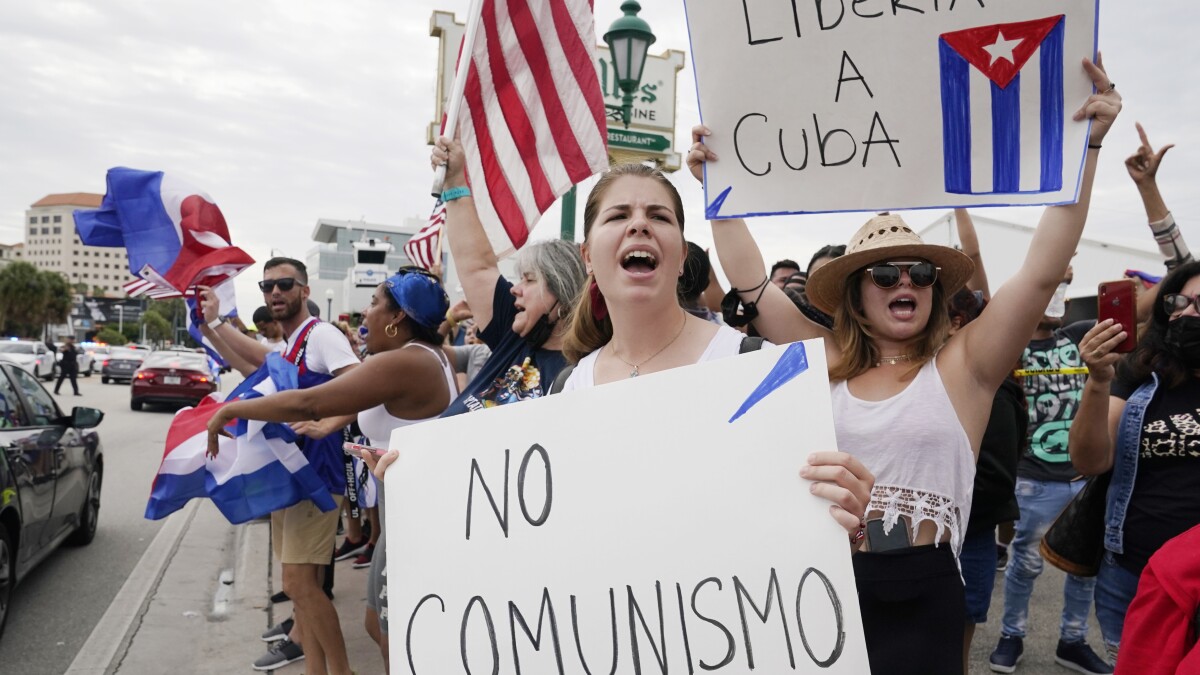
- Domestic Politics: Cuban-American communities in Florida have historically influenced policy, favoring tough stances against the regime.
Critics argue the policy is driven by outdated Cold War thinking, revenge for nationalizations, or a desire to dominate the region economically. Some point out that the embargo has failed to achieve regime change after over 60 years, instead harming Cuban civilians while the government blames external forces for internal mismanagement, corruption, and policy failures.
Impact on Cuba and International Criticism
Cuba estimates the embargo has cost the island hundreds of billions (or even trillions) in lost revenue over decades. It limits access to US technology, spare parts, financing, and markets. Combined with the 2026 oil measures, it has worsened chronic issues like energy blackouts and shortages of food and medicine.
The United Nations has repeatedly condemned the policy (often near-unanimously), calling it illegal under international law due to its extraterritorial effects. Human rights groups acknowledge repression under the Cuban government but argue sanctions disproportionately affect civilians.
On the other hand, supporters note that Cuba trades with many nations (including China, Russia, and Europe) and that domestic factors — such as centralized economic control, lack of incentives for production, and corruption — play a major role in its difficulties.
Current Status (as of 2026) and Future Outlook
The core embargo remains codified in law, requiring congressional action for full removal. The 2026 oil restrictions represent a “maximum pressure” approach aimed at accelerating change, though some flexibility (e.g., private sector fuel sales) has been introduced. Diplomatic relations exist but are strained, with limited humanitarian exceptions.
Public opinion in the US is divided: many view the policy as too harsh on the Cuban people, while others support pressure on the regime. Internationally, calls to end the embargo persist, though enforcement of US sanctions via the dollar’s dominance gives Washington significant leverage.
Conclusion: A Complex and Enduring Dispute
The US does not maintain a literal naval blockade of Cuba but enforces a comprehensive economic embargo designed to isolate the communist government economically and diplomatically. The reasons include national security concerns, human rights, and a desire for democratic transition. Recent oil restrictions in 2026 have heightened the pressure, exacerbating an energy crisis while aiming to force accountability or change.
Whether this policy is effective, ethical, or outdated continues to divide experts, governments, and the public. For the Cuban people, daily hardships stem from a mix of external sanctions and internal governance challenges. Understanding “why is the US blockading Cuba” requires looking beyond slogans to the intertwined history, ideology, and geopolitics that have defined the relationship for over six decades.
For the latest developments, consult official US State Department sources or balanced international reporting, as the situation evolves with shifting administrations and global events.