
Last Updated on 5 months ago by TodayWhy Editorial
Cuba oil is one of the most geopolitically charged subjects in energy today. On an island of 11 million people just 90 miles from the Florida coast, oil is not merely a commodity — it is the lifeblood of the entire economy, the source of nearly all electricity, and the lever through which foreign powers have long sought to reshape Cuba’s political future.
Cuba possesses its own oil reserves, operates its own state oil company, and sits on top of a geological province that some estimates place among the most significant untapped deepwater deposits in the Western Hemisphere. And yet, as of 2026, Cuba faces its worst oil crisis since the Soviet collapse of the 1990s — its imports slashed to near-zero by US sanctions and geopolitical disruption, its power grid in collapse, and its people enduring rolling blackouts that have made life on the island nearly unlivable.
TodayWhy answers every essential question about Cuba oil: what it is, where it comes from, how much Cuba has, who controls it, why Cuba is so dependent on imports, and what the current energy crisis means for the island’s future.
1. Cuba Oil at a Glance: Key Statistics
Before diving into the full story, here is a snapshot of the key numbers that define Cuba oil today:
| Metric | Data | Source |
|---|---|---|
| Proven oil reserves | 124 million barrels (2025) | Worldometer |
| World reserve ranking | #67 globally | Worldometer |
| Daily domestic production | ~24,000–30,542 barrels/day (2024) | Worldometer / Trading Economics |
| Daily oil consumption | ~112,423 barrels/day (2024) | Worldometer |
| Production as % of consumption | ~27% (domestic production only) | Worldometer |
| Import dependency | ~60–73% of consumption (pre-2026) | Multiple sources |
| Primary import source (pre-2026) | Venezuela (Petrocaribe) | CFR / Global Security |
| Peak domestic production year | 2003 (~57,900 barrels/day) | Trading Economics |
| 2026 oil crisis import level | Effectively zero (January–March 2026) | Financial Times / Kpler |
| Electricity from oil | ~80–95% of national grid | Electric Choice / Global Security |
Cuba produces only about one-quarter to one-third of the oil it consumes. Everything else must be imported — and in early 2026, those imports were cut to near-zero by US sanctions and geopolitical disruption, triggering a national catastrophe.
Source: Worldometer – Cuba Oil | Trading Economics – Cuba Crude Oil Production
2. The Geology of Cuba Oil: Where Does It Come From?
Cuba’s oil exists because of a remarkable geological story that began over 150 million years ago.
The Cuban Fold and Thrust Belt
Cuba’s oil-bearing geology is dominated by the Cuban fold and thrust belt — a complex zone of compressed, folded, and faulted rock formations along the island’s northern coastline. This geological structure formed when ancient oceanic crust collided with the Caribbean plate, creating ideal conditions for hydrocarbon traps: the pressure-cooked organic material became oil and gas, which migrated upward into porous carbonate rock formations where it was sealed by impermeable layers above.
The Reservoir Rocks
Cuba’s oil fields produce primarily from fractured Upper Jurassic and Lower Cretaceous carbonate reservoirs — ancient limestone and dolomite formations laid down when the region was a shallow tropical sea, now folded and fractured by tectonic forces. The fractures in these carbonate rocks act as natural pathways and storage for oil, enabling production even in reservoirs with relatively low matrix porosity.
As the Oil & Gas Journal describes: “Most of the present-day production comes from fractured Upper Jurassic and Lower Cretaceous carbonate reservoirs in structural traps of the Cuban fold and thrust belt.”
Heavy Crude: Cuba’s Signature Oil
Cuba’s domestic oil is predominantly extra-heavy crude — a dense, viscous oil with an API gravity typically below 20° (compared to the 30–40° of light crude oils). Cuba’s heavy crude contains high sulfur content and requires significant processing before it can be used in modern refineries.
Because of its viscosity, Cuba’s heavy crude must be mixed with diluents — lighter hydrocarbon products such as naphtha — before it can flow through pipelines from wellheads to collection centers. This blending requirement adds cost and complexity to Cuba’s production process. The ONEI (Cuba’s Office of Statistics and Information) measures production volumes that include these diluents, which can inflate reported production figures relative to actual raw crude output.
The Deepwater Potential
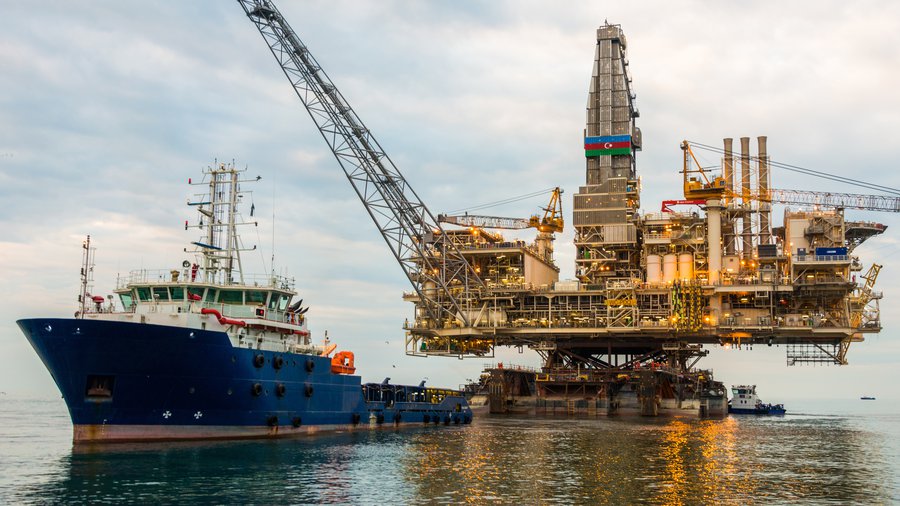
Beyond the shallow northern coast fields, Cuba’s Exclusive Economic Zone (EEZ) in the Gulf of Mexico encompasses some 110,000 square kilometers of mostly undrilled deepwater territory. Cuba has divided this area into 59 blocks available for foreign exploration. US geological surveys estimate these deepwater reserves could hold 5 billion barrels; Cuban government estimates run as high as 20 billion barrels.
3. Cuba’s Proven Oil Reserves
The Official Numbers
According to the most recent data, Cuba holds 124 million barrels of proven oil reserves as of 2025, ranking it #67 in the world — significant for a small island nation, though modest on a global scale. At 2024 production rates, these proven reserves represent approximately 3 years of domestic consumption without any imports.
Historically, Cuba’s proven reserve figures have been volatile:
- Minimum: 0.1 billion barrels (1991) — immediately after Soviet collapse
- Peak: 0.75 billion barrels (2002) — following new field development
- Current (2025): 0.124 billion barrels (124 million barrels)
The Unproven Potential
The gap between proven and estimated total reserves is enormous. Cuba’s northern coastal belt and its Gulf of Mexico EEZ contain potentially vast additional deposits that have not been confirmed by drilling:
- US Geological Survey estimate: ~5 billion barrels in deepwater EEZ
- Cuban government estimate: up to 20 billion barrels
- Varadero field alone: estimated 2 billion barrels of oil in place (though recoverable volumes are much lower)
The uncertainty is enormous — and largely the consequence of the US embargo, which has prevented American oil companies (who possess the most advanced deepwater drilling technology) from participating in Cuban exploration. If even a fraction of the deepwater potential is confirmed, Cuba’s energy situation would be transformed.
4. Cuba Oil Production: How Much Does Cuba Produce?
Current Production Levels
Cuba produces approximately 24,000–30,542 barrels per day (b/d) of oil as of 2024, ranking it #68 in the world. Production has been in long-term structural decline from its peak:
- Peak production: ~57,900 b/d (2003)
- 2015 production: ~52,000 b/d
- 2024 production: ~24,000–30,542 b/d
- Extra-heavy crude peak (2003): 3,679.8 metric tonnes
- Extra-heavy crude 2023: 2,311.1 metric tonnes — a 37% decline from peak
By June 2025, Cuba declared it had reached 1 million tonnes of crude oil extraction for the year — a figure that CUPET framed as progress, though it includes both heavy crude and condensates and falls well short of national demand.
Why Production Has Fallen
Cuba’s domestic oil production has been in structural decline for two decades due to:
- Mature, declining fields: The northern coast fields have been producing for decades, and natural decline is accelerating.
- Aging infrastructure: Wellbores, collection centers, and pipelines are old and require constant maintenance.
- Lack of advanced technology: Enhanced oil recovery (EOR) techniques that could dramatically increase extraction from existing fields require foreign capital and expertise that has been difficult to attract under the US embargo.
- Insufficient investment: Cuba’s state company CUPET has operated with chronic capital shortfalls.
In early 2025, CUPET announced an exploratory drilling campaign of 3–5 new onshore wells in the Varadero region, aiming to add incremental production — a modest effort against decades of structural decline.
Source: Worldometer – Cuba Oil | Havana Times – Encouraging Cuban Government Data on Oil Production | OG Analysis – Cuba Oil and Gas Market Report 2026
5. CUPET: Cuba’s State Oil Company
Cuba Petróleo Union — known by the trade name CUPET — is the state-owned company that controls every aspect of Cuba’s oil and gas industry.
What CUPET Does
CUPET is a vertically integrated energy conglomerate responsible for:
- Exploration and production of hydrocarbons across Cuba’s onshore and offshore acreage
- Refining at Cuba’s small-scale refineries, including the Cienfuegos facility
- Transportation and storage of crude oil and refined products via pipeline and maritime terminal
- Distribution of petroleum products nationally
- Retail fuel sales through a network of filling stations
- Foreign partnerships — CUPET has signed production-sharing agreements (PSAs) with companies from Canada, Spain, Angola, Russia, China, France, Australia, and others
CUPET’s Structure
CUPET consists of 41 subsidiary companies, five of which include foreign capital. Since 1992, CUPET has signed 42 Petroleum Sharing Agreements (PSAs) with foreign partners — a recognition that Cuba’s oil potential cannot be developed without outside technology and capital.
CUPET’s Challenges
CUPET operates under severe constraints:
- The US embargo prevents access to American technology, financing, and equipment
- Cuba’s foreign currency shortages limit equipment imports
- The US dollar restrictions resulting from Cuba’s State Sponsor of Terrorism designation effectively exclude Cuba from international financial markets
- Aging infrastructure requires constant repair with limited resources
CUPET and the 2026 Crisis
The 2026 oil crisis has placed CUPET in an existential position. With imports near zero, CUPET’s primary function has shifted from managing an energy sector to crisis management — rationing the remaining fuel supply, prioritizing critical infrastructure, and desperately seeking any available supplier willing to brave US sanctions.
Source: Offshore Technology – Varadero Heavy Oil Field, Cuba | Cuba Business Report – The Oil and Gas Industry in Cuba | OG Analysis – Cuba Oil and Gas Market 2026
6. Cuba’s Major Oil Fields: Varadero and Beyond
The Heavy Crude North Coast Field
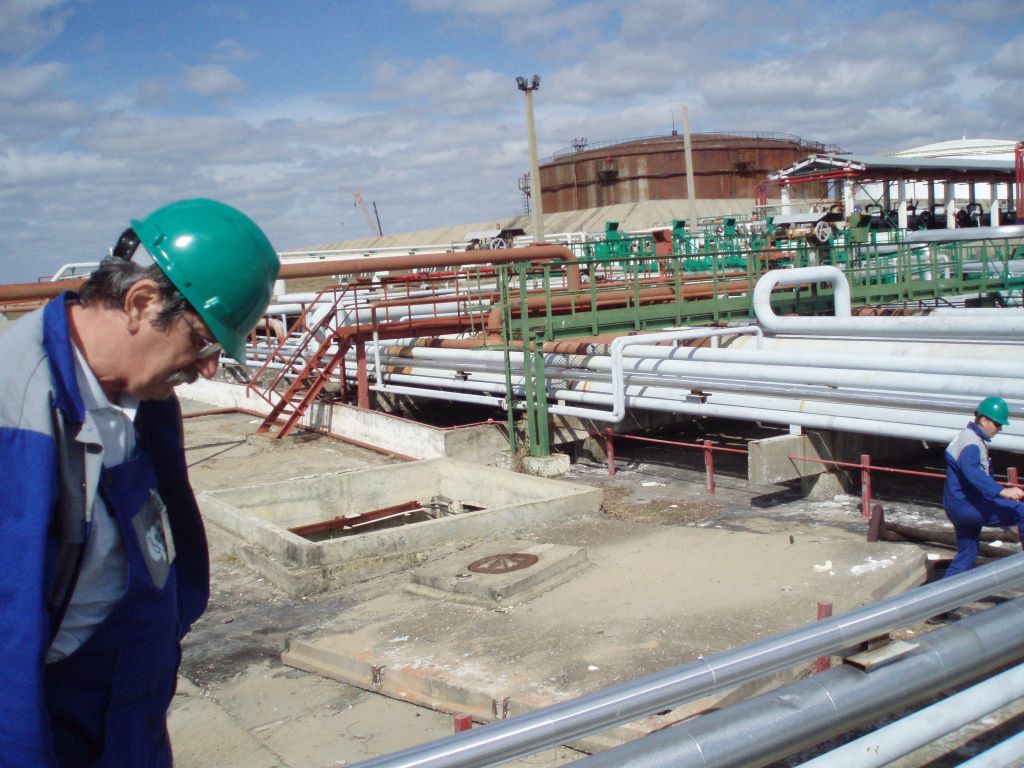
Cuba’s oil production is overwhelmingly concentrated in the Heavy Crude North Coast Field — a 750 square kilometer belt of onshore and near-offshore fields stretching along the northern coastline between Havana and Varadero (Matanzas province). According to the National Network on Cuba, approximately 99% of Cuban oil comes from this corridor.
Varadero: Cuba’s Crown Jewel
The Varadero oil field is Cuba’s largest and most important producing field. Key facts:
- Location: Along the northern coast at coordinates 23.145°N, 81.33°W, Matanzas Province
- Operator: CUPET (100% owner)
- Estimated oil in place: 2 billion barrels
- Remaining recoverable reserves: ~90.11 million barrels
- Geology: Fractured Upper Jurassic and Lower Cretaceous carbonate reservoirs
- Drilling technique: Extended-reach horizontal wells drilled from shore, reaching reservoirs several miles offshore
The Varadero field has been the subject of continued investment. In 2024, CUPET drilled the longest horizontal oil well in Cuba — Varadero 1012 (VDW-1012), measuring an extraordinary 8,047 meters — a technical achievement that demonstrated Cuba’s growing horizontal drilling capability.
Boca de Jaruco and Other Fields
Beyond Varadero, Cuba’s northern coast hosts other significant producing fields including Boca de Jaruco and more than 10 offshore fields in shallow water along the northern coast. These fields collectively account for the ~30,000 b/d of current national production.
The Cienfuegos Refinery
Cuba operates the Cienfuegos refinery on the southern coast — originally built with Soviet assistance and subsequently upgraded with Venezuelan help under the Chávez era. The refinery processes imported crude oil (primarily from Venezuela) into fuel oil, diesel, and other products. With the 2026 oil crisis, the Cienfuegos refinery has been operating at minimal capacity due to feedstock shortages.
Source: Oil & Gas Journal – Cuba Deepwater Exploration | Offshore Technology – Varadero Heavy Oil Field | National Network on Cuba – Oil in Cuba | Havana Times – Cuban Government Data on Oil Production
7. Cuba’s Oil Consumption vs. Production: The Import Gap
Cuba’s most fundamental energy challenge is a structural consumption-production gap that has defined its energy vulnerability for decades.
The Numbers
- Daily consumption (2024): ~112,423 barrels/day
- Daily domestic production (2024): ~24,000–30,542 barrels/day
- Import requirement: approximately 70–75% of all oil consumed
In 2018, Cuba imported 32% of its oil consumption (48,480 barrels/day out of 150,589 consumed). By 2024, as domestic production declined, import dependency had grown significantly. The Worldometer data shows Cuba’s proven reserves at only about 3 years of consumption at current rates — meaning the island is producing its own reserves faster than it is discovering new ones.
Why the Gap Exists
Cuba’s heavy crude oil cannot simply substitute for light crude oil in power plants designed for lighter fuels. Cuba’s aging thermoelectric power plants were built to burn lighter fuel oil and heavy fuel oil sourced from Venezuelan imports — not Cuba’s own extra-heavy crude, which requires upgrading before use. This technological mismatch means that even if Cuba’s domestic production were higher, it could not fully replace imported oil without major infrastructure investment.
Self-Sufficiency: The Long-Term Goal
CUPET’s stated strategic objective has long been energy self-sufficiency — producing enough oil domestically to meet national needs. This goal has consistently remained out of reach due to declining production in mature fields, insufficient investment, and the technological constraints of extracting Cuba’s heavy crude at scale.
8. The Venezuela-Cuba Oil Alliance: A History
No single relationship has shaped Cuba’s energy situation more profoundly than the Venezuela-Cuba oil alliance — a geopolitical and economic partnership that, for two decades, kept Cuba’s lights on.
The Petrocaribe Alliance
When Hugo Chávez became president of Venezuela in 1999, he created a new model of energy diplomacy: Petrocaribe — a program that provided Caribbean and Central American nations with Venezuelan oil on preferential terms, including long repayment periods, low interest rates, and the ability to pay for oil in services rather than cash.
Cuba received an especially favorable arrangement: Venezuela supplied 90,000–100,000 barrels of oil per day at subsidized prices. In exchange, Cuba sent tens of thousands of doctors, teachers, military advisers, and security personnel to Venezuela — a barter arrangement that sustained both countries’ governments.
The Peak Years (2007–2015)
At its peak, the Venezuela-Cuba oil partnership was transformative:
- Venezuelan oil met approximately two-thirds of Cuba’s total petroleum demand
- Cuba’s Cienfuegos refinery was upgraded with Venezuelan support to process Venezuelan crude
- The arrangement allowed Cuba to rebuild its economy after the catastrophic “Special Period” of the 1990s (when Soviet oil subsidies ended and Cuba lost ~35% of its GDP)
- The relationship was the cornerstone of ALBA (Bolivarian Alliance for the Peoples of Our America), a bloc of left-aligned Latin American governments led by Chávez and Castro
Decline After Chávez (2013–2025)
The alliance began fraying after Chávez’s death in 2013. His successor Nicolás Maduro presided over Venezuela’s economic collapse — a combination of US sanctions, falling oil prices, and mismanagement produced hyperinflation and a 73% fall in Venezuelan GDP from 2012 to 2020.
Venezuelan oil deliveries to Cuba declined steadily:
- Pre-2013 peak: ~90,000–100,000 b/d
- Late 2010s: ~40,000–50,000 b/d
- 2024: below 37,000 b/d (imports level)
- By November 2025: Venezuela’s last cargo to Cuba arrived
- January 2026: Venezuelan oil to Cuba effectively ended
Cuba’s oil imports fell 35% in the first ten months of 2025 compared to 2024. Venezuelan imports dropped nearly 15%, while Mexican imports declined 73%. By January 2026, for the first time since 2015, Cuba received no oil imports at all.
9. Other Oil Suppliers: Mexico, Russia, and the Search for Alternatives
As Venezuela’s oil declined, Cuba attempted to diversify its supply sources — with only partial success.
Mexico
Mexico emerged as Cuba’s secondary oil supplier in the early 2020s, providing fuel oil that partially compensated for reduced Venezuelan deliveries. However, Mexican supply was never sufficient to replace Venezuela, and it was politically vulnerable to US pressure.
The final blow came on January 11, 2026, when Trump posted “THERE WILL BE NO MORE OIL OR MONEY GOING TO CUBA — ZERO!” after a Mexican tanker arrived in Havana. Mexico suspended oil shipments shortly afterward in response to the threat of US tariffs on Mexican goods under Executive Order 14380.
Russia
Russia has been an episodic alternative supplier for Cuba. Russia and Cuba maintain close political ties rooted in Soviet-era relationships, and Zarubezhneft (Russia’s state oil company) has conducted exploration drilling in Cuba’s EEZ.
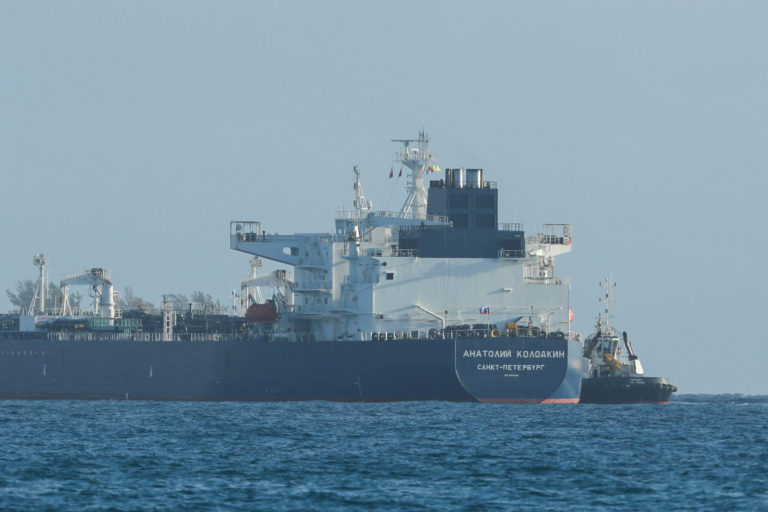
In late March 2026, Cuba received a Russian oil tanker carrying 730,000 barrels of crude oil — the first oil shipment Cuba had received in three months. The arrival was politically significant, demonstrating Russia’s willingness to supply Cuba despite US sanctions, and it underscored the severity of the crisis: one tanker was enough to make international news because Cuba had been operating on near-zero oil for months.
China
China has had a long-standing role in Cuba’s oil sector. China’s SINOPEC signed a $40 million drilling contract with CUPET in 2005, and Chinese state entities have been involved in various aspects of Cuban energy infrastructure.
China’s interest in Cuba oil is both strategic (maintaining influence in the Western Hemisphere) and technical (gaining experience with heavy crude extraction). However, the risk of US secondary sanctions has deterred large-scale Chinese engagement.
Source: Click Petróleo e Gás – Cuba Oil Crisis | News on Air – Cuba Suffers Second Power Blackout | Newsweek – Trump’s Oil Blockade
10. Cuba Offshore Oil: The Deep-Water Frontier
Cuba’s most significant unrealized energy potential lies beneath the deep waters of its Gulf of Mexico Exclusive Economic Zone (EEZ) — a 110,000 square kilometer area that remains largely unexplored.
The Geological Promise
The Cuban EEZ shares geological characteristics with some of the world’s most productive oil provinces:
- It is an offshore extension of the Cuban fold and thrust belt that already produces oil onshore
- DSDP (Deep Sea Drilling Program) Site 535, in the central portion of the Cuban EEZ, confirmed the existence of thermally-mature, viable oil source rocks even in deepwater areas
- New 2D seismic surveys covering 26,880 km of the EEZ have revealed “numerous potentially large prospects, with possible analogies to some of the proven deepwater plays off Mexico and the US presalt to the north”
The 59 Blocks
Cuba has divided its EEZ into 59 blocks available for licensing under production-sharing contract terms. As of 2019’s first license round, CUPET was offering 24 of these blocks in mid- to deep-water off the north coast.
Exploration Results So Far — Disappointing
Despite the geological promise, actual deepwater drilling results have been discouraging:
- In 2012, three exploratory deepwater wells drilled by a consortium including Repsol (Spain), PDVSA (Venezuela), and CNOOC (China) were all dry — finding no commercially viable hydrocarbons
- Zarubezhneft (Russia) and Spanish Repsol have drilled in Cuba’s Gulf of Mexico portion with no commercial finds
- The failure of the 2012 wells significantly dampened investor enthusiasm
The US Embargo Barrier
The most significant obstacle to unlocking Cuba’s offshore potential is the US embargo. American companies, which operate the world’s most advanced deepwater drilling technology and have the greatest experience in the Gulf of Mexico, are prohibited from participating in Cuban exploration. Without US technology and capital, Cuba must rely on less experienced partners or seek technology transfers that are slower and less efficient.
Source: Oil & Gas Journal – Cuba Deepwater Exploration | Offshore Magazine – Cuba Pushing to Deeper Water | IPS News – Cuba’s Extra-Heavy Crude
11. Foreign Investment in Cuba Oil
Despite the US embargo, Cuba has attracted foreign investment from a range of international oil companies — though the total investment has been far below what the island’s potential would justify.
Notable Foreign Partners
Canada — Sherritt International Canada’s Sherritt International has been the most consistent Western energy company operating in Cuba, with contracts to explore five blocks of the island’s northern oil belt and a long-term partnership with CUPET. Sherritt’s Cuba operations have produced approximately 20,000 barrels of oil per day at peak, making it a significant contributor to Cuba’s domestic output.
Angola — Sonangol Angola’s state oil company Sonangol contracted four deepwater blocks in Cuba’s Gulf of Mexico EEZ and has worked with CUPET on deepwater exploration, bringing experience from Angola’s own prolific deepwater oil province.
Spain — Repsol Repsol has conducted both onshore and offshore exploration in Cuba, drilling some of the few deepwater wells that have been attempted in the Cuban EEZ. No commercial finds resulted.
Australia — Melbana Energy Melbana Energy (ASX: MAY) holds acreage in western Cuba and has revised upward its onshore reserve estimates for Block 9 to 612 million barrels — almost double earlier estimates. Melbana’s ongoing work represents one of the most active current foreign exploration programs in Cuba.
France — TotalEnergies (formerly Total) Total signed a deal with CUPET in May 2015 to explore for offshore oil — one of several European majors that briefly showed interest in Cuban offshore exploration following the Obama thaw.
China — SINOPEC SINOPEC signed a $40 million drilling contract with CUPET in 2005 and has maintained various technical relationships with Cuba’s oil sector.
Russia — Zarubezhneft Zarubezhneft has participated in offshore drilling campaigns in Cuba’s EEZ, sharing results with CUPET as part of the broader Russia-Cuba strategic partnership.
The Investment Barrier
The fundamental challenge for all foreign investors in Cuba oil is the US embargo and secondary sanctions risk. Any company with significant US operations or dollar-denominated assets risks sanctions exposure if it invests significantly in Cuba. This has kept most major Western oil companies out of Cuba entirely.
Source: Cuba Business Report – The Oil and Gas Industry in Cuba | OilPrice.com – Cuba Eager to Develop Offshore Oil Reserves | Xinhua – Cuba Plans to Attract Foreign Investment
12. Cuba Oil and Electricity: The Power Grid Dependency
Cuba’s relationship with oil is not primarily about transportation or industrial inputs — it is about electricity. This is what makes Cuba’s oil situation so immediately life-or-death.
The Overwhelming Dependency
Cuba generates approximately 80–95% of its electricity from oil-fired thermoelectric power plants. There is essentially no meaningful separation between Cuba’s oil supply and Cuba’s ability to keep the lights on, pump water, run hospitals, refrigerate food, and power the most basic functions of modern life.
Cuba’s thermoelectric infrastructure consists of multiple large centralized power stations — plants like the Antonio Guiteras Power Plant in Matanzas, which experienced a catastrophic failure in October 2024, and a network of smaller distributed diesel generators installed during the “Revolución Energética” campaign of 2006.
The Cascading Failure Mechanism
When oil supply falls, the cascade of failures is predictable and rapid:
- Power plants reduce output as fuel reserves dwindle
- Rolling blackouts begin — initially hours per day, expanding to 12–18 hours per day
- Water pumping fails — water towers empty, taps run dry
- Food distribution breaks down — refrigeration fails, transport halts
- Hospitals struggle — surgeries postponed, medical equipment fails
- Industry halts — factories, farms, and businesses cannot operate
This cascade is not theoretical. Cuba has lived through it multiple times: during the Special Period of the 1990s after Soviet oil ended, during the 2022–2023 blackout crisis triggered by falling Venezuelan supplies, and most severely during the 2024–2026 blackout crisis that has left the island without reliable power for sustained periods.
Source: Electric Choice – Cuba Electricity Crisis | Global Security – Cuba’s Venezuelan Oil Dependence | Wikipedia – 2024–2026 Cuba Blackouts
13. The 2026 Cuba Oil Crisis: How It Happened
The 2026 Cuba oil crisis did not arrive without warning. It was the culmination of years of deteriorating supply chains, combined with two geopolitical shocks in rapid succession.
Phase 1: Venezuela’s Long Decline (2013–2025)
As Venezuela’s own economy collapsed under Maduro — triggered by falling oil prices, US sanctions, and catastrophic mismanagement — Venezuelan oil deliveries to Cuba declined year after year. By late 2025, Venezuela was Cuba’s sole remaining major supplier, but even those deliveries had fallen far below earlier levels.
On December 10, 2025, the US Navy seized a Venezuelan crude cargo destined for Cuba — the first physical interception of a Cuba-bound oil shipment, establishing a concrete precedent for cargo confiscation and immediately deterring further shipments.
Phase 2: The Venezuela Trigger (January 3, 2026)
On January 3, 2026, US military forces captured Venezuelan President Nicolás Maduro in Operation Southern Spear. This immediately disrupted Venezuelan oil production and exports entirely — ending Cuba’s primary oil lifeline overnight.
Phase 3: Mexico Withdraws (January 27, 2026)
On January 27, 2026, Mexico — Cuba’s remaining secondary supplier — suspended oil shipments in response to escalating US pressure and the threat of tariffs on Mexican goods.
Phase 4: Executive Order 14380 (January 29, 2026)
On January 29, 2026, Trump signed EO 14380, threatening tariffs on any country in the world that supplies oil to Cuba. The deterrent effect was immediate — other potential suppliers backed away.
The Result: Near-Total Collapse
According to data analytics firm Kpler, at the start of 2026, Cuba had oil reserves of approximately 460,000 barrels — enough for only 15–20 days of operations. By March 2026, President Díaz-Canel publicly confirmed Cuba had received no oil shipments in more than three months.
Cuba’s oil imports dropped from over 37,000 b/d in 2025 to effectively zero in January–March 2026 — a collapse with no modern precedent outside of active military blockades.
Source: Click Petróleo e Gás – Cuba Oil Crisis | PBS NewsHour – Cuba Reports Island-Wide Blackout | Travel and Tour World – Cuba in Crisis 2026
14. The US Oil Blockade: Executive Order 14380 Explained
The 2026 US oil blockade on Cuba represents the most aggressive escalation of US Cuba policy in decades — a deliberate attempt to cut the island off from the global oil market through the threat of secondary sanctions.
How EO 14380 Works
Executive Order 14380, signed January 29, 2026, operates through a tariff authorization framework:
- Any country that directly or indirectly sells or provides crude oil or petroleum products to Cuba may face additional ad valorem import duties on its goods entering the United States
- The order applies to intermediaries and third countries — meaning even oil routed through a third country to Cuba triggers the tariff mechanism
- The tariff rates are discretionary, giving the administration flexibility to target specific countries
- The US Supreme Court subsequently struck down certain tariffs in the order, providing a limited legal check
The Stated Justification
The White House framed the order as a national security measure, declaring Cuba an “unusual and extraordinary threat” that “aligns itself with — and provides support for — numerous hostile countries, transnational terrorist groups, and malign actors adverse to the United States” — explicitly naming Russia, China, Iran, Hamas, and Hezbollah.
The Real Objective: Regime Change
Secretary of State Marco Rubio was explicit: within hours of Maduro’s capture in January 2026, he signaled that Cuba was next in the administration’s campaign of regime change in Latin America. The oil blockade is not a conventional trade dispute — it is a tool of regime change, designed to bring the Cuban government down by starving the island of the energy it needs to function.
15. Impact: Life Without Cuba Oil
The collapse of Cuba’s oil supply has had immediate, measurable, and devastating consequences for ordinary Cubans.
The Blackout Crisis
Beginning in early March 2026, Cuba experienced total, nationwide blackouts — not rolling outages, but complete grid failures affecting all 11 million Cubans simultaneously. The PBS NewsHour reported Cuba’s Ministry of Energy announcing a “complete disconnection” of the country’s electrical system.
By March 22, Cuba had suffered its second total blackout in less than a week, with the Ministry confirming the island faced a power deficit of 1,704 megawatts — a vast structural gap that cannot be closed without oil.

Healthcare Collapse
Cuba’s healthcare system, long a point of national pride, has been brought to crisis:
- Surgeries postponed for tens of thousands of patients due to electricity shortages
- An estimated 11,000 children were awaiting surgery with no timeline for procedures
- 96,000+ patients required medical procedures that hospitals could not perform
- Medical equipment requiring constant electricity — dialysis machines, ventilators, incubators — operated under extreme rationing
Water, Food, and Basic Services
- National water pumping system has failed in multiple municipalities
- Garbage collection has ceased in Havana
- Cold chains for food storage have collapsed, threatening food safety
- Transportation has been severely disrupted, stranding workers and preventing food distribution
Mass Emigration
The Economist estimated that Cuba’s population fell from over 11 million in 2021 to substantially less by 2026 — one of the most dramatic peacetime emigration waves in Latin American history, driven by desperation about the country’s economic and energy future.
16. Cuba’s Alternatives: Solar, Gas, and the Path Forward
With oil imports blocked, Cuba has been forced to accelerate its search for alternative energy sources — a challenge the island was wholly unprepared to meet at scale.
Natural Gas
Cuba produces associated natural gas from its oil fields — approximately 970 million cubic meters per year (2024), down from a peak of 1,244.5 MMm³ in 2015. Cuba now uses 97% of its natural gas output for heating and power generation. However, this represents only a fraction of the electricity Cuba needs — natural gas is a supplement, not a substitute, for oil-fired power.
Solar Power
Cuba has been developing distributed solar capacity, though at a scale far too small to address the crisis. The Cuban government has cited solar power as part of the emergency energy mix during the 2026 crisis, but solar generation represents a tiny fraction of national capacity.
The “Revolución Energética” Legacy
Cuba’s 2006 energy reform — which distributed millions of energy-efficient appliances and installed distributed diesel generators across the island — provided some resilience against centralized grid failures. These distributed generators, however, still require diesel fuel, and in the 2026 oil crisis, diesel has been as scarce as every other petroleum product.
The Long-Term Path
Cuba’s path to genuine energy security would require:
- Deepwater oil development in the Gulf of Mexico EEZ — potentially transformative, but requiring massive foreign investment and advanced technology
- Large-scale renewable energy — solar and wind projects that could provide baseload power independent of imports
- Energy efficiency improvements across the economy
- Diversified import relationships — reducing dependence on any single supplier
All of these require either capital Cuba does not have, technology that US sanctions complicate, or political conditions that the US oil blockade has made harder to create.
Source: Havana Times – Cuban Government Data on Oil Production | Electric Choice – Cuba Electricity Crisis
17. Cuba Oil and Geopolitics: A Resource Under Siege
Cuba oil has never been merely an energy story. It sits at the intersection of Cold War history, great-power competition, and one of the most persistent bilateral conflicts in modern history.
The US Embargo’s Direct Impact on Cuba Oil
The US embargo has shaped Cuba’s oil sector in every dimension:
- American companies — which pioneered Cuban oil production before 1959 — have been excluded for 65 years
- US technology sanctions prevent CUPET from accessing the best deepwater drilling equipment
- Dollar-transaction restrictions make international oil purchases extremely difficult
- Secondary sanctions deter third-country companies from investing in Cuban exploration or supply
Cuba Oil and the Russia-China Axis
Cuba’s oil vulnerability has made it more dependent on Russia and China — both of which have strategic interests in maintaining a sympathetic government in the Western Hemisphere. Russia has supplied oil tankers during the 2026 crisis. China has provided drilling equipment and technical assistance. Both countries’ involvement in Cuba oil increases their geopolitical foothold 90 miles from the United States — the exact outcome the US embargo was designed to prevent.
The Humanitarian Carve-Out
In February 2026, the US Treasury issued a limited license allowing the resale of Venezuelan-origin oil to Cuba’s private sector — a strategic distinction the Trump administration uses to support independent Cuban entrepreneurs while denying resources to the Cuban military and state. Critics argue this distinction is unworkable in practice and does little to address the humanitarian emergency.
18. Conclusion: Cuba Oil’s Past, Present, and Future
Cuba oil encompasses a story of geological promise, political constraint, geopolitical dependency, and crisis — all compressed into the narrow coastline and turbulent waters of a 110,000-kilometer-square island nation.
Cuba has real oil — proven reserves of 124 million barrels, producing fields along its northern coast, the Varadero giant field with 2 billion barrels in place, and a deepwater EEZ that could hold 5–20 billion barrels of untapped potential. It has a state oil company, CUPET, that has operated for decades and built technical expertise despite extraordinary constraints. It has produced oil since the 1960s and at its peak met a meaningful fraction of its own energy needs.
But Cuba’s oil story has always been defined by what it lacks more than what it has: lacking the technology to develop its heavy crude at scale, lacking the foreign investment that US sanctions preclude, lacking the refinery capacity to process its own crude into usable products, and above all lacking the imports it needs to bridge the gap between what it produces and what its economy and power grid require.
The 2026 oil crisis has made Cuba’s vulnerability catastrophic and visible to the entire world. With imports near zero, blackouts total, hospitals overwhelmed, and people emigrating by the hundreds of thousands, the stakes of Cuba’s oil dependency have never been clearer.
Whether Cuba’s long-term future involves deepwater development that transforms its energy balance, renewable energy that reduces its oil dependency, a political settlement with the United States that reopens investment, or continued crisis — Cuba oil will remain at the center of the island’s fate for decades to come.
19. Frequently Asked Questions (FAQ) {#faq}
Q: What is Cuba oil? A: Cuba oil refers to the petroleum resources produced, imported, and consumed in Cuba. Cuba has 124 million barrels of proven oil reserves (2025), produces approximately 24,000–30,000 barrels per day domestically from heavy crude fields along its northern coast, but consumes over 112,000 barrels per day — requiring large-scale imports to bridge the gap. Cuba oil is also a geopolitical term, referring to the use of oil supply as leverage in US-Cuba relations.
Q: How much oil does Cuba have? A: Cuba has proven reserves of 124 million barrels (2025), ranking #67 globally. However, the deepwater Exclusive Economic Zone may hold 5–20 billion additional barrels, according to US and Cuban estimates respectively — a vast potential that remains largely undrilled.
Q: What type of oil does Cuba produce? A: Cuba produces primarily extra-heavy crude oil — dense, viscous oil with high sulfur content extracted from fractured carbonate reservoirs along the northern coastline. This oil must be mixed with diluents (naphtha) to flow through pipelines. It requires significant upgrading before it can be refined in conventional facilities.
Q: Who controls Cuba’s oil industry? A: CUPET (Cuba Petróleo Union) is the state-owned company that controls all aspects of Cuba’s oil and gas industry — from exploration and production to refining and distribution. CUPET has signed production-sharing agreements with foreign companies from Canada, Russia, Spain, Angola, China, France, and Australia, though the US embargo limits the most advanced foreign participation.
Q: Why does Cuba depend on oil imports? A: Cuba’s domestic production covers only about 25–30% of national consumption. Cuba’s aging thermoelectric power plants generate ~80–95% of electricity from oil, creating massive energy import dependency. The structural gap between production and consumption has never been closed due to declining mature fields, lack of investment capital, and US sanctions that limit technology access.
Q: What is Cuba’s oil crisis in 2026? A: In January 2026, Cuba’s two primary oil suppliers — Venezuela (disrupted by the US capture of Nicolás Maduro) and Mexico (pressured by US tariff threats) — both stopped supplying Cuba. Trump’s Executive Order 14380 threatened tariffs against any country supplying Cuba with oil. The result was a near-total collapse of Cuba’s oil imports to zero, causing nationwide blackouts, healthcare crises, and widespread shortages.
Q: What is the biggest oil field in Cuba? A: The Varadero oil field in Matanzas Province is Cuba’s largest producing field, with an estimated 2 billion barrels of oil in place. It is operated 100% by CUPET and produces oil from fractured carbonate reservoirs using extended-reach horizontal wells drilled from shore. The longest horizontal well in Cuba — Varadero 1012, measuring 8,047 meters — was drilled here in 2024.
Q: Can Cuba develop its own offshore oil? A: Cuba’s Gulf of Mexico EEZ is estimated to contain 5–20 billion barrels of oil, but three deepwater test wells drilled in 2012 were all dry. No commercially viable deepwater finds have been confirmed. The main obstacles are the US embargo (which excludes American technology), lack of investment capital, and the deterrent effect of US secondary sanctions on potential foreign investors.
Last updated: May 2026.