

Last Updated on 6 months ago by TodayWhy Editorial
In an age of digital overload, cultural confusion, and widespread loneliness, a quiet but powerful shift is underway. Generation Z men—those born roughly between 1997 and 2012—are increasingly turning to Catholicism. Far from the stereotype of declining religiosity among youth, young men are filling pews, joining RCIA (Rite of Christian Initiation of Adults) programs, and embracing traditional practices like the Latin Mass, Washington Post reported.
A Harvard University study captured this reversal: Catholic identification among Gen Z rose from 15% in 2022 to 21% in 2023, marking the first time in U.S. history that Gen Z Catholics outnumber Protestants (21% vs. 19%). Some dioceses report 30–70% year-over-year increases in new converts, with young men leading the charge, Fox News reported.
What’s driving this? It’s not nostalgia or cultural inertia. Gen Z men, often raised in secular or loosely religious homes, are making deliberate choices. They seek truth, beauty, order, purpose, and authentic community in a world that feels chaotic and empty. Here’s a detailed breakdown of why Catholicism is resonating so deeply with this generation.
1. A Hunger for Truth, Order, and Moral Clarity in a Relativistic World
Gen Z has grown up in a hyper-fluid culture where identity, gender, and morality often feel negotiable. Many young men describe modern life as “blurry” — endless options without anchors.
Catholicism offers the opposite: a 2,000-year-old institution with clear teachings on life, sexuality, responsibility, and human dignity. As one college student told interviewers, Gen Z is “looking for traditions with long histories, structure, and answers for many pertinent questions, such as the meaning of life,” according to Campusreform.
The Church’s emphasis on objective truth — rooted in Scripture, natural law, and thinkers like St. Thomas Aquinas — appeals to young men tired of relativism. In a time when social media amplifies confusion, Catholicism provides certainty and a coherent worldview. Young men report feeling liberated, not restricted, by its moral framework.
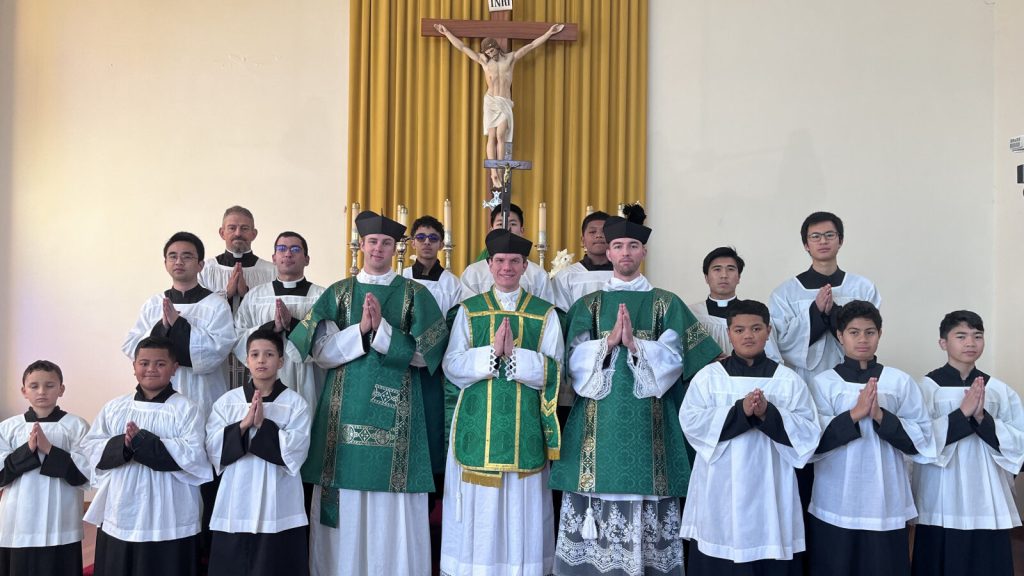
2. The Timeless Beauty and Solemnity of Catholic Tradition
Modern evangelical services often mimic concerts or self-help seminars. In contrast, Catholicism — especially the Traditional Latin Mass (TLM) — delivers reverence, ritual, and transcendence that feel profoundly countercultural.
Incense, Gregorian chant, Latin, and ancient liturgy create an experience of awe that many Gen Z men describe as “enchanting” in a disenchanted world. Attendance at TLM among 18–29-year-olds bucks broader declines in religiosity. Young people say the solemnity and mystery fill a spiritual hunger that flashy alternatives cannot, according Catholicexchange.
Beauty matters. From grand cathedrals to the Eucharist, Catholicism engages the senses and intellect simultaneously. As converts note, the rituals feel “transcendent” compared to “lax” Protestant alternatives. This aesthetic and historical depth draws men who crave something eternal amid fleeting trends.
3. A Compelling Vision of Masculinity, Purpose, and Responsibility
Many Gen Z men face a crisis of purpose. Cultural messages often portray traditional manhood as toxic or outdated, while statistics show high rates of loneliness (one in four men under 35 report feeling lonely daily), Fox News reported.
Catholicism counters this with a positive, challenging vision: men are called to sacrificial leadership, protection, and virtue. Figures like St. Joseph and St. Michael embody strength, humility, and courage. Theology classes, retreats, and mentorship programs at Catholic schools explicitly address “what it means to be a believing man, a Catholic Christian man.”
Young men describe the faith as providing a “mission” — not vague self-improvement, but a heroic call to serve God, family, and community. This resonates deeply in a society that has left many feeling adrift.
4. Real Community, Brotherhood, and “Third Spaces”
Gen Z is the loneliest generation, yet hyper-connected online. Catholicism offers tangible, in-person connection — what sociologists call “third spaces” beyond work and home.
In New York City, young adult events like pizza socials before Mass at St. Joe’s draw hundreds. Lines form outside churches on Sundays. Young men speak of forming tight bonds through service, retreats, and shared worship. These gatherings combat isolation and create natural opportunities for friendship — and, yes, romantic relationships. One influencer noted finding a potential partner as a “huge selling point.”
Catholicism builds brotherhood without performative masculinity. Men pray together, discuss deep questions, and hold one another accountable — a refreshing alternative to superficial online “bro culture.”

5. The Rise of Gen Z Catholic Influencers and Digital Evangelism
Social media has flipped the script. Gen Z Catholic creators are making faith look cool, relatable, and intellectually rigorous.
- Anthony Gross (@anthonygross on Instagram, 125K+ followers) hosts pizza socials and ranks NYC churches while blending fitness and faith.
- Father David Michael Moses (1.1M Instagram followers) posts humorous “A Weekend as a Catholic Priest” videos.
- Others like Matt Fradd (Pints with Aquinas), Bishop Robert Barron, and TikTok converts share testimonies, memes, and explanations of doctrine.
These influencers provide “social proof”: when respected peers return to Mass, it normalizes the choice. Content addresses anxiety, purpose, and cultural critique in Gen Z’s native language. As one creator observed, “The pendulum has swung… people are turning back to God,” New York Post reported.
Online journeys often lead to in-person parishes, where the faith becomes incarnational.
6. A Countercultural Stand Against Consumerism and Secular Excess
Gen Z witnessed the failures of secular promises: endless scrolling, hookup culture, careerism without fulfillment, and ideological extremes. Many reject both hyper-progressivism and shallow materialism.
Catholicism stands “athwart the post-Enlightenment world yelling ‘stop,’” offering rooted principles that confront societal decline. Young men appreciate its unapologetic stance on difficult topics and its emphasis on sacrifice over self-indulgence. It feels rebellious to embrace tradition in a progressive age.
Why This Matters: A Sign of Hope or Temporary Trend?
Critics suggest some attraction stems from grievance or nostalgia for hierarchy. Yet the data and testimonies point to something deeper: a genuine spiritual hunger. These young men aren’t returning because it’s easy — they’re converting because Catholicism challenges them while giving them meaning, beauty, and belonging.
For the Catholic Church, this influx of committed young men signals renewal. Parishes report energetic young adult ministries, record baptisms, and renewed vocations. For society, it hints at a broader yearning for stability amid cultural turbulence.
If you’re a Gen Z man exploring faith — or simply curious about the trend — the invitation is clear. Visit a Traditional Latin Mass. Join a young adult group. Read Aquinas or listen to a Catholic podcast. As one convert put it, the Church offers “something more than what you can produce and what you can buy.”
The revival is real. Catholicism isn’t just surviving among Gen Z men — it’s thriving because it answers the questions modernity cannot.