
Last Updated on 3 months ago by TodayWhy Editorial
One flashback in Christopher Nolan’s The Odyssey has sent audiences straight to Google. Buried inside the sprawling epic is a single brutal scene: Agamemnon carrying his own daughter to her death. Here’s the actual myth behind why Agamemnon had to sacrifice his daughter, and how Nolan chose to show it on screen.
Why Did Agamemnon Have to Sacrifice His Daughter?
The story begins at the port of Aulis, where Agamemnon has gathered a massive Greek fleet to sail for Troy and reclaim his brother Menelaus’s wife, Helen. Before the ships can leave, the goddess Artemis sends storms that trap the entire fleet on shore.
According to the myth, Artemis is furious with Agamemnon over an earlier offense, either a boast that he was a better hunter than her or an insult committed by his father, King Atreus. Whatever the exact cause, the result is the same: no wind, no war, and an army stuck at Aulis growing hungrier and angrier by the day.
A prophet named Calchas tells Agamemnon there is only one way to lift the goddess’s curse. He must sacrifice his own eldest daughter, Iphigenia, to Artemis. Only then will the winds return and the fleet be allowed to sail.
How Did Agamemnon Trick Iphigenia Into Her Own Death?
What makes the Agamemnon sacrifice especially cruel in most tellings is the deception involved. Agamemnon reportedly sends word to his wife Clytemnestra, asking her to bring their daughter to the army’s camp at Aulis under a joyful pretense: Iphigenia is told she is about to marry Achilles, the greatest warrior in Greece.
Instead of a wedding, Iphigenia arrives to find an altar waiting for her. This version of events comes primarily from the playwright Euripides’s tragedy Iphigenia at Aulis, which has shaped nearly every screen adaptation of the myth since. In some later retellings, Artemis takes pity on Iphigenia at the last moment and swaps her for a deer, whisking the girl away to become a priestess instead. In the older, harsher tradition that most epic adaptations follow, Agamemnon actually goes through with it.
Does Homer Actually Describe the Agamemnon Sacrifice?
Here’s the twist that surprises a lot of viewers: this detail never appears in either of Homer’s original epics, the Iliad or the Odyssey. Homer’s Agamemnon mainly shows up in the underworld, warning Odysseus not to trust anyone too easily after his own murder at the hands of his wife.
The sacrifice of Iphigenia comes from the wider mythological cycle surrounding the Trojan War, and it was the playwright Aeschylus who first explicitly tied the killing to Clytemnestra’s motive for revenge in his trilogy the Oresteia. Later, Euripides built an entire tragedy around the moments leading up to the sacrifice itself. Nolan’s film follows that broader tradition rather than Homer’s original silence on the matter, borrowing from Aeschylus and Euripides to give Clytemnestra’s rage its full emotional weight.
How Does The Odyssey (2026) Show the Agamemnon Sacrifice?
Nolan’s approach to the Agamemnon sacrifice is deliberately brief but unmistakably brutal. Rather than dramatizing the entire ordeal the way older adaptations have, the film delivers it as a single devastating flashback: a shot of Agamemnon carrying a small child while his wife screams in horror nearby.
According to reporting on the film’s production, the scene serves two purposes at once. It establishes Agamemnon’s monstrous nature early on, and it fuels Odysseus’s private fear that his own son Telemachus could meet a similar fate if he refuses to join the war effort. Penelope reportedly describes the act onscreen as simply monstrous.
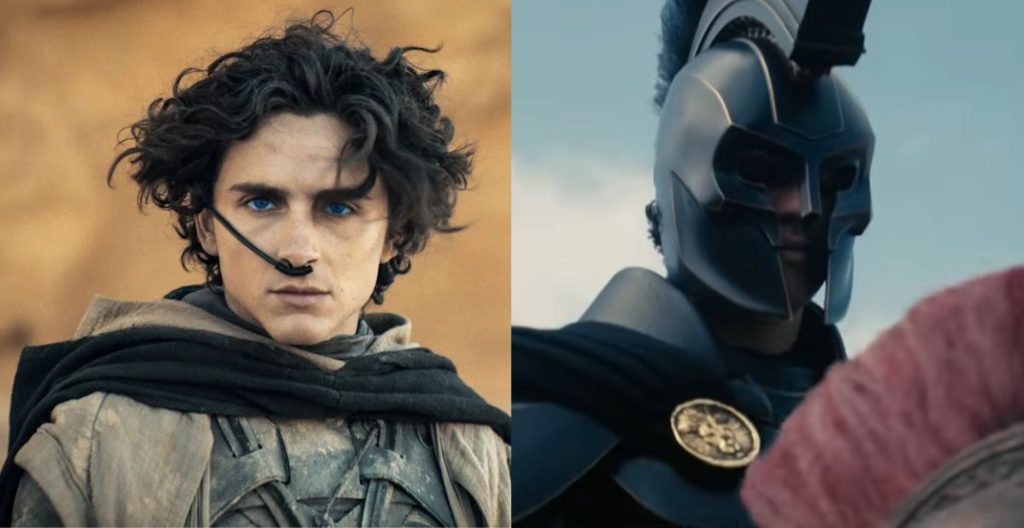
Benny Safdie, best known as a filmmaker alongside his brother Josh on films like Uncut Gems, plays Agamemnon in the film. It’s his second collaboration with Nolan after portraying physicist Edward Teller in Oppenheimer.
Why Does the Agamemnon Sacrifice Matter for the Rest of the Story?
The Agamemnon sacrifice isn’t just a grim aside. It sets off a chain of revenge that runs through three generations of the same family. Clytemnestra never forgives her husband and secretly plots his death for the entire decade he’s away fighting at Troy.
When Agamemnon finally returns home victorious, Clytemnestra kills him herself, avenging their daughter in the most direct way possible. Their son Orestes later avenges his father in turn by killing his own mother, closing out one of Greek mythology’s darkest family tragedies.
In Nolan’s version, Lupita Nyong’o plays both Helen of Troy and her sister Clytemnestra, a dual casting that adds an extra layer of irony: the sisters’ fates are intertwined from the very start, since Helen’s abduction by Paris is technically what set the entire chain of events, including Iphigenia’s death, into motion in the first place. If you’re curious about that casting decision specifically, we’ve broken down the Helen of Troy casting controversy separately.
Who Plays Agamemnon in The Odyssey (2026)?
Agamemnon is played by Benny Safdie, joining a cast that includes Matt Damon as Odysseus, Tom Holland as Telemachus, Anne Hathaway as Penelope, Jon Bernthal as Menelaus, Charlize Theron as Circe or Calypso depending on the scene, and Zendaya as Athena. The film opened in IMAX theaters on July 17, 2026.
Given how much narrative weight Nolan places on a single flashback most viewers won’t have expected walking into a Matt Damon adventure epic, it shows how seriously the director treated the darker corners of Greek mythology rather than smoothing them over for a modern blockbuster audience.
How Does the Agamemnon Sacrifice Compare to Other Versions of the Myth?
Greek mythology rarely settles on just one version of any story, and the Agamemnon sacrifice is no exception. Euripides himself wrote two different plays touching on Iphigenia’s fate: Iphigenia at Aulis, which covers the sacrifice itself, and Iphigenia in Tauris, a later work in which Iphigenia turns out to have survived after all, secretly whisked away by Artemis to serve as a priestess in a distant land.
That “survival” version softens the story considerably. Iphigenia lives, eventually reunites with her brother Orestes, and even helps him escape a curse. But it’s the harsher version, the one where Agamemnon actually goes through with the killing, that has dominated stage and screen adaptations for centuries, from the 1977 Greek film Iphigenia to Nolan’s 2026 flashback. Filmmakers tend to gravitate toward the darker ending because it does more narrative work: it gives Clytemnestra an unambiguous, permanent reason for the murder she commits when her husband finally comes home.
Frequently Asked Questions
Why did Agamemnon sacrifice his daughter Iphigenia?
To lift a curse from the goddess Artemis, who had trapped his fleet at Aulis with storms and calm winds. A prophet told Agamemnon that only sacrificing his eldest daughter would allow the Greek ships to sail for Troy.
Did Agamemnon actually kill his daughter, or was she saved?
It depends on the version. In the older, harsher tradition followed by most epic adaptations, including Nolan’s The Odyssey, Agamemnon goes through with the sacrifice. In some later retellings, Artemis substitutes a deer at the last moment and secretly saves Iphigenia.
Is the Agamemnon sacrifice story in Homer’s Odyssey?
No. It never appears in Homer’s original text. The detail comes from later Greek tragedy, particularly Aeschylus’s Oresteia and Euripides’s Iphigenia at Aulis, and most modern adaptations draw on those sources rather than Homer.
How did Clytemnestra react to the Agamemnon sacrifice of their daughter?
She never forgave him. Clytemnestra spent the decade of the Trojan War plotting revenge, and when Agamemnon finally returned home, she killed him herself.
Who plays Agamemnon in The Odyssey 2026?
Benny Safdie plays Agamemnon. It’s his second film with director Christopher Nolan after playing physicist Edward Teller in Oppenheimer.
Is there a version where Agamemnon doesn’t sacrifice his daughter?
Yes. In Euripides’s play Iphigenia in Tauris, Artemis secretly saves Iphigenia and makes her a priestess in a distant land, where she later reunites with her brother Orestes. Most film and stage adaptations, however, follow the harsher version in which the sacrifice actually happens.