

Last Updated on 1 month ago by TodayWhy Editorial
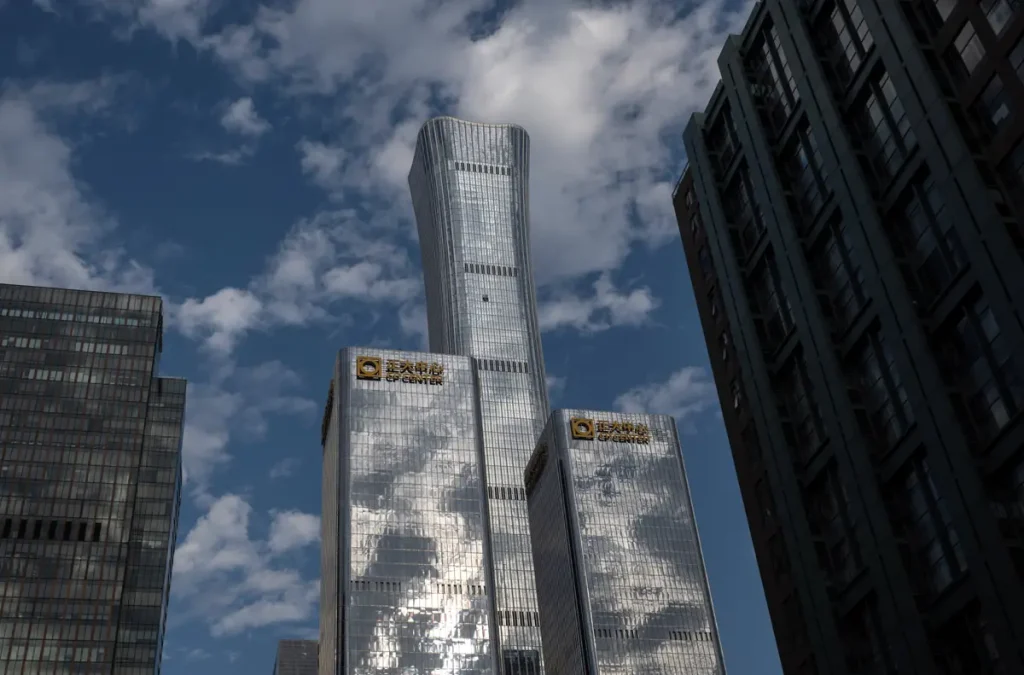
On the afternoon of June 26, 2026, a small aircraft slammed into the upper floors of the CITIC Tower, also known as China Zun, sending debris and a section of the plane’s tail tumbling onto the streets of Beijing’s Central Business District below. The Beijing CITIC Tower plane crash triggered an immediate evacuation of the 109-story skyscraper, a heavy police response, and a wave of questions — both inside and outside China — about how a small civilian aircraft ended up in the airspace above the country’s tallest building in the first place.
As of this update, the aircraft’s flight path, the confirmed casualty count, and — most notably — the pilot’s true identity have all come into sharper focus, though one central mystery remains unresolved.
What happened during the CITIC Tower plane crash
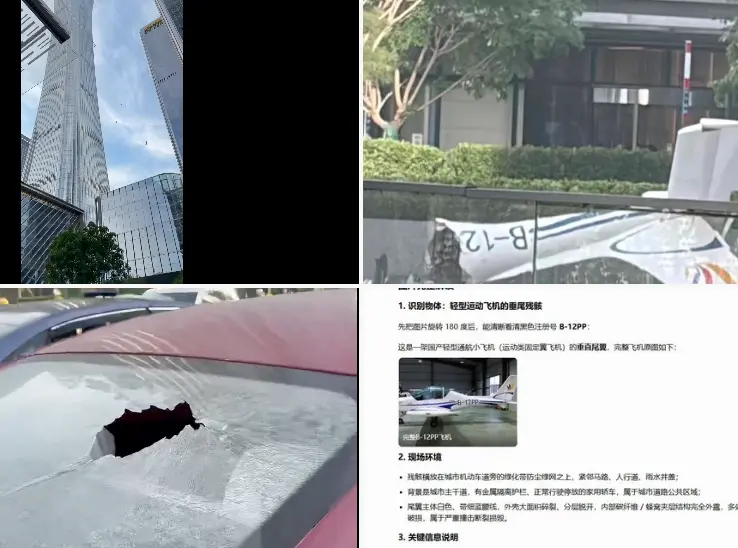
Social media footage verified by international outlets showed the small aircraft striking one of the upper floors of the tower before disintegrating, with large pieces of wreckage — including an intact tail section — landing in the street. A taxi window was reportedly shattered by falling debris. Witnesses described firetrucks, police cars and ambulances converging on the scene as the building was evacuated.
Unverified flight-tracking data cited by CNN suggested the aircraft had taken off from Beijing’s Shifosi airport before its flight path deviated sharply. Online images of the wreckage pointed to a domestically manufactured light sport aircraft, reportedly a Sunward SA-60L Aurora, registered to a local general aviation operator. Chinese-language social media posts identified the aircraft by a different model designation, a B-12PP light aircraft, underscoring how much remained unconfirmed in the hours after the crash.
According to the South China Morning Post’s reporting carried by NPR, Chinese authorities did not immediately issue an official statement, and the cause of the crash could not be independently verified in the immediate aftermath.
Subsequent reporting has filled in more of the timeline. According to several China-based aviation social media accounts — information Chinese authorities have not officially confirmed — the aircraft, registered B-12PP, took off at 5:30 p.m. from Shifosi Airport with a planned return at 5:40 p.m. Rather than landing, it reportedly held a heading of 270 degrees as it neared the runway, and its ADS-B tracking signal disappeared near Beijing’s East Fifth Ring Road shortly before the crash, which occurred around 5:55 p.m. Beijing Capital International Airport is said to have briefly halted departures, reversed its runway direction, and alerted other flight crews to watch for fixed-wing aircraft in the area.
Hong Kong’s Ming Pao, citing aviation-industry sources, reported that Beijing air traffic control repeatedly tried to reach the aircraft before the crash without success, and that a military helicopter was scrambled to investigate — arriving only after the plane had already struck the tower. If accurate, that would point to a detection-to-interception gap rather than a failure to spot the aircraft at all: the plane’s low altitude, slow speed, and small radar signature are the same combination that makes light aircraft notoriously hard for any air-defense system to intercept in time.
Why this incident is especially unusual for Beijing
What makes the CITIC Tower incident so striking is the regulatory environment it occurred in. Since May 1, 2026, Beijing has enforced sweeping new restrictions that have made the capital effectively drone-free: residents cannot buy, rent or fly any unmanned or small aircraft anywhere within the city’s jurisdiction without explicit government approval. Locals interviewed near the scene described being acutely aware of just how unusual it was to see any aircraft of this kind near the city center at all, given how strictly the new airspace rules have been enforced.
That context is part of why the incident drew so much attention so quickly — not just because of the dramatic footage, but because the very presence of a small aircraft in restricted airspace above one of China’s most prominent commercial towers ran counter to months of tightened control over the skies above the capital.
What is the CITIC Tower?
Also known by its nickname “China Zun” — a reference to its shape, which echoes an ancient bronze wine vessel — the CITIC Tower stands 109 stories tall in Beijing’s Central Business District and is the tallest building in the city. It serves as the headquarters for CITIC Group, one of China’s largest state-owned investment conglomerates, and is one of the most recognizable additions to Beijing’s skyline of the past decade.
Was anyone hurt?
Local authorities in Beijing’s Chaoyang district confirmed the casualty count roughly 22 hours after the crash: the pilot, the aircraft’s sole occupant, died at the scene, and 13 people on the ground were injured, none reportedly in critical condition. Photos and video showed broken glass on several of the tower’s upper floors, along with debris and part of the plane’s tail landing on the street below — including a shattered taxi window — but no major structural damage to the skyscraper itself.
Who was the pilot? Officials have named him — but not the bigger question
On July 2, nearly a week after the crash, Chaoyang district authorities issued an official statement identifying the pilot as a 66-year-old man surnamed Liu — a Beijing native, self-employed, divorced, and living alone. He held a sport pilot license and a private pilot license, first certified in 2021.
According to the statement, Liu took off on the afternoon of June 26 from a general aviation airport in Beijing’s suburban Pinggu district, initially flying with a companion before switching to a solo flight. It was during that solo leg that he deviated from his approved flight path and lost contact with the airport — shortly before the aircraft, registration B-12PP, struck the tower. Authorities said Liu’s diary contained repeated references to ending his life, alongside a documented history of chronic insomnia and anxiety. Investigators classified the case as “endangering public safety caused by personal reasons” — officially treating it as a deliberate act. Reuters, Bloomberg, CNN, and NBC News all reported consistent details.
Of the 13 people injured, officials said none were in life-threatening condition and one had already been discharged.
This account effectively closes the earlier “Liu Junhua” rumor thread — the officially named pilot is male, with no stated connection to CITIC or its subsidiaries. Notably, though, authorities have never directly addressed that specific rumor, and the statement avoided naming “China Zun” or CITIC Tower outright, referring to it only as “a high-rise building near the East Third Ring Road.”
What the statement doesn’t resolve is arguably the bigger question: how the aircraft penetrated one of the most heavily guarded airspaces in the world without being intercepted. That gap — not the pilot’s motive — remains the focus of most independent analysis of the incident.
As of this update, Chinese authorities have not issued a full, official confirmation of the pilot’s identity that reconciles these two accounts. The “66-year-old divorced man” version from domestic reporting and the unresolved “Liu Junhua” thread from social media and international outlets like the Financial Times currently exist side by side, with no source explaining the discrepancy between them.

One additional detail has added to the story’s ironic undertone: the Aurora SA60L had previously been promoted in Chinese state media as a flagship of domestic aviation self-sufficiency, nicknamed a plane with a “Chinese heart and Chinese brain” for its locally made engine and avionics — before becoming the aircraft behind the most serious airspace security lapse in the capital in years.
What happens next
Authorities in Beijing have still not released a formal, complete cause-of-crash determination, and footage documenting the incident continued to be removed from Chinese social media platforms in the days that followed — a pattern consistent with how sensitive infrastructure incidents are often handled in China, and one that several international outlets flagged as a transparency concern.
Frequently Asked Questions
What kind of plane crashed into the CITIC Tower?
Unverified reports point to a small domestically manufactured light sport aircraft. International outlets cited online images suggesting a Sunward SA-60L Aurora, while Chinese social media referenced a B-12PP model. Chinese authorities had not confirmed the aircraft type as of the latest reporting.
Is the CITIC Tower the tallest building in Beijing?
Yes. The 109-story CITIC Tower, nicknamed China Zun, is the tallest skyscraper in Beijing and serves as the headquarters of the state-owned CITIC Group.
Why was a plane flying over Beijing if drones are banned?
Beijing’s restrictions, in effect since May 1, 2026, primarily target drones and unmanned aircraft rather than all forms of light aviation, though residents described the city as having become broadly intolerant of any unauthorized aircraft activity near the city center. How this particular light aircraft entered the airspace above the CITIC Tower remains under investigation.
Were there any injuries reported?
Yes. Chaoyang district authorities confirmed the pilot died at the scene and 13 people on the ground were injured, none reported to be in critical condition.
Has the pilot been identified?
Yes. On July 2, Chinese authorities named the pilot as a 66-year-old Beijing man surnamed Liu, self-employed and living alone, and classified the crash as a deliberate act tied to personal mental health struggles rather than a technical failure. The earlier social-media rumor linking the pilot to a CITIC executive named Liu Junhua appears to be unrelated, since the officially confirmed pilot is male.
What theories are circulating about the crash?
Beyond the confirmed facts, unverified theories have spread online and in some overseas Chinese-language outlets, including speculation about internal Communist Party politics and comparisons to other aviation incidents. These claims lack independent corroboration and originate largely from sources with an openly critical stance toward the Chinese government — they should be treated as speculation rather than established fact.