
Last Updated on 1 month ago by TodayWhy Editorial
Ceuta, a tiny Spanish autonomous city on the North African coast, occupies one of the most geopolitically complex spots on Earth. Perched directly across the Strait of Gibraltar and sharing a 6.4-kilometer (4-mile) land border with Morocco, Ceuta—along with its sister city Melilla—represents the only physical land border between the European Union and the African continent.
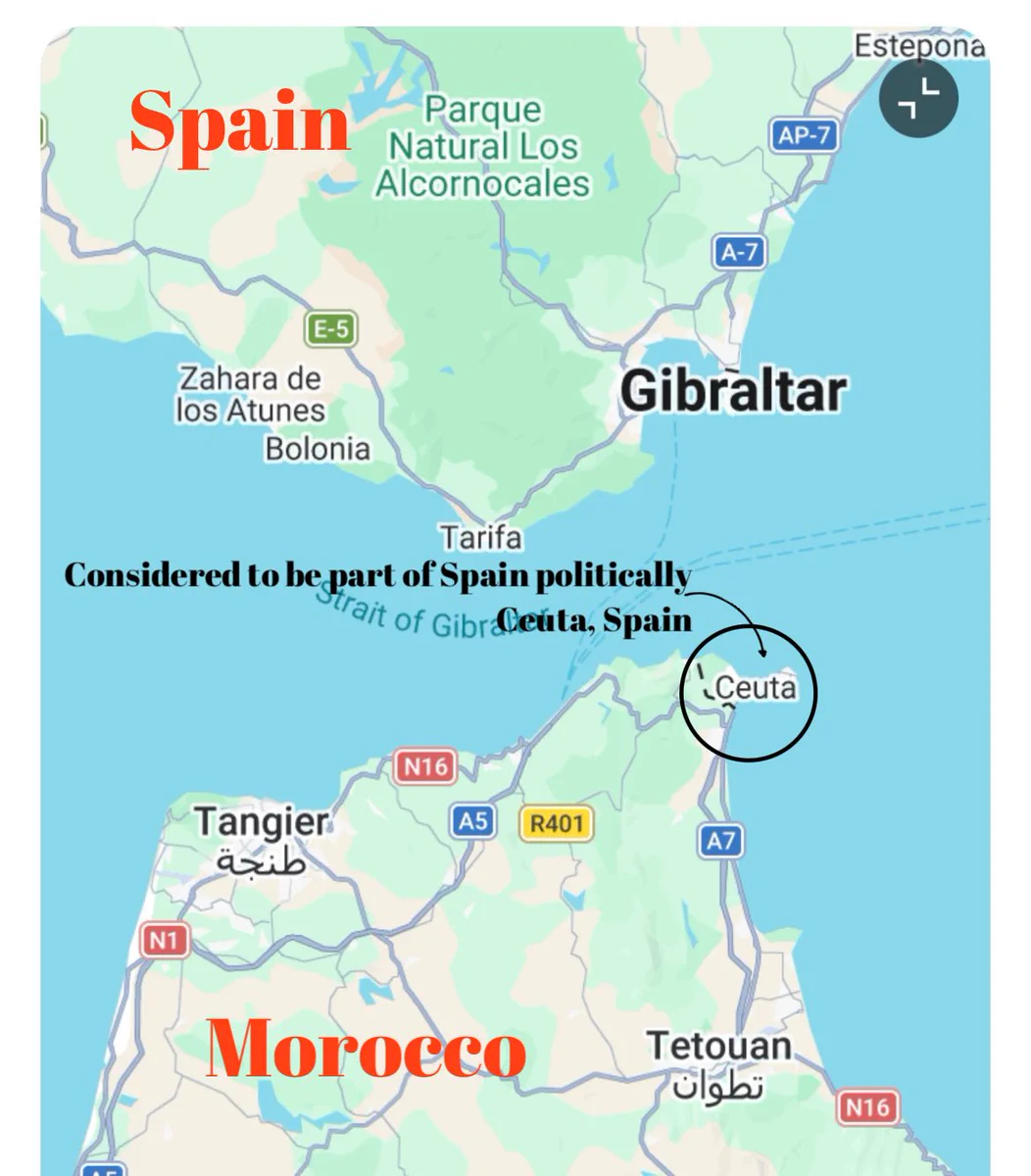
Because of this unique geography, Ceuta is a constant magnet for migrants seeking economic opportunity, political asylum, and entry into Europe. When mass border surges occur, they trigger immediate humanitarian, security, and diplomatic crises.
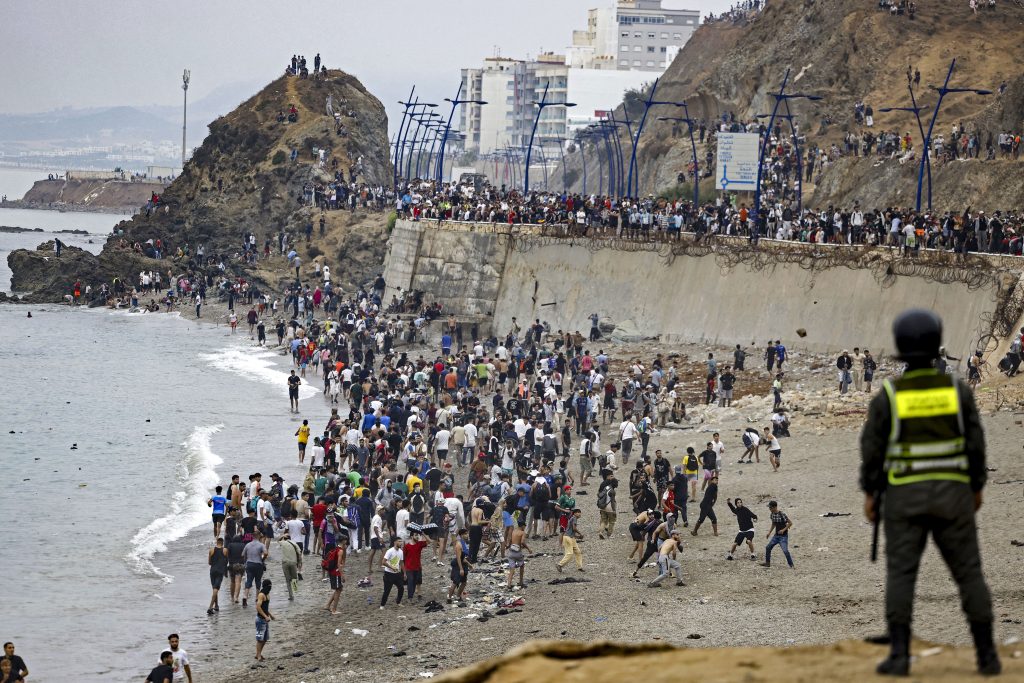
The fragility of this border was starkly exposed in late July and early August 2026, when an unprecedented surge saw between 50,000 and 60,000 people enter Ceuta in a matter of days—an influx nearly equal to three-quarters of the city’s entire population of 83,000. The crisis left at least 67 people dead, overwhelmed local infrastructure, and triggered emergency Schengen suspensions across Europe.
This raises a vital question: What is Spain doing to control, manage, and secure Ceuta amidst evolving emergency threats?
Spain’s approach relies on a multi-layered strategy combining military mobilization, high-tech pneumatic barriers, rapid legal returns, high-stakes diplomacy with Morocco, and defensive battles within the European Union.
Here is a detailed breakdown of how Spain manages and defends its African enclave.
1. Tactical Security: Army Deployment and Emergency Force Mobilization
When border tensions explode into mass breaches, Spain’s immediate priority is physical containment through the mobilization of state security forces and military units.
Armed Forces and Emergency Deployment
Border security in Ceuta is routinely managed by the Guardia Civil (Spain’s gendarmerie force) and the Policía Nacional. However, during extreme events, the Spanish Ministry of Defense mobilizes regular army units (Ejército de Tierra).
- Troops and Armored Vehicles: During the crisis in July 2026, Spain deployed army units and armored vehicles along coastal transit corridors such as Avenida Martínez Catena to reinforce border checkpoints and assist civil authorities in regaining control.
- Garrison Forces: Ceuta maintains a permanent military garrison, including the Spanish Legion (La Legión) and Regulars (Regulares). These specialized troops secure critical infrastructure and establish containment zones when local resources are overwhelmed.
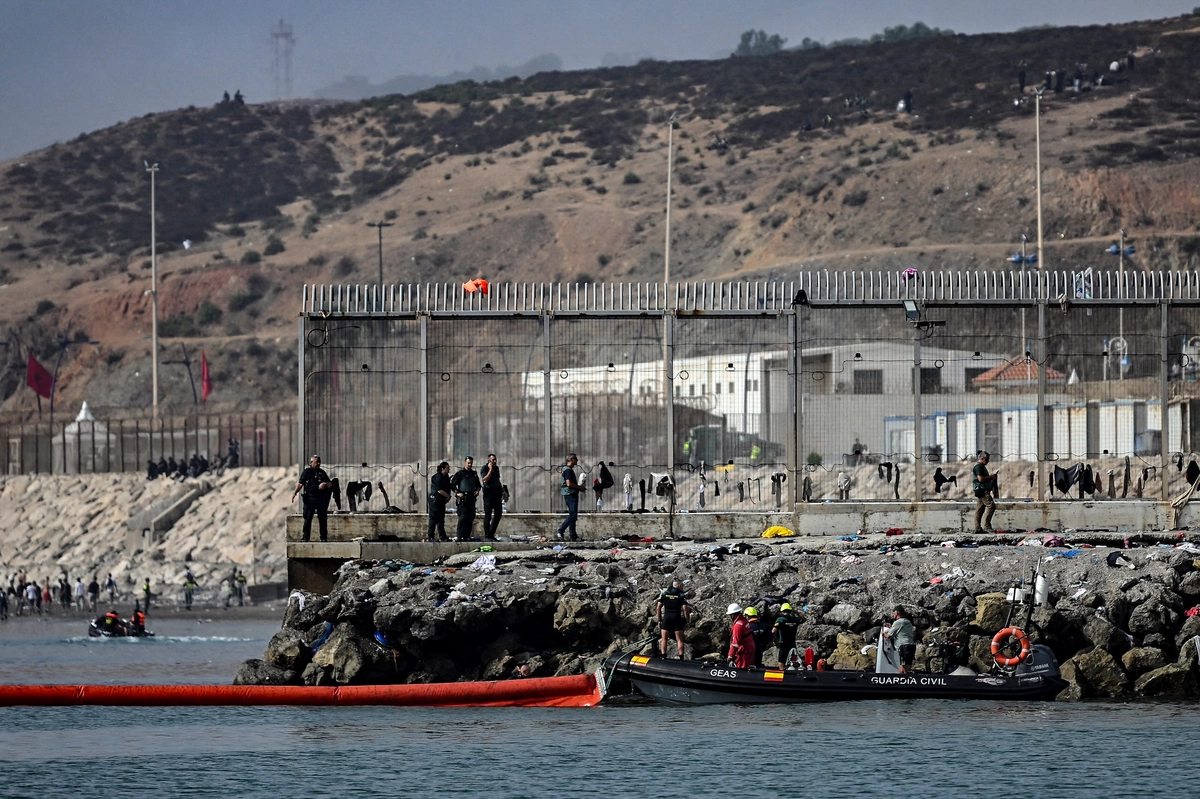
- Crowd Containment and Maritime Response: Anti-riot police (GRS units) dispatched from mainland Spain work alongside Guardia Civil patrol vessels and helicopters to respond to aquatic attempts around the Tarajal and Benzú breakwaters.
Despite deploying heavy armor and military personnel, the central government maintains that armed forces act in a supporting role to stabilize order during humanitarian and territorial emergencies.
Video: Military and police escort swarm of migrants out of Spain’s Ceuta enclave
2. Advanced Fortifications: High-Tech Fences and the 2026 Pneumatic Floating Barrier
The 6.4-kilometer perimeter fence (Valla de Ceuta) stands between 6 and 10 meters high. However, as land fences become harder to scale, migrants increasingly attempt dangerous sea crossings around the maritime breakwaters (espigones).
In response to the deadly surge of August 2026, Spain introduced aggressive new aquatic physical barriers.
Video: Spanish officials install floating barriers on coast of Ceuta as over 48,000 migrants are sent back to Morocco
The Tarajal Pneumatic Sea Barrier
On August 1, 2026, following the deaths of at least 67 migrants who drowned or were crushed during mass crossing attempts, the Guardia Civil began installing a specialized floating barrier off the Tarajal breakwater:
- Pneumatic Floating Line: The primary obstacle is a 1,640-foot (500-meter) heavy-duty pneumatic barrier extending 12 to 28 inches above the waterline and reaching up to 3 feet below the surface to block swimmers and divers.
- Anchored Naval Buoy Line: Behind the pneumatic barrier sits a secondary defense line of heavy anchored naval buoys designed to prevent boats or watercraft from bypassing the perimeter.
- Patrol Channel: A designated water channel between the two floating barriers allows Guardia Civil vessels to conduct continuous rapid-interception patrols directly along the maritime border.
The barrier is not only a physical deterrent. Announcing the deployment, Prime Minister Pedro Sánchez said the government would install a containment barrier in the sea to “facilitate repatriation at the border, in compliance with the Supreme Court ruling.”
That sentence explains why the barrier exists at all. The Supreme Court’s 29 June 2026 ruling limited summary returns — Spain’s fast-track pushback regime — to people who cross a physical containment element such as a fence. Open water was not considered one, which is why swimmers who reached Ceuta by sea gained a stronger legal footing than those who climbed the fence. The pneumatic barrier is designed to close that gap: by giving the sea route its own physical barrier, Spain aims to bring maritime crossings back under the same fast-track return rules that already apply on land.
Smart Land Perimeter Technology
On land, Spain has replaced sharp razor wire (concertinas) with inverted semi-spherical steel tops (peines invertidos) to reduce fatal lacerations. The land fence is monitored via high-resolution thermal imaging cameras, underground seismic sensors, infrared night vision, and continuous drone surveillance.
Video: nsane footage shows migrants scaling border fence in Melilla, Spain
3. Legal Mechanisms: Fast-Track Expulsions and Emergency Frameworks
Physical barriers are complemented by legal frameworks designed to rapidly document, process, and return undocumented entrants to prevent long-term overcrowding.
Rapid Returns and Mass Processing
Under a 1992 bilateral treaty between Madrid and Rabat, Morocco agrees to readmit citizens and third-country nationals who cross illegally into Spanish territory.
- 48-Hour Return Operations: Spain’s fast-track return protocols were demonstrated during the late-July 2026 emergency, when Spanish security forces processed and returned over 48,000 migrants to Morocco within 48 hours without major incident.
- Summary Pushbacks (Devoluciones en Caliente): Under Spain’s Citizen Security Law, police are legally authorized to immediately push back individuals intercepted directly at or on the border fence or breakwaters without opening lengthy administrative asylum procedures.
- Controversy Over National Emergency Declarations: During acute crises, local leaders—such as Ceuta’s Mayor-President Juan Jesús Vivas—frequently declare “absolute humanitarian and social emergencies” and demand that Madrid declare a formal state of national emergency. While Prime Minister Pedro Sánchez pledged full national support during his July 31, 2026 visit to Ceuta, central authorities stopped short of a formal national emergency declaration, saying Spanish legislation does not classify migration flows as a risk to national security. Sánchez, joined by Interior Minister Fernando Grande-Marlaska Gómez, wrote on X after arriving: “What has happened is an attack on Spain’s territorial integrity and deserves our most resounding and energetic condemnation.”
- Instead of a national emergency, the government dispatched 60 soldiers, police reinforcements, a military vessel, and a diving unit — the last of these tasked with recovering bodies from the water — to handle the nearly 60,000 crossings recorded over roughly 24 hours.
Care and Distribution of Unaccompanied Minors
Under international human rights law, unaccompanied migrant children (Menores Extranjeros No Acompañados) cannot be summarily returned. Spain manages this challenge through an inter-regional transfer model, relocating minor migrants from Ceuta’s overcrowded temporary shelters to autonomous regions across mainland Spain.
4. Diplomatic Realignment: Partnering with Morocco
Spain cannot secure Ceuta unilaterally. Effective border control requires direct physical cooperation from Moroccan security forces on the African side of the frontier.
The Western Sahara Diplomatic Pivot
In March 2022, Spanish Prime Minister Pedro Sánchez executed a historic diplomatic shift by endorsing Morocco’s autonomy plan for Western Sahara, departing from decades of Spanish neutrality.
This diplomatic realignment secured essential border management commitments from Rabat:
- Active Moroccan Perimeter Policing: Moroccan forces actively monitor access roads, deploy water cannons to push back mass crowds, and dismantle makeshift migrant camps near the border.
- Joint Intelligence Sharing: Spanish and Moroccan police share real-time intelligence to dismantle human smuggling networks operating in North Africa.
- Formalized Customs Trade: Both nations agreed to establish official commercial customs offices (aduanas comerciales) to replace unregulated informal smuggling (porteo).
When diplomatic coordination functions smoothly, irregular crossing attempts drop significantly; when friction arises, border enforcement on the Moroccan side can quickly deteriorate.
5. European Fallout: Schengen Suspensions and Political Tensions
Spain continuously frames Ceuta as the southern land border of the entire European Union, asserting that the security of Ceuta is vital to the security of Europe.
The 2026 EU Border Rift
The scale of the August 2026 border breach sent shockwaves across Europe, igniting fierce political debates and triggering unilateral security measures by EU neighbors:
- Schengen Suspensions: In response to the influx of tens of thousands into Ceuta, Italy temporarily suspended passport-free Schengen travel arrangements with Spain for one month. French Interior Minister Laurent Nuñez said he had instructed border checks with Spain to be bolstered “without delay” and activated the country’s Rapid Intervention Border Force; President Emmanuel Macron separately confirmed France would strengthen its land borders with Spain.
- Finland Backs Italy: Finnish Interior Minister Mari Rantanen backed Italy’s position, writing on social media that “countries that do not fulfill their obligation to protect the external border cannot be members of Schengen” and urging other EU states to follow Rome’s lead.
- Calls for EU Emergency Meetings: Twenty-two EU member states called for emergency interior minister meetings to demand coordinated EU action, increased Frontex deployment, and a review of financial agreements with North African nations.
- Political Resistance in Madrid: PM Pedro Sánchez strongly rejected calls to isolate Spain within Schengen, calling restrictions “selfish, polarising and unlawful.” Spain clarified that illegal entrants into Ceuta are legally barred from traveling onward to mainland Spain or the rest of Europe.
- Clarification on Amnesty Programs: Spain also rejected claims that its domestic legal status programs incentivized border surges, emphasizing that legal residence pathways require proof of continuous residence established prior to specific cutoff dates. The government had estimated roughly 500,000 people would be eligible under the regularisation decree; Spanish think tank Funcas put the realistic figure closer to 840,000. Applications opened in April, and nearly 1.2 million had been filed by the 30 June deadline — none of which, the government notes, could have covered anyone who crossed in late July. On 31 July, Europe Minister José Manuel Albares wrote on X that “practically the entirety of those who entered Ceuta have already returned to Morocco.”
Summary Table: Spain’s Comprehensive Strategy in Ceuta
| Domain | Tactical Measures & Policies | Key Objectives & 2026 Updates |
| Military & Security | Armored vehicle deployment, Army garrisons, Guardia Civil anti-riot units | Secure critical corridors, maintain order during mass influxes |
| Physical Infrastructure | 1,640-ft pneumatic floating barriers, naval buoys, 10m land fences | Prevent sea swimming bypasses and fence scaling |
| Legal & Return Policies | 1992 bilateral treaty, 48-hour mass returns, summary pushbacks | Fast-track expulsions (48k returned in 48h during August 2026) |
| Diplomatic Strategy | Western Sahara policy alignment, joint anti-smuggling task forces | Enlist Moroccan police and water cannon containment efforts |
| EU & Schengen Policy | EU border management funding, Frontex integration, Schengen defense | Maintain external EU border integrity amidst inter-state tension |
Conclusion: A Fortress Town at the Crossroads of Continents
What Spain is doing about Ceuta represents a continuous, high-stakes balance between national defense, humanitarian responsibility, and geopolitical maneuvering.
The events of August 2026—marked by pneumatic sea barriers, military armor, emergency pushbacks, and European political friction—demonstrate that Ceuta is far more than a local border checkpoint. It is a critical flashpoint where European migration policy, North African diplomacy, and human hardship intersect.
Through physical fortifications, rapid returns, and firm diplomatic ties with Morocco, Spain continues to reinforce its southern frontier—navigating the delicate reality of governing a European enclave on the African continent.