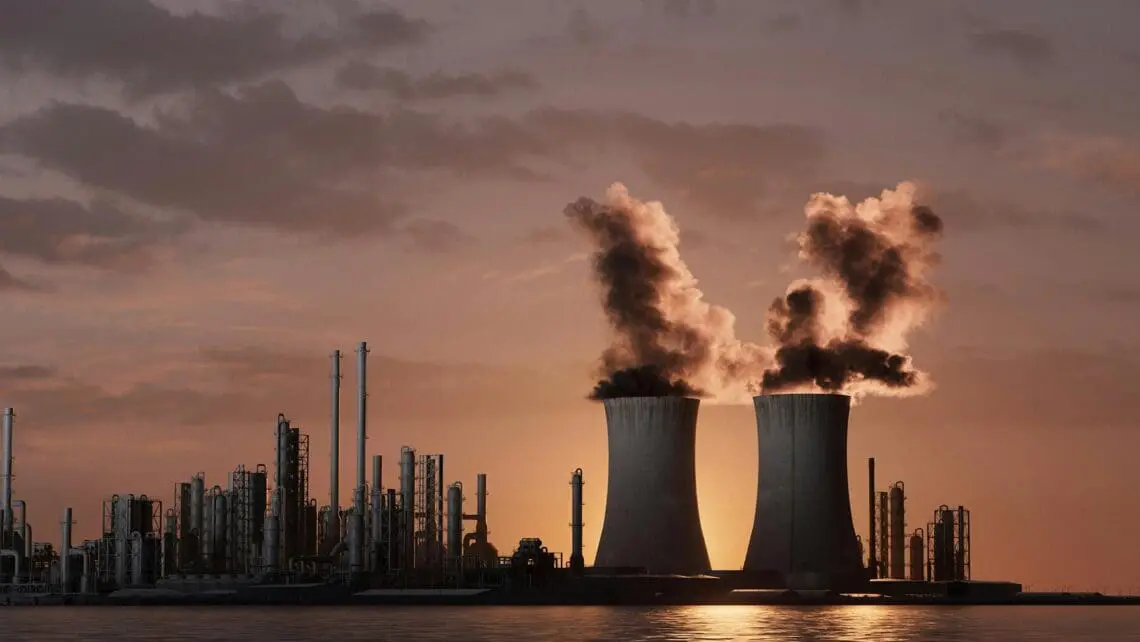
In the heart of one of the world’s most volatile regions, Iran nuclear program continues to captivate—and alarm—the international community. As of March 2026, following devastating U.S. and Israeli airstrikes in 2025 that severely damaged key facilities at Natanz, Fordow, and Isfahan, Tehran has declared its intent to rebuild what it insists is a purely peaceful civilian nuclear endeavor. Yet questions linger: How much capability remains? Could Iran rapidly reconstitute its enrichment activities? And why has the Islamic Republic pursued this path for decades, enduring crippling sanctions, sabotage, assassinations, and now direct military action?
The program, which Iran frames as a sovereign right under the Nuclear Non-Proliferation Treaty (NPT) for energy, medicine, and scientific advancement, has long been viewed by Western powers and Israel as a covert pathway to nuclear weapons capability. With highly enriched uranium stockpiles unaccounted for post-strikes, breakout timelines potentially shortened despite infrastructure setbacks, and diplomacy stalled, Iran’s nuclear ambitions remain a defining flashpoint in global security. This article delves into the historical roots, strategic drivers, current status after recent attacks, and the enduring reasons behind Tehran’s unwavering commitment.

Historical Background: Roots in the Pahlavi Era and Post-Revolution Revival
Iran’s nuclear journey began long before the 1979 Islamic Revolution. In 1957, under the U.S.-backed Shah Mohammad Reza Pahlavi, Iran signed a civil nuclear cooperation agreement as part of President Eisenhower’s “Atoms for Peace” initiative. The Tehran Research Reactor went critical in 1967, initially fueled by highly enriched uranium supplied by the United States.
By the mid-1970s, the Shah announced ambitious plans for 23 nuclear power plants and a complete nuclear fuel cycle, aiming to generate 23,000 megawatts of electricity and position Iran as a modern regional power. Iran signed the Nuclear Non-Proliferation Treaty (NPT) in 1968 as a non-nuclear-weapon state.
The 1979 Revolution dramatically altered the trajectory. The new Islamic Republic initially suspended the program, viewing it as a relic of Western dependence. However, the devastating Iran-Iraq War (1980–1988) — during which Iraq used chemical weapons with apparent international tolerance — prompted a reversal. Iranian leaders, including future president Akbar Hashemi Rafsanjani, concluded that a nuclear deterrent might be necessary for survival.
Clandestine activities accelerated in the late 1980s and 1990s with assistance from Pakistan’s A.Q. Khan network, Russia, and China. The program gained global attention in 2002 when an Iranian opposition group exposed secret facilities at Natanz (enrichment) and Arak (heavy-water reactor). By 2006, President Mahmoud Ahmadinejad publicly announced uranium enrichment to 3.5%, triggering UN Security Council sanctions.
This timeline reveals a consistent thread: Iran has viewed nuclear technology as both a modernizing tool and a strategic insurance policy against existential threats.

Iran’s Official Position: Peaceful Purposes and a Religious Fatwa
Iran has consistently maintained that its nuclear program is entirely peaceful, intended for energy production, medical isotopes, and scientific research. Supreme Leader Ayatollah Ali Khamenei (until his reported death in 2026) issued a religious fatwa declaring nuclear weapons haram (forbidden under Islamic law). Iranian officials argue that oil-rich Iran needs nuclear power to diversify its energy mix and free up hydrocarbons for export.
The International Atomic Energy Agency (IAEA) and Western intelligence agencies counter that Iran pursued a structured weapons program (the AMAD Project) until at least 2003, and retains the knowledge to weaponize rapidly. Iran’s stockpile of uranium enriched to 60% purity — near weapons-grade — has raised alarms. As of early 2026 reports, this material could theoretically support multiple bombs if further enriched.
Tehran insists high enrichment levels are a direct response to the U.S. withdrawal from the 2015 Joint Comprehensive Plan of Action (JCPOA) and subsequent sanctions. The program, they argue, is a bargaining chip for sanctions relief rather than a path to bombs.
Strategic Security Reasons: Deterrence Against Existential Threats
At the heart of Iran’s persistence is national security. Iranian leaders perceive themselves as surrounded by adversaries: Israel (with its undeclared nuclear arsenal), the United States (with a history of regime-change rhetoric), and Sunni Arab states backed by Washington.
The 2003 U.S. invasion of Iraq — a neighbor that once invaded Iran — demonstrated the peril of lacking a nuclear deterrent. Saddam Hussein had no weapons of mass destruction and was toppled; Iranian strategists took note. A nuclear capability, even latent, serves as the ultimate insurance against invasion or airstrikes.
Recent events underscore this logic. Israeli and U.S. strikes in June 2025 and early 2026 damaged facilities at Natanz, Fordow, and Isfahan, yet Iran’s program has not collapsed. Redundant underground sites, dispersed stockpiles, and retained scientific expertise allow reconstitution. As one analyst noted, Iran built its program with survivability in mind.
Nuclear latency also deters aggression without the full costs of actual weaponization. It projects power in the Persian Gulf, counters Saudi Arabia’s conventional and potential nuclear ambitions, and shields Iran’s network of regional proxies (Hezbollah, Houthis, and others).

National Pride, Sovereignty, and Anti-Imperialist Identity
Iran’s nuclear program is deeply intertwined with national identity. Decades of foreign interference — notably the 1953 CIA-backed coup against Prime Minister Mohammad Mossadegh — fuel a narrative of resistance to Western domination. Mastering the nuclear fuel cycle symbolizes technological self-reliance and dignity.
Abandoning enrichment under pressure would be seen as national humiliation, akin to surrendering sovereignty. Iranian leaders repeatedly frame the program as a matter of “who Iranians are as a nation.” Decades of investment — estimated in the hundreds of billions — create path dependency; dismantling it would invite domestic questions about wasted resources and lost prestige.
This pride extends to regime legitimacy. The Islamic Republic portrays itself as the defender of Iranian independence against “arrogant powers.” Sanctions are spun as proof of Western hostility, rallying public support even as the economy suffers.
Political and Domestic Drivers: Regime Survival and Leverage
Domestically, hardliners in the Islamic Revolutionary Guard Corps (IRGC) view the nuclear program as a core pillar of revolutionary identity. Conceding would signal weakness and erode credibility after years of defiance.
Internationally, the program provides negotiating leverage. Iran has repeatedly offered limits on enrichment in exchange for sanctions relief, using its growing stockpile as a pressure tool. Even after military setbacks, Tehran insists it will never accept “zero enrichment” — a red line that preserves its breakout capability.
Resilience to Sanctions: Adaptation Over Surrender
Sanctions — UN measures since 2006, U.S. “maximum pressure” after 2018, and snapback provisions — have inflicted severe economic pain. Oil exports plummeted, inflation soared, and living standards declined. Yet the nuclear program not only survived but accelerated.
Iran adapted through:
- Sanctions evasion via smuggling networks and barter trade with China and Russia.
- Domestic substitution and black-market procurement.
- Proxy resilience and oil sales to Asia despite secondary sanctions.
- Psychological framing: Sanctions are portrayed as badges of honor in the “resistance economy.”
Critically, sanctions failed to alter Iran’s cost-benefit calculus. The perceived security gains of nuclear latency outweigh economic costs. Post-JCPOA collapse, Iran breached limits incrementally, installing advanced centrifuges and enriching to 60%. By late 2024–early 2025, breakout time (time to produce weapons-grade material) shrank from over a year to roughly one week.
Recent military strikes have damaged declared facilities but left stockpiles unaccounted for and knowledge intact. IAEA access remains limited, complicating verification.
The JCPOA: A Brief Window of Restraint and Its Collapse
The 2015 JCPOA represented the high-water mark of diplomacy. Iran capped enrichment at 3.67%, reduced centrifuges, and accepted intrusive IAEA monitoring in exchange for sanctions relief. Breakout time extended significantly.
The U.S. withdrawal in 2018 under President Trump — followed by reimposed sanctions — shattered trust. Iran responded with a “step-by-step” rollback, proving that sanctions relief must be credible and durable. As of 2026, revival efforts have failed amid heightened tensions and military action.

Current Status in 2026: Damaged but Not Destroyed
Following Israeli-U.S. strikes in 2025–2026, key sites (Natanz, Fordow, Isfahan) suffered damage to entrances and support infrastructure. Iran’s 60% enriched uranium stockpile (hundreds of kilograms) location remains partially unverified by the IAEA. No evidence confirms active weaponization, but the capability persists.
Iran suspended some cooperation with inspectors and has hinted at exiting the NPT if pressure continues. Facilities are hardened underground, and scientific expertise dispersed. The program has survived airstrikes, sanctions, and assassinations of scientists.
International Implications and Future Outlook
A nuclear-armed or nuclear-capable Iran risks regional proliferation (Saudi Arabia, Turkey), escalation with Israel, and global instability. Yet military force alone has proven limited: strikes set back timelines but reinforce Iran’s narrative of victimhood and determination.
Diplomacy remains the only sustainable path, though mutual distrust runs deep. Any deal must address Iran’s security concerns, provide verifiable limits, and deliver tangible economic benefits.
Conclusion: Why Sanctions and Strikes Have Not Deterred Iran
Iran’s relentless pursuit of its nuclear program stems from deep-seated strategic, historical, and ideological imperatives. Sanctions have exacted a heavy toll but failed to convince Tehran that abandonment serves its interests better than persistence. The program embodies survival, pride, and power in a hostile environment.
Until the underlying threats — real or perceived — are addressed through credible security guarantees and mutual respect, Iran is likely to maintain its nuclear hedge. The stakes remain extraordinarily high: for Iran’s regime, the Middle East’s stability, and global non-proliferation norms.
FAQ: Common Questions About Iran’s Nuclear Program
Q: Does Iran have nuclear weapons?
A: No. U.S. and IAEA assessments confirm Iran has not resumed a structured weapons program since 2003, though it possesses the knowledge and near-weapons-grade material for rapid breakout.
Q: Why doesn’t Iran just abandon enrichment for sanctions relief?
A: Zero enrichment is viewed as surrender of sovereignty and a political liability domestically. Iran sees it as a core right under the NPT.
Q: How effective have sanctions been?
A: Economically devastating but strategically unsuccessful in halting the program. Iran adapted and accelerated enrichment after the JCPOA collapse.
Q: Could military strikes eliminate the program?
A: Strikes have caused setbacks but not elimination. Underground facilities, dispersed stockpiles, and scientific know-how ensure survivability.
Q: What is the current breakout time?
A: Pre-strike estimates placed it at weeks for fissile material production. Post-2025–2026 damage, timelines are extended but not erased due to retained expertise.
Iran’s nuclear saga underscores a timeless lesson in international relations: when a state believes its survival depends on a capability, external pressure alone rarely suffices. Understanding these motivations is essential for any future resolution.