
Last Updated on 4 months ago by TodayWhy Editorial
Cuba needs roughly 100,000–120,000 barrels per day (bpd) of petroleum products but produces only 24,000–32,000 bpd domestically — leaving an import gap of 60,000–80,000+ bpd that must be filled entirely through Cuba oil imports, according to CEIC data.
⚡ Crisis update (May 2026): Venezuela resumed limited shipments (~1M barrels, week of Mar 27). Trump signaled no opposition to fuel deliveries on Mar 29. Russia’s Anatoly Kolodkin delivered ~730,000 bbl on Mar 31. Mexico has yet to fully resume. Cuba’s power grid remains critically fragile.
Summary Data Table — Cuba Oil Imports 2025–2026
| Category | Volume / Detail | Status (May 2026) |
|---|---|---|
| Total daily demand | 100,000 – 120,000 bpd | Chronic deficit |
| Domestic production | 24,000 – 32,000 bpd (heavy crude) | Declining |
| Import gap | 60,000 – 80,000+ bpd | Near-zero imports Q1 2026 |
| Venezuela (pre-2026) | 27,000 – 55,000 bpd (~33%) | Resumed limited (Mar 2026) |
| Mexico / Pemex (pre-2026) | 13,000 – 22,000 bpd (~44%) | Suspended since Jan 27, 2026 |
| Russia (2026) | ~730,000 bbl delivered Mar 31 | Sporadic; ≈12–15 days of need |
| Algeria & others | Small spot volumes (~4–10%) | Halted under EO 14380 threat |
| Proved oil reserves | ~124 million barrels (EIA) | Largely unexploited offshore |
| Refinery capacity | Cienfuegos ~65,000 bpd design; actual <30% | Critically underperforming |
| Renewable share | <5% of generation (2025) | Solar target: 24% by 2030 |
1. What Are Cuba Oil Imports and Why Do They Matter?
Cuba’s energy economy rests on a single precarious fact: the island consumes roughly 100,000–120,000 barrels per day (bpd) of petroleum products but produces only 24,000–32,000 bpd domestically. That structural gap — 60,000 to 80,000+ bpd — must be filled entirely through Cuba oil imports. Without them, the country’s thermoelectric power plants, transport networks, hospitals, water pumping stations, and agricultural machinery all grind to a halt.
This dependence is not new. Since the collapse of the Soviet Union in 1991 — which abruptly ended Moscow’s heavily subsidized oil deliveries — Cuba has cycled through a series of patron suppliers: Venezuela from 2000 onward, Mexico from 2023, and sporadic Russian deliveries. Each transition has exposed the same underlying vulnerability: Cuba’s oil security is geopolitical, not geological.
In early 2026, that vulnerability became a crisis. A US executive order and the removal of Venezuelan President Nicolás Maduro combined to cut off approximately 75% of Cuba’s oil supply within weeks. The result — rolling nationwide blackouts lasting 20+ hours, grid collapses, and a cascading humanitarian emergency — made Cuba oil imports a front-page story worldwide.
Todaywhy covers the complete picture: who supplies Cuba’s oil and why, how domestic production works, what the 2026 embargo means legally, what Cuba can refine, and what a post-crisis energy future might look like.
2. Cuba Oil Imports by Country (2025 Breakdown)
Cuba’s supplier mix in 2025 — before the crisis — was dominated by three countries. Mexico had overtaken Venezuela as the single largest source, together accounting for roughly 77% of all Cuba oil imports by country. Russia contributed a steady minority share. This balance shifted dramatically in January 2026.
- Venezuela — ~33% of imports Dominant supplier 2000–2025 under barter deal (oil for Cuban doctors and services). Reduced from 100,000 bpd peak (2011) to ~27,000–55,000 bpd by 2023–2025. Status: limited resumption March 2026.
- Mexico (Pemex) — ~44% of imports Rose to top supplier in 2025, delivering ~13,000–22,000 bpd of light crude (Olmeca/Istmo grades). Halted January 27, 2026 under US tariff pressure. Mexico called it a “sovereign decision.” Status: suspended since January 2026.
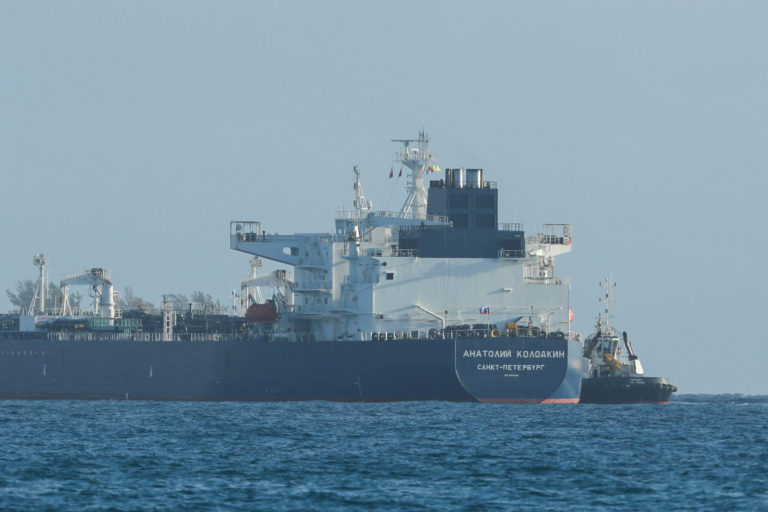
- Russia — ~10% of imports Sporadic crude deliveries throughout 2024–2025. Tanker Anatoly Kolodkin delivered ~730,000 bbl at Matanzas port on March 31, 2026 — the first major arrival in three months. Status: irregular; resumed March 2026.
- Others (Algeria etc.) — ~4–10% of imports Minor spot purchases from Algeria and occasional third-party resellers. All halted by the EO 14380 deterrent effect as of February 2026. Status: halted.
Key fact: In 2025, Cuba’s total petroleum imports averaged approximately 1.2 million barrels per month (~40,000 bpd), with Venezuela and Mexico as the primary sources before the disruptions of January 2026. By March 2026, effective imports had collapsed to near zero — only a single Russian tanker and humanitarian fuel broke the effective blockade.
3. Cuba Oil Imports from Venezuela: From Barter Lifeline to Collapse
For a quarter century, Cuba oil imports from Venezuela defined the bilateral relationship between Havana and Caracas. The arrangement, formalized under Hugo Chávez beginning in 2000 through the Petrocaribe framework, allowed Cuba to receive discounted or bartered oil in exchange for Cuban professional services — primarily tens of thousands of doctors, teachers, military advisers, and intelligence personnel deployed in Venezuela.
The Petrocaribe Deal in Numbers
At the arrangement’s peak between 2011 and 2012, Venezuela shipped over 100,000 bpd to Cuba — enough to cover the island’s entire import need. As Venezuela’s own oil production collapsed through the late 2010s, those volumes eroded steadily:
| Period | Estimated Venezuelan supply to Cuba | Context |
|---|---|---|
| 2011–2012 | >100,000 bpd | Peak of Chávez-era Petrocaribe; Cuba’s full import need covered |
| 2014–2016 | ~55,000 bpd | First Venezuelan production decline; deal renegotiated |
| 2019–2021 | ~30,000–40,000 bpd | PDVSA collapse; US secondary sanctions biting |
| 2023–2024 | ~27,000–46,000 bpd | Stabilized at lower level; some flows via third-party ships |
| Jan–Mar 2026 | ~0 (then 1M bbl resumed) | Maduro captured Jan 3; barter deal terminated |
The 2026 Turning Point
The arrangement collapsed on January 3, 2026, when US Special Operations forces captured Nicolás Maduro during an operation in Venezuela. Among the approximately 30 members of Maduro’s security detail killed in the operation were Cuban personnel — the Cuban government declared two days of national mourning. Washington immediately seized control of Venezuela’s PDVSA operations, ending Cuban-bound shipments.
On February 26, 2026, a partial path opened: the US Treasury issued a licensing policy allowing companies to apply for licenses to resell Venezuelan-origin oil for “commercial and humanitarian use in Cuba,” explicitly excluding entities linked to the Cuban military, intelligence services, or government institutions. Limited Venezuelan crude resumed in late March 2026 under this framework.
→ See also: Cuba–Venezuela Oil Deal: The Complete History of Petrocaribe (2000–2026)
4. Cuba Oil Imports from Mexico: Rise, Pressure, and the Pemex Dilemma
Mexico’s emergence as Cuba’s top oil supplier was a relatively recent development. Beginning in late 2023, the government of Claudia Sheinbaum instructed Pemex to significantly increase crude deliveries to Cuba. By 2025, Mexico had become the largest single source of Cuba oil imports, accounting for approximately 44% of total inflows.
Mexico sent primarily light crude grades — Olmeca and Istmo — well suited to Cuba’s aging Cienfuegos refinery, which struggles to process Cuba’s own heavy domestic output. Volumes ranged from 13,000 to 22,000 bpd.
The US Pressure Campaign
The arrangement attracted immediate attention from Washington. On January 11, 2026 — following the arrival of a Mexican oil tanker in Havana — President Trump posted publicly: “THERE WILL BE NO MORE OIL OR MONEY GOING TO CUBA – ZERO!” The subsequent Executive Order 14380, signed January 29, threatened tariffs on any country supplying oil to Cuba.
Mexico halted Pemex shipments on January 27, 2026 — two days before the executive order was formally signed. President Sheinbaum described the pause as a “sovereign decision,” though analysts widely interpreted it as preemptive compliance. Mexico sent two humanitarian aid shipments (non-oil) to Cuba in February 2026. As of May 2026, oil shipments remain suspended.
Strategic context: Mexico faces a structural dilemma — a 124-year relationship with Cuba on one side, and the reality that Mexico sends approximately 80% of its exports to the United States on the other. The Trump administration’s leverage over Mexican tariffs made continued Cuban oil shipments economically untenable regardless of political will.
→ See also: [Cuba Oil Imports from Mexico: Pemex, US Pressure & the 2026 Suspension]
5. Cuba Oil Imports from Russia: The Strategic Lifeline
Russia’s role in Cuba’s oil supply has historically been secondary — a reminder of Cold War ties rather than a major commercial relationship. Through 2024 and into early 2025, Russia provided roughly 10% of Cuba oil imports, delivered via sporadic tanker shipments.
That dynamic changed after January 2026. As Venezuela and Mexico were knocked out of the equation, Russia became Cuba’s only active oil supplier. The Kremlin explicitly described US actions as an attempt to “suffocate” Cuba, and Deputy Prime Minister Alexander Novak confirmed in February 2026 that Russia was actively planning fuel deliveries.
The Anatoly Kolodkin Delivery (March 31, 2026)
On March 20, the US government announced it would not permit Russian fuel oil tankers then en route to Cuba to complete their deliveries. One tanker reportedly diverted. However, on March 29, President Trump reversed course, signaling he would not oppose fuel shipments to Cuba.
The Russian-flagged tanker Anatoly Kolodkin — a vessel already under US sanctions — docked at the Matanzas oil terminal on March 31, 2026, delivering approximately 730,000 barrels of crude (~100,000 tonnes). This single shipment provided roughly 12–15 days of Cuba’s refined fuel needs.
The tanker had departed a Russian port in mid-March, traveling approximately 3,000 nautical miles across the Atlantic. Its arrival was the first significant oil delivery to Cuba since January 2026. Subsequent Venezuelan shipments — approximately 1 million barrels in the week ending March 27 — followed Trump’s policy softening.
6. Executive Order 14380: The Cuba Oil Embargo Explained
To understand why Cuba oil imports collapsed so rapidly in 2026, you need to understand the precise mechanism of Executive Order 14380, signed by President Trump on January 29, 2026. This order created what legal scholars describe as an effective oil embargo through deterrence, not through physical interdiction of ships.
How EO 14380 Works
The order authorizes additional tariff duties on goods imported from any country determined to have “directly or indirectly purchased or received Cuban oil, or otherwise provided oil to Cuba.” The operative word is indirectly — meaning a country that allows a company within its jurisdiction to transship crude through a third port to Cuba could theoretically trigger the tariffs.
The mechanism’s deterrent power is disproportionate to its formal scope. No vessels have been boarded under the Cuba-specific oil authorities. No tariffs have been formally imposed. Yet the effect has been decisive:
- Mexico halted Pemex shipments two days before the order was even signed.
- At least one Russian tanker carrying temporarily non-sanctioned oil diverted mid-voyage after the order was announced.
- Algeria and other minor suppliers ceased deliveries without formal notification.
- The tanker shipping industry began refusing Cuba-bound charters entirely.
International Law Dimension
The order has drawn criticism from international legal scholars as a novel use of tariff authority to achieve what amounts to an extraterritorial blockade. Cuba has argued that EO 14380 violates international maritime law and UN resolutions. The UN General Assembly has repeatedly voted to condemn the US embargo on Cuba; the 2026 oil measures have renewed those debates with specific focus on the humanitarian impact of energy deprivation.
The February 26 Licensing Policy Shift
On February 26, 2026, the US Treasury’s Office of Foreign Assets Control (OFAC) issued a statement clarifying that companies could apply for licenses to resell Venezuelan oil for commercial and humanitarian use in Cuba — provided those companies had no links to the Cuban military, intelligence services, or other government institutions. This created a narrow channel for private-sector fuel imports while maintaining pressure on the Cuban state.
7. Cuba Oil Production: Reserves, Output, and Structural Limits
Despite its acute dependence on imports, Cuba sits on meaningful geological potential. Most confirmed Cuba oil reserves are concentrated in the North Cuba Basin, a heavy-oil belt stretching along the island’s northwestern coastline from Havana province through Matanzas and Ciego de Ávila.
Proved Reserves
The US Energy Information Administration (EIA) estimates Cuba’s proved oil reserves at approximately 124 million barrels. Cuba’s Exclusive Economic Zone (EEZ) in the Gulf of Mexico has been estimated to contain billions of barrels of technically recoverable oil in deepwater formations. However, the US trade embargo, Cuba’s lack of deep-water drilling technology, and international oil companies’ reluctance to risk US sanctions have kept these resources largely unexplored.
Cuba Oil Production 2024–2026
Cuba’s domestic output has followed a long declining trend, falling from a peak of ~57,000 bpd in the mid-2000s to 24,000–32,000 bpd in 2024–2025. Three factors drive the decline:
- Aging infrastructure: Fields in Matanzas and Ciego de Ávila are mature, with declining reservoir pressure and increasingly complex extraction requirements.
- Capital starvation: US sanctions block access to most international financing, modern drilling equipment, and technical partnerships needed to boost output.
- The heavy crude problem: Cuba’s crude is viscous, high-sulfur, and corrosive — largely unsuitable for refined products. It can only power thermoelectric plants, not replace imported diesel or gasoline.
- Sherritt halted: Canadian miner Sherritt International’s joint ventures — Cuba’s main foreign energy partner — paused operations in early 2026 due to fuel shortages at the Moa nickel facility.
Domestic production covers only 25–30% of national demand, leaving the country structurally dependent on Cuba oil imports for lighter crudes and all refined products.
→ See also: Cuba Oil Production & Reserves: North Cuba Basin, Cienfuegos, Decline
8. Refinery Capacity and the Processing Gap
One of the least-discussed aspects of Cuba’s oil crisis is that it has two distinct dimensions: a supply gap (not enough crude coming in) and a refining gap (inability to convert the crude it does have into usable products). Even when Venezuela was sending 50,000+ bpd, Cuba struggled to refine it efficiently.
The Cienfuegos Refinery
Cuba’s principal refinery, located in Cienfuegos on the southern coast, was designed with a nameplate capacity of approximately 65,000 bpd. Historically operated as a joint venture with Venezuela’s PDVSA — which supplied technology, technical staff, and crude calibrated to the refinery’s specifications — the facility has deteriorated significantly since the Venezuelan partnership began collapsing in the mid-2010s.
By 2024–2025, the Cienfuegos refinery was operating at well below 30% of design capacity, constrained by:
- Severe corrosion damage from years of processing Cuba’s heavy domestic crude, for which the refinery was not optimally designed
- Lack of spare parts (many sourced from US suppliers, blocked by embargo)
- Departure of Venezuelan technical personnel who maintained the facility
- Insufficient feedstock — not enough crude arriving to justify full operations
Cuba also operates the smaller Nico López refinery in Havana. However, Cuba’s need for diesel, gasoline, jet fuel, and fuel oil cannot be met domestically regardless of crude input volumes — the country lacks sufficient processing infrastructure to cover demand even if supply were fully restored.
Policy implication: The refinery gap explains why Cuba’s aviation fuel crisis — no jet fuel at airports since February 9, 2026, causing Canadian airlines to suspend all Cuba flights — was a separate problem from the crude supply issue. Even if crude arrived in bulk, converting it to aviation-grade kerosene requires functional, modern refining infrastructure Cuba currently does not have at scale.
9. The 2026 Cuba Energy Crisis: Blackouts, Rationing, and Daily Life
The collapse of Cuba oil imports in early 2026 exposed the fragility of an energy system that had been deteriorating for decades.
Crisis Timeline
- January 3, 2026 — Maduro captured. Venezuelan oil shipments to Cuba effectively cease. Cuba confirms 32 security personnel killed; declares two days of national mourning.
- January 11, 2026 — Trump posts “ZERO” warning. International tanker companies begin withdrawing from Cuba routes. Shipping insurance premiums spike.
- January 27, 2026 — Mexico halts Pemex shipments. Cuba loses its largest remaining supplier. Fuel rationing begins nationally. Government announces four-day work week for state employees.
- January 29, 2026 — EO 14380 signed. Additional tariffs authorized on countries supplying oil to Cuba. Algeria and minor suppliers halt deliveries.
- February 9, 2026 — Cuba stops refueling foreign aircraft at all airports. Air Canada, WestJet, and other carriers cancel Cuba flights. Tourism sector collapses.
- February 26, 2026 — US issues limited Venezuela oil license for private-sector flows. Canada pledges $6.7M food aid. Mexico dispatches two humanitarian (non-oil) naval aid shipments.
- March 21–22, 2026 — Third nationwide grid collapse. Generation drops below 1,000 MW against a 3,000 MW demand baseline. Power restored to only 72,000 of Havana’s 2 million residents. Five hospitals affected.
- March 29–31, 2026 — Trump softens stance; Anatoly Kolodkin docks at Matanzas with ~730,000 bbl of crude.
- Week of March 27, 2026 — Venezuela resumes ~1 million barrels under OFAC licensing. First Venezuelan crude since December 2025.

Human and Economic Impacts
- Power & electricity: 20+ hour daily blackouts in most provinces. National grid collapsed three times in Q1 2026. Available generation fell below 1,000 MW vs. 3,000 MW needed.
- Transport: Public bus service at less than 42% capacity in Havana. Only 44 of 106 garbage trucks operational as of February. Diesel rationing prioritized emergency services.
- Healthcare: Hospitals relied on generators with limited fuel. Surgeries postponed. Medicine storage compromised by refrigeration failures. Five major Havana hospitals affected in the March grid collapse.
- Industry: Sherritt nickel mining in Moa paused operations. Sugar, agriculture, and construction halted or severely curtailed. Food spoilage widespread.
- Aviation & tourism: No jet fuel at Cuban airports from February 9. Cuba’s main hard currency earner — tourism — effectively collapsed.
- Water & sanitation: Water pumping stations require diesel; outages caused water shortages in urban areas, with reports of waterborne illness risk in affected municipalities.
→ See also: [Cuba Energy Crisis 2026: Blackouts, Causes & Humanitarian Impact]
10. Cuba’s Renewable Energy Roadmap: Solar, Wind, and the Path Beyond Oil
The 2026 crisis has accelerated Cuba’s existing push toward renewable energy. Before the oil disruption, Cuba had set a target of generating 24% of its electricity from renewable sources by 2030, up from less than 5% in 2025. Achieving that target is now treated as a national security imperative, not merely an environmental ambition.
Solar: The Priority Bet
Cuba’s geographic location — roughly 23°N latitude, with high solar irradiance year-round — makes photovoltaic generation the most viable near-term renewable pathway. The government had installed approximately 1.2 GW of solar capacity by end of 2025, concentrated in utility-scale parks in eastern provinces (Holguín, Camagüey). Plans call for that figure to triple by 2030, with significant financing sought from China, the EU, and multilateral development banks not subject to US sanctions.
During the 2026 crisis, the Cuban government fast-tracked installation of containerized solar-plus-battery systems at hospitals, water pumping stations, and schools — prioritizing facilities that could not be allowed to fail during blackouts.
Wind and Biogas
Cuba’s wind resources are modest compared to solar but meaningful along its northern coast and in the mountains of eastern Cuba. A handful of wind farms existed as of 2025 with capacity well below 100 MW. Biogas from Cuba’s sugar industry — bagasse, molasses, agricultural waste — represents a more immediately available resource; several sugar mills already run on combined heat and power from bagasse.
Structural Obstacles
Cuba’s transition to renewables faces three hard constraints:
- Grid infrastructure: Cuba’s transmission and distribution network is severely deteriorated. Adding renewable generation without grid rehabilitation causes instability — solar power cannot be efficiently absorbed if the transmission lines that carry it are degraded.
- Battery storage: Solar generation peaks midday but Cuba’s demand peaks in the evening. Without utility-scale battery storage, solar only partially displaces oil-fired generation.
- Equipment dependency: Solar panels, inverters, wind turbines, and batteries are all imported — primarily from China. US sanctions do not directly block Chinese-Cuban energy trade, making this the most viable investment channel for Cuba’s renewable transition.
Long-term outlook: Energy analysts estimate that even an aggressive renewable buildout cannot displace Cuba’s oil import dependency within five years. Petroleum will remain essential for transport, industrial processes, and backup generation through at least the mid-2030s. The realistic goal is reducing oil’s share of electricity generation from ~80% to ~50% by 2030.
11. Geopolitics and the Future of Cuba Oil Imports
The 2026 crisis has fundamentally changed the geopolitical landscape around Cuba oil imports. The previous model — stable supply from Venezuela backstopped by Mexico — has been dismantled. Cuba must now navigate a more complex and contested energy environment.
Scenarios for 2026–2028
| Scenario | Condition required | Likelihood |
|---|---|---|
| Partial Venezuela restoration | US maintains OFAC licensing for private-sector flows | Moderate — underway |
| Mexico resumes limited shipments | US–Mexico tariff deal reduces Cuba sanctions pressure | Possible; Mexico positioning for return |
| Russia becomes primary supplier | Continued geopolitical alignment; irregular tanker deliveries | Partial — irregular deliveries likely |
| US–Cuba diplomatic opening | Cuba makes concessions; political prisoner releases | Low near-term; Cuba signals dialogue |
| Continued severe shortfall | No major supplier resumes; EO 14380 deterrent holds | Declining as partial flows resume |
| Renewable displacement at scale | Significant Chinese investment in solar + grid | Possible medium-term (5+ year horizon) |
Cuban President Miguel Díaz-Canel has signaled willingness to engage in technical cooperation discussions with Washington, including counterterrorism and counter-narcotics coordination. Cuba’s release of political prisoners in early 2026 was described by analysts as a potential goodwill gesture toward reopening dialogue. However, the Trump administration’s stated goal of accelerating regime change makes full normalization of energy trade unlikely in the near term.
12. Frequently Asked Questions About Cuba Oil Imports
How much oil does Cuba import per day?
Cuba needs roughly 100,000–120,000 barrels per day (bpd) of petroleum products but produces only 24,000–32,000 bpd domestically. This means Cuba must import 60,000–80,000+ bpd to meet national demand. In early 2026, effective imports collapsed to near zero, causing nationwide blackouts. As of May 2026, limited flows from Venezuela and Russia have partially resumed.
Where does Cuba get its oil?
Historically, Venezuela was Cuba’s dominant oil supplier under a barter agreement since 2000, providing up to 100,000 bpd at its peak. By 2025, Mexico (via Pemex) had risen to become the largest single supplier at ~44% of imports, followed by Venezuela at ~33% and Russia at ~10%. After January 2026, both Venezuelan and Mexican shipments were disrupted by US pressure, leaving Russia as Cuba’s only significant supplier until limited Venezuelan flows resumed in late March.
Why did Cuba’s oil imports stop in 2026?
Two events triggered the 2026 oil crisis. First, the US captured Venezuelan President Nicolás Maduro on January 3, 2026, severing Cuba’s primary oil lifeline through the Petrocaribe barter deal. Second, on January 29, 2026, President Trump signed Executive Order 14380, threatening tariffs on any country that supplied oil to Cuba. Mexico halted Pemex shipments by January 27. The combined effect was a near-total import blockade, causing grid collapse and 20+ hour blackouts across Cuba.
How much oil does Cuba produce domestically?
Cuba produces approximately 24,000–32,000 barrels per day, mainly heavy, high-sulfur crude from onshore fields in Matanzas and Ciego de Ávila provinces. This covers only 25–30% of national demand. The crude is too heavy and corrosive for most uses beyond thermoelectric power generation, meaning Cuba must import lighter refined products like diesel, gasoline, and jet fuel regardless of domestic output levels.
Is Venezuela still sending oil to Cuba in 2026?
Venezuelan oil shipments halted after January 3, 2026. On February 26, the US Treasury issued a licensing policy allowing companies to resell Venezuelan-origin oil to Cuba for “commercial and humanitarian use,” excluding entities linked to the Cuban military or government. Venezuela resumed limited shipments in late March 2026, sending approximately 1 million barrels in the week ending March 27 — the first significant Venezuelan crude delivery since December 2025.
What is Executive Order 14380 and how does it affect Cuba’s oil imports?
Executive Order 14380, signed January 29, 2026, authorizes additional tariffs on goods from any country that directly or indirectly purchases, receives, or supplies oil to Cuba. Its deterrent power has been decisive without requiring physical vessel interdiction: Mexico halted shipments pre-emptively, at least one Russian tanker diverted mid-voyage, and no new supplier was willing to risk US tariffs. A partial exception was granted in February 2026 for private-sector Venezuelan oil resales.
Can Cuba become energy independent?
Full energy independence is not realistic for Cuba within the next decade. Domestic oil production covers only 25–30% of demand and is declining. Cuba has a 2030 target of 24% renewable electricity generation (vs. less than 5% in 2025), mainly through solar. Even achieving that target would not eliminate oil dependency for transport, industry, or backup generation. The most realistic medium-term scenario is reducing oil’s share of electricity generation from ~80% to ~50% by 2030, with China as the primary investor in renewable infrastructure.
Sources: US Energy Information Administration (EIA), US Treasury OFAC, S&P Global Commodity Insights, Al Jazeera, Euronews, Fortune, Just Security, Reuters, Prensa Latina, CAS Energy Intelligence. Last updated: May 22, 2026.