
The question “why Iran and US are fighting” has dominated global headlines for decades. As of April 2026, the two nations are locked in direct military conflict — the 2026 Iran War — following U.S.-Israeli strikes launched on February 28 that targeted Iranian nuclear facilities, missile sites, naval bases, and leadership, including the reported killing of Supreme Leader Ali Khamenei.
This isn’t a sudden clash. It is the culmination of 70+ years of rivalry rooted in oil politics, ideological opposition, nuclear ambitions, proxy battles across the Middle East, and repeated cycles of sanctions and retaliation. This in-depth guide explains why Iran and the US are fighting, with clear sections, a timeline, both sides’ perspectives, and the latest 2026 developments to help you understand the full picture.
Historical Roots: From Allies to Enemies (1953–1979)
U.S.-Iran relations were once friendly. In the early 20th century, America supported Iran against British and Soviet influence. That changed dramatically in 1953.
- The 1953 Coup (Operation Ajax): The CIA and MI6 orchestrated the overthrow of democratically elected Prime Minister Mohammad Mosaddegh after he nationalized Iran’s oil industry. The U.S. feared communist ties and wanted to protect Western oil interests. The Shah Mohammad Reza Pahlavi was reinstated and ruled as a U.S.-backed authoritarian until 1979.
Many Iranians viewed the coup as foreign meddling that crushed democracy and fueled resentment against “American imperialism.”
- The 1979 Iranian Revolution: Mass protests toppled the Shah. Ayatollah Ruhollah Khomeini established the Islamic Republic, branding the U.S. the “Great Satan.” The revolution rejected Westernization and secularism.
- Iran Hostage Crisis (1979–1981): Iranian students seized the U.S. Embassy in Tehran, holding 52 Americans for 444 days. This event cemented the U.S. view of Iran as a hostile theocracy and triggered the first wave of sanctions.
These events created the foundational mistrust that still drives the conflict today.
Core Ideological and Geopolitical Clashes
At its heart, the Iran-US conflict is about two opposing visions for the Middle East:
| Aspect | U.S. Perspective | Iranian Perspective |
|---|---|---|
| Government | Democracy & human rights | Islamic theocracy & anti-imperialism |
| Regional Role | Ally with Israel & Gulf states | “Axis of Resistance” against U.S./Israel |
| Oil & Strait of Hormuz | Secure global energy flows | Leverage chokepoint for leverage |
| Foreign Policy | Counter terrorism & nuclear proliferation | Export Islamic Revolution & resist hegemony |
Iran sees the U.S. as an oppressor trying to dominate the region through military bases and alliances. The U.S. views Iran as a state sponsor of terrorism that destabilizes the Middle East through its support for groups like Hezbollah, Hamas, the Houthis, and Iraqi militias.
The Nuclear Program: The Flashpoint That Keeps Escalating
Iran insists its nuclear program is peaceful. The U.S. and Israel argue it is a cover for weapons development. This dispute has triggered sanctions, sabotage, and now direct strikes.
- 2015 JCPOA Nuclear Deal: Under Obama, Iran agreed to limit enrichment in exchange for sanctions relief.
- 2018 Trump Withdrawal: The U.S. reimposed “maximum pressure” sanctions, calling the deal flawed.
- Iran’s Response: Uranium enrichment surged to near weapons-grade levels; IAEA access was restricted.
By 2025, collapsed talks and fears of an imminent Iranian bomb led to Israeli and U.S. strikes. In February 2026, U.S. and Israeli forces hit key sites including Natanz, Fordow, and Isfahan.
Iran’s Nuclear Facilities Map (Key Sites Targeted in 2025–2026 Strikes)

Proxy Wars and the “Axis of Resistance”
Iran rarely fights directly. Instead, it arms and funds proxy militias to attack U.S. interests and Israel:
- Hezbollah in Lebanon
- Hamas and Palestinian Islamic Jihad in Gaza
- Houthis in Yemen (attacking Red Sea shipping)
- Shia militias in Iraq and Syria
These groups have launched thousands of attacks on U.S. troops and Israeli targets since October 2023. The U.S. and Israel have responded with strikes on proxy leaders and Iranian assets.
Economic Sanctions: America’s Primary Weapon
Since 1979, the U.S. has layered sanctions on Iran’s oil, banking, and Revolutionary Guard Corps. The goal: cripple the economy and force policy change. Iran calls them “economic terrorism.” The result? Hyperinflation, currency collapse, and public hardship — yet the regime remains defiant.
Timeline of Key Events: Why Iran and US Are Fighting
- 1953: CIA-backed coup installs the Shah.
- 1979: Islamic Revolution and Hostage Crisis.
- 1980–1988: Iran-Iraq War (U.S. aids Iraq).
- 2002: President Bush labels Iran part of the “Axis of Evil.”
- 2015: JCPOA signed.
- 2018: Trump exits deal and reimposes sanctions.
- 2020: U.S. drone strike kills General Qassem Soleimani.
- 2024: Iran launches direct missile attacks on Israel.
- June 2025: U.S.-Israeli strikes on nuclear sites (“Operation Midnight Hammer”).
- February 28, 2026: Major U.S.-Israeli operation (“Operation Epic Fury”) kills Khamenei and degrades Iran’s military capabilities.
Map of Coalition Strikes on Iranian Naval Facilities and Maritime Attacks (as of March 2026)
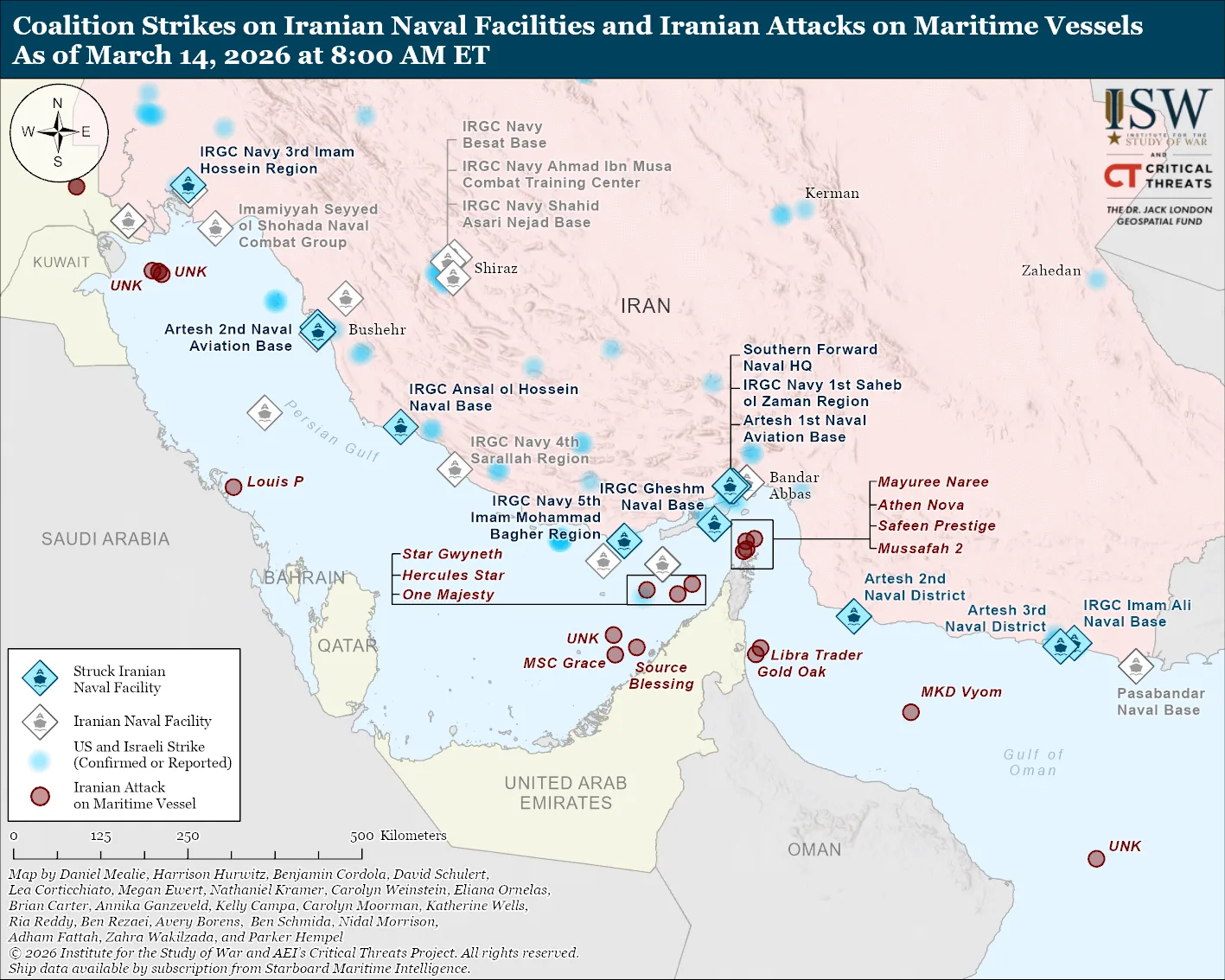
Strait of Hormuz Incidents (2026) — Iran has attacked vessels and threatened to close the strait, through which 20% of global oil passes.

The 2026 War: From Talks to Direct Conflict
Failed 2025 nuclear negotiations and Iran’s continued enrichment prompted Israel to strike first. On February 28, 2026, the U.S. joined with nearly 900 strikes in 12 hours. Goals cited by the Trump administration: destroy nuclear and missile programs, weaken the navy, and degrade proxies — not full regime change.
Iran retaliated with missiles, drones, and proxy attacks. Houthis joined the fight. As of April 1, 2026, the conflict continues with U.S. officials predicting a possible end in “2–3 weeks” once Iranian capabilities are sufficiently degraded.
Global Impacts of the Iran-US Conflict
- Oil Prices: Spike due to Strait of Hormuz threats.
- Regional Stability: Risk of wider war involving Lebanon, Iraq, Yemen.
- U.S. Politics: Domestic debate over war aims and costs.
- Human Cost: Thousands dead or displaced; civilian casualties reported on all sides.
Both Sides’ Perspectives
Iran frames the fight as resistance to U.S. imperialism and defense of sovereignty.
United States sees it as necessary action against a nuclear threat, terrorism sponsor, and destabilizing force.
Video: The Iran War Explained: Nuclear Threat, Ballistic Missiles, and What Comes Next
Conclusion: Is Peace Possible?
The Iran-US conflict is not just about one issue — it is a toxic mix of history, ideology, nuclear fears, and power struggles. The 2026 war marks the most direct confrontation yet. Whether it leads to a new deal, prolonged stalemate, or further escalation depends on diplomacy, military outcomes, and domestic politics in both nations.
For the latest updates on why Iran and the US are fighting, follow credible sources and watch developments around the Strait of Hormuz and nuclear negotiations.
FAQ
Q: Are Iran and the US officially at war in 2026?
A: Yes — limited direct military operations began February 28, 2026, though neither side has formally declared war.
Q: What is the main reason for the conflict?
A: A combination of the 1953 coup legacy, the 1979 Revolution, Iran’s nuclear program, and proxy warfare.
Q: Will the 2026 conflict end soon?
A: U.S. officials have indicated operations could conclude within weeks once key military objectives are met.
This article is optimized for search terms including why Iran and US are fighting, Iran US war 2026, Iran nuclear conflict explained, and US Iran relations history. Share your thoughts or specific questions below!