
Last Updated on 4 months ago by TodayWhy Editorial
If you search for Falun Gong online, you will quickly encounter two sharply different characterizations: a persecuted spiritual movement whose practitioners have been tortured, imprisoned, and killed for their beliefs — or a dangerous “evil cult” that China was right to suppress. The gap between these descriptions is not a matter of interpretation. It is the result of one of the most successful political propaganda campaigns of the past 25 years.
This article examines where the “cult” label came from, who applied it and why, what independent scholars and human rights organizations have actually concluded, and what legitimate — and separate — criticisms of Falun Gong do exist.
What Is Falun Gong?
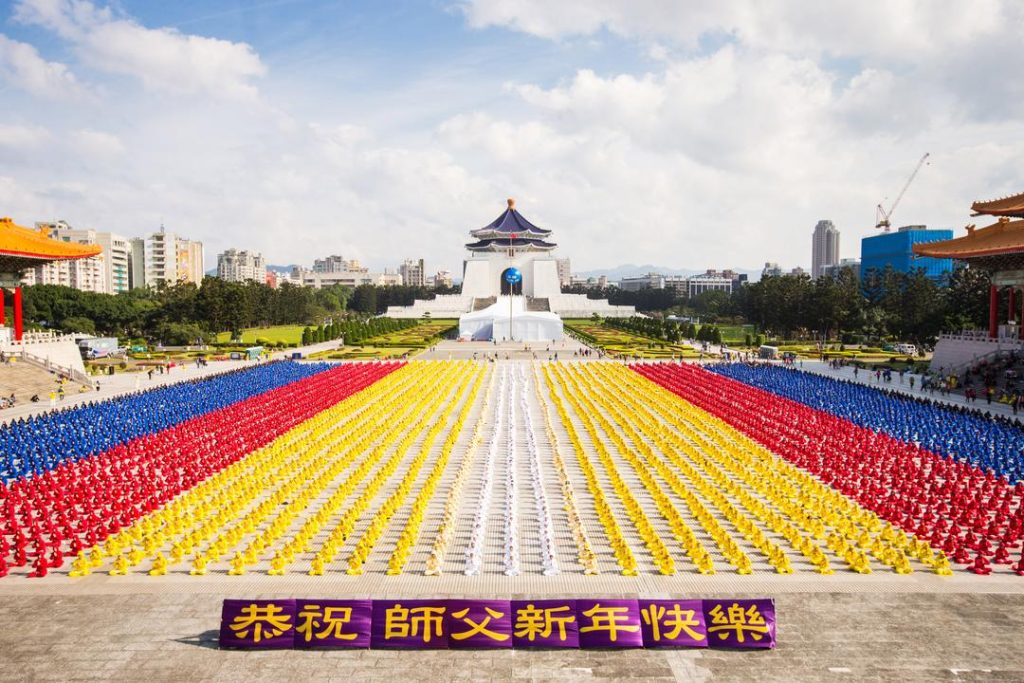
Falun Gong — also called Falun Dafa — is a spiritual practice founded by Li Hongzhi in the Chinese city of Changchun in 1992. It draws on elements of Buddhism and Taoism, combines meditative exercises with moral teachings, and centers on three guiding principles: truthfulness (Zhen), compassion (Shan), and forbearance (Ren).
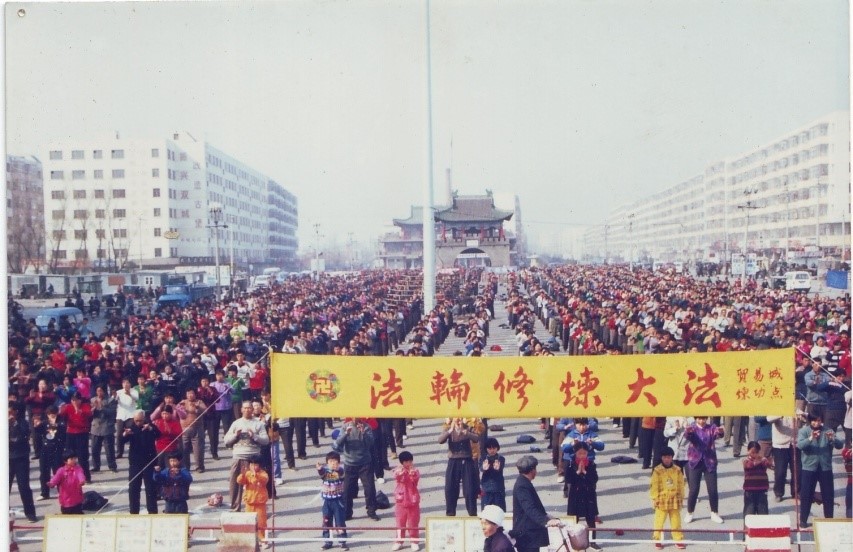
Practitioners meditate, perform a series of gentle physical exercises, and study spiritual texts — primarily the book Zhuan Falun, Li Hongzhi’s primary teaching. The practice spread rapidly throughout China during the 1990s, attracting an estimated 70 to 100 million adherents by 1999 — more than the membership of the Chinese Communist Party at the time.
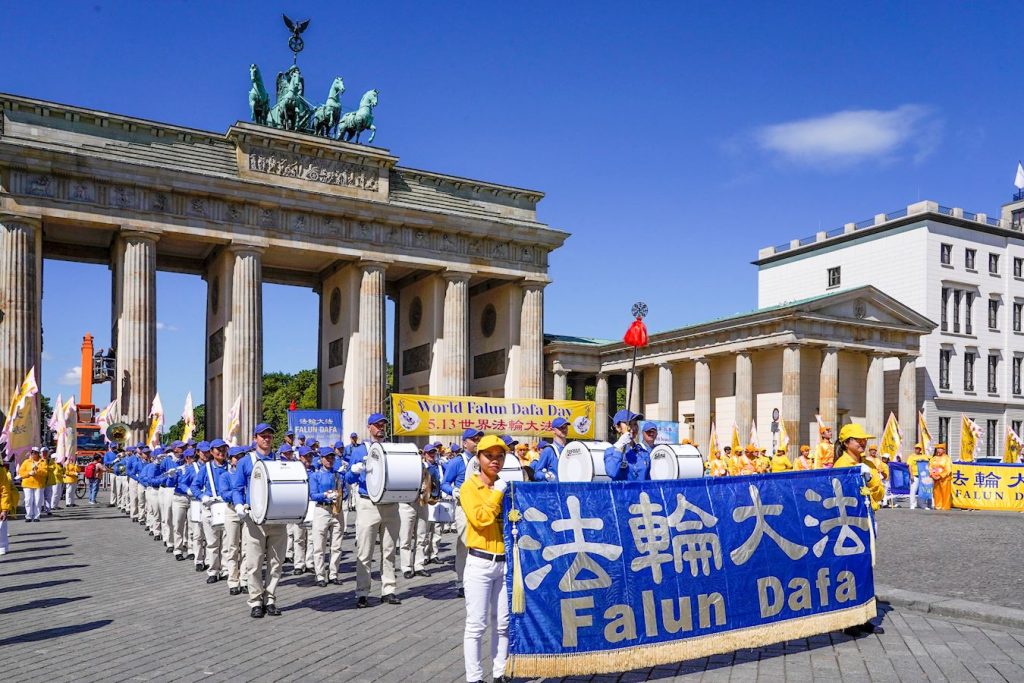
Today, Falun Gong is practiced freely in over 100 countries. It operates no temples, charges no fees, requires no formal membership, and has no clergy. Its organizational structure is decentralized: local volunteers organize outdoor practice sessions and distribute texts without financial compensation.
Academic scholars of religion classify Falun Gong as a new religious movement — the same category used for early Christianity, early Islam, and the many spiritual traditions that began as minority practices within dominant religious cultures.
Where Did the Falun Gong “Cult” Label Come From?
The label did not come from theologians, sociologists, psychologists, or religious scholars. It did not arise from academic study, observation of harmful outcomes, or grassroots concern within China. It came from one man, acting out of personal and political motives, at a specific moment of crisis.
April 25, 1999
Over 10,000 Falun Gong practitioners gather peacefully outside Zhongnanhai, the CCP’s central compound in Beijing, to petition for an end to growing harassment and to seek official recognition of their right to practice. Premier Zhu Rongji meets with representatives and takes a conciliatory stance.
July 20–22, 1999
Communist Party General Secretary Jiang Zemin overrides the Politburo Standing Committee — which did not unanimously endorse the crackdown — and orders a nationwide ban on Falun Gong. Practitioners across China are arrested. Falun Gong is declared an illegal organization. At this point, the word “cult” has not yet been used.
October 1999 — Three months later
With the crackdown underway but generating intense international criticism, Jiang Zemin orders Falun Gong to be branded a “cult” and demands that a new law be passed banning cults. The Washington Post reports on November 9, 1999: “It was Mr. Jiang who ordered that Falun Gong be branded a ‘cult,’ and then demanded that a law be passed banning cults.” A Party official tells the same newspaper: “This obviously is very personal for Jiang.”
This sequence matters enormously. Falun Gong was banned first, and then called a cult — not the reverse. The label was applied retroactively to justify a decision that had already been made for political reasons.
“The crackdown was undertaken to demonstrate and solidify the power of the Chinese leadership… Communist Party sources said that the standing committee of the Politburo did not unanimously endorse the crackdown and that President Jiang Zemin alone decided that Falun Gong must be eliminated.”— The Washington Post, November 9, 1999
Freedom House’s comprehensive 2017 report on Falun Gong confirmed this chronology: “The label only appeared in party discourse in October 1999, months after the crackdown was launched… This suggests that the term was applied retroactively to justify a violent campaign that was provoking international and domestic criticism.”
The Mistranslation: Xiejiao vs. “Evil Cult”
The Chinese term used to describe Falun Gong is xiejiao (邪教). This is a legal and historical category in Chinese law, not a sociological term. Its closest accurate translation is “heretical organization” or “heterodox teachings” — meaning groups that challenge state-sanctioned religious authority, a category with roots stretching back centuries in Chinese governance.
Xiejiao vs. “Evil Cult” — The Translation Gap
Xiejiao (邪教): A Chinese statutory category for groups deemed heterodox or challenging to state religious authority. Translated accurately as “heretical organization.” A broad legal instrument applied to dozens of groups including house churches, Buddhist sects, and Falun Gong.
“Evil cult”: The English rendering promoted by CCP state media — deliberately chosen to trigger Western associations with violent apocalyptic groups like Heaven’s Gate (1997) and Aum Shinrikyo (1995). Amnesty International notes this translation is “misleading.” Freedom House calls it a “manipulated English translation.”
Scholars at Bitter Winter, a journal of religious freedom, have traced the specific political decision behind the translation: the CCP chose “evil cult” rather than the more accurate “heretical organization” partly to appeal to Western audiences — including anti-cult organizations and mainline Christian churches — who associated the word “cult” with violence and manipulation. The translation was a communications strategy, not a linguistic judgment.
As Professor David Ownby, Director of the Centre for East Asian Studies at the University of Montreal and one of the world’s leading scholars on Chinese religions, has written: “The entire issue of the supposed cultic nature of Falun Gong was a red herring from the beginning, cleverly exploited by the Chinese state to blunt the appeal of Falun Gong and the effectiveness of the group’s activities outside China.”
Before the Ban: The Government’s Own Record
One of the most telling pieces of evidence against the “cult” label is the Chinese government’s own behavior toward Falun Gong in the years before the ban. If Falun Gong had genuinely been a dangerous, coercive cult, the government would not have:
- Invited Li Hongzhi to give a lecture at the Chinese embassy in Paris in 1995 — at the government’s explicit invitation
- Invited Li Hongzhi to lecture at the Ministry of Public Security’s University Auditorium in Beijing in December 1993
- Issued a certificate of honor from the China Foundation for Justice and Courage — an affiliate of the Ministry of Public Security — to Li Hongzhi in December 1993
- Published positive coverage of Falun Gong in state media throughout the 1990s, praising its health and social benefits
- Allowed practitioners to receive “healthy citizen awards” at state-organized events
Freedom House’s 2017 report documented this period explicitly: “Throughout the early and mid-1990s, Falun Gong, its practitioners, and founder Li Hongzhi enjoyed substantial government support and positive coverage in state media… State media reports from that period laud the benefits of Falun Gong practice and show adherents receiving ‘healthy citizen awards.'”
The government’s position did not change because new evidence about Falun Gong’s dangers emerged. It changed because the practice had grown larger than the Communist Party — and Jiang Zemin perceived it as a threat to his authority.
What Scholars and Human Rights Groups Conclude
The scholarly and human rights consensus on Falun Gong’s categorization is clear and consistent across independent institutions that have no relationship with each other or with Falun Gong:
“The group [Falun Gong] didn’t meet many common definitions of a cult: its members marry outside the group, have outside friends, hold normal jobs, do not live isolated from society, do not believe that the world’s end is imminent and do not give significant amounts of money to the organization. Most importantly, suicide is not accepted, nor is physical violence… [Falun Gong] is at heart an apolitical, inward-oriented discipline, one aimed at cleansing oneself spiritually and improving one’s health.”— Ian Johnson, Pulitzer Prize-winning journalist, formerly with The Wall Street Journal
“International scholars have repeatedly concluded that Falun Gong does not have the attributes of a cult.”— Freedom House, Battle for China’s Spirit: Religious Revival, Repression, and Resistance under Xi Jinping, 2017
“The entire issue of the supposed cultic nature of Falun Gong was a red herring from the beginning, cleverly exploited by the Chinese state.”— David Ownby, Professor and Director, Centre for East Asian Studies, University of Montreal
A wide range of international institutions — including United Nations Special Rapporteurs, Human Rights Watch, Amnesty International, and democratic governments from the United States to the European Parliament — have consistently characterized the Chinese government’s campaign against Falun Gong as unjustified religious persecution, not as a legitimate government response to a dangerous cult.
Is Falun Gong Actually a Cult? Applying the Academic Definition
Sociologists of religion use specific criteria when evaluating whether a group constitutes a cult. These criteria — developed independently of politics — focus on structural features: isolation, financial exploitation, coercive control, an apocalyptic worldview, and a prohibition on leaving. Applying them to Falun Gong yields a consistent result.
| Academic Cult Criterion | Applies to Falun Gong? |
|---|---|
| Members isolated from family and outside friends | No — practitioners maintain normal social lives |
| Members required to donate significant money | No — Falun Gong charges no fees; books are free online |
| Members prevented from leaving the group | No — practitioners may stop at any time without penalty |
| Members required to live communally, separate from society | No — practitioners hold normal jobs and live in the community |
| Apocalyptic worldview; belief in imminent world end | No |
| Physical violence endorsed or practiced | No — Falun Gong’s response to 25 years of persecution has been entirely nonviolent |
| Hierarchical leadership with coercive authority | No — organization is decentralized; no enforced hierarchy below Li Hongzhi |
| Practices associated with harm (suicide, exploitation) | No — suicide is not accepted; no documented exploitation mechanism outside China |
By these standard criteria — the criteria used by the very anti-cult movements in the West whose language the CCP was trying to co-opt — Falun Gong is not a cult.
📌 Practiced freely in over 100 countries Outside China, Falun Gong has been practiced for 30+ years across the Americas, Europe, Asia-Pacific, and Africa with no legal restrictions. No Western country has designated it a cult or banned it. No country other than China — and those operating under Chinese influence — has taken action against it.
Legitimate Criticisms of Falun Gong That Exist — And Their Limits
Intellectual honesty requires acknowledging that criticisms of Falun Gong exist that are independent of CCP propaganda — and these should be taken seriously on their own terms.
Li Hongzhi’s published writings contain passages that characterize homosexuality in strongly negative terms. In lectures given in Europe in the late 1990s, he stated that homosexuality violated divine standards and that practitioners should abandon it. He has also expressed views on mixed-race relationships that many in the West find objectionable. These are documented in Li’s own texts and lectures and have been reported by secular Western journalists and commentators.
⚠️ A critical distinction Holding theologically conservative or socially objectionable views is not the same thing as operating a coercive cult. Many mainstream religious traditions — including large denominations of Christianity, Islam, and Orthodox Judaism — hold similar positions on homosexuality without being classified as cults. The question for evaluating a group as a cult is not whether its doctrines are acceptable to secular Western society, but whether it coerces, isolates, or harms its members. On those measures, Falun Gong does not qualify.
These criticisms stand on their own — they do not require CCP claims to be valid, and they should be acknowledged transparently. However, the Chinese government’s own use of these criticisms as a propaganda tool should be approached with caution: facts.org.cn, which publishes material about Li Hongzhi’s statements on homosexuality, is operated by Chinese state media entities, and its framing serves to conflate doctrinal conservatism with cult-level coercion.
There are also questions about the relationship between Falun Gong’s spiritual community and affiliated media organizations — particularly The Epoch Times and NTD — which critics argue blend journalism with advocacy in ways that are not always transparent. These are legitimate media ethics questions. They do not, however, bear on whether Falun Gong constitutes a cult by any accepted definition.
The CCP’s Falun Gong Cult Playbook: Same Label, Different Targets
Understanding the “cult” label as a political instrument means recognizing that Falun Gong is not its only target. The Chinese government has used the xiejiao designation against dozens of groups over the decades — including house churches affiliated with Christianity, Buddhist sects, and other qigong movements. The label is not a finding about any group’s characteristics; it is a legal-administrative tool for suppressing unauthorized religious organization.
This pattern is consistent with how authoritarian governments historically manage religious movements that grow beyond state control. The label “cult” — like “heretic,” “enemy of the state,” or “counter-revolutionary” before it — serves as a mechanism to shift public sympathy away from victims and toward the persecutors. As the Washington Post reported in 1999, Jiang Zemin’s goals in applying the label were explicit: to undercut public sympathy for Falun Gong, to shift scrutiny from the state’s violence to the victim’s character, and to prepare the ground for escalating repression.
The label has largely worked in China, where state media control is total. Outside China, it has been partially successful — absorbed by some journalists and commentators who repeated it without scrutiny. But the independent scholarly and human rights record is clear: the “cult” designation is a political label, not a factual one.
📖 Related: Why Is Falun Gong Banned in China? — The Full History and Global Significance
📖 Related: Why Is Shen Yun Called a Cult — Separating CCP Propaganda from Legitimate Questions
Frequently Asked Questions
Why does China call Falun Gong a cult?
China’s “cult” label for Falun Gong was not the result of theological analysis or scholarly study. It was a political decision made by Communist Party chief Jiang Zemin in October 1999 — three months after Falun Gong was banned — specifically to justify an already-violent crackdown that was generating international criticism. The Washington Post reported at the time that “it was Jiang who ordered that Falun Gong be branded a cult, and then demanded that a law be passed banning cults.”
What does xiejiao actually mean in Chinese?
Xiejiao (邪教) translates most accurately as “heretical organization” or “heterodox teachings” — a legal and historical term for groups that challenge state-approved religious authority. The CCP, according to Freedom House, “seized on a manipulated English translation” to render it as “evil cult” — deliberately chosen to trigger Western associations with violent groups like Heaven’s Gate and Aum Shinrikyo, and to delegitimize Falun Gong internationally.
Do independent scholars consider Falun Gong a cult?
No. Freedom House, Pulitzer Prize-winning journalist Ian Johnson, and leading Chinese religions scholar David Ownby of the University of Montreal have all concluded that Falun Gong does not meet the standard academic definition of a cult. Scholars classify it as a new religious movement. It is practiced freely in over 100 countries without legal restrictions.
Are there legitimate criticisms of Falun Gong or its founder Li Hongzhi?
Yes. Li Hongzhi’s published writings include statements characterizing homosexuality negatively and views on racial mixing that many in the West find objectionable. These criticisms are made by secular Western commentators independently of the CCP. However, holding objectionable views on social topics does not make a spiritual movement a cult by academic definition, and none of these views involve the coercion, isolation, or violence that define cult behavior.
Was Falun Gong ever praised by the Chinese government?
Yes. Throughout the early and mid-1990s, Chinese state media, government officials, and the Ministry of Public Security praised Falun Gong for its health benefits and contribution to social stability. Li Hongzhi was invited to lecture at Chinese embassy premises abroad and at the Ministry of Public Security’s university in Beijing. The “cult” label emerged only after the CCP decided to eliminate the movement — not before.
Does Falun Gong meet the academic criteria for a cult?
No. By standard sociological criteria, practitioners marry outside the group, maintain external friendships, hold normal jobs, are not isolated from society, do not donate significant money, and do not face penalties for leaving. There is no enforced hierarchy, no coercive isolation, and no history of violence. Scholars classify Falun Gong as a new religious movement.
Sources & Further Reading
- Freedom House — Battle for China’s Spirit: Falun Gong — Religious Freedom in China (2017)
- Amnesty International — Crackdown on Falun Gong and Other So-Called “Heretical Organizations”
- UK Home Office — Country Policy and Information Note: China: Falun Gong (November 2025)
- Bitter Winter — What Is a Xie Jiao? (Academic analysis of the term)
- U.S. Congressional Record (govinfo.gov) — Falun Gong in China: Review and Update
- Falun Dafa Information Center — Is Falun Gong a “Cult”?
- Falun Dafa Information Center — CCP Lies: An “Evil Cult”?