
Last Updated on 1 month ago by TodayWhy Editorial
Some wars begin with gunfire. Others begin with a signature on a contract. There are no tanks crossing borders, no warships firing shells, no fighter jets screaming across the sky — only corporate acquisitions, investment agreements, intellectual property transfers, and patents quietly changing hands. And one day, when people look back, what they find missing is not a territory, but the industrial future of a nation.
That is the story now unfolding between Germany and China. And a landmark study published in June 2026 has put a concrete number on the scale of what has been lost.
The IW Study: 11,300 Patents and What They Represent
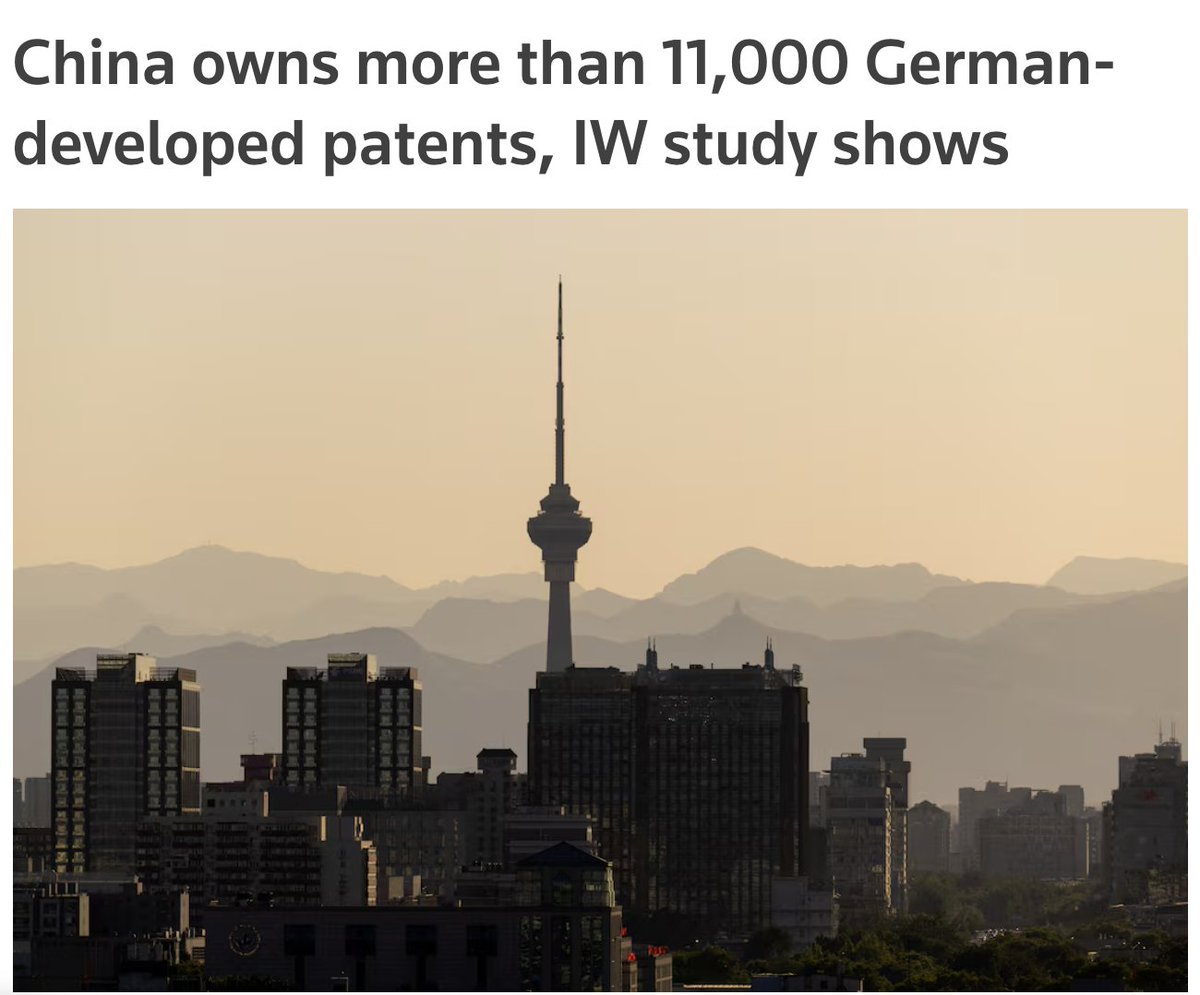
Commissioned by the Bertelsmann Foundation, a new study by the German Economic Institute (IW) released on June 2, 2026, delivers a sobering headline: China now controls more than 11,300 patents that were developed in Germany over the past two decades.
The broader context is equally striking. Nearly one in three inventions developed in Germany is now owned by a foreign entity. Of those foreign-held patents, U.S. companies account for roughly one-third and Swiss entities for about 11 percent. But it is China’s position — and the way it has accumulated these holdings — that draws the study’s sharpest concern.
The shift is most pronounced in mechanical engineering, one of Germany’s most strategically vital sectors. Patent applications in that field climbed from approximately 3,300 in 2000 to 4,300 in 2022, and Chinese entities have been particularly active in acquiring technologies in precisely that space.
These are not just abstract statistics. Each patent represents an invention born in a German laboratory, developed by German engineers, and financed through German institutions — but now legally owned and commercially controlled by a foreign power with explicitly stated ambitions to surpass Western industrial capacity.
How China Acquired Germany’s Technology
The process did not happen overnight, and it was not accidental. It followed a recognizable and deliberate escalation:
- Customer: China began as a buyer of German technology — importing machinery, automobiles, and industrial equipment.
- Production partner: Chinese companies became manufacturing partners, gaining exposure to German production processes.
- Joint venture and localization requirements: Beijing required foreign firms to form joint ventures with Chinese partners and transfer technical knowledge as a condition of market access.
- Equity acquisitions: Chinese entities purchased minority and majority stakes in German companies, gaining access to proprietary technologies from within.
- Direct patent ownership: Through acquisitions of firms and their intellectual property portfolios, or through the assignment of patents during joint development agreements, Chinese entities came to hold the underlying legal rights to the technology itself.
Once China owned the technology, the relationship changed fundamentally. The student had become the competitor — equipped with the same core knowledge, able to manufacture at larger scale, at lower cost, and backed by the full weight of state industrial policy.
Germany as Europe’s Industrial Core
To understand why China’s patent acquisition in Germany matters so far beyond bilateral trade statistics, it is essential to understand Germany’s unique role within the European Union.
Germany is not merely the EU’s largest economy. It is the continent’s manufacturing backbone: automobiles, industrial machinery, chemicals, automation systems, precision engineering, production line technologies. If France represents Europe’s political and military center, and Brussels its institutional machinery, Germany is the engine that powers European industrial output.
This is precisely why Beijing did not need to target all of Europe simultaneously. Control German technology, create dependencies in German supply chains, bind German corporations to the Chinese market — and the rest of Europe becomes far harder to coordinate against Beijing’s interests.
Germany’s voice carries enormous weight in EU trade policy, industrial strategy, and foreign relations. When German corporations have deep financial interests in China, Berlin finds it politically difficult to support genuinely assertive policies toward Beijing. And when Berlin hesitates, Brussels hesitates. When Germany is divided, smaller EU member states are even less likely to take the lead.
The Strategic Asymmetry: Open Europe, Closed China
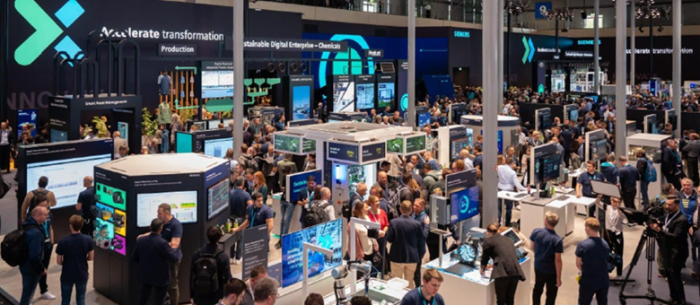
IW expert Oliver Koppel, one of the study’s authors, acknowledged that foreign patent ownership is not inherently problematic — companies around the world hold patents across borders, and that is normal competition. But he was explicit about what makes China’s approach different.
Beijing, Koppel noted, directs Western acquisitions strategically while keeping China’s own domestic market relatively closed to foreign investors. That is an imbalance — and it is one of the most consequential structural asymmetries in the global economy today.
Europe opened its markets to Chinese investment under the assumption that reciprocal openness would follow. It has not. The result is a one-directional flow of strategic technology: outward from Europe to China, with no meaningful counterflow of access, leverage, or comparable Chinese technologies moving in the opposite direction.
As Koppel argued, European countries need to monitor much more closely where strategically relevant technologies are migrating — because the current rate of transfer constitutes a structural weakening of Europe’s long-term industrial position.
The Automotive Lesson: From Customer to Competitor
No sector illustrates this trajectory more painfully than the automobile industry.
For years, Germany’s automakers viewed China primarily as their largest and most profitable export market. Volkswagen, BMW, and Mercedes-Benz built enormous sales operations there, and China accounted for a substantial share of their global revenue. The arrangement seemed mutually beneficial: German firms sold premium cars; Chinese consumers bought them enthusiastically.
But China was never content to remain a buyer. While German brands were expanding their dealership networks in Shanghai and Beijing, Chinese industrial policy was channeling massive investment into electric vehicles, battery technology, software-defined mobility, and the mineral supply chains that underpin the entire sector.
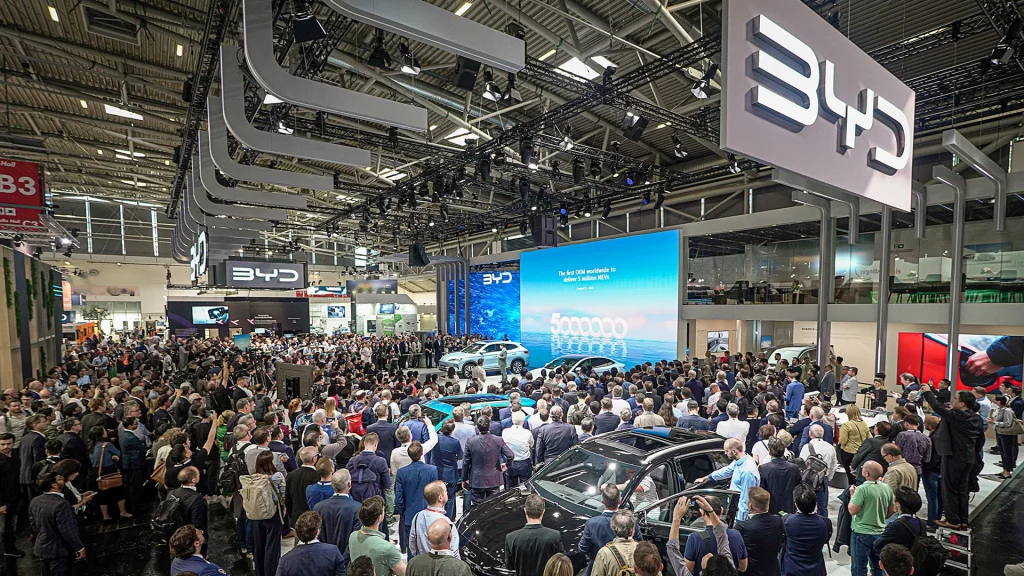
The result is now visible in European showrooms and trade policy debates: Chinese electric vehicles are competing directly against German automakers on European soil. What began as a customer relationship has become a competitive threat — one that did not happen by accident but by strategic design.
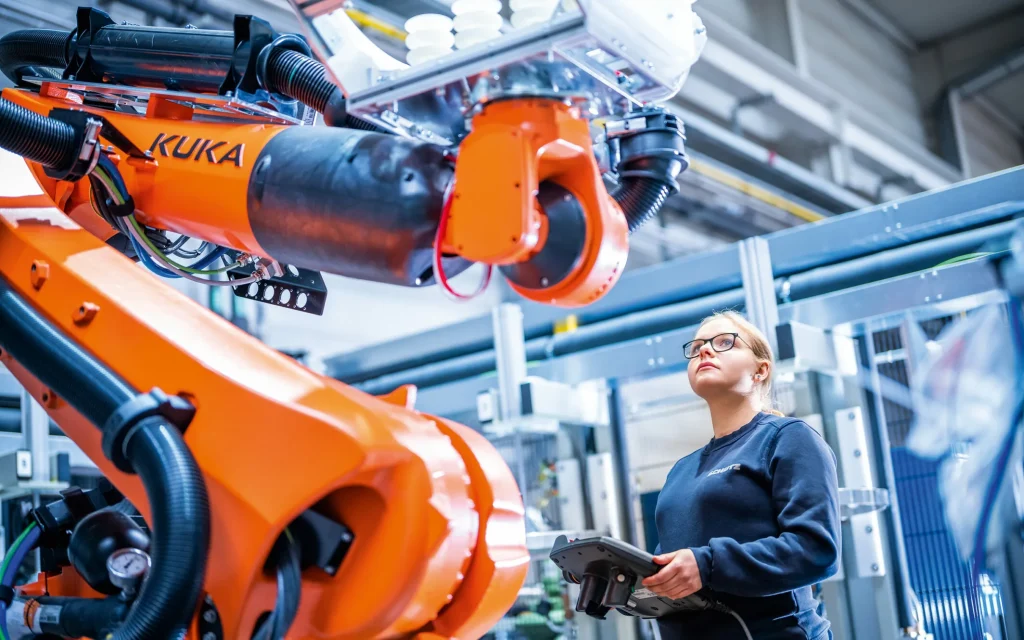
The automobile sector was first. Industrial machinery, robotics, energy equipment, and smart manufacturing systems are the logical next chapters in the same playbook.
Germany’s Declining R&D Investment
The patent acquisition story is compounded by a parallel and deeply concerning trend in Germany’s own innovation capacity.
In 2000, Germany ranked third globally in research and development spending, with outlays that were roughly double those of China at the time. By 2021, Germany had fallen to sixth place in the global R&D rankings — while China’s R&D investment has grown approximately twentyfold over the same period.
This is not merely a relative decline caused by China’s dramatic rise. It reflects an absolute weakening of Germany’s domestic innovation infrastructure at precisely the moment when the global competition for technological leadership is intensifying.
The IW study notes that Germany’s domestic innovative strength is weakening due to insufficient investment in research and development. When a country both loses ownership of its existing innovations and reduces the pace of generating new ones, the compounding effect on long-term industrial competitiveness is severe.
What This Means for European Strategic Autonomy
The political implications extend well beyond economics. In the 20th century, power resided in coal, steel, oil, armies, and factories. In the 21st century, it resides in semiconductors, batteries, data, artificial intelligence, patents, and intelligent manufacturing systems.
Whoever owns the technology writes the rules. Whoever holds the patents sets the standards. Whoever sets the standards controls the market. And whoever controls the market wields political power that is more durable and harder to resist than conventional military force.
A Europe that loses control of its core technologies — through patent migration, supply chain dependence, and market entanglement — cannot be strategically autonomous regardless of the rhetoric it employs. True strategic autonomy requires the capacity to act independently: to produce, to innovate, to set standards, and to withhold cooperation when necessary. None of those capacities are available to an economy whose most valuable intellectual property sits in foreign hands.
The European Union has spoken at length in recent years about reducing strategic dependencies. But as analysts have noted, efforts to reduce dependence on American technology infrastructure — while simultaneously deepening reliance on Chinese supply chains, critical minerals, green technology, and capital — do not produce autonomy. They substitute one form of dependence for another that is, by most assessments, considerably more asymmetric and less aligned with European values.
What Germany and the EU Must Do
The answer is not a blanket economic decoupling from China. That is neither realistic nor necessary. Germany and China will continue to trade, and some degree of economic interdependence is both inevitable and beneficial.
But Germany — and the EU — must develop the capacity to distinguish clearly between:
- Normal commercial trade versus the transfer of strategic industrial capabilities;
- Healthy foreign investment versus the acquisition of core technologies that determine long-term competitiveness;
- Short-term corporate profit versus long-term national and continental industrial security.
A company may need to sell into the Chinese market to survive the next financial quarter. But a nation cannot sell its technological future simply to rescue a balance sheet. Corporations operate on quarterly timelines; governments must think in generational ones.
Specific policy measures that analysts and the IW study point toward include: strengthened foreign investment screening mechanisms with explicit criteria for strategic technology sectors; reciprocity requirements in market access negotiations with China; increased domestic R&D investment to rebuild Germany’s innovation pipeline; and closer coordination within the EU on which technologies should be subject to enhanced export controls and acquisition review.
Without these measures, Germany risks becoming what Beijing’s strategy has long aimed to engineer: a nominal industrial power whose most critical technological building blocks are controlled by the very competitor it is nominally competing against.
Frequently Asked Questions
How many German-developed patents does China own?
According to a June 2026 study by the German Economic Institute (IW), commissioned by the Bertelsmann Foundation, China now owns more than 11,300 patents that were originally developed in Germany over the past two decades.
What share of German inventions are held by foreign owners?
Nearly one in three inventions developed in Germany is now owned by a foreign entity. U.S. companies hold roughly one-third of those foreign-held patents; Swiss owners hold about 11 percent. China is notable for the state-directed nature of its acquisition strategy.
Which German sectors are most targeted by Chinese patent acquisitions?
Mechanical engineering is the most affected sector. Patent applications there rose from around 3,300 in 2000 to 4,300 in 2022, and Chinese entities have been especially active in acquiring technologies in that space.
Why is China’s patent strategy considered a strategic threat rather than normal competition?
IW expert Oliver Koppel explains that Beijing directs its Western acquisitions strategically while keeping China’s own domestic market relatively closed to foreign investors. This asymmetry — Europe open, China closed — means Germany transfers industrial knowledge outward without receiving comparable access or leverage in return.
How has Germany’s R&D position changed relative to China?
Germany ranked third globally in R&D spending in 2000, with outlays twice as high as China’s. By 2021 it had fallen to sixth place, while China’s R&D spending has grown approximately twentyfold over the same period.
What can Germany and the EU do to address this?
Experts recommend strengthened foreign investment screening for strategic technologies, reciprocity requirements in trade negotiations with China, increased domestic R&D investment, and closer EU-level coordination on export controls and acquisition review for sectors of strategic importance.