
Last Updated on 2 weeks ago by TodayWhy Editorial
Updated: The Senate on Sept. 28 passed a bill targeting individuals involved in forced organ harvesting in China. The bipartisan Falun Gong and Victims of Forced Organ Harvesting Protection Act (S.4009) passed with unanimous consent. It’s now headed to the House for approval.
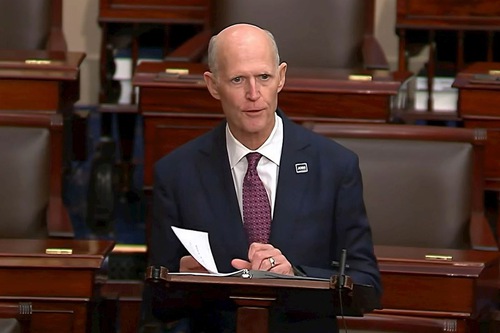
On June 17, 2026, the Senate Foreign Relations Committee advanced S.4009, the Falun Gong and Victims of Forced Organ Harvesting Protection Act, sending it toward a possible full Senate vote. It’s a bipartisan bill, co-sponsored by Senator Ted Cruz (R-TX) and Senator Jeff Merkley (D-OR), and it arrives just days after the Supreme Court closed off a separate legal path for Falun Gong victims seeking accountability through the courts. The timing isn’t a coincidence — it’s a shift in strategy.
What the Bill Actually Does
S.4009 doesn’t create a new way for victims to sue anyone. Instead, it builds a sanctions and reporting regime aimed at the Chinese state apparatus behind forced organ harvesting. Three mechanisms do the work:
- A sanctions list. Within 180 days of enactment, the President must submit a list of foreign persons who knowingly engaged in or facilitated forced organ harvesting in China, updated regularly afterward.
- Real penalties for anyone on that list. People named face frozen U.S. assets, a ban on transactions with American persons or entities, revoked visas, and a bar on entering the country — the same toolkit used in other sanctions regimes like Magnitsky-style lists.
- A mandatory State Department report. Within a year, the Secretary of State, working with Health and Human Services and the National Institutes of Health, must formally assess whether China is or has been systematically harvesting organs from prisoners of conscience — and if so, whether that conduct rises to the level of an atrocity crime under international law.
That last provision is unusually specific for a sanctions bill: it requires the government to evaluate not just isolated incidents but transplant volume data, donor numbers, and how quickly organs are procured — a detail relevant because investigators have long argued that China’s reported procurement timelines are too fast to be explained by voluntary donation alone.
Why Now
The bill was introduced back in March 2026, but its June 17 advancement out of committee landed in the same week as the Supreme Court’s ruling dismissing Falun Gong practitioners’ Alien Tort Statute lawsuit against Cisco Systems over its alleged role in Chinese surveillance — a decision that further narrowed the path to holding companies liable in U.S. courts for enabling abuses in China. Civil litigation under that 1789 law has been getting harder to win for two decades. A sanctions bill routed through Congress sidesteps that problem entirely: it doesn’t need a plaintiff, a court, or proof that conduct happened on U.S. soil. The President can act on the list directly.
The legislative momentum has been building for months. An amendment added June 15 cited the State Department’s 2023 International Religious Freedom Report and a New York City Bar Association study, both pointing to continued evidence of forced organ harvesting targeting Falun Gong practitioners and Uyghurs. Senator Merkley framed it as accountability for “horrific consequences” stemming from China’s campaign of repression, while Senator Cruz has described the practice as a state-sponsored industry targeting people for their faith.
The committee vote also came just one day after the full Senate unanimously passed a separate resolution (S.Res. 444) condemning Xi Jinping for crimes against humanity, including the organ harvesting of prisoners of conscience — a sign of how much bipartisan momentum has built around this issue in June 2026.
The Evidence Behind the Push
The bill doesn’t operate in a vacuum. It follows years of independent findings that TodayWhy has covered in depth in our reporting on the organ harvesting allegations and the first known survivor to come forward. The China Tribunal, an independent international panel chaired by Sir Geoffrey Nice KC — the lead prosecutor in the Milošević case at The Hague — concluded after a year of hearings that forced organ harvesting from prisoners of conscience in China had occurred for a substantial period, involving a substantial number of victims, and that it amounts to crimes against humanity. Nine United Nations Special Rapporteurs separately called on China in 2021 to respond to the allegations.
S.4009 is also not the first attempt at legislation on this issue — it builds on years of prior bills that stalled, which is part of why its bipartisan committee passage this June is being treated as meaningful progress rather than routine procedure.
What Happens Next
Committee passage doesn’t make S.4009 law. It still needs a vote on the Senate floor, passage in the House, and a presidential signature. If it clears all three, the sanctions authority would run for five years from enactment, with the President retaining a national-security waiver to avoid sanctioning someone when doing so isn’t in U.S. interests — a standard feature of similar sanctions laws that also gives the executive branch room to limit enforcement in practice.
For Falun Gong practitioners and human rights advocates, the bill represents a different kind of accountability than a lawsuit would have provided: not compensation for individual victims, but a structural attempt to cut off the people responsible from the U.S. financial system and from American soil. Whether it becomes the tool its sponsors intend depends on how aggressively a future administration uses the sanctions list it creates.
FAQ about the Falun Gong Protection Act
What does S.4009 actually do?
It requires the President to compile a sanctions list of foreign individuals who knowingly engaged in or facilitated forced organ harvesting in China, impose asset freezes and travel bans on them, and directs the State Department to formally report on whether China is engaged in systematic forced organ harvesting.
Who introduced the bill?
Senator Ted Cruz (R-TX) and Senator Jeff Merkley (D-OR) introduced it in March 2026. Additional cosponsors, including Senator Adam Schiff (D-CA) and Senator Todd Young (R-IN), signed on in the months that followed.
Does this bill let victims sue anyone?
No. It’s a sanctions and reporting bill, not a private right of action. It works through executive branch enforcement rather than civil lawsuits — a deliberate alternative after the Supreme Court narrowed lawsuit-based accountability in a separate case involving Cisco.
Has the Senate passed this bill yet?
As of late June 2026, the Senate Foreign Relations Committee has advanced it with an amendment. It still requires a full Senate vote, House passage, and a presidential signature before it can become law.