

Last Updated on 5 months ago by TodayWhy Editorial
For more than six decades, the United States has maintained one of the longest and most comprehensive economic blockades in modern history — against the island nation of Cuba, just 90 miles from the coast of Florida.
The blockade has survived twelve U.S. presidencies, the end of the Cold War, the death of Fidel Castro, and a brief period of diplomatic thaw under Barack Obama. It has been condemned by the United Nations General Assembly every year since 1992, with near-universal support. And in early 2026, under President Donald Trump, it was dramatically escalated into what critics call a total oil blockade — cutting off Cuba’s primary energy source and triggering the island’s worst humanitarian crisis since the 1990s.
So why is the US blockading Cuba? The answer is not simple. It stretches from the geopolitics of the Cold War and the shadow of nuclear annihilation to modern accusations of terrorism sponsorship, human rights violations, alignment with adversarial powers, and a frank desire for regime change. It involves Cuban exiles in Florida, billion-dollar property disputes, and a 90-mile stretch of ocean that the United States has never stopped viewing as its strategic backyard.
TodayWhy tells the full story — from 1959 to today.
1. The Origins: Fidel Castro and the Cuban Revolution (1959)
To understand why the United States blockades Cuba, you have to begin on January 1, 1959, when a guerrilla commander named Fidel Castro rode into Havana at the head of a revolutionary army and overthrew Fulgencio Batista.
Cuba Before Castro: An American Backyard
Before the revolution, Cuba was deeply intertwined with American interests. U.S. corporations owned enormous tracts of Cuban land — sugar plantations, utilities, oil refineries, and hotels. Batista’s regime was authoritarian and corrupt, but it was also pro-American and open to U.S. business. Cuba was, in the blunt language of the era, part of the American sphere of influence in the Western Hemisphere.
Castro’s Revolution Changes Everything
Castro’s revolution was not initially communist in its public framing. But it was militantly nationalist and anti-imperialist. When Castro moved to nationalize American-owned properties and businesses — without compensation — without warning, and with explicit ideological justification, U.S.-Cuban relations entered a rapid deterioration.
Castro also turned to the Soviet Union, which was happy to extend military and economic support to a defiant revolutionary government 90 miles from Miami. In U.S. strategic thinking, this was not merely an economic dispute — it was the Cold War arriving at America’s doorstep.
2. Eisenhower Strikes First: The Embargo’s Roots (1960)
President Dwight D. Eisenhower did not wait for Kennedy. In 1960, his administration began applying economic pressure on Cuba — initially through subtle measures designed to destabilize the new regime. When these backfired, the approach hardened.
Eisenhower began by cutting the U.S. sugar quota — Cuba’s primary export revenue — and authorized the CIA to train and equip Cuban exiles for an eventual invasion to topple Castro. The plan would ultimately be executed by the next president, with catastrophic results.
The logic of economic pressure was explicit from the start: squeeze Cuba financially hard enough, and popular discontent would force Castro from power — or at minimum prevent the spread of his revolutionary model to other Latin American nations. The Monroe Doctrine, which asserted the Western Hemisphere as an American sphere free of outside power interference, provided the ideological justification.
Source: Mises Institute – A Brief History of the Enduring American Embargo Against Cuba
3. Kennedy and the Full Embargo (1962)
President John F. Kennedy formalized and escalated what Eisenhower had begun.
On February 3, 1962, Kennedy signed Proclamation 3447, declaring “an embargo upon all trade between the United States and Cuba.” His stated rationale was unambiguous: “The present Government of Cuba is incompatible with the principles and objectives of the Inter-American system.”
The night before he signed the proclamation, Kennedy sent his press secretary Pierre Salinger to buy as many Cuban cigars as he could find — Salinger returned with 1,200 Petit Upmann cigars, which Kennedy promptly signed the embargo to prohibit anyone else from importing.

The embargo was comprehensive: it suspended all trade, severed commercial relationships, and prevented U.S. citizens from traveling to the island. It was not merely a trade dispute — it was a declaration that the U.S. would use economic isolation as a weapon to bring down a government it considered hostile to American interests and incompatible with hemispheric order.
Source: Mises Institute – Brief History of the American Embargo Against Cuba | Britannica – Cuba Embargo Debate
4. The Cuban Missile Crisis: When the Blockade Became Literal (1962)
Eight months after the full trade embargo was imposed, the Cuban crisis reached its most dangerous apex — and the word “blockade” acquired its most literal, terrifying meaning.
October 1962: 13 Days from Nuclear War
On October 14, 1962, a U.S. U-2 spy plane photographed Soviet nuclear missile launch sites under construction in Cuba. President Kennedy was briefed two days later. For the next thirteen days, the world came closer to nuclear war than at any other point in history.
Kennedy’s response was a naval “quarantine” — he deliberately avoided the word “blockade,” which under international law constitutes an act of war. A ring of U.S. Navy warships surrounded Cuba, with orders to intercept any Soviet vessels carrying offensive military equipment to the island.
The JFK Library describes the decision simply: “Kennedy decided to place a naval blockade, or a ring of ships, around Cuba. The aim of this ‘quarantine,’ as he called it, was to prevent the Soviets from bringing in more military supplies.”
Why Cuba Accepted Soviet Missiles
From the Soviet and Cuban perspective, the missiles were a response to American aggression. The U.S. had already attempted to overthrow Castro through the Bay of Pigs invasion in April 1961 — a CIA-organized attack by Cuban exile forces that failed disastrously. Castro and Khrushchev saw the missiles as deterrence against the next U.S. attempt.
The crisis was resolved on October 28, when Khrushchev agreed to remove the missiles in exchange for a U.S. pledge not to invade Cuba and a secret agreement to remove U.S. Jupiter missiles from Turkey. The naval blockade of October 1962 was lifted — but the broader trade embargo of February 1962 remained, and has never been lifted since.
Source: JFK Library – Cuban Missile Crisis | HISTORY – Cuban Missile Crisis | U.S. State Department – Office of the Historian
5. Cold War: Communism, Proxies, and the Monroe Doctrine
Through the 1960s, 1970s, and 1980s, the U.S. justification for maintaining and tightening the embargo was rooted in the Cold War logic of containment.
Cuba as a Soviet Proxy
Cuba received massive Soviet economic and military subsidies — at its peak, Soviet support amounted to roughly $4–6 billion per year. Cuba deployed troops to support Soviet-aligned forces in Angola and Ethiopia, and supported revolutionary movements across Latin America. The U.S. State Department added Cuba to its State Sponsors of Terrorism list in 1982, citing its support for communist rebels in Africa and Latin America.
President Johnson expanded the embargo’s multilateral reach in 1964, attempting to prevent other countries from trading with Cuba. Most of Europe and Latin America eventually resumed relations with Cuba anyway, but the U.S. blockade remained.
The Monroe Doctrine Dimension
Underlying all of the specific justifications was a deeper structural principle: the Monroe Doctrine (1823), which established the Western Hemisphere as a zone in which the United States would not tolerate outside great-power interference. A Soviet-allied communist government 90 miles from Florida was not merely an ideological affront — it was a direct challenge to this foundational principle of American foreign policy.
Every U.S. administration from Eisenhower through Reagan maintained and in some cases tightened the embargo for variations on this theme: Cuba was a Soviet satellite, an exporter of revolution, a security threat to the United States and its hemispheric allies.
Source: Britannica – Cuba Embargo | WOLA – Understanding the Failure of the US Cuba Embargo
6. The Helms-Burton Act (1996): Cementing the Embargo in Law
The fall of the Soviet Union in 1991 removed the Cold War justification for the embargo — but rather than liberalizing Cuba policy, the United States tightened it.
The Trigger: Shooting Down Civilian Aircraft
In February 1996, the Cuban Air Force shot down two civilian aircraft flown by Brothers to the Rescue, a Cuban-American humanitarian organization that was flying over the Florida Straits. Four U.S. citizens were killed. The outrage in the United States — particularly in the Cuban-American community in Florida — was immediate and intense.
President Clinton, under enormous political pressure, signed the Cuban Liberty and Democratic Solidarity Act of 1996 — universally known as the Helms-Burton Act — into law. The Act:
- Codified the existing embargo into statute, meaning that only Congress — not the president — could lift it.
- Declared that the Castro government’s acts, “including systematic human rights violations, are a threat to international peace.”
- Created Title III, allowing U.S. citizens (including naturalized Cuban-Americans) to sue foreign companies conducting business involving properties confiscated by Cuba after the 1959 revolution — a provision so aggressive that every president from Clinton through Obama suspended it, until Trump activated it in 2019.
- Extended the embargo’s reach to foreign companies, threatening sanctions against any non-U.S. business that invested in Cuba using confiscated American property.
The Helms-Burton Act transformed the embargo from an executive policy (which a president could lift by executive order) into a statutory framework that only a Congressional majority could undo. This was a deliberate strategy by hardline Cuba policy advocates — primarily the Cuban-American lobby, led by the Cuban American National Foundation (CANF) — to lock in the policy against future administrations that might pursue normalization.
Source: Mises Institute – Brief History of the American Embargo Against Cuba | Yale Review of International Studies – Helms-Burton Act
7. State Sponsor of Terrorism
One of the most consequential designations in the U.S. approach to Cuba is the State Sponsor of Terrorism (SSOT) label.
Cuba was first designated in 1982, citing its support for revolutionary movements and communist insurgencies in Africa and Latin America. The designation carries severe practical consequences:
- Prohibition on arms-related exports and sales
- Restrictions on U.S. foreign assistance
- Prohibition on U.S. government procurement from Cuban entities
- Restrictions on financial transactions
- Effective exclusion from the international banking system, making it extremely difficult for Cuba to conduct dollar-denominated transactions
The designation has been added and removed strategically over the decades. The Obama administration removed Cuba from the SSOT list in 2015 as part of normalization. Trump’s first term ended with a last-minute re-designation of Cuba in January 2021. Biden declined to reverse it. Trump’s second term doubled down, maintaining the designation and using it as the legal foundation for expanded financial restrictions on Havana.
The Trump White House’s justification in 2026 cited Cuba’s ties to Russia, China, Iran, Hamas, and Hezbollah — framing Cuba not merely as a communist holdout but as part of a broader network of U.S. adversaries.
Source: White House Fact Sheet – Trump Sanctions on Cuba | Congress.gov – U.S. Policy Toward Cuba
8. Obama’s Thaw — and Its Reversal
The most significant departure from the embargo consensus came under President Barack Obama, who in December 2014 announced a historic normalization of U.S.-Cuba relations in a coordinated announcement with Cuban President Raúl Castro.
What Obama Did
- Restored full diplomatic relations, reopening the U.S. Embassy in Havana and the Cuban Embassy in Washington.
- Removed Cuba from the State Sponsors of Terrorism list.
- Eased travel restrictions for U.S. citizens.
- Expanded permitted financial transactions.
- Allowed some U.S. commercial activity in Cuba.
Obama argued that 50 years of isolation had failed to produce regime change, and that engagement was more likely to advance American values and Cuban human rights than continued economic strangulation. He visited Havana in March 2016 — the first U.S. president to visit Cuba since Calvin Coolidge in 1928.
The Limits of the Thaw
Obama’s normalization was executive action only — he could not unilaterally lift the Helms-Burton embargo, which required Congressional action. The Republican Congress refused to move. The core economic embargo remained in place throughout his presidency.
Trump Reverses It
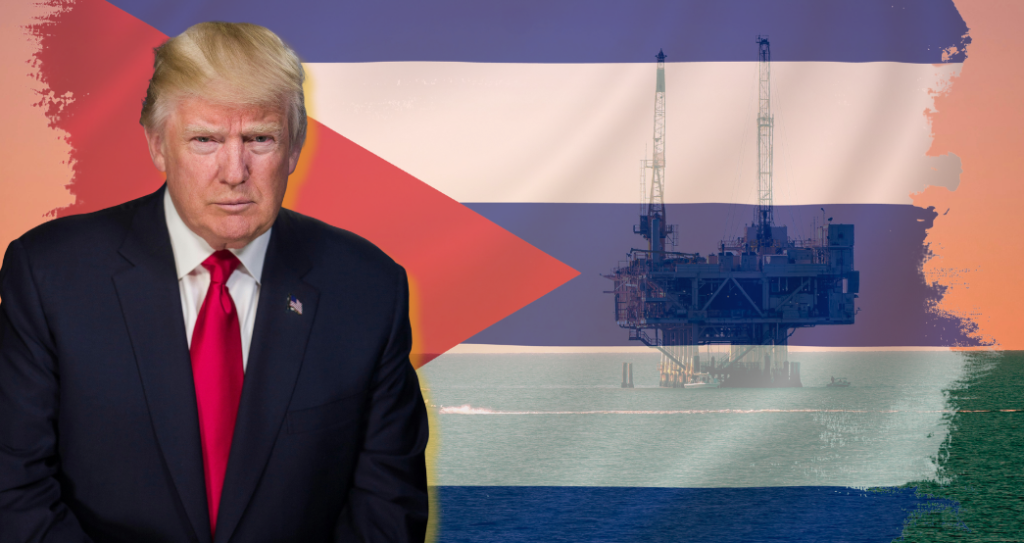
Within months of taking office in 2017, Donald Trump reversed most of Obama’s executive-level changes. Travel restrictions were reimposed. Financial transactions were restricted. And in 2019, Trump activated Title III of Helms-Burton for the first time — unleashing a wave of lawsuits against foreign companies operating in Cuba.
Source: WOLA – Understanding the Failure of the US Cuba Embargo
9. Trump’s First Term “Maximum Pressure” (2017–2021)
Trump’s first term saw a systematic tightening of every available pressure point on Cuba, driven primarily by Secretary of State Marco Rubio.
Key actions included:
- Reimposing travel restrictions on U.S. tourists.
- Restricting financial transactions with Cuban military-controlled entities.
- Activating Title III of Helms-Burton (April 2019), enabling lawsuits against foreign investors.
- Restricting remittances from Cuban-Americans to their families in Cuba.
- Re-designating Cuba as a State Sponsor of Terrorism in January 2021 — a final-days action designed to make Biden’s path to normalization more difficult.
The stated goals of Trump’s “maximum pressure” campaign were: promoting human rights in Cuba, fostering a private sector independent of government control, and advancing U.S. national security interests.
Source: CFR – Trump’s Maximum Pressure Campaign on Cuba, Explained | Congress.gov – U.S. Policy Toward Cuba
10. Trump’s Second Term Escalation (2025–2026)
Trump’s return to office in January 2025 brought immediate and dramatic escalation against Cuba — rapidly escalating from economic pressure to what analysts and international organizations describe as a near-total oil blockade.
The Venezuela Connection
The trigger for the 2026 escalation was the January 3, 2026 U.S. military operation in Venezuela that captured Venezuelan President Nicolás Maduro. Venezuela had been Cuba’s primary oil supplier since the early 2000s, providing heavily subsidized petroleum in exchange for Cuban doctors and security advisers. The disruption of Venezuelan oil exports following Maduro’s capture immediately cut off Cuba’s largest energy lifeline.
Mexico stepped in briefly to supply oil — until Trump made clear that this would not be tolerated.
The January 11 Social Media Post
On January 11, 2026, after a Mexican oil tanker arrived in Havana, Trump posted on Truth Social: “THERE WILL BE NO MORE OIL OR MONEY GOING TO CUBA – ZERO!”
Executive Order 14380 (January 29, 2026)
On January 29, 2026, Trump signed Executive Order 14380, declaring Cuba an “unusual and extraordinary threat” to U.S. national security and authorizing tariffs on goods imported into the United States from any country that sells or provides oil to Cuba — directly or through intermediaries.
The order cited Cuba’s alleged ties to Russia, China, Iran, Hamas, and Hezbollah. It also explicitly referenced Cuba’s support for Venezuela’s Maduro government and its use of Cuban security forces in Venezuela.
Within weeks, Mexico suspended oil shipments to Cuba in response to U.S. pressure. Cuba’s total oil imports collapsed by an estimated 90%.
In June 2025, Trump had already strengthened pressure through a National Security Presidential Memorandum tightening travel and remittance restrictions and ordering executive agencies to “adjust regulations regarding transactions with Cuba.”
Source: White House – Trump Imposes Sanctions on Cuba Officials | Al Jazeera – Trump Threatens Tariffs on Countries Supplying Cuba with Oil | Mayer Brown – New Executive Order Authorizes Tariffs on Cuba Oil Suppliers
11. The 2026 Oil Blockade: How It Works and What It’s Doing
The 2026 oil blockade is a significant escalation beyond the existing trade embargo because it targets third-country suppliers — threatening any nation in the world with U.S. tariffs if it dares to sell oil to Cuba. This extraterritorial reach is what makes it qualitatively different from previous embargo measures.
The Mechanism
Executive Order 14380 establishes a tariff authorization framework: any country that sells crude oil or petroleum products to Cuba — directly or through intermediaries — may face additional import duties on its goods entering the United States. The order’s broad, discretionary language allows the administration to target specific countries at will.
The practical effect has been powerful: deterrence without enforcement. The mere threat of tariffs was sufficient to pressure Mexico into suspending oil shipments. At least one Russian tanker reportedly diverted from Cuba in response to U.S. pressure. The result was a near-total collapse of Cuba’s oil supply — a country that generates over 80% of its electricity from oil-fired power plants.
Why the Oil Blockade Is Different
The Congressional Research Service notes that the order is explicitly “aimed at curtailing Cuba’s access to international oil supplies by increasing pressure on governments that facilitate oil shipments.” This is not a bilateral U.S.-Cuba trade restriction — it is an attempt to cut Cuba off from the entire global oil market through the threat of secondary sanctions.
Secretary Rubio said within hours of Maduro’s capture that he would be “concerned at least a little bit” if he were in Cuba’s government — a signal that Venezuela was the first domino in a broader regional strategy.
12. The Crisis: Life in Cuba Under the Blockade
The human consequences of the 2026 oil blockade have been immediate, severe, and extensively documented.
The Collapse of Cuba’s Power Grid
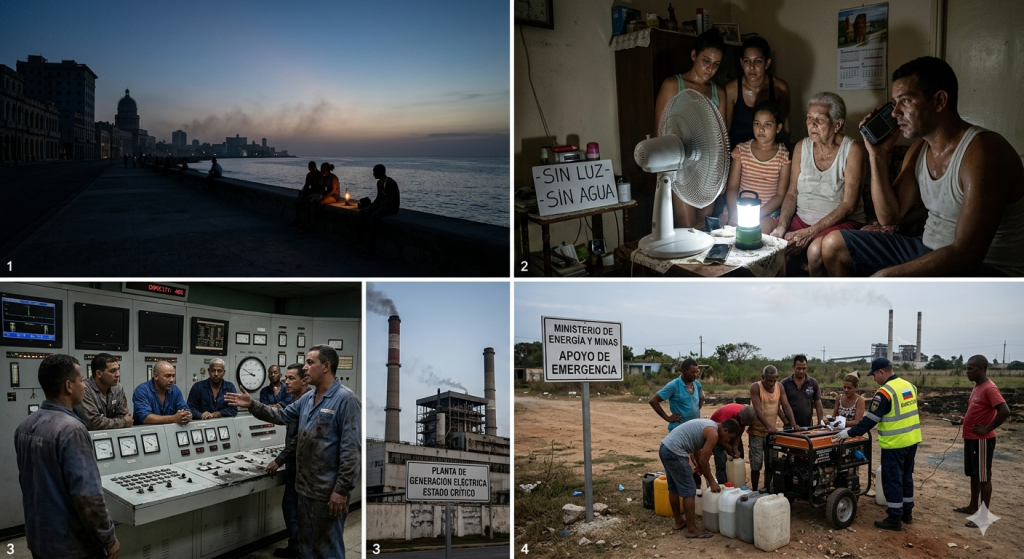
More than 80% of Cuba’s electricity is generated from oil. With oil imports reduced by approximately 90%, Cuba’s already-fragile power grid has collapsed into near-continuous blackouts that began in March 2026 and have continued nationwide. Cuba was already experiencing rolling blackouts before 2026, but the oil blockade transformed intermittent outages into a systemic, permanent crisis.
Healthcare Breakdown
The Council on Foreign Relations has documented that Cuban hospitals have been unable to perform surgeries and medical procedures due to electricity shortages and lack of supplies. Verfassungsblog’s legal analysis reported that an estimated 11,000 children were awaiting surgery while more than 96,000 people required medical procedures that hospitals could not provide.
By early March 2026, Cuban President Díaz-Canel publicly stated that Cuba had not received any oil shipments in three months — an extraordinary admission of the blockade’s effectiveness.
Water and Food
Electricity powers water pumps, refrigeration, and food distribution infrastructure. Without reliable electricity, access to clean drinking water, food storage, and basic services has deteriorated dramatically. Democracy Now!’s reporter in Havana described the situation as “the collective punishment of a population, particularly targeting poor communities, pregnant women, children and the elderly.”
Mass Emigration
The Economist estimates that since 2021, Cuba’s population has fallen from over 11 million to fewer than expected, with hundreds of thousands having emigrated — one of the largest emigration waves in Cuban history, driven by economic desperation. The 2026 blockade has accelerated this trend.
13. The US Government’s Official Justifications
The U.S. government’s official justifications for the Cuba blockade have evolved over 60+ years, but consistently cluster around several core themes.
1. National Security / Geopolitical Threat
The original Cold War framing — Cuba as a Soviet military base 90 miles from Florida — evolved after the USSR’s collapse into a broader geopolitical threat argument. The 2026 executive order frames Cuba as an “unusual and extraordinary threat” that “aligns itself with — and provides support for — numerous hostile countries, transnational terrorist groups, and malign actors adverse to the United States,” including Russia, China, Iran, Hamas, and Hezbollah.
2. Human Rights and Democracy
Every piece of U.S. legislation on Cuba since the Helms-Burton Act has included human rights and democracy promotion as explicit justifications. The U.S. has maintained that the embargo should remain until Cuba: releases political prisoners, allows political opposition, permits labor unions, holds free elections, and transitions to a democratic government.
As Study.com summarizes: “In 1962, 1992, and 1996, the USA defined the embargo in terms of human rights, stating that if Cuba wanted to reopen trade with the US, it had to improve its human rights record.”
3. Compensation for Nationalized Property
A significant body of U.S. law — most explicitly Helms-Burton’s Title III — is driven by the rights of American citizens and Cuban-Americans who had property seized by the Castro government after 1959 without compensation. The value of certified claims runs into the billions of dollars, and the Cuban-American lobby has been a formidable political force in ensuring this grievance remains central to U.S. policy.
4. Regime Change
Most directly stated in the Trump administration’s rhetoric, the explicit goal of the blockade — particularly the 2026 oil blockade — is to pressure the Cuban government into collapse or forced negotiation. Secretary Rubio and Trump have both explicitly linked the Cuba policy to a broader regional strategy of ousting left-wing governments, beginning with Venezuela.
Source: White House – Fact Sheet on Cuba Sanctions | Study.com – Cuban Embargo Pros and Cons
14. Conclusion: Why the Blockade Endures
The United States blockades Cuba for reasons that have never been entirely consistent, that have shifted dramatically across administrations, and that critics argue have long since ceased to make strategic sense.
It began as Cold War containment — an attempt to strangle a Soviet-allied communist government 90 miles from Florida before it could export revolution to the rest of the Western Hemisphere. It survived the Cold War because it became institutionalized in law (Helms-Burton), driven by a powerful political constituency (Cuban-American exiles), and repeatedly reinvigorated by Cuban government actions — from the Mariel Boatlift to the shooting down of civilian aircraft — that made normalization politically impossible.
Today, under Trump’s second term, the blockade has been escalated into a near-total oil blockade aimed explicitly at producing regime change — finishing what was started 65 years ago, in a region the U.S. has never stopped viewing as its own.
16. Frequently Asked Questions (FAQ)
Q: Why does the US have a blockade against Cuba?
A: The US blockade of Cuba originated in 1962 as a Cold War measure against Fidel Castro’s communist government, which nationalized American properties and allied with the Soviet Union. Today the U.S. maintains it to promote human rights, democracy, and regime change in Cuba, and to pressure Havana over its ties to Russia, China, and other U.S. adversaries. (Source: Britannica)
Q: When did the US start the Cuba embargo?
A: The full trade embargo was signed by President Kennedy on February 3, 1962, via Proclamation 3447, suspending all trade between the US and Cuba. Economic pressure under Eisenhower began in 1960. (Source: Mises Institute)
Q: What is the 2026 US oil blockade on Cuba?
A: In January 2026, Trump signed Executive Order 14380 declaring Cuba a national security threat and authorizing tariffs on any country that sells oil to Cuba. Following the US capture of Venezuelan President Maduro and the resulting cut-off of Venezuelan oil to Cuba, combined with Mexico suspending shipments under US pressure, Cuba’s oil imports collapsed by approximately 90%, causing nationwide blackouts and a severe humanitarian crisis. (Source: CFR)
Q: What is the Helms-Burton Act?
A: The Helms-Burton Act (1996) codified the Cuba embargo into U.S. law, meaning only Congress can lift it. It also allows U.S. citizens and Cuban-Americans to sue foreign companies that profit from properties confiscated by Cuba after 1959, and threatens sanctions against foreign investors in Cuba. Title III, which enables these lawsuits, was first activated by Trump in 2019. (Source: Mises Institute)
Q: Why is Cuba designated a State Sponsor of Terrorism?
A: Cuba was first designated a State Sponsor of Terrorism in 1982 for supporting communist movements in Africa and Latin America. Obama removed it in 2015. Trump re-designated Cuba in January 2021, citing support for the Maduro government in Venezuela, harboring of wanted criminals, and alleged ties to Iran, Hamas, and Hezbollah. The designation severely restricts Cuba’s access to the international financial system. (Source: White House)
Q: Has the US Cuba embargo ever been lifted?
A: No. The full embargo has never been lifted. President Obama normalized diplomatic relations and eased some restrictions by executive action (2014–2016), but could not lift the statutory Helms-Burton embargo without Congress. Trump reversed Obama’s changes, and the embargo has remained in place continuously since 1962. (Source: WOLA)
Last updated: May 2026.