
Last Updated on 3 weeks ago by TodayWhy Editorial
Update, July 20, 2026: The final has been played. Spain beat Argentina 1-0 in extra time to win their second World Cup title. For the full breakdown of the disallowed goal and Argentina’s red card, see our final recap: Why was Spain’s goal disallowed? The original preview is preserved below for context.
Spain and Argentina met Sunday in the 2026 World Cup final, in a matchup that lined up almost too perfectly: the tournament’s best attack against its best defense, a 39-year-old legend against the 19-year-old heir to his throne, and a shot at history that hadn’t been within reach since 1962.
How did the World Cup final end?
Spain won 1-0 after extra time. Ferran Torres scored the decisive goal in the 106th minute. Argentina played the final 30 minutes with 10 men after Enzo Fernández was sent off for a second yellow card late in normal time. Earlier in extra time, a Nico Williams goal had been ruled out for a foul in the buildup.
It’s Spain’s second World Cup title, following their 2010 win. Argentina fell short of back-to-back titles, a feat only Italy (1938) and Brazil (1958, 1962) have managed.
Why this final was historic
Argentina were defending champions, chasing back-to-back World Cup titles for the first time since Brazil in 1958 and 1962. Spain, meanwhile, were looking for only their second World Cup title, following their 2010 win.
It was also the first time in 60 years that the reigning champions of South America and Europe had met in a World Cup final. Spain and Argentina had actually faced each other at a World Cup exactly once before, back in 1966 — Argentina won 2-1 in the group stage, then both teams were eliminated early.
Why the attack-vs-defense angle mattered
The numbers had set up a genuine contrast in styles. Argentina scored more goals than any other team at this World Cup — 19 across the tournament. Spain conceded fewer than anyone — just one goal heading into the final. In the end, Spain’s defense held: Argentina never registered a shot across the full 120 minutes.
Spain’s engine room ran through Rodri, who completed more passes than any other player in the tournament, while Mikel Oyarzabal led their scoring with five goals. For Argentina, Lautaro Martínez and Enzo Fernández had chipped in three and two goals respectively, but the team remained built around one man to the end.
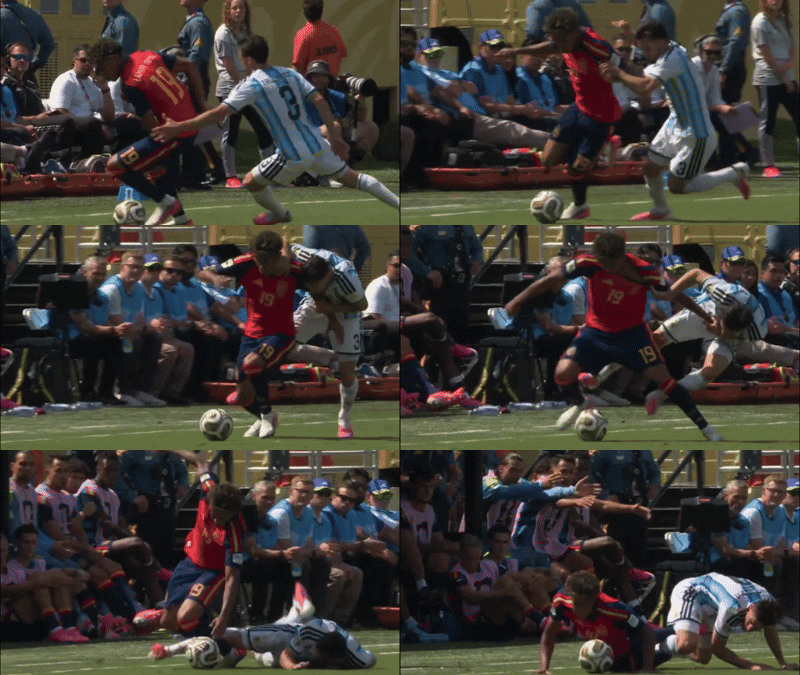
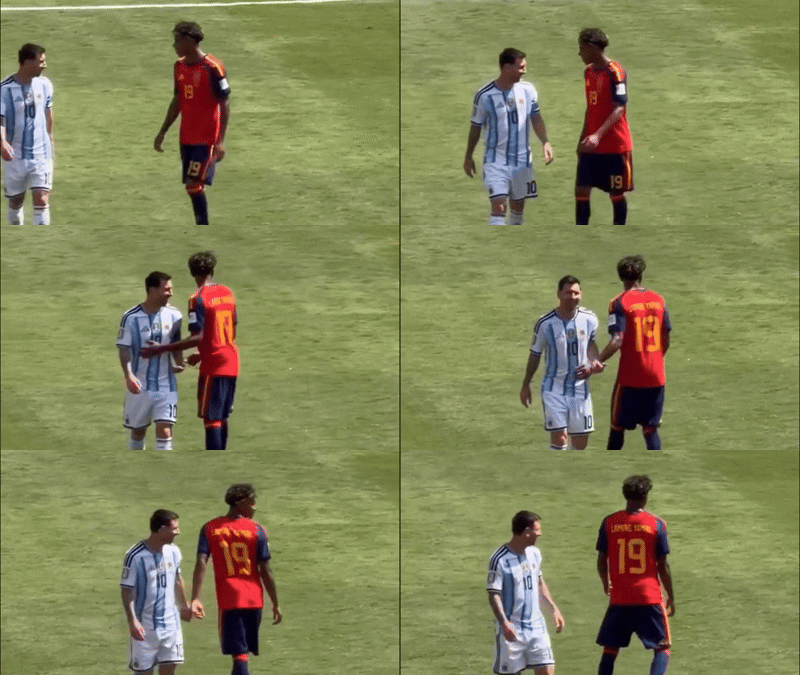
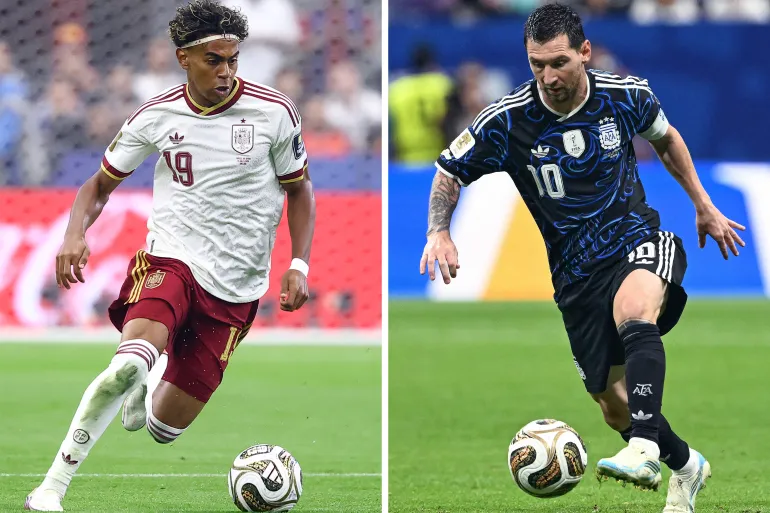
Messi vs. Yamal: why it was called a changing of the guard
Messi, at 39 and playing what’s widely assumed to be his last World Cup, managed just a handful of touches in the final and finished without a shot. Yamal, 19 and playing in his first World Cup — for the club Messi spent 21 years at as a player, Barcelona — was involved in the buildup to Spain’s winning goal.
The Golden Boot, decided
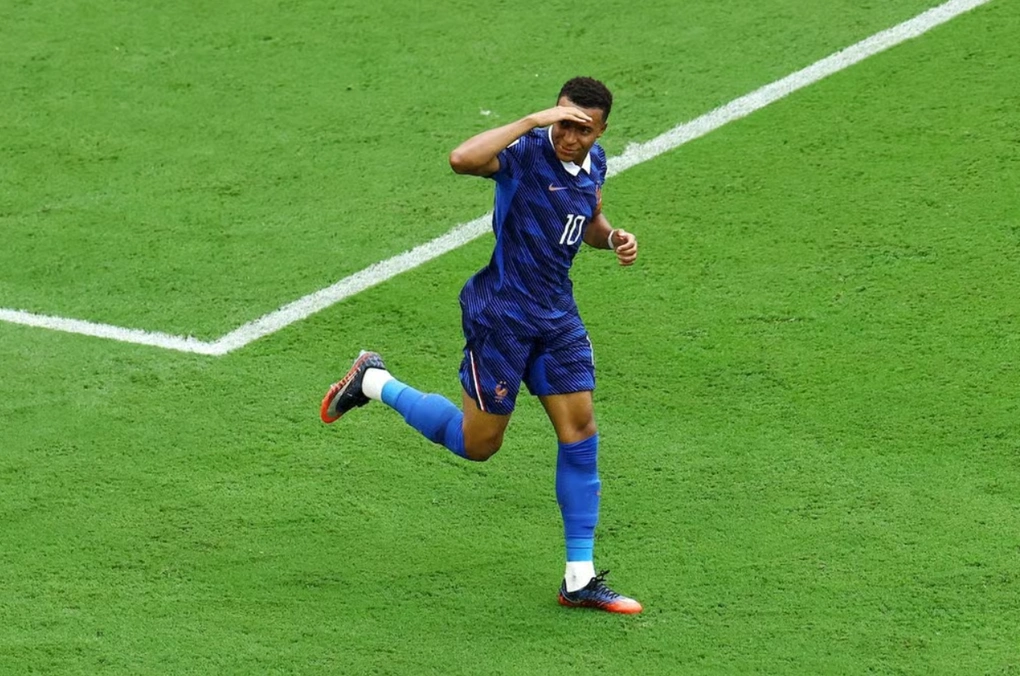
Heading into the final, the race for the tournament’s top scorer had shifted in France’s favor: Kylian Mbappé scored twice in the third-place match against England, pushing his tally to 10 goals, two ahead of Messi’s 8. Since Messi didn’t score in the final, Mbappé finished as the tournament’s top scorer.
What happens next
The next World Cup is in 2030, co-hosted by Spain, Portugal and Morocco — meaning Spain will defend their title on home soil. Argentina now heads into a rebuild without knowing whether Messi will feature in another major tournament.
Frequently asked questions
Who won the 2026 World Cup final?
Spain beat Argentina 1-0 after extra time to win their second World Cup title.
Who scored the winning goal?
Ferran Torres scored in the 106th minute, after a Nico Williams header off a Pedro Porro cross.
Did Argentina retain their title?
No. No team has won back-to-back World Cups since Brazil in 1958 and 1962.
Who won the Golden Boot?
Kylian Mbappé, with 10 goals. Messi finished second with 8 after going scoreless in the final.
Sources: Al Jazeera match report, July 19, 2026; ESPN final coverage, July 19, 2026.