
Last Updated on 4 months ago by TodayWhy Editorial
In August 2024, a Falun Gong practitioner named Cheng Pei Ming became the first known survivor of China’s organ harvesting system. Two years later, researchers gathered in Montreal delivered an even more troubling update: the practice didn’t stay contained to Falun Gong practitioners. It spread to a second, much larger group — Uyghurs — and the world’s slow response is part of the reason why.
Why Did Organ Harvesting Spread to Uyghurs?
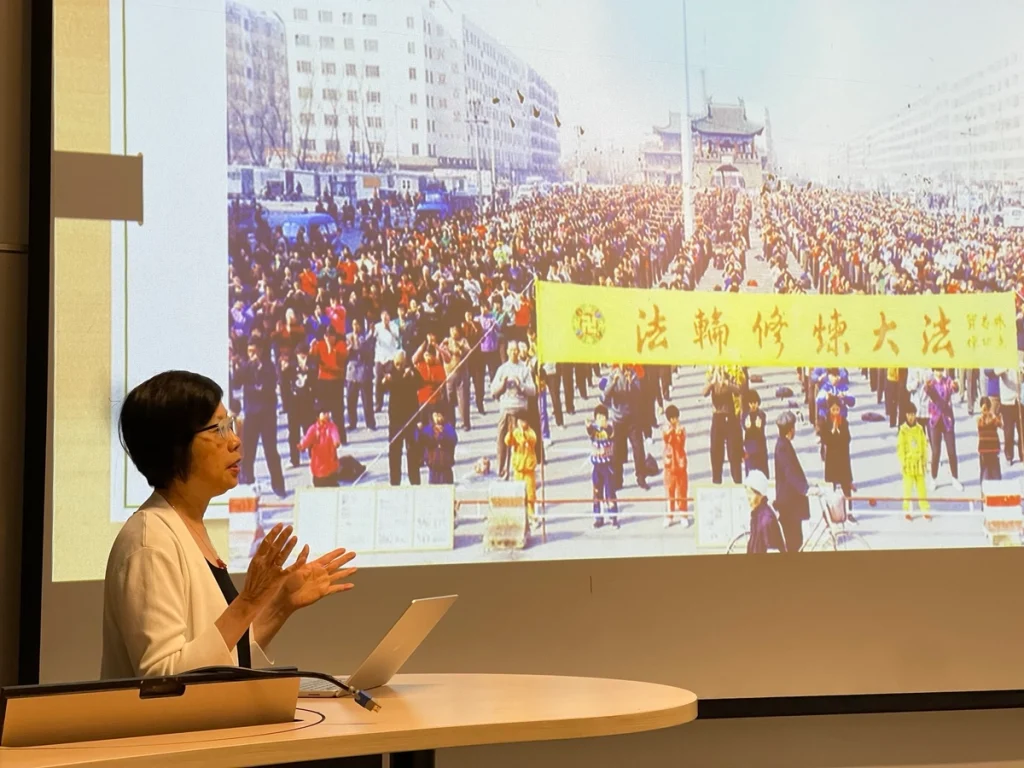
Speaking at a Montreal panel on the practice at the International Congress on Law and Mental Health on July 1, 2026, Maria Cheung — executive director of the Falun Gong Human Rights Group and professor emeritus at the University of Manitoba — offered a blunt explanation for why the practice expanded beyond its original victims.
“The response was very, very slow, and so the Chinese communist regime already developed a lot of technology” — Maria Cheung, on why the international community’s muted reaction to allegations against Falun Gong practitioners let the system mature enough to be turned on Uyghurs.
In plain terms: two decades of advocacy, congressional hearings, and UN letters never translated into consequences China’s government actually felt. That gap gave transplant hospitals, screening infrastructure, and logistics networks time to scale up — and once mass detention of Uyghurs began in Xinjiang, that infrastructure was already there to absorb a new population.
📖 Related: Why Are Falun Gong Practitioners Killed for Their Organs in China? — our full breakdown of the evidence, the China Tribunal verdict, and survivor testimony.
The Montreal Panel: Four Researchers, One Warning
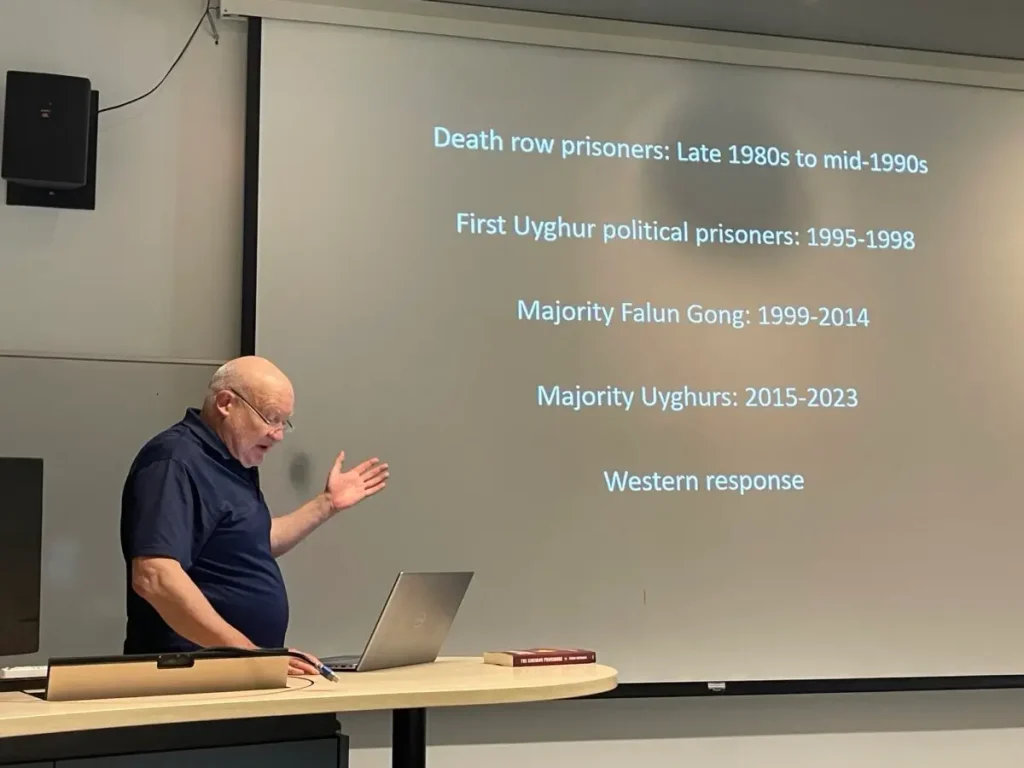
The panel brought together the field’s most established investigators: human rights lawyer David Matas, who co-authored the original 2006 report with the late David Kilgour; Mehmet Tohti, director of the Uyghur Rights Advocacy Project; and journalist Ethan Gutmann, whose new book on the subject was released in March 2026.
Matas reiterated a point that has anchored the case against China for two decades: the country has no organ donation culture, so the surge in transplant volume after 1999 — when the Chinese Communist Party (CCP) launched its campaign to “eradicate” Falun Gong — cannot be explained by voluntary donors. Researchers have cross-checked this against the number of transplant beds, the number of hospitals performing the surgeries, and wait times reported to be as short as two weeks.
The DNA Database: 15 Million Samples
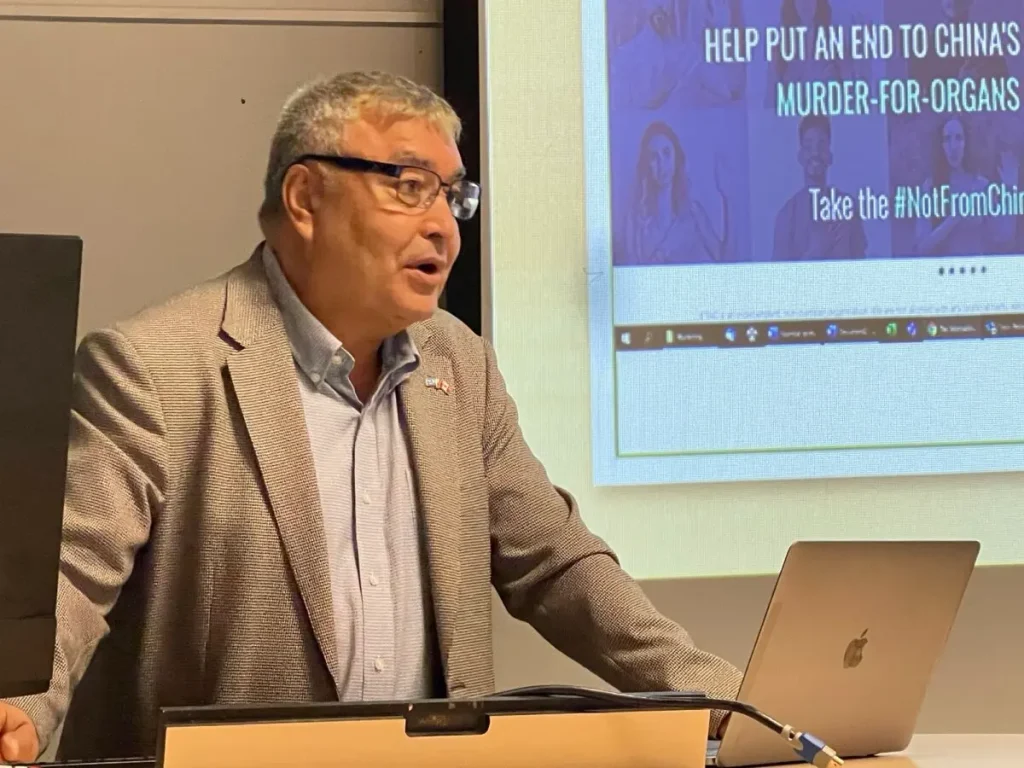
Tohti’s contribution to the Montreal panel centered on Xinjiang’s biometric collection program. He described how Chinese authorities carried out mandatory DNA sampling of more than 15 million people in the Uyghur region — a database he argues was built, at least in part, to support organ matching at scale.
The scale of that number matters for the “why:” a matching system this size doesn’t emerge from routine public health screening. It requires the same blood-type and tissue-compatibility data that a transplant program would need to identify a donor for a specific recipient on short notice.
“Halal” Transplant Marketing and the Airport Fast Lanes
Because Falun Gong practitioners avoid alcohol and tobacco, investigators have long argued their organs were considered especially desirable. Tohti drew a direct parallel to Uyghurs, who as observant Muslims share the same abstinence — and said Chinese hospitals capitalized on it, running marketing campaigns advertising “halal” organ transplants to patients in Gulf and other Muslim-majority countries.
He also described dedicated airport infrastructure built to move organs quickly out of Xinjiang: expedited lanes at the airports in Kashgar, Aksu, and Urumqi. The International Coalition to End Transplant Abuse in China issued a statement in 2021 specifically condemning the halal-marketing practice.
The Pink Bracelets: A New Witness Account
Gutmann’s panel remarks pointed to a detail from his research that hasn’t circulated widely before: a woman who escaped a detention camp in Xinjiang told him that after prisoners underwent blood tests, some were later seen wearing pink bracelets — and those individuals subsequently disappeared. It’s the kind of granular, testimony-level detail that has historically preceded broader confirmation in this field, as it did with earlier Falun Gong survivor accounts.
Same Playbook, Different Target
The throughline connecting Falun Gong and Uyghur victims isn’t circumstantial — it’s structural. Both groups were placed into mass detention outside normal judicial oversight, both were subjected to blood and tissue screening with no medical justification given, and both come from populations whose lifestyle habits (no smoking, no drinking) made their organs more marketable. The 2019 China Tribunal in London — chaired by Sir Geoffrey Nice, formerly the lead prosecutor of Slobodan Milošević — concluded that forced organ harvesting had been committed “beyond reasonable doubt” against Falun Gong practitioners, and found it plausible that Uyghurs were being targeted as well.
Where the Law Stands
Legislative momentum has been building on both sides of the U.S. Capitol. The Senate’s Falun Gong and Victims of Forced Organ Harvesting Protection Act (S.4009), introduced in March 2026 by Sen. Ted Cruz (R-Texas) and Sen. Jeff Merkley (D-Ore.), passed the Senate Foreign Relations Committee on June 17, 2026. The bill has since picked up bipartisan cosponsors, including Sen. Adam Schiff (D-Calif.) and Sen. Todd Young (R-Ind.), and would require the president to sanction individuals involved in forced organ harvesting and report annually on China’s transplant system.
On the House side, the Stop Forced Organ Harvesting Act (H.R. 1503) passed 406–1 in May 2025. Together, the bills reflect a rare point of bipartisan agreement — but as Cheung’s Montreal remarks underscore, legislation alone hasn’t yet been enough to stop the practice from spreading to new victim groups.
📖 Related: Why the Senate Advanced the Falun Gong Protection Act — full breakdown of what S.4009 does, the Senate’s June 17 committee vote, and S.Res. 444.
Frequently Asked Questions
Why did China’s organ harvesting expand from Falun Gong to Uyghurs?
Researchers speaking in Montreal on July 1, 2026, said the international community’s slow response to Falun Gong organ harvesting allegations gave China time to build out transplant infrastructure and screening systems. When mass detention of Uyghurs began in Xinjiang, that same infrastructure was applied to a new population.
What is the evidence that Uyghurs are targeted for organ harvesting?
Investigators point to mandatory DNA sampling of more than 15 million people in Xinjiang, “halal” transplant marketing campaigns aimed at Gulf countries, dedicated organ-transport fast lanes at regional airports, and witness testimony describing pink bracelets marking prisoners before they disappeared.
What did Ethan Gutmann’s new book reveal?
Gutmann’s book, released in March 2026, includes testimony from a woman who escaped a Xinjiang detention camp. She told him that after blood tests were conducted, certain prisoners were later seen wearing pink bracelets — and those individuals subsequently went missing.
What is S.4009 and where does it stand?
S.4009, the Falun Gong and Victims of Forced Organ Harvesting Protection Act, was introduced by Sen. Ted Cruz and Sen. Jeff Merkley in March 2026. It passed the Senate Foreign Relations Committee on June 17, 2026, and would sanction individuals involved in forced organ harvesting while requiring an annual State Department report on China’s transplant system.
Are Falun Gong practitioners still targeted for organ harvesting?
Yes. Researchers say Falun Gong practitioners remain a primary source of harvested organs alongside Uyghurs, and that the 2015 reforms China announced have not been shown to have ended the practice.
Sources & Further Reading
- The Epoch Times — From Falun Gong to Uyghurs: Researchers Shed Light on the Expansion of China’s Forced Organ Harvesting Industry (July 2026)
- Congress.gov — S.4009: Falun Gong and Victims of Forced Organ Harvesting Protection Act
- China Tribunal — Final Judgment (March 2020)
- International Coalition to End Transplant Abuse in China — statement on “halal” organ transplant marketing (2021)