
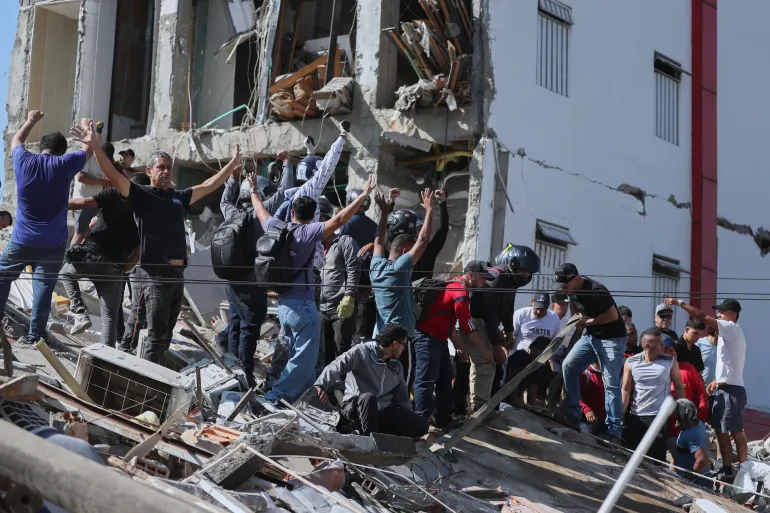
Last Updated on 1 month ago by TodayWhy Editorial
Update (as of mid/late August 2026): The death toll from the August 10, 2026 earthquake has risen significantly. According to official figures from Colombia’s National Unit for Disaster Risk Management (UNGRD) and later reports, more than 300 people have been confirmed dead, with hundreds still reported missing. Over 4,000 people were injured.
Regarded as one of the strongest seismic events to hit Colombia in recent history, the powerful tremors propagated hundreds of kilometers from the epicenter, forcing widespread evacuations as far away as the capital, Bogotá.
Quick Summary: Key Facts of the Colombia Earthquake Today
| Feature | Details |
| Event | 7.4-Magnitude Earthquake |
| Date & Time | August 10, 2026 at 07:34 AM Local Time (12:34 UTC) |
| Epicenter | San José del Palmar, Chocó Department, Western Colombia |
| Focal Depth | ~100–107 km |
| Confirmed Deaths | 32+ dead, 570+ injured |
| Affected Cities | Cali, Pereira, Manizales, Quibdó, Armenia, Bogotá |
| Tsunami Warning | None (depth prevented major ocean floor displacement) |
What We Know About the Colombia Earthquake Today
Early reports on the day of the quake put the death toll at around 111–132. In the following days the number continued to climb. By mid-August 2026, official tallies exceeded 300 fatalities and more than 4,000 injuries. Pereira and Cali were among the hardest-hit cities.
Major Damage Reports Across Key Cities
- Cali: In Colombia’s third-largest city, Mayor Alejandro Eder reported that residents remain trapped under the debris of at least 20 to 25 collapsed buildings. Specialized disaster teams from Bogotá and Medellín have been requested to bolster local emergency efforts.
- Pereira: Severe structural destruction occurred throughout the city. At Matecaña International Airport, ceiling collapse caused casualties and immediate flight cancellations.
- Manizales: Mayor Jorge Eduardo Rojas Giraldo confirmed that more than 12 commercial buildings and 20 residential homes were partially or completely destroyed. Tragically, one of the towers of the city’s iconic neo-Gothic Cathedral Basilica of Our Lady of the Rosary collapsed onto its nave.
- Airport Suspensions: The Colombian Civil Aeronautics Agency confirmed that operations have been suspended across at least six airports in western Colombia, including those serving Pereira, Manizales, Quibdó, Armenia, Cartago, and Buenaventura.
The Colombian Association of Capital Cities reported that at least 60 of the confirmed deaths occurred in Pereira alone. Nationwide, the quake damaged more than 1,600 buildings, including 18 health centers and 52 educational centers, and destroyed 61 structures outright. In Cali, the pediatric and neonatal wing of a hospital partially collapsed, trapping patients inside. The US State Department pledged $15.5 million in emergency funding for shelter, food and protection efforts.
1. Epicenter Details of Colombia earthquake today
According to official reports from the United States Geological Survey (USGS) and the Colombian Geological Service (SGC), the earthquake occurred at 07:34 AM on August 10, 2026 (local time) (approximately 12:34 UTC).
- Epicenter: Located in the municipality of San José del Palmar, Chocó Department, western Colombia.
- Focal Depth: Approximately 100–107 km deep.
- Magnitude: 7.4 Mwd (some international monitoring agencies recorded between 7.2 and 7.7 M).
- Impacted Area: Tremors spread across hundreds of kilometers, directly affecting over 15 million people with varying levels of shaking.
Although the epicenter was in the mountainous rainforests of the west, strong tremors were clearly felt in the capital city of Bogotá (hundreds of kilometers away), causing terrified residents to evacuate high-rise buildings. Nearer to the epicenter, in cities such as Pereira, Cali, and Quibdó (capital of Chocó), shaking was violent, collapsing several architectural structures.
Colombia sits directly on the Pacific Ring of Fire, positioned over a complex plate boundary where the Nazca, South American, and Caribbean tectonic plates interact. While light to moderate tremors (“temblores”) are common, quakes exceeding magnitude 6.0 are far less frequent.
2. Why No Tsunami Warning Was Issued
Despite a magnitude of 7.4 Richter—large enough to trigger destructive tsunamis—the Pacific Tsunami Warning Center (PTWC) and USGS confirmed no tsunami threat.
The main reason is that the focal depth of the earthquake was over 100 km deep within the Earth’s crust. At this depth, energy dissipates widely inland without causing sudden, massive seabed displacements needed to trigger a tsunami.
3. Aftershock Alerts and Secondary Hazards
Following the mainshock, a sequence of aftershocks has repeatedly occurred. Seismometers have recorded dozens of secondary tremors ranging from 2.8 to 5.8 magnitude.
Disaster response authorities strongly advise residents against rushing back into buildings with major cracks, as even minor aftershocks can cause weakened structures to collapse completely.
4. Colombian Government Response and International Aid
Immediately following the disaster, the President of Colombia and the government established a National Emergency Rescue Committee, deploying military, police, and Red Cross forces to priority zones.
- On-Site Rescue: First responders are racing against time, deploying heavy excavators and search-and-rescue dogs to locate survivors trapped under rubble in Pereira and Quibdó.
- Emergency Medical Relief: International organizations such as Direct Relief and the International Red Cross immediately activated emergency medical supply operations, dispatching first-aid kits and medicine to field hospitals.
- International Solidarity: By the afternoon, international leaders from the US, South America (El Salvador, Venezuela), and Europe (Italy, Ukraine) expressed deep condolences and committed specialized search-and-rescue teams as well as emergency humanitarian aid to Colombia.
5. Safety Guide: What to Do During an Earthquake and Aftershocks
If you are living, working, or traveling in earthquake-affected areas in South America, strictly follow these safety procedures:
During the Shaking
- Drop, Cover, and Hold On:
- Drop: Lower yourself onto your hands and knees.
- Cover: Crawl under a sturdy table or desk to protect your head and neck.
- Hold On: Hold on tightly to your shelter until shaking stops completely.
- Outdoors: Stay clear of high-rise buildings, power lines, streetlights, and large trees.
- In a Vehicle: Safely pull over to the side of the road away from hazards, engage the handbrake, and stay inside.
After the Shaking Stops
- Check for Hazards: Shut off main electrical breakers and gas valves to prevent fires or explosions.
- Evacuate Safely: Use stairs; never use elevators.
- Stay Alert for Aftershocks: Keep an emergency go-bag ready (containing water, non-perishable food, flashlight, whistle, IDs, and a first-aid kit).
- Stay Informed: Follow news and updates through official government channels or radio broadcasts.
Conclusion
The 7.4-magnitude Colombia earthquake today represents one of the most severe seismic disasters the country has experienced in over a decade. With over 300 confirmed dead and extensive structural damage across major western cities, rescue operations remain active. High vigilance is required due to the ongoing threat of aftershocks and mountain landslides.
Casualty and damage figures continue to be updated as rescue and assessment operations proceed in remote areas. The earthquake ranks among the most destructive seismic events in Colombia in recent decades.
Sources: USGS, Colombian Geological Service (SGC), GDACS, Direct Relief.