
Last Updated on 3 months ago by TodayWhy Editorial
Rodri, not Lionel Messi, has won the Golden Ball as the best player of the 2026 World Cup. Spain’s captain picked up the award minutes after lifting the trophy itself, and a stadium full of fans immediately let their feelings be known: chants of Messi’s name rang out across MetLife Stadium in protest.
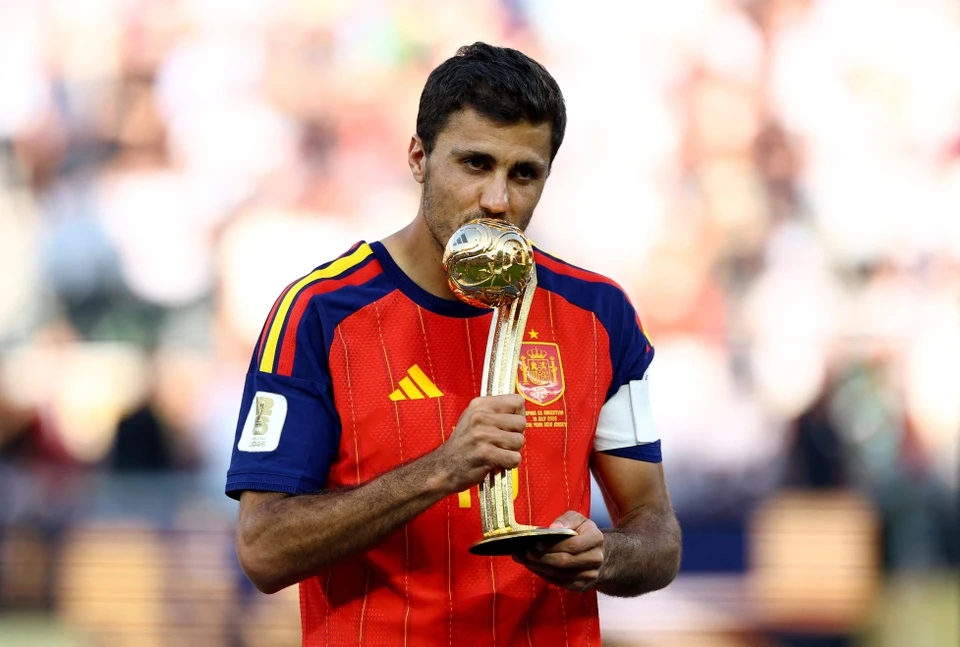
Here’s why FIFA’s panel went with Rodri, what the underlying numbers show, and how the rest of the individual awards were decided.
Why did Rodri win the Golden Ball over Messi?
Messi had entered the final as the heavy favorite. He was chasing a third Golden Ball, which would have made him the only player ever to win the award more than twice, and his eight goals and four assists had powered Argentina back to a second straight final.
But the award covers the whole tournament, not just the highlight reel, and by that measure Rodri’s case was hard to ignore. He finished the World Cup as the leader in successful passes and line-breaking passes of any player in the competition, had more touches than anyone else in the tournament, and ranked fifth in possessions won. In the final itself, he completed 92.9% of his passes across seven games overall, adding 22 tackles, 34 recoveries and 11 clearances over the tournament — the defensive midfield engine that let Spain control games from the back rather than chase them.
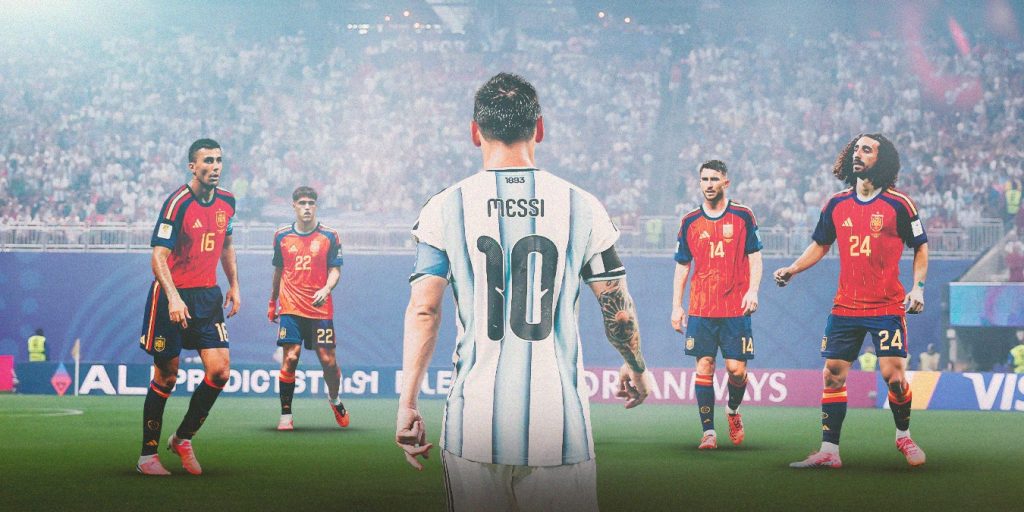
Messi, by contrast, was kept quiet throughout Sunday’s final, managing only a handful of touches as Spain’s defense swarmed him all night.
The stats behind the case
Independent match-data providers back up the award. Across all eight of Spain’s games, Rodri played 726 minutes, completed 756 of 811 passes at 93.2% accuracy, and supplied 11 key passes with an expected-assists tally of 1.09 — solid chance creation for a player operating from deep, even without an assist to his name. He added 26 tackles (18 won), 40 ball recoveries, 11 clearances, and won 49 of his total duels, including 11 of 14 in the air.
He was dribbled past only seven times in the entire tournament. His match ratings never dipped below 6.8, and he closed with an 8.5 in the final itself — 101 of 106 passes completed, 8 duels won to only 2 lost, and 3 of 4 tackles won as Spain saw out the win with Argentina down to 10 men. Zero goals, zero assists, and still the tournament’s best player: it’s a profile award voters have rewarded before, and rarely for a striker.
How Rodri decided the semifinal before the final even started
The clearest preview of Rodri’s final performance came two games earlier, in Spain’s semifinal win over France. Facing an attack built around Kylian Mbappé, Ousmane Dembélé and Michael Olise, Rodri didn’t try to match anyone for speed. Instead he closed passing lanes, condensed space in front of Spain’s back line, and repeatedly forced France’s attackers to receive the ball in positions where it did the least damage.
That performance was widely read as a return to the form that won Rodri the 2024 Ballon d’Or: not just protecting Aymeric Laporte and Pau Cubarsí, but constantly occupying the zones France needed to build attacks through. By the final, Argentina ran into the same wall. Messi was repeatedly forced deep to find the ball, while Julián Álvarez was cut off from Argentina’s midfield by distance and by the pressure Spain’s players kept applying around him.
Messi’s tournament: a hot start, a quiet ending
Messi’s Golden Ball case was built early. He scored a hat-trick in Argentina’s group-stage opener and found the net in the team’s first five matches of the tournament, extending his record for consecutive World Cup games with a goal to eight, stretching back to the 2022 title run — and taking his career World Cup tally to 20 goals, the most in tournament history. Through the quarterfinal and semifinal he shifted into more of a playmaking role, setting up goals without always scoring them himself.
The final was the exception. Spain’s compact shape, with Rodri as its anchor, cut off the supply lines Messi had relied on all tournament. He finished Sunday’s match with a “silver” sweep instead of gold: runner-up medal, runner-up in the Golden Boot race, and runner-up for the Golden Ball — the same trophy case, coincidentally, that Kylian Mbappé also filled at the 2022 World Cup before winning the Golden Boot outright this time around.
Why didn’t Messi win the Golden Boot either?
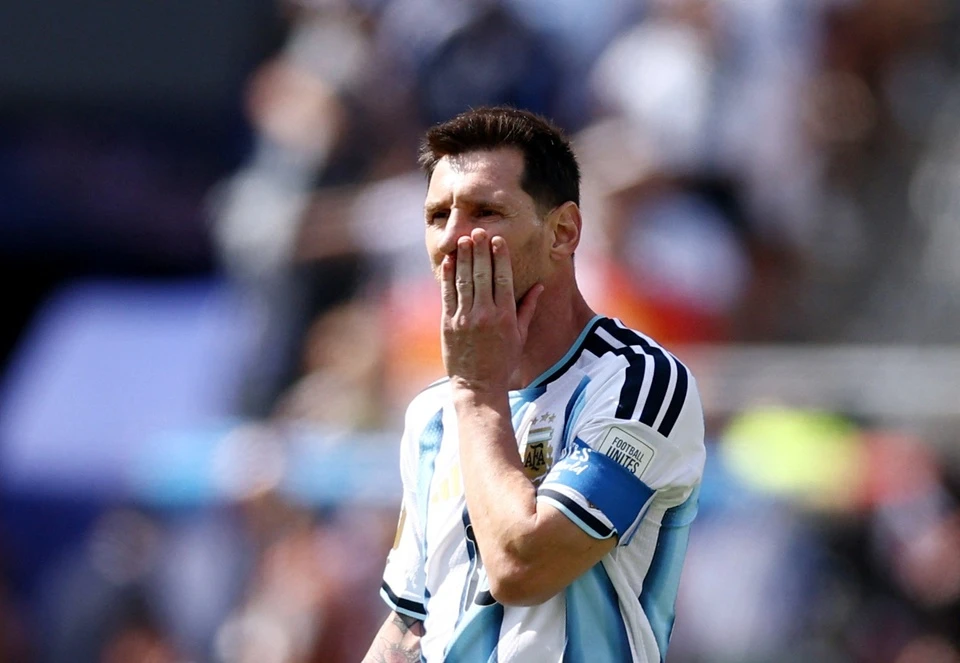
Messi and Kylian Mbappé went into the final weekend tied on eight goals apiece. Mbappé then scored twice in France’s third-place match against England, a 6-4 classic, pulling ahead to finish the tournament with 10 goals — two clear of Messi. It’s the second consecutive World Cup in which Mbappé has finished as top scorer, and the goals also made him the competition’s all-time leading scorer, with 22 across his career.
A familiar argument: Rodri has won this debate before
This isn’t the first time Rodri’s case has divided opinion against a more spectacular attacking player. He won the 2024 Ballon d’Or over Real Madrid’s Vinícius Júnior, who had scored and created more headline moments that season — a decision Real Madrid’s delegation protested by boycotting the ceremony. Voters at the time pointed to the same profile now being credited for his Golden Ball: a player whose value shows up in structure and control rather than goals.
The award also has precedent at World Cups specifically. Fabio Cannavaro won the Golden Ball in 2006 after captaining Italy to the title without scoring or assisting in the final, on the strength of his defensive command across the tournament. Rodri’s case follows the same logic: modern voting panels increasingly reward the player who controls a match’s outcome, not only the one who finishes it.
Who won the other awards?
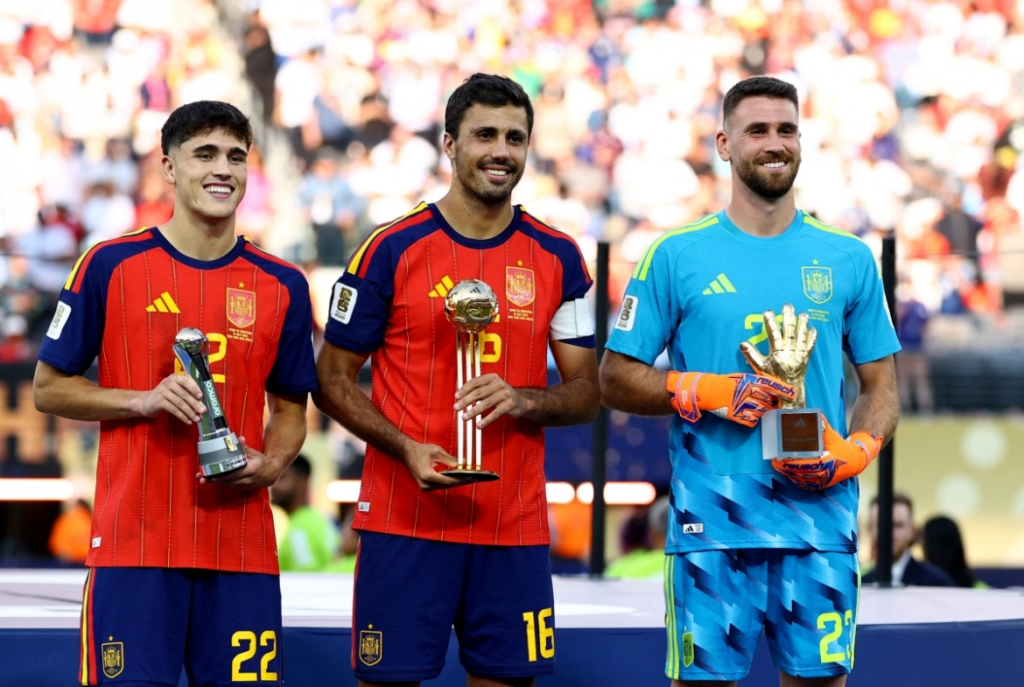
Spain swept most of the individual honors alongside the trophy itself:
- Golden Ball (best player): Rodri, Spain
- Silver Ball: Lionel Messi, Argentina
- Bronze Ball: Kylian Mbappé, France
- Golden Boot (top scorer): Kylian Mbappé, France — 10 goals
- Golden Glove (best goalkeeper): Unai Simón, Spain
- Best Young Player (21 or under): Pau Cubarsí, Spain
- Man of the Match, final: Ferran Torres, Spain
The Best Young Player award added its own subplot: Cubarsí beat out his own Barcelona teammate, 19-year-old Lamine Yamal, who had been one of the storylines of the tournament heading into the final.
What it means
For Rodri, the Golden Ball adds to a Ballon d’Or he already won in 2024, cementing his run as arguably the sport’s most decorated deep-lying midfielder of his generation. For Messi, the runner-up finish closes out — barring a surprise return — a World Cup career that already includes a title in 2022 and now two Golden Ball near-misses in his final two tournaments, a fitting coda to the final that Spain won 1-0 in extra time.
Frequently asked questions
Why did Rodri win the Golden Ball instead of Messi?
Rodri led the tournament in successful passes, line-breaking passes and touches, and ranked fifth in possessions won, while Messi was kept quiet in the final itself. FIFA’s award covers the whole tournament, not just standout moments.
What were Rodri’s full tournament stats?
Across eight games: 726 minutes played, 756 of 811 passes completed (93.2%), 11 key passes, 26 tackles, 40 recoveries, 11 clearances, and just seven times dribbled past all tournament. Zero goals and zero assists.
Did fans agree with the decision?
Many didn’t. A full stadium chanted Messi’s name in protest when Rodri received the award.
Has a player won the World Cup’s best-player award without scoring before?
Yes — Fabio Cannavaro won it in 2006 as a defender who neither scored nor assisted in that final, on the strength of his defensive leadership. Rodri’s award follows a similar logic.
Who won the Golden Boot?
Kylian Mbappé, with 10 goals, two more than Messi, after scoring twice in the third-place match against England.
Who won Best Young Player?
Pau Cubarsí of Spain, ahead of his own teammate Lamine Yamal.
Sources: theScore, July 19, 2026; Sofascore match-data breakdown, July 20, 2026.